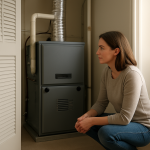
Furnace Humming Loudly: Causes & When It’s Serious
Quick Answer
A furnace that suddenly starts humming loudly during the heating cycle is often pointing to blower motor bearing wear, especially if the hum rises as the blower ramps up and gets worse over weeks. First action: isolate where the sound comes from by listening at the blower compartment door and changing the fan setting from Auto to On. If the hum is accompanied by scraping, grinding, burning smell, or the blower struggles to start, shut the system off and call a technician.
Identify the Noise First
If the hum starts only when the blower starts and stops when the blower stops, the blower assembly is the likely source.
If the hum begins at ignition or when burners light but before the blower starts, it is less consistent with bearings and you should re-check the timing before focusing on the motor.
If the hum is constant even with the thermostat set to Off, it may be vibration transfer from the cabinet or ductwork, or a control transformer hum being amplified by a loose panel. Confirm by turning off the furnace switch or breaker; if it stops immediately, it was inside the furnace cabinet.
If the hum is louder at certain registers or rooms, suspect vibration traveling through ducts. If it is loudest at the furnace blower door, suspect the blower motor itself.
If your system has an outdoor unit and you hear nothing outside, keep troubleshooting at the indoor furnace. Bearing-related humming is an indoor blower issue.
What This Noise Usually Means
Blower motors rely on bearings to keep the shaft centered and spinning smoothly. As bearings wear or dry out, friction increases and the motor produces a deeper, louder hum as it works harder to maintain speed. The vibration can transfer into the blower wheel, mounting brackets, and furnace cabinet, making the sound seem electrical even though the root cause is mechanical drag at the bearings.
As wear progresses, the hum may shift into a growl, whirr, or rumble, and the blower can develop start-up hesitation because the motor needs extra torque to overcome bearing resistance.
Most Common Causes
Worn blower motor bearings: Hum increases with blower speed, often louder at start-up and after the furnace has been running 5–15 minutes as the motor warms.
Dry sleeve bearings on older motors (if equipped): A steady hum with a rougher tone; may change briefly after the blower stops as the shaft coasts down.
Blower wheel slightly off-center from bearing play: Hum plus a faint rhythmic vibration; may worsen when the cabinet door is on because it resonates.
Bearing wear causing motor to run hot and strain: Hum accompanied by reduced airflow, hotter supply air at first then potential high-limit cycling as the blower fails to move enough air.
Vibration amplification from a loose blower door or panel: Motor hum seems abnormally loud at the cabinet seam; pressing gently on the door reduces the sound even though the bearing issue is still present.
Blower mounting bolts or brackets slightly loose due to ongoing vibration: Hum or buzz increases at certain speeds; you may feel vibration through the furnace jacket near the blower section.
Airflow restriction increasing load on a marginal bearing: Hum is worse with a dirty filter or closed registers because the motor works harder, exposing bearing weakness.
How to Check Safely
Confirm the timing: Stand near the furnace and listen through a full heat cycle. Note whether the hum begins exactly when the blower starts, not when the burners ignite.
Use the thermostat fan test: Switch Fan from Auto to On. If the hum appears without heat running, that isolates the noise to the blower operation.
Check for cabinet resonance: With the blower running, press gently on the blower door/panel. If the hum drops noticeably, vibration transfer is contributing, and the underlying motor vibration still needs evaluation.
Look for simple vibrating contacts: Make sure the furnace door is fully seated and the latches are tight. Ensure nearby duct boots or return grilles are not rattling against framing.
Check the filter: Replace a dirty filter with the correct size and airflow rating. Restricted airflow can increase motor load and make bearing noise more obvious.
Listen at different locations: Compare sound at the blower compartment, return grille, and a nearby supply register. Loudest at the blower compartment points toward motor/bearing vibration.
Observe start behavior: If the blower hesitates, starts slowly, or needs multiple attempts, turn the system off and call a technician. Bearing drag can overheat the motor.
Smell check: If you notice a hot, electrical, or burning smell while the hum is present, shut the furnace off and schedule service.
Do not open electrical compartments: If you suspect an electrical source, do not remove panels beyond the normal blower door. A technician should verify motor amperage and condition.
Normal vs A Problem
Usually normal: A soft, steady blower sound that does not change much over months, no vibration in the cabinet, normal airflow, and no start hesitation.
Usually a problem: Hum that is new, noticeably louder than last season, or increasing week to week. Humming paired with vibration you can feel on the furnace cabinet, a rougher tone as the blower coasts down, or any airflow reduction points toward bearing wear.
Serious signs: Humming with grinding/scraping, repeated blower start failures, overheating smell, or the furnace cycling off on limit due to low airflow. Breaker trips are not typical for mild bearing noise and should be treated as a service call.
When to Call a Technician
The hum clearly starts with the blower and is getting louder over time.
The blower hesitates, starts slowly, or stops and restarts during a call for heat.
You feel strong vibration at the blower door or the ductwork shakes when the blower runs.
Airflow is weaker than normal, rooms take longer to heat, or you suspect the furnace is cycling on high limit.
There is any burning smell, visible dust scorching near the motor area, or the motor housing is excessively hot to the touch through the panel.
The hum persists after a new filter and after confirming panels are secured.
How to Prevent This Problem
Replace filters on schedule to keep blower load reasonable and reduce heat buildup at the motor.
Keep supply registers open and return grilles unobstructed to avoid unnecessary static pressure that stresses the motor and bearings.
Make sure furnace doors and latches are firmly seated so normal motor hum is not amplified into the living space.
During annual service, ask for blower assembly inspection, including wheel balance, mounting tightness, and motor condition checks.
Address new vibrations early; prolonged vibration can loosen mounts and worsen bearing wear.
If you have an older motor designed for lubrication, have a technician confirm whether it is serviceable and lubricate appropriately.
Related HVAC Noise Problems
Buzzing that happens only at ignition, then stops before the blower starts
Rattling blower door that quiets when you press on the panel
Whistling at return grille from an undersized or restrictive filter
Fluttering or tapping at a supply register when the blower ramps up
Low-frequency duct rumble that is louder in one room than at the furnace
Click then brief hum and the blower fails to start
Grinding or scraping that changes with blower speed
Banging at blower shutdown from loose ductwork or a shifting panel
High-pitched motor whine that is present only on certain fan speeds
Vibration transmitted into refrigerant lines or gas line from the blower cabinet
Conclusion
A loud furnace hum that tracks the blower run cycle most often points to blower motor bearing wear, sometimes amplified by a loose panel or duct vibration. Confirm the timing with the fan set to On and check for simple resonance issues like loose doors and a dirty filter. If the blower hesitates, airflow drops, or the sound shifts toward grinding, shut it off and have a technician inspect the motor and blower assembly.
Frequently Asked Questions
Can a loud hum be normal electrical hum from the furnace?
It can, but blower bearing hum is commonly mistaken for electrical hum because it resonates through the cabinet. If the sound starts exactly when the blower starts and changes with blower speed, treat it as a motor/mechanical issue first and then rule out cabinet vibration amplification.
Why is the humming louder with the furnace door on?
The door can act like a speaker panel. When bearings wear, the motor vibrates more, and a slightly loose door or duct connection can amplify that vibration into a louder hum even though the source is still the blower motor.
Will a dirty filter cause humming?
A dirty filter usually does not create a hum by itself, but it increases static pressure and motor load. That extra load can make a marginal bearing noticeably louder and can accelerate motor overheating and wear.
Is it safe to keep running the furnace if it only hums?
If airflow is normal and the hum has not changed, it may run for a while. If the hum is new, increasing, or paired with vibration, start hesitation, burning smell, or reduced airflow, turn the system off and schedule service to avoid motor failure and overheating issues.
What will a technician do to confirm blower bearing wear?
They will verify the noise timing, inspect the blower wheel and motor mounting, check for shaft play, and measure motor amperage and temperature under load. Those checks help confirm mechanical drag from bearing wear versus cabinet resonance or an airflow-related load problem.
Relief has a funny way of arriving without ceremony. One day the noise is still there, but it stops steering the whole mood.
Not everything changes overnight, yet the weight feels different. The rest is just living again—less negotiating, fewer loops, more room to breathe.