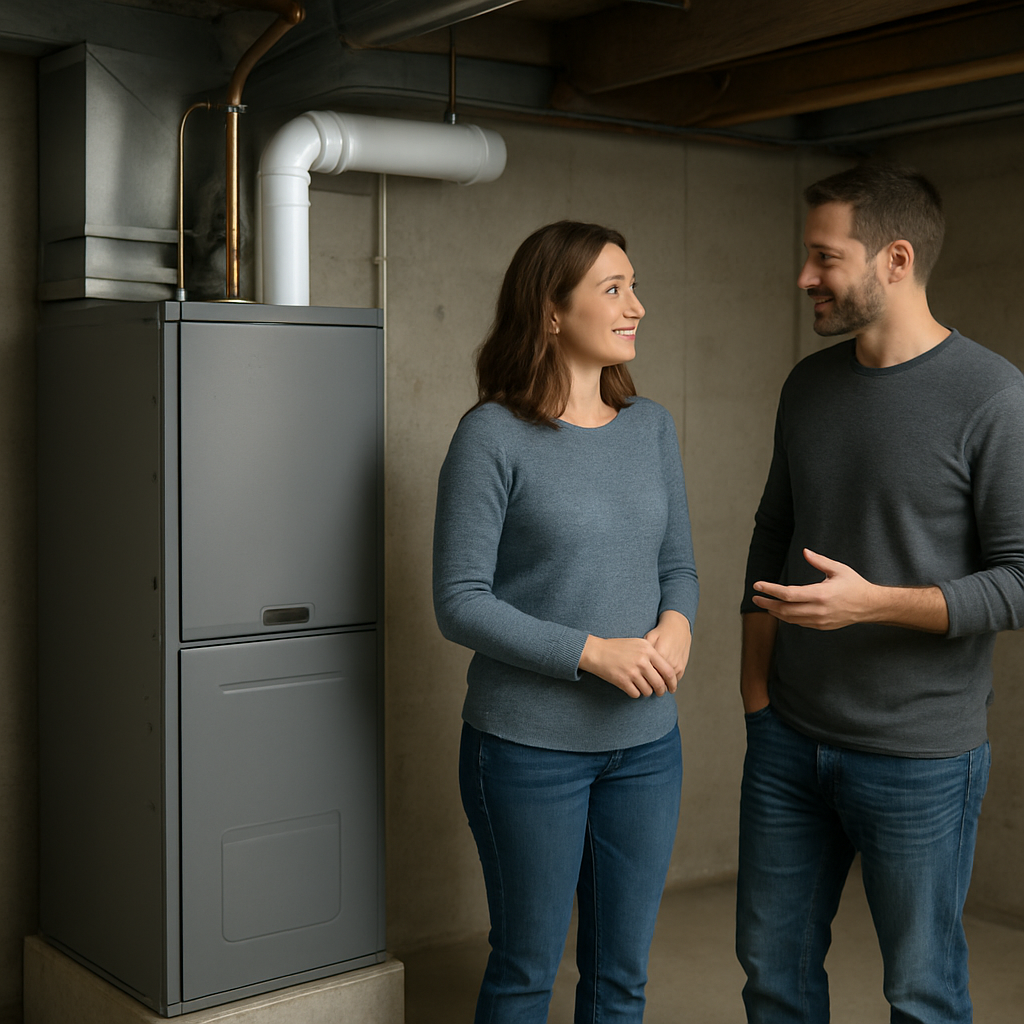
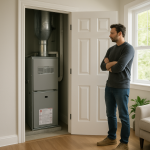
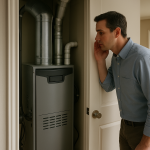
Most furnace noises right after installation come from vibration: the furnace cabinet, vent pipe, or duct connection is touching framing, drywall, or a loose panel and amplifying normal blower and inducer vibration. First action: run a heat call and gently press on panels and nearby vent/duct sections to find what changes the sound. If you hear grinding, metal-on-metal scraping, or smell exhaust, shut it off and call a technician.
Identify the Noise First
If the noise starts during ignition and before the blower comes on, focus on the draft inducer and vent piping. If it starts exactly when the blower starts, focus on duct connection vibration and cabinet mounting. If it only happens on shutdown, look for vent pipe movement, sheet metal popping, or a flue joint that shifts as the inducer stops.
If it is constant while heating, check for a vent pipe or duct that is physically contacting wood, drywall, or the furnace jacket and vibrating the whole cycle. If it is intermittent or worse on windy days, suspect vent termination movement, loose vent supports, or a pressure-related vibration at a poorly supported elbow.
To isolate location, stand near the furnace cabinet first, then follow the vent pipe to where it exits, and finally listen along the supply/return plenum. The loudest point is usually the contact or unsupported span.
What This Noise Usually Means
A newly installed furnace often runs normally but transmits vibration into the house because something in the mounting or venting is rigidly coupled. The inducer motor and blower create steady vibration. If the vent pipe is strapped too tight to framing, is misaligned, or is touching drywall, that vibration becomes a buzz, rattle, or low hum that sounds louder than it should. The same thing happens when the furnace cabinet is not level, sits directly on an uneven surface, or the duct/vent connections preload the cabinet and make panels resonate.
Most Common Causes
Vent pipe touching framing or drywall: buzz or drumming that is loudest where the pipe passes a joist bay or wall penetration; noise changes if you lightly steady the pipe.
Loose or missing vent pipe supports: rattling or ticking that happens when the inducer starts and airflow begins; long horizontal runs shake.
Misaligned vent joints creating a stressed connection: creak or pop during heat-up and cool-down; the pipe looks slightly cocked at an elbow or coupling.
Poorly supported vent termination outside: wind-related flutter or tapping; noise is worse at night or during gusts, sometimes heard indoors near the exit wall.
Furnace not set solidly on the base or pad: low-frequency hum or cabinet buzz; changes when you press on a cabinet corner or the base.
Cabinet panels or burner door not seated after install: metallic rattle during inducer or blower operation; stops when you hold the panel edge.
Duct connection transferring vibration into the plenum: booming or vibration that starts with the blower; strongest at the supply plenum or return drop.
Vent pipe clearance too tight at a hole or thimble: scraping or ticking as the furnace heats and the vent expands; sound comes and goes with temperature changes.
How to Check Safely
Run one heating cycle: set the thermostat to call for heat and note when the sound begins: inducer start, burners, blower start, or shutdown.
Do a panel pressure test: with the furnace running, gently press on the front panels and door edges. If the noise changes, it is likely resonance or a loose panel fit.
Trace the vent pipe by sound: without touching hot surfaces, listen along the vent from the furnace to the wall/roof. Identify the loudest section.
Check for contact points: look for vent pipe or duct metal touching wood, drywall, piping, conduit, or the furnace jacket. Even light contact can amplify vibration.
Look for unsupported spans: long vent runs or elbows should be supported; if you see sagging or a long free span, it can rattle under inducer airflow.
Check cabinet stability: confirm the furnace does not rock when you gently push on opposite corners. Rocking points to an uneven base or mounting issue.
Listen at the outdoor termination: from outside, stand near the vent outlet while the furnace runs. If the sound is louder outside or changes with wind, focus there.
Confirm nearby items are not vibrating: return grille covers, nearby shelving, and utility lines can buzz only when the furnace runs; lightly hold them to see if the sound stops.
Stop and call a technician if you notice exhaust smell, soot, condensation leaking at a vent joint, or any scraping that sounds like metal grinding.
Normal vs A Problem
Normal after installation: a soft whoosh at the vent, a steady low inducer tone, mild airflow noise, and occasional light sheet-metal tick as ducts warm. These should not be loud across the room and should not get worse each day.
A problem: buzzing that you can feel in walls, rattling that starts exactly with inducer or blower operation, repeated popping from a stressed vent joint, or vibration that appears only when wind hits the termination. Also treat it as a problem if the noise is increasing over time, the furnace cabinet is visibly shaking, rooms have reduced airflow, or you notice exhaust odor, condensation at joints, or any breaker trips.
When to Call a Technician
The noise is tied to the vent system and you see any sign of vent joint leakage, staining, moisture, or melted/heat-damaged nearby materials.
The vent pipe has inadequate clearance, is not properly supported, or appears mis-pitched and you cannot correct it safely without disassembly.
The furnace rocks, vibrates heavily, or the cabinet resonance returns immediately after you reseat panels.
Noise is accompanied by exhaust smell, headaches, or the carbon monoxide alarm activates.
You hear scraping, grinding, or a loud metallic rattle that does not change with light panel pressure and persists every cycle.
How to Prevent This Problem
Ensure vent piping is properly supported at recommended intervals and not strapped so tight it transmits vibration into framing.
Maintain proper clearances around vent pipe penetrations so thermal expansion does not cause rubbing or ticking.
Use approved isolation where appropriate between furnace/duct connections to reduce vibration transfer into the plenum.
Confirm all cabinet panels and doors are fully seated and fastened after filter changes and service.
Keep the area around the furnace clear so stored items do not touch the vent or cabinet.
During installation or replacement, verify the furnace sits level and solid on its base or pad before connecting vent and ductwork.
Related HVAC Noise Problems
Rattle only when the blower starts, caused by a loose return drop or filter rack vibrating
Popping or banging in sheet metal ducts during heat-up, caused by duct expansion and tight framing contact
Buzzing that stops when you press the burner door, caused by a loose panel or latch fit
Fluttering at the vent termination during wind, caused by termination movement or poor support
Clicking near the vent elbow on shutdown, caused by vent cooling and shifting at a stressed joint
Low hum heard in a bedroom wall, caused by vent pipe touching framing and transferring vibration
Tapping from a nearby copper line, caused by line contact with the furnace or duct vibrating during operation
Whistling at a return grille after install, caused by increased restriction and airflow noise rather than mechanical failure
Rumbling in the utility room ceiling, caused by an unsupported vent run against joists
Intermittent buzz only on high heat, caused by higher inducer airflow exciting a loose vent strap
Conclusion
Most furnace noise right after installation is vibration transfer from the venting or mounting, not a failing furnace. Use timing to match the sound to inducer or blower operation, then look for contact points and unsupported vent or duct sections. If you see vent leakage, smell exhaust, or hear scraping or grinding, shut the system off and schedule a technician.
Frequently Asked Questions
Why did my furnace get louder after a new installation even though it heats fine?
New equipment can run normally but transmit vibration differently. A vent pipe touching framing, a stressed vent joint, or a cabinet that is not sitting solidly can amplify normal inducer or blower vibration into a noticeable buzz or hum.
Is it safe to run my furnace if the noise seems to come from the vent pipe?
If it is a simple rattle with no exhaust smell, no moisture at joints, and no alarm activation, it is usually a support or contact issue that should be corrected soon. If you smell exhaust, see staining or condensation at vent joints, or the noise is accompanied by symptoms like headaches, shut it off and call a technician.
How can I tell if it is the venting or the blower making the noise?
If the noise begins before the blower starts, during the pre-ignition phase, it points to the inducer and venting. If it begins exactly when air starts coming from vents, it is more likely duct connection vibration or a resonating cabinet tied to blower operation.
Can wind cause furnace vent noise inside the house?
Yes. A loose or poorly supported outdoor termination, or a vent run that is rigidly coupled to framing, can transmit wind-induced movement as tapping, fluttering, or rumbling that you hear indoors near the exit wall or ceiling.
What is the fastest thing I can check without tools?
Run a heat cycle and gently press on the furnace panels and nearby duct/vent sections that are cool enough to touch. If the sound changes immediately, you have a vibration amplification issue, and the next step is identifying the exact contact point or unsupported section for correction.
The point isn’t to make things louder or grander than they are—it’s to notice how neatly the story lines up when you stop fighting it. The frustration fades, and what’s left feels oddly straightforward.
Nothing magically changes overnight, but the air clears. After all that build-up, it turns out the real shift was simply paying attention to what was already there.