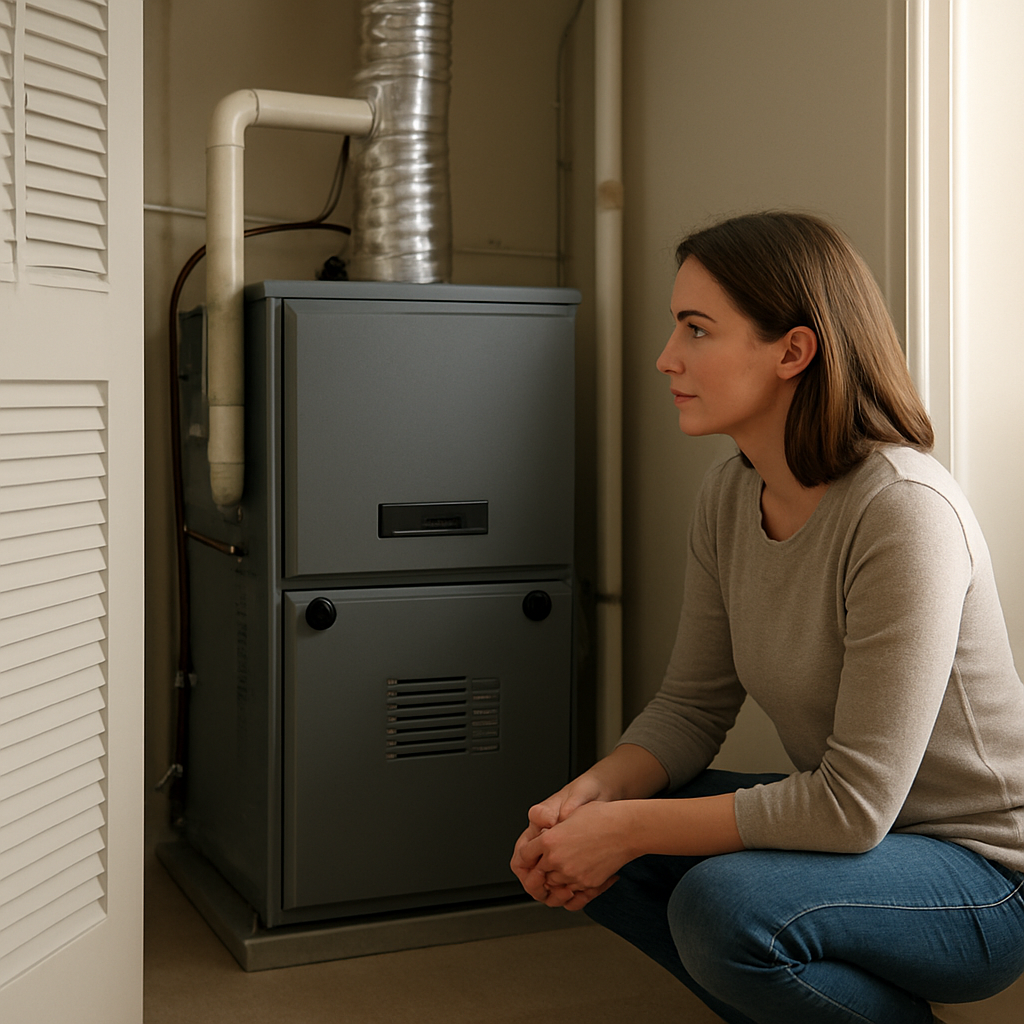
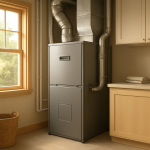
A furnace rattling sound is most often caused by a loose blower housing, loose access panel, or vibrating ductwork transmitting blower vibration into the cabinet. Start by locating whether the rattle begins when the blower starts, then check and snug the blower-door and upper panel screws and look for any panel edges or ducts touching. If you hear scraping or metal-on-metal contact inside the blower area, shut the furnace off and call a technician.
Identify the Noise First
If the rattling starts exactly when the indoor blower turns on and stops shortly after the blower stops, focus on blower housing, cabinet panels, and nearby duct vibration.
If the rattling happens during the startup delay before the blower comes on, it is less likely to be blower housing vibration and more likely a different furnace-stage issue.
If the rattling gets louder as airflow increases (higher fan speed), suspect a loose panel, loose duct section, or a return grille/filter slot vibrating under higher static pressure.
If you only hear it at certain rooms or vents while the furnace runs, suspect a loose register, return grille, or duct panel vibration transferring sound away from the furnace.
To confirm indoor vs outdoor: a furnace rattle is almost always at the indoor unit or ductwork. Stand near the furnace cabinet first, then near the largest return grille; note where it is strongest.
What This Noise Usually Means
The blower assembly creates steady vibration as it spins. When the blower housing, blower mounting rails, cabinet panels, or adjacent duct panels are slightly loose, that normal vibration becomes a rattle as metal edges tap, panels flex, or ducts resonate like a drum. The noise is usually worst at blower start, at higher airflow, or when the cabinet warms and expands, changing clearances. The fix is typically tightening, re-securing, or isolating the vibrating surfaces so they cannot contact each other.
Most Common Causes
Loose blower-door or burner-door panel: Rattle starts with blower airflow and changes if you press on the door or the corner of the cabinet.
Loose cabinet screws or missing fasteners: A buzz-rattle that comes and goes; you may see a panel edge flutter slightly when the blower runs.
Blower housing or mounting bracket slightly loose: Rattle is strongest at the furnace, often at blower start or when the fan ramps up; may reduce if you lightly brace the cabinet side panel.
Ductwork panel vibration near the plenum: Rattle seems to come from the supply plenum or first duct section; noise changes when you touch the duct panel (do not touch hot surfaces).
Return drop or filter rack vibration: Rattle is loud near the return; the filter slot area may buzz, especially with a restrictive filter or closed registers.
Loose return grille, supply register, or damper door: Rattle is localized to one room or grille and changes when the grille is held or slightly repositioned.
Refrigerant line, condensate line, or low-voltage wire touching the cabinet: A light ticking-rattle that matches blower vibration; disappears if the line is gently moved away from contact.
Filter bowed or not seated: A plastic or metallic rattle at the filter door area; may worsen right after a filter change or when airflow is high.
How to Check Safely
Use timing to narrow it down: Set the thermostat to heat and listen for when the rattle starts: at blower start, during steady run, or at shutdown.
Try Fan Only: If your thermostat has a Fan On mode, run the blower without heat. If the rattle still happens, it supports a blower/cabinet/duct vibration issue.
Press test on panels: While the blower is running, gently press on the blower door and nearby cabinet corners. If the sound changes, a loose panel or screw is likely.
Check for obvious loose screws: With the furnace off at the thermostat (and ideally after it stops), snug any loose exterior cabinet screws you can access without opening electrical compartments.
Inspect the filter fit: Confirm the filter is the correct size, fully seated, and the access slot/door is latched. A loose filter door is a common rattle source.
Look for duct contact points: Find any duct panel, takeoff, or return box that touches framing, drywall, or the furnace jacket. Contact points often create rattles under airflow.
Check grilles and registers: Lightly hold the noisy register/grille while the blower runs. If it stops, tighten grille screws or add thin foam gasket behind the grille flange.
Check line contact: Visually confirm condensate tubing, thermostat wire, or nearby piping is not tapping the furnace cabinet. If safe, gently reposition for clearance.
Repeatability test: Cycle the furnace off and on once. A rattle that repeats at the same blower timing usually indicates a consistent vibration point, not a random internal failure.
Stop and call a technician: If the rattle includes scraping, steady metal grinding, or the blower seems to struggle, turn the system off. That can indicate internal blower contact that needs service.
Normal vs A Problem
Usually normal: Soft airflow noise and a mild, steady hum from the blower, with no sharp metal rattle and no change in heating performance.
Needs attention: A distinct metallic rattle that changes when you touch a panel, gets worse over weeks, or appears after a filter change or duct work. These are typical signs of loosening panels, blower mounting, or duct resonance.
Call sooner: Rattle paired with reduced airflow, new overheating shutdowns, burning smell, or a breaker trip. Vibration problems can worsen if a panel is contacting moving parts or if airflow restrictions amplify cabinet flex.
When to Call a Technician
The rattle is loud at the furnace cabinet and does not change after tightening accessible panel screws and confirming doors are properly seated.
You suspect the blower housing or internal mounting is loose but you cannot access it without removing panels beyond normal filter access.
You hear scraping, rhythmic knocking, or any sound that suggests the blower wheel is contacting the housing.
The rattle is accompanied by reduced airflow at vents, frequent limit trips, or the furnace shutting down mid-cycle.
Ductwork is visibly oil-canning or flexing hard when the blower runs, suggesting static pressure or duct support issues that need proper correction.
How to Prevent This Problem
Replace filters on schedule and use the correct size so the filter rack and door close firmly without gaps.
Keep supply registers open and avoid closing many vents, which increases duct pressure and panel vibration.
During routine maintenance, snug exterior cabinet screws and confirm access panels are fully seated and latched.
Add thin foam gasket behind loose return grilles or registers to prevent metal-to-drywall rattles.
Ensure condensate tubing, thermostat wire, and nearby piping have clearance and are secured so they cannot tap the cabinet.
Have duct sections near the plenum properly supported so large flat panels do not resonate when the blower ramps up.
Related HVAC Noise Problems
Rattle only when a specific supply register is open, pointing to a loose damper or register grille.
Buzzing at the return grille that stops when the filter is removed, pointing to filter rack or airflow restriction vibration.
Thumping when the blower starts, often from duct expansion or a loose duct hanger rather than a constant rattle.
Tapping noise that follows the duct run, commonly a duct touching framing and transferring vibration.
Vibration hum that gets louder with higher fan speed, often cabinet resonance vs a failing motor.
Rattle after a service visit, commonly from a panel not fully seated or a missing screw.
Rattle only in one room at night, often a loose grille or vent boot vibrating with cooler, denser airflow.
Light ticking near the furnace that is actually a line or wire contacting the jacket and vibrating.
Pop or bang during heating cycles, usually duct oil-canning rather than a blower housing rattle.
Conclusion
A furnace rattling sound is most often a vibration issue: a loose blower door, cabinet panel, blower housing mount, or nearby duct panel resonating when the blower runs. Use timing to confirm it starts with the blower, then do simple panel, filter-fit, and contact-point checks. If the noise suggests internal blower contact or you cannot stabilize it from the outside, schedule a technician to secure the blower assembly and inspect mounting and clearance.
Frequently Asked Questions
Why does my furnace rattle only when the blower turns on?
That pattern strongly points to vibration transfer from the spinning blower into a loose panel, loose blower housing mount, or a duct panel that resonates under airflow. Focus your checks on access doors, cabinet screws, and the first sections of ductwork near the furnace.
Can a dirty filter cause a rattling sound?
Yes, indirectly. A restrictive or dirty filter increases static pressure, which can make duct panels and cabinet doors flex and rattle. It can also cause a filter to bow and buzz in the rack if it is not seated tightly.
Is it safe to keep running the furnace if it is rattling?
If it is a light panel rattle that stops when you press on the door and there are no performance issues, it is usually not an emergency. If you hear scraping, loud metal-on-metal sounds, or notice reduced airflow or shutdowns, turn it off and call a technician.
What is the easiest fix I can try first?
Confirm the blower door and upper panel are fully seated and snug the accessible screws. Then check the filter is the correct size and the filter door is latched. Finally, hold the nearest return grille or supply register to see if the rattle is coming from the duct end rather than the furnace.
Why is the rattle louder in one room than at the furnace?
Vibration can travel through ductwork and get amplified at a loose register, return grille, or thin duct panel. If holding that grille stops the sound, the fix is usually tightening it or adding a thin foam gasket to stop the grille from vibrating against the wall or ceiling.
The hard part wasn’t the message—it was the waiting. Now the noise feels less persuasive, and the room breathes a little easier.
There’s a calm to having the shape of the solution in place, even if life keeps getting messy. Not dramatic, just steady—like a stubborn itch that finally stops showing up.