Air Purifier Suddenly Loud? Immediate Causes To Check
Quick Answer (Most Likely Cause)
The most common reason an air purifier suddenly gets loud is a sudden airflow restriction that forces the fan to work harder or shifts it to a higher load point: a clogged filter, blocked intake, or filter not seated flat. First step: turn the unit off, remove the filter, and check for packing plastic, heavy dust loading, or a collapsed/shifted filter frame. If you smell burning, feel excessive heat, or the unit repeatedly shuts off, stop using it.
Identify the Noise First
Match the sound to when it happens. Timing isolates whether you are hearing airflow turbulence, vibration transfer, or a fan motor problem.
Gets loud right after a filter change: usually a filter install issue (not seated, wrong filter, plastic wrap left on) causing restriction and turbulence.
Gets loud when you switch to high speed or Auto ramps up: normal to get louder, but a sudden jump typically means restriction or a loose panel now vibrating under higher static pressure.
Suddenly loud at startup then settles: brief fan ramp is normal; loudness that persists points to restriction or a fan rubbing a shroud.
Loud only in one location or after moving the unit: vibration transfer from an uneven floor, a loose intake grille, or the purifier touching a wall/curtain.
Hum with weak airflow at all speeds: restriction is more likely than motor failure; confirm intake/exhaust blockage before suspecting the motor.
Rattle or buzz that changes when you press on the housing: vibration problem first (loose cover, grille, or filter door).
What This Noise Usually Means
A sudden increase in loudness is most often the fan encountering higher resistance and operating in a more turbulent airflow condition. When the filter loads up quickly, shifts out of position, or the intake/exhaust becomes blocked, the fan has to pull harder against static pressure. That changes the sound from smooth airflow to a louder whoosh, flutter, or low-frequency roar. The same restriction can also make normal motor noise seem louder because the housing vibrates more and acts like a speaker.
Less commonly, the noise is true mechanical contact: a filter bowing into the fan path, debris entering the blower, or a fan that has developed imbalance. Diagnose restriction and vibration transfer first because they are quick to verify and far more common than sudden motor failure.
Most Common Causes (Ranked by Probability)
Filter suddenly clogged or loaded (high airflow restriction)
What happens: dust loads the media, airflow drops, static pressure rises, fan turbulence increases.
Sound profile: louder whoosh or roar; sometimes a deeper tone at the same speed.
Clue: weaker airflow at the outlet; Auto mode climbs to higher speed more often; filter looks dark/gray and feels heavy.
Filter not seated flat or installed backwards
What happens: air bypasses and whistles, or the filter edge flutters; some models choke if the gasket is misaligned.
Sound profile: fluttering, chuffing, or a sharp hiss/whistle; may change when you press the filter door.
Clue: noise started immediately after filter service; door feels harder to close; filter frame looks tilted.
Packing plastic, film, or a shipping sheet left on the filter
What happens: airflow is partially blocked, forcing the fan into a high-load condition.
Sound profile: loud rush of air with restricted output; may add a paper-like flutter.
Clue: brand-new filter change followed by sudden loud operation; visible plastic seam or glossy wrap.
Intake or exhaust blocked (curtains, wall, pet bed, lint)
What happens: the purifier recirculates air poorly; fan noise increases because it cannot move air freely.
Sound profile: louder, harsher airflow; can sound like wind buffeting.
Clue: noise improves when you pull the unit 12–24 inches away from walls or lift it off carpet.
Loose housing, filter door, or grille vibrating under higher pressure
What happens: restriction increases internal pressure differences and cabinet vibration, amplifying normal fan noise.
Sound profile: buzzing or rattling that changes when you touch the panel.
Clue: pressing on a corner, grille, or door quiets it; noise is worse on hard floors.
Debris pulled into the blower or fan guard (hair, a leaf, paper)
What happens: turbulence spikes and the fan can tap debris intermittently.
Sound profile: ticking, light scraping, intermittent rattle plus airflow noise.
Clue: started suddenly; outlet airflow may fluctuate; noise follows fan speed changes closely.
Fan imbalance from dust buildup on blades
What happens: uneven mass causes vibration that makes the unit sound much louder even if airflow is normal.
Sound profile: low-frequency hum or vibration; worse at certain speeds.
Clue: purifier vibrates on the floor or table; noise peaks at one setting and is lower above or below it.
Fan motor bearing wear or mounting shift (mechanical wear)
What happens: bearing friction or a shifted mount changes alignment; load increases under restriction.
Sound profile: growl, grind, or persistent rough hum; may not change much with filter removal.
Clue: noise persists after confirming clear airflow and correct filter seating; vibration remains across speeds.
True electrical source hum vs vibration amplifying normal motor noise
What happens: a real electrical hum is typically from motor drive electronics or coils; more often the cabinet is simply amplifying normal motor tone because restriction makes the fan work harder.
Sound profile: true electrical hum is a steady tone (often 50/60 Hz or a constant whine) that does not sound like moving air; amplified motor noise usually increases with airflow load and changes with speed.
Clue: if it is just vibration amplification, pressing on the housing or moving the unit to a softer surface reduces it; true electrical hum is less affected by touching panels and may persist even with the filter removed.
How to Check Safely
Power off and wait for the fan to stop. If there is a burning smell, unusual heat, or the unit is shutting off repeatedly, stop and do not continue running it.
Check for vibration transfer first:
Place the purifier on a level, firm surface.
Make sure it is not touching a wall, furniture, or curtains.
Gently press on the filter door and intake/exhaust grille while running to see if the buzz/rattle changes (do not block airflow).
Eliminate airflow restriction:
Remove the filter and inspect it for heavy loading, collapse, or warping.
Confirm all packaging plastic or protective film is removed from new filters.
Reinstall the filter in the correct orientation; ensure gaskets and edges sit flat and the door fully latches.
Check intake and exhaust openings for lint mats, pet hair, or obstructions and clear them gently with a soft brush or vacuum on the exterior surfaces only.
Quick restriction confirmation test:
Run the unit briefly with the filter removed only if your model allows it and only for diagnosis. If the noise drops sharply and airflow becomes smooth, restriction or filter seating is the issue.
Do not operate long-term without filters, especially in dusty environments.
Check for obvious debris:
Look through the intake grille with a flashlight for visible debris near the fan guard. Remove only loose, accessible debris without disassembly.
Reset the control logic:
Unplug for 5 minutes, then restart. Some units ramp aggressively due to sensor readings after a disturbance; a reset can normalize control behavior once airflow is restored.
Normal Operating Sound vs Warning Signs
✔ Normal fan airflow: smooth whoosh that increases predictably with fan speed; no harsh fluttering; outlet airflow feels steady.
✔ Normal motor tone: steady hum under the airflow sound, changes gradually with speed changes, minimal vibration felt in the housing.
✔ Normal Auto mode behavior: speed increases when the room air is dirty or after stirring dust; noise should reduce once air clears.
✘ Warning: rattling or buzzing that reacts to touching the cabinet: usually a loose panel or fitment made worse by restriction; fix seating and clearances promptly to prevent wear.
✘ Warning: grinding, scraping, or ticking: suggests fan contact, debris in the blower area, or bearing wear. Stop if persistent.
✘ Warning: hum with very low airflow: strong indicator of restriction or a stalled fan. Do not keep running it at high speed.
✘ Warning: overheating smell or electrical smell: stop using immediately and unplug. Do not continue diagnostic running.
✘ Warning: repeated shutdowns or error indications: often tied to overheating from restriction or a failing motor. Stop and proceed to service evaluation.
When Professional Service Is Recommended
Noise stays loud after confirming the filter is correct, unwrapped, properly seated, and airflow paths are clear.
Grinding, scraping, or repeated ticking continues, indicating possible fan contact or bearing failure.
Unit runs hot, smells hot, or shuts off repeatedly, which can indicate overload conditions.
True electrical hum or whine persists regardless of filter removal and cabinet pressure checks, suggesting motor drive or motor issues.
Airflow remains weak even with a known-good filter and clear intake/exhaust.
Any water intrusion into the purifier (spills, leaks, wet filter) followed by new noise or odor requires professional evaluation before further use.
How to Prevent This Problem
Replace or clean pre-filters on schedule so the main filter does not load abruptly and force high fan speeds.
Confirm filter orientation and full seating every time the door is opened; do not force the door closed against a crooked filter.
Remove all packaging from replacement filters before installation.
Maintain clearance: keep intake and exhaust at least 12–24 inches from walls, curtains, and soft furnishings.
Keep the unit on a level surface and avoid placing it on hollow furniture that amplifies vibration.
Vacuum exterior grilles routinely to prevent lint mats that create sudden restrictions.
Move it carefully: after relocation, verify the filter door and grilles are fully latched and the unit is not touching anything.
Related Air Treatment Noise Problems
Loud only on high speed but quiet on low speed
Buzzing right after a filter change
Rattling after moving the purifier to a new room
Humming but no airflow coming out the top/front
Sudden loud whoosh in Auto mode at night
Whistling noise from the side intake
Vibration noise only when placed on hardwood or a desk
Ticking sound that matches fan speed changes
Airflow feels weak and the unit runs hotter than normal
New loudness but the purifier still cleans normally
Conclusion
A sudden loud air purifier is most often reacting to a sudden airflow restriction or a filter seating problem that shifts fan load and increases turbulence and vibration. Check cabinet vibration points first, then confirm intake/exhaust clearance and inspect the filter for blockage, packaging, or misalignment. If there is burning smell, overheating, repeated shutdown, or grinding noises, stop use and move to professional service.
Frequently Asked Questions
Is it safe to run an air purifier if it suddenly got louder?
If the sound is just louder airflow and the unit is not overheating, not smelling hot, and airflow is still present, it is usually safe for short diagnostic operation while you check for restriction and filter fit. If there is burning odor, excessive heat, repeated shutdown, or grinding/scraping, unplug and stop.
Can a dirty filter alone make the purifier sound like it is failing?
Yes. A heavily loaded filter raises static pressure and makes airflow louder and harsher while also amplifying normal motor noise through cabinet vibration. The common giveaway is reduced airflow at the outlet and the unit running higher speeds more often.
What is the quickest way to tell restriction noise from a motor problem?
Confirm the filter is unwrapped and seated correctly, and briefly test with a clean filter or (if allowed) with the filter removed. A major noise drop points to restriction or installation. If the noise stays rough, grinding, or strongly vibrating regardless of airflow checks, suspect fan imbalance or bearing wear.
Should I repair or replace if the fan motor is worn?
For many consumer purifiers, fan motor or control board replacement can approach the cost of a new unit. If the purifier is out of warranty and the noise is confirmed to be bearing-related after airflow and vibration checks, replacement is often more cost-effective. Under warranty, service is appropriate.
How urgent is a new hum that sounds electrical?
Treat it as urgent if it is accompanied by hot smell, heat, or shutdowns. A steady electrical-type hum without heat can still be cabinet vibration amplifying normal motor tone, so verify mounting, panels, and restriction first. If the hum persists with clear airflow and firm housing, schedule service.
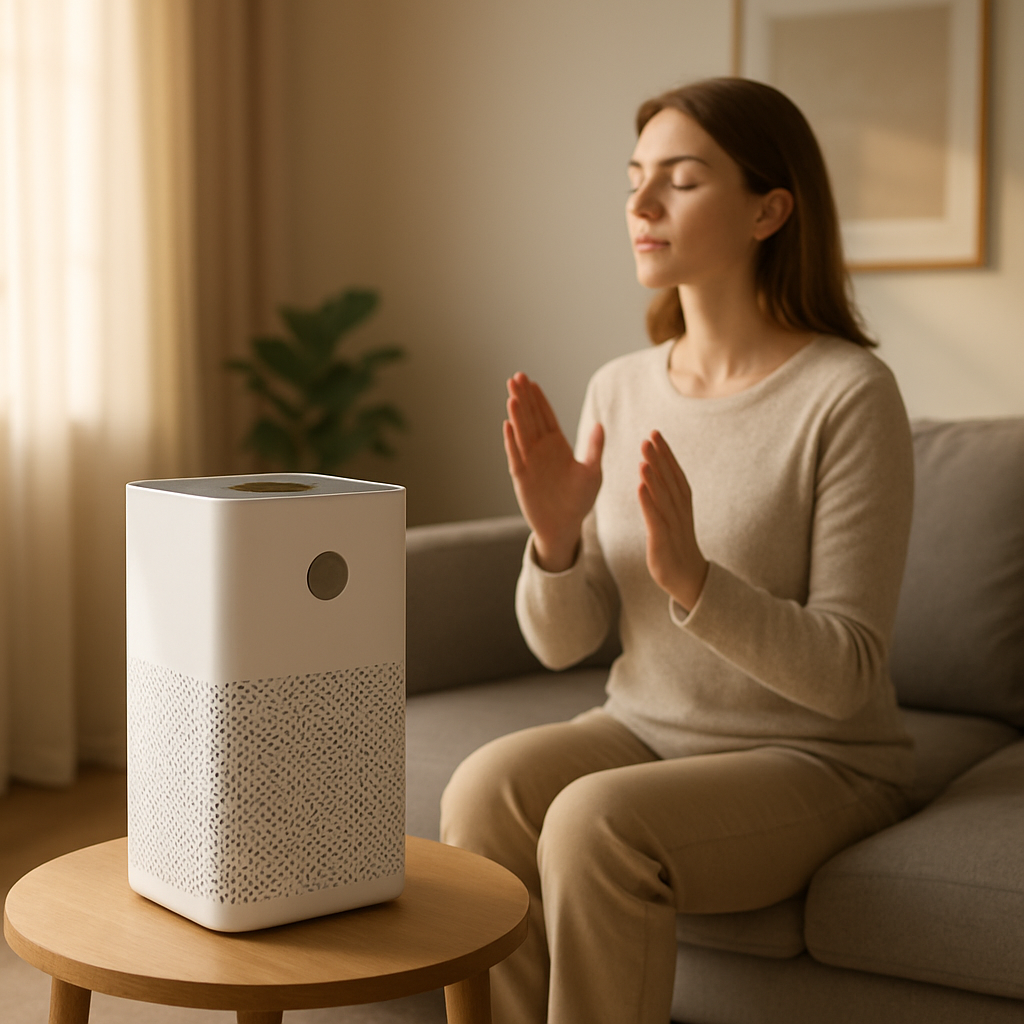
It’s the kind of relief that doesn’t make a big speech—more like your brain finally stops circling the same corner. The noise fades, and the day feels a little more yours again.
When the fix is already on the table, everything else just gets easier. Not glamorous, not dramatic—just cleaner, calmer, and quietly better.