
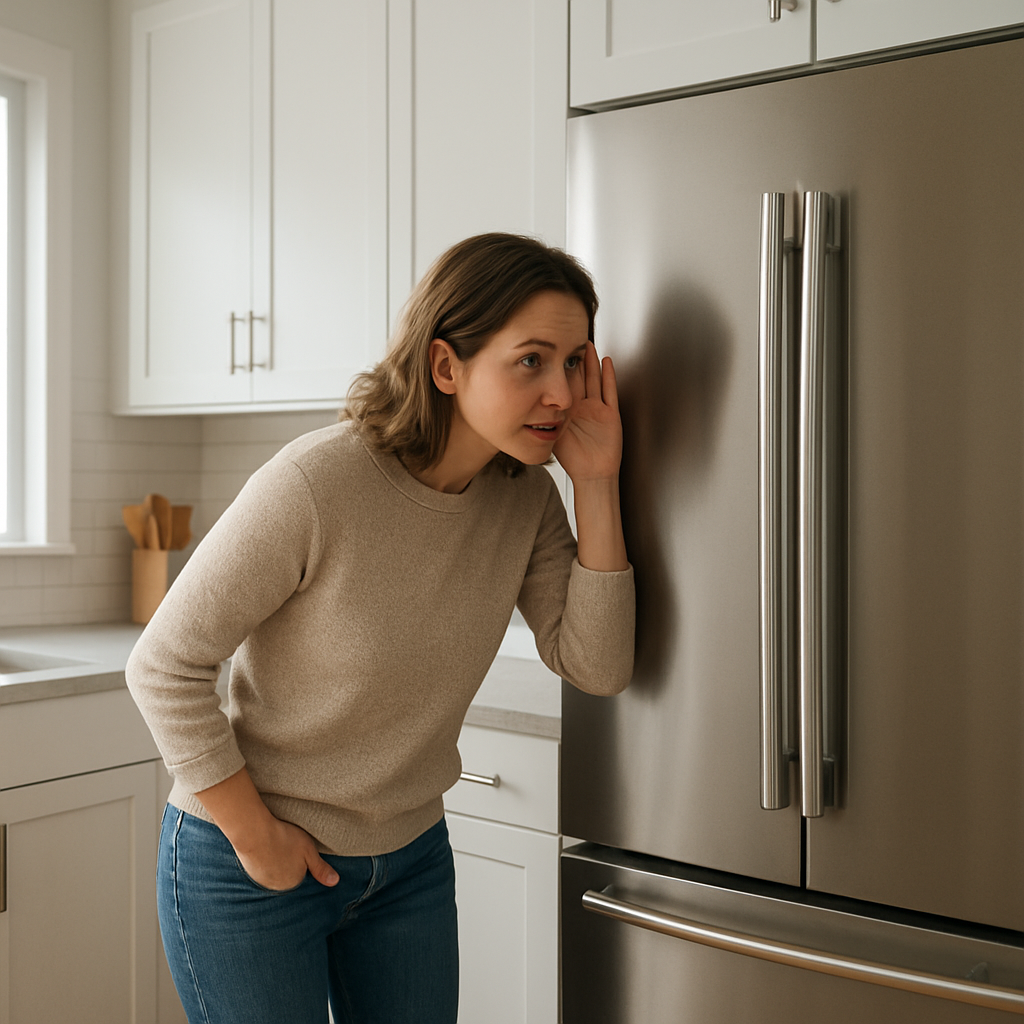
Fridge Noise From Bottom? Common Causes Explained
Quick Answer
If the noise is clearly coming from the lower rear or bottom kickplate area, the most common cause is a condenser fan hitting dust buildup, a wire, or a shifted shroud. First action: pull the fridge slightly forward, confirm it is not touching the wall, then listen at the bottom rear while the compressor is running to see if the sound matches a fan rattle or scrape.
Identify the Noise First
Use this quick timing guide to pinpoint the bottom-compartment source.
- If the noise happens exactly when the compressor starts: suspect a brief compressor start hum, a relay click, or the condenser fan starting up with a rattle.
- If the noise continues while the compressor is running: suspect condenser fan noise, vibration against the floor/wall, or a compressor mount issue.
- If the noise happens right after the compressor stops: suspect refrigerant equalizing (a short hiss/gurgle) or the unit settling and tapping from vibration.
- If the noise appears during defrost or shortly after: many models run the compressor off and shed water onto the drain pan; listen for sizzling/dripping into the pan near the bottom rear.
- If the noise happens when the ice maker runs or fills (if equipped): a brief water valve buzz may be heard low and rear, even though the ice maker is in the freezer.
- If the noise happens when the evaporator fan is running (freezer side): it will usually be louder inside the freezer, not at the bottom rear; opening the freezer door often changes the sound.
- If the noise is loudest at the rear/bottom and changes with the back cover area: this points strongly to the condenser fan or something vibrating in the machine compartment.
- If it is constant: constant grinding or scraping from the bottom is not normal; constant low hum may be normal if the compressor is running steadily.
- If it is intermittent: most bottom noises are cycle-related (fan/compressor starting and stopping).
- If it is louder at night: normal household background noise drops at night, so mild hums and fan sounds seem louder; new rattles still indicate a fitment or airflow issue.
Quick confirmation test: if the sound is much louder when you crouch behind the fridge near the lower rear panel (or front toe-kick on some models), you are dealing with the lower mechanical compartment, not the freezer evaporator area.
What This Noise Usually Means
Bottom-compartment mechanical noise typically comes from moving parts and vibration in the machine area: the compressor, the condenser fan (if equipped), and anything mounted near them such as the fan shroud, lower rear cover, drain pan, and tubing. These parts can transmit vibration into the cabinet base and floor, turning a small buzz into a noticeable rattle. When the noise tracks compressor run time, that is a strong clue the source is either the condenser fan airflow path or the compressor and its mounts.
Most Common Causes
- Condenser fan rubbing or rattling: a scraping, ticking, or growling from the bottom rear that appears only when the compressor is running. Often caused by lint buildup, a shifted wire, or a loose fan shroud.
- Lower rear cover or toe-kick vibrating: a buzzing or fluttering sound that changes when you lightly press on the panel area. Usually worsens when the compressor is running.
- Fridge touching the wall or cabinet: a low vibration, buzzing, or knocking that stops or changes when you pull the unit forward an inch or two.
- Drain pan vibrating or water dripping into it: a plastic rattle near the bottom rear, or a brief sizzling/dripping sound during/after defrost. A pan that is not seated can buzz loudly.
- Compressor mounting grommets or bracket issues: deeper, heavier vibration or knocking that follows compressor operation and may be felt through the floor. More common as units age or after the fridge has been moved.
- Ice maker water inlet valve buzzing (sound seems low/rear even though the ice maker is in the freezer): a 5–10 second buzz during fill cycles. Abnormally loud buzzing can indicate a restricted water supply or a failing valve.
- Sealed-system flow noises amplified at the base: brief gurgle/hiss after shutdown can sound like it comes from the bottom because lines run through the machine compartment. Normal unless coupled with performance issues.
How to Check Safely
These checks keep you in low-risk territory. Do not remove covers that require tools unless you are comfortable and the manufacturer instructions allow it.
- Step 1: Confirm location
- Listen at the bottom front (toe-kick) and bottom rear. Identify where it is clearly loudest.
- Step 2: Match the noise to a cycle
- Note whether it happens at start, during steady running, or at shutdown.
- If it is intermittent, write down times and what the fridge was doing (cooling heavily after door openings, ice maker filling, etc.).
- Step 3: Check for contact vibrations
- Pull the fridge straight out enough to clear the wall by 1–2 inches.
- Make sure the water line (if present) and power cord are not tapping the back panel.
- Verify the fridge is not touching adjacent cabinets.
- Step 4: Level and stabilize
- Check that the fridge does not rock. If it rocks, adjust the front leveling feet until stable.
- Aim for slight tilt back so the doors self-close and the cabinet sits firmly without wobble.
- Step 5: Simple panel vibration check
- While the noise is happening, lightly press on the lower rear cover area or toe-kick grille (no force). If the sound changes or stops, you have a vibration/fitment issue.
- Step 6: Clean accessible airflow areas
- Unplug the fridge.
- Vacuum the front toe-kick grille (if present) and the floor area under the unit where dust collects.
- If your model has an exposed condenser coil accessible from the front/bottom, clean it gently with a coil brush and vacuum. Do not bend fins.
- Step 7: Door test to separate bottom vs freezer noises
- Open the freezer door while the noise is happening. If the sound changes noticeably, the evaporator fan may be involved instead of the bottom compartment.
- If the sound stays the same and still seems loudest at the rear/bottom, keep focus on the machine compartment.
- Step 8: Ice maker fill confirmation
- If you have an ice maker, listen for a short buzz and water sound at the back shortly after ice harvest. If the buzz is very loud or lasts longer than about 10 seconds, consider a water supply restriction or valve issue.
Stop and call a technician if you smell electrical burning, hear repeated clicking with failed starts, or the unit is warming while the noise is occurring.
When This Is Normal vs A Problem
Usually normal in the bottom compartment:
- Low steady hum while running, especially on newer or high-efficiency units.
- Brief click at start/stop and a short whoosh of airflow near the bottom rear.
- Occasional gurgle or hiss for a few seconds after the compressor stops.
- Light dripping/sizzling into the drain pan during or shortly after defrost.
Usually a problem worth addressing:
- New rattling, ticking, or grinding from the bottom rear that was not there before.
- Scraping or growling that lasts the entire time the compressor runs.
- Buzzing that stops when you pull the fridge away from the wall or press on the lower panel.
- Repeated clicking every few minutes with the compressor failing to stay running.
- Buzzer-like sound during ice maker fill that becomes louder over time or lasts unusually long.
- Any bottom noise accompanied by rising temperatures, water leaks at the rear, or a hot burning smell.
When to Call a Technician
- Repeated start attempts: click, buzz/hum, then shutoff repeating, especially with warming temperatures. This can indicate a compressor start device issue or compressor problem.
- Persistent fan scraping from the bottom rear after basic cleaning and ensuring the unit is not touching anything. A failing condenser fan motor or damaged blade may be involved.
- Loud vibration or knocking that can be felt through the floor and does not change with leveling or cabinet clearance. Compressor mounts or internal compressor wear may be the cause.
- Electrical smell, scorch marks, or breaker trips: stop using the appliance and schedule service.
- Noise plus poor cooling: bottom-compartment airflow and sealed-system issues can overlap; a technician can verify compressor operation, fan operation, and heat rejection safely.
How to Prevent This Problem
- Keep clearance: maintain space behind and above the fridge per the manual so the machine compartment can breathe without vibrating against surfaces.
- Clean the condenser area regularly: vacuum the toe-kick and accessible coils every 6–12 months (more often with pets). Reduced airflow can make the condenser fan louder and increase vibration.
- Level the cabinet: a stable, non-rocking base prevents panels and the drain pan from buzzing.
- Secure common rattle sources: keep the power cord and water line from tapping the back of the unit; avoid letting them drape against panels.
- Use reasonable temperature settings: extreme settings can increase run time and make normal bottom noises more noticeable.
- Ice maker care: replace clogged water filters on schedule and ensure the shutoff valve is fully open to reduce valve buzz during fills.
- Avoid blocking vents: overpacking can increase run time and amplify lower-compartment noises from longer compressor/fan operation.
Related Refrigerator Noise Problems
- Rattling noise from the back of the fridge when the compressor runs
- Buzzing from the bottom rear for 5–10 seconds during ice maker fill
- Clicking from the lower rear every few minutes and the fridge not cooling
- Humming that gets louder at night but cooling remains normal
- Grinding sound from the back bottom that stops when the fridge is pulled forward
- Plastic vibrating noise near the drain pan after defrost
- Fan-like whirring from the bottom that comes and goes with compressor cycles
- Knocking or tapping from the base when the compressor shuts off
- Vibration noise after moving the fridge to clean behind it
- Water dripping sound at the bottom rear during defrost with no leak visible
Conclusion
A noise from the bottom of the fridge is usually a condenser fan rattle, a vibrating panel, or cabinet contact that shows up during compressor run time. Start by confirming the timing, pulling the unit slightly away from the wall, stabilizing it, and cleaning accessible dust buildup. If the noise persists with poor cooling, repeated clicking, or a strong electrical odor, schedule service for the lower mechanical compartment.
Frequently Asked Questions
Why does my fridge make a rattling noise from the bottom only when it is running?
That pattern most often points to the condenser fan area or a panel/drain pan vibrating from compressor and fan vibration. Check that the fridge is not touching the wall, the unit is level, and the toe-kick/lower rear cover is secure. If you can change the noise by lightly pressing on a lower panel, it is typically a vibration issue rather than an internal cooling failure.
Is a gurgling sound from the bottom after the compressor stops normal?
Yes, a short gurgle/hiss right after shutdown is commonly refrigerant equalizing in tubing routed through the machine compartment. It becomes concerning if it is new and paired with poor cooling, repeated clicking, or the compressor struggling to start.
Why is my fridge buzzing from the bottom for a few seconds and then stopping?
If you have an ice maker, that short buzz is often the water inlet valve energizing during a fill. If the buzz is loud or lasts longer than about 10 seconds, check for a partially closed shutoff valve, a kinked water line, or an overdue filter. If the buzz happens repeatedly with no ice production, a technician may need to test the valve and ice maker controls.
What if the bottom noise stops when I pull the fridge away from the wall?
That strongly indicates vibration transfer: the cabinet, tubing, cord, or water line is tapping the wall or another surface. Leave proper clearance, route the cord and water line so they do not touch the back panel, and recheck leveling to reduce vibration.
Should I unplug the fridge if I hear grinding from the bottom rear?
If it is a steady grinding or scraping that continues during operation, unplugging is a safe move until you can confirm it is not a fan blade hitting something. If temperatures are rising, the unit cycles off on overload, or you notice any electrical smell, keep it unplugged and call a technician.
What’s striking is how quickly the noise fades when the point is finally clear. The right choice starts feeling less like a decision and more like the way things were supposed to work all along.
There’s no dramatic finale—just the kind of quiet relief that shows up in the small moments. A little less friction, a little more breathing room, and you can get on with the rest of your day.