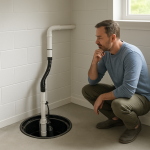
Sump Pump Making Loud Noise? Top Causes & Fast Fix Guide
Quick Answer (Most Likely Cause)
The most common reason a sump pump suddenly gets loud is vibration transferring into the discharge pipe or a loose pump base, turning normal motor and water flow vibration into a loud rattling or banging. First action: while the pump runs, lightly steady the discharge pipe and check for contact with joists, drywall, or the pit rim. If the pump is not moving water, runs continuously, or the pit is rising toward overflow, stop troubleshooting and call a technician.
Identify the Noise First
Loud at startup (first 1–3 seconds): pipe jumps, check valve snaps, pump shifts on the pit floor.
Loud only during heavy rain or high inflow: higher flow makes the discharge line shake more; pipe contact points start buzzing or rattling.
Continuous run gets louder over time: vibration builds as the pipe warms, shifts, or the pump walks on the bottom of the pit.
Humming but not pumping: electrical hum may be normal motor hum amplified by the pipe, or the motor is energized but the impeller cannot turn.
Noise started right after installation or plumbing work: discharge line alignment, missing isolation, or pipe strapped too tight to framing.
Single loud thunk when shutting off: check valve closing and the discharge line snapping against a clamp or framing.
What This Noise Usually Means
Most loud sump pump complaints are not the motor being bad. The pump produces normal vibration from the motor and moving water, but the discharge pipe and mounting transmit and amplify it like a speaker. A rigid PVC line tight to joists, a loose clamp, or a pump that is not sitting flat can convert mild vibration into harsh rattling, buzzing, or banging. This also makes normal electrical motor hum sound much louder, even when the electrical components are working correctly.
Most Common Causes (Ranked by Probability)
Discharge pipe contacting framing, pit rim, or wall
What happens: vibration travels up the pipe and hits wood, concrete, or drywall, creating an impact buzz.
Sound profile: rattling, buzzing, rapid knocking that changes when you touch the pipe.
Clue: noise reduces immediately if you steady the pipe by hand or wedge a temporary shim.
Loose or missing pipe supports, clamps, or isolators
What happens: the pipe oscillates with each pump pulse and whips slightly at elbows and couplings.
Sound profile: tapping against joists, clacking at fittings, drumming through the floor.
Clue: visible shaking, especially at 90-degree elbows and near the check valve.
Pump not sitting flat on the pit bottom (rocking or walking)
What happens: torque at startup twists the pump; vibration transfers into the basin and pipe.
Sound profile: low rattly growl, thumping, or a brief bang at startup.
Clue: pump shifts position over days; discharge joint looks stressed or slightly misaligned.
Check valve slam or water hammer transmitted through rigid piping
What happens: when the pump stops, water reverses slightly and the check valve closes hard; the line snaps against supports.
Sound profile: single loud thunk or bang at shutoff, sometimes followed by a rattle.
Clue: noise is strongest right when the pump shuts off and is worse with long vertical runs.
Debris in the basin causing intermittent impeller contact (sediment/obstruction)
What happens: stones, sludge, or a zip tie hits the impeller or jams under the volute, increasing vibration that transfers to the pipe.
Sound profile: grinding, ticking, or harsh rattling that comes and goes.
Clue: water appears dirty, basin has gravel, noise changes as water level drops.
Load-related strain from restricted discharge line (ice, blockage, crushed hose, stuck flap)
What happens: pump works against higher head pressure; vibration rises and the pipe shakes harder.
Sound profile: louder-than-normal hum and vibration, sometimes surging.
True electrical source hum (motor, capacitor, relay) versus amplified hum
What happens: a motor can hum normally under load; a failing start component can cause a stronger electrical hum while not spinning. Separately, a healthy motor can sound loud when the discharge pipe resonates.
Sound profile: steady 60 Hz-like hum; if not pumping, hum may be louder and the pump may trip overload.
Clue: if you steady the pipe and the hum drops a lot, it is mainly vibration amplification. If the pump hums but does not move water and gets hot, treat it as a functional failure.
What happens: worn bearings or a damaged impeller create imbalance; that vibration then transfers into the pipe and basin.
Sound profile: rough growl, metallic grinding, persistent vibration even when the pipe is isolated.
Clue: noise persists after stabilizing the pipe and clearing obvious discharge restrictions; performance may be reduced.
How to Check Safely
Do a quick safety check first: if water is rising and not being pumped out, or the pump repeatedly trips a breaker/GFCI, stop and call for service. Do not keep resetting a tripping circuit.
Listening test while running: stand by the pit and identify whether the loudest point is the pump body, the check valve area, or where the discharge pipe touches framing.
Pipe contact check: while the pump runs, lightly steady the discharge pipe with one hand (do not put fingers near the basin opening or moving parts). If the noise drops sharply, you have a vibration transfer problem more than a motor problem.
Look for hard contact points: inspect the discharge line for tight holes through joists, pipe resting on the pit rim, or fittings touching the wall. Any direct contact can transmit noise into the structure.
Check supports: confirm the pipe is strapped securely but not so tight it cannot absorb vibration. Loose straps cause rattling; overtight straps can transmit vibration into framing.
Check the pump position: with power unplugged, verify the pump sits flat and stable. A pump perched on debris or a sloped pit bottom will rock and vibrate.
Inspect the basin for debris and sludge: with power unplugged, use a flashlight to look for gravel, broken plastic, or heavy silt around the pump base. If present, remove loose debris you can reach safely without dismantling the pump.
Discharge flow check: during a cycle, confirm strong steady flow at the discharge point outside. Weak flow paired with loud vibration points to restriction and load strain.
Check valve observation: listen for a sharp slap at shutoff. If the noise is only at shutoff, focus on check valve type, placement, and how the pipe is secured around it.
Normal Operating Sound vs Warning Signs
Normal: smooth motor sound with mild vibration; brief startup surge; water rushing in the pipe; one soft check valve close at shutoff.
Normal but needs minor correction: buzzing or rattling that stops when you steady the pipe, especially after recent installation or plumbing changes.
Warning: vibration damaging piping: visible pipe shaking, banging against framing, stress at couplings, or recurring loosening of fittings.
Warning: sediment/obstruction: grinding, ticking, or intermittent rattling paired with dirty water and reduced pumping rate.
Warning: cavitation or inlet disturbance: harsh crackling/growling with surging flow, often during very high inflow or low water over the intake.
Warning: motor strain: louder hum with slow pumping, longer run times, or the pump body getting unusually warm.
Warning: overheating or electrical issue: humming without pumping, repeated thermal shutdowns, burning odor, or GFCI/breaker trips.
Failure to pump: pit level rises during operation or the pump runs continuously without lowering the water level.
When Professional Service Is Recommended
Pump hums but does not pump, even after checking for obvious discharge blockage and confirming the float is free.
Breaker or GFCI trips, or the pump repeatedly needs reset. This is an electrical fault or overload condition that needs proper testing.
Persistent loud rumbling or grinding that does not change when the pipe is stabilized and contact points are corrected.
Repeated check valve banging that cannot be resolved with proper pipe support and alignment.
Water is not evacuating fast enough during storms or inflow events, or the pump runs nearly continuously.
Visible leaks at the check valve, unions, or discharge piping, especially if vibration is stressing joints.
Vibration is damaging the structure: cracked fittings, wall/floor resonating loudly, or movement at penetrations through framing.
How to Prevent This Problem
Support the discharge line correctly: strap vertical and horizontal runs so the pipe cannot whip, especially near elbows and the check valve.
Eliminate hard contact points: keep the pipe from touching joists, studs, and the pit rim; allow clearance at penetrations.
Add vibration isolation where appropriate: use proper fittings and alignment so the pipe is not forced into position and preloaded with stress.
Keep the basin clean: remove gravel and heavy silt periodically to reduce impeller contact and vibration.
Confirm proper discharge routing: avoid kinks, crushed sections, and sagging that can trap water and increase load.
Seasonal discharge check: before freezing weather, verify the exterior discharge is not blocked and the line drains as designed.
Annual functional test: run the pump, confirm strong flow outside, and listen for new vibration points as the home settles.
Related Water & Pump Noise Problems
Sump pump hums but does not discharge water: differentiate amplified hum from a non-starting motor or jammed impeller.
Loud sump pump during a storm only: high flow increases pipe vibration and reveals loose supports.
Pump short cycling with clicking noises: float or check valve issues can cause rapid cycling and repeated pipe movement.
Noise started after sump pump replacement: discharge alignment and missing isolation often cause new vibration transfer.
Check valve thump at shutoff: pipe support and valve selection/placement affect slam noise.
Discharge pipe rattles inside a wall: hidden contact at studs can amplify vibration into living spaces.
Water heater popping after years of use: sediment-related boiling pops, a different mechanism than sump vibration transfer.
Water heater ticking after heating: normal expansion ticks that can transfer through rigid piping supports.
Pipe banging near a heater or pump line: loose pipe supports can cause structure-borne noise.
Basement drain gurgle when pump runs: discharge turbulence or check valve action can transmit sound through piping.
Conclusion
Most loud sump pump noise is structure-borne vibration: the discharge pipe or pump base is transferring normal operating vibration into the home. The next safe step is a running listening test and a pipe-contact check to confirm whether stabilizing the discharge line reduces the noise. If the pump is not evacuating water, is overheating, or is tripping electrical protection, stop and schedule professional service.
Frequently Asked Questions
Is a loud sump pump dangerous to keep running?
If the noise is strictly vibration transfer and the pump is moving water normally, it is usually not immediately dangerous, but it can loosen fittings and cause leaks over time. If the pump is not pumping, is cycling abnormally, smells hot, or trips a breaker/GFCI, stop using it and get service.
What is the fastest temporary way to quiet a vibrating discharge pipe?
Confirm the pipe is not touching framing, then add temporary clearance by repositioning the pipe slightly and padding the contact point. A proper fix is adding correctly placed pipe supports and eliminating forced alignment so vibration is not driven into the structure.
How can I tell true electrical hum from vibration making it sound electrical?
Steady the discharge pipe while the pump runs. If the hum gets much quieter, the electrical hum was being amplified by the pipe and framing. If the pump hums loudly but does not move water, heats up, or shuts off on overload, treat it as a true electrical or mechanical starting problem and call a technician.
What should I expect to pay to fix a loud sump pump noise problem?
Simple vibration-transfer corrections like adding supports, correcting pipe contact, or replacing a noisy check valve are typically a lower-cost service visit. If diagnostics point to a restricted discharge line, impeller obstruction, or internal wear requiring pump replacement, costs rise accordingly due to parts and labor.
Should I repair or replace a loud sump pump?
If the pump is evacuating water properly and the noise clearly changes when you stabilize the discharge pipe, focus on repair of supports, alignment, and check valve noise first. Replace the pump when noise persists after vibration and restriction checks, performance is reduced, or the unit hums without pumping, overheats, or trips electrical protection.
What’s left is mostly noise—paperwork energy, the kind that makes you wonder why we even bother. The heavy lifting has already been done, and the rest feels like walking the last block after a long day.
Some issues hang around like bad weather; this one doesn’t. There’s a quiet steadiness to it, the sort you notice when you finally get your attention back.