Water Heater Making Loud Noise? 7 Fast Causes & When To Worry
Quick Answer (Most Likely Cause)
The most common reason a water heater suddenly gets loud is vibration transfer through the connected piping or a mounting surface that is now acting like a speaker. The fastest diagnostic is to listen at the tank jacket versus the hot and cold pipes and gently steady the pipes to see if the sound changes. If the heater is leaking, overheating, or the T&P relief valve is discharging, stop using it and call a technician.
Identify the Noise First
Pin down when the noise happens. Timing is the quickest way to separate pipe vibration from internal sediment disturbance.
Only during a heating cycle: noise starts a minute or two after burner/element operation begins, then fades as it satisfies demand.
Right at burner/element start: sharp buzz, brief vibration, or a quick rattle when heating kicks on.
Popping or crackling: irregular snaps, often after the heater has been running for a bit.
Rumbling or low growl: steady rolling sound during longer heating periods, often worse on heavy hot-water use days.
Buzzing or humming: can be true electrical hum or vibration amplifying normal hum; note if it changes when you touch/steady nearby piping.
Constant vs intermittent: constant points to vibration transfer, fan/inducer (if present), or electrical hum; intermittent points to sediment disturbance during specific heating events.
New vs long-standing: new noise after plumbing work, water pressure changes, or a replacement often indicates mounting/pipe support issues; long-standing worsening noise often indicates sediment layer growth.
What This Noise Usually Means
Most loud water heater noises come from one of two field-proven mechanisms: vibration being transmitted and amplified by rigid plumbing, or sediment at the bottom of the tank being disturbed during heating.
Vibration transfer through pipes or mounting: the heater, burner assembly, element area, or circulating water movement creates normal vibration. If the hot/cold lines are tightly strapped to framing, touching drywall, or rigidly connected without isolation, that normal vibration becomes a loud rattle, buzzing, or drumming noise in the house structure.
Internal tank sediment disturbance: minerals settle and form a layer. During heating, the bottom area overheats relative to the water above, creating steam bubbles that release through the sediment. That release makes popping and rumbling. It is not the same as expansion ticks and it typically gets worse over time.
Electrical sounds must be separated into a true electrical source versus vibration amplifying normal electrical hum. A heating element or contactor can hum electrically, but loose panels and hard piping can turn that mild hum into a loud vibration.
Most Common Causes (Ranked by Probability)
1) Hot or cold pipe vibration against framing or drywall
What happens: rigid pipe contact transfers vibration from the heater into wood/metal framing, creating a loud resonant rattle.
Sound profile: buzzing, rattling, or drumming that seems louder away from the heater (in a wall or floor).
Clue: noise changes immediately if you lightly steady the pipe or if you press near the wall penetration.
2) Loose pipe straps, unsupported runs, or tight strapping
What happens: pipes either bounce (too loose) or transmit vibration (too rigid). Both can amplify normal heater vibration.
Sound profile: rhythmic tapping or vibration, often worst when hot water is flowing and the heater is firing.
Clue: you can feel vibration with your fingertips along the first few feet of hot outlet pipe.
3) Sediment layer causing popping during heating
What happens: sediment insulates the tank bottom; water flashes into steam pockets and releases through the mineral layer.
Sound profile: popping, crackling, or sharp snaps, usually beginning after the heater has been heating a short time.
Clue: noise is strongest during long recoveries (after showers/laundry) and reduces when demand is low.
4) Sediment causing rumbling and longer recovery strain
What happens: thick sediment makes heating inefficient, prolonging firing time and increasing turbulence and vibration.
Sound profile: low rumble or rolling growl during heating, sometimes with occasional pops.
Clue: hot water seems to run out sooner or recovery feels slower than it used to.
5) Thermal expansion and contraction transferring as ticks through rigid piping
What happens: as pipes heat and expand, they bind at tight holes/straps and then release, making ticks that echo.
Sound profile: ticking or light clicking, usually early in a heating cycle and again as it cools.
Clue: noise is brief and not accompanied by rumbling; it often tracks with hot water draw and cool-down.
6) True electrical hum from element/contactor versus amplified hum
What happens: electrical components can produce a steady 60 Hz hum; if the cover panel is loose or piping is rigid, that hum becomes louder due to vibration amplification.
Sound profile: consistent humming/buzzing during element operation; may stop when heating stops.
Clue: hum is strongest at the access panel; if pressing the panel or nearby pipe changes volume, amplification is a major factor.
7) Internal mechanical wear or burner/assembly vibration (after other causes ruled out)
What happens: components can loosen over time, creating vibration that then transfers into piping and structure.
Sound profile: persistent vibration or rattle that is localized to the heater body and repeats with every heating call.
Clue: the noise remains even when you isolate nearby pipe movement and it is clearly coming from the unit’s base or jacket.
How to Check Safely
These checks stay homeowner-safe and focus on confirming vibration transfer versus sediment disturbance. Stop and call for service if you see leaking, smell gas, see scorch marks, hear boiling, or the heater trips a breaker.
Listen at three points
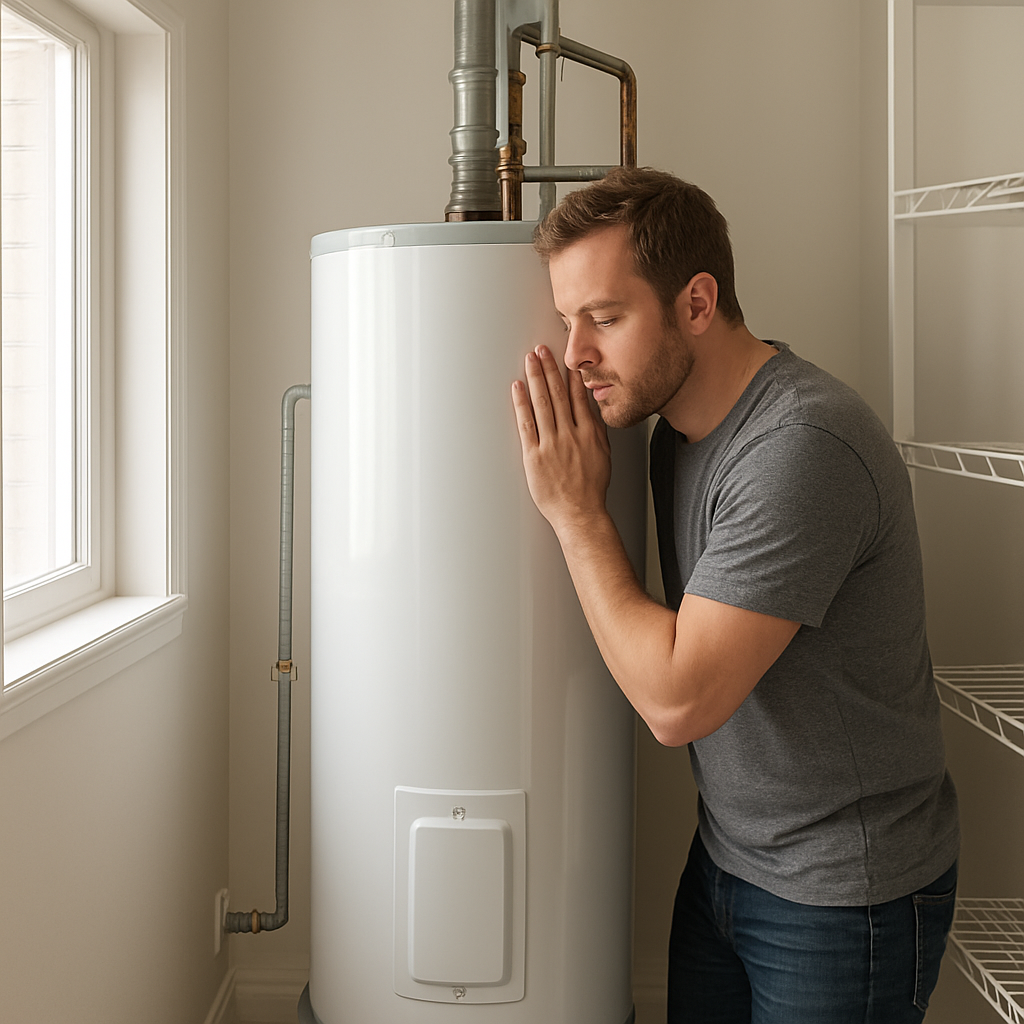
Tank jacket: put your ear near the tank body to see if the noise is internal.
Hot outlet pipe: listen on the first 2–6 feet of piping above the heater.
Nearby wall/floor: if it is louder in the structure than at the tank, vibration transfer is likely.
Do a gentle pipe steady test
How: with one hand, lightly hold the hot or cold line near the heater (do not touch venting or hot surfaces).
Result: if the sound changes significantly, you are dealing with vibration transfer and/or pipe contact.
Check for visible contact points
Pipe touching drywall, studs, ceiling joists, metal duct, or another pipe.
Very tight straps that clamp copper/PEX hard to framing.
Water lines acting as a bridge between the heater and the building.
Confirm the timing with a heating call
Run hot water for 2–3 minutes, stop, then listen for the heater to start heating.
Popping that ramps up after heating begins points to sediment disturbance.
Immediate buzzing/rattle that starts exactly with the call often points to vibration transfer or electrical hum.
Perform a basic sediment flush only if you can do it without forcing valves
How: turn the heater to OFF (or lowest setting). Let water cool if it is very hot. Connect a hose to the drain valve and run it to a suitable drain. Open a hot faucet to prevent vacuum, then open the drain valve and briefly flush until water runs clearer.
Stop conditions: if the drain valve will not open easily, if it leaks after touching it, or if flow is blocked and you cannot restore normal operation, stop and schedule service.
Interpretation: heavy grit and cloudy discharge supports sediment as a primary cause of popping/rumbling.
Electrical noise screening without removing covers
If the hum is loudest at an electrical access area but changes when you steady pipes or press on the exterior panel, vibration amplification is likely.
If the hum is strong, steady, and unaffected by touching piping, a true electrical source is more likely and should be evaluated by a technician.
Normal Operating Sound vs Warning Signs
✔ Normal: light ticking as pipes heat and cool, especially after a hot water draw.
✔ Normal: brief soft whoosh at burner start or a mild hum during heating that stays low and does not travel through the house.
Warning: sediment buildup: popping/crackling that repeats through most heating cycles, or rumbling that is getting louder over weeks/months.
Warning: vibration damaging piping: loud rattling that makes pipes visibly shake, causes straps to loosen, or is loud in walls/ceilings.
Warning: load-related strain: rumbling that appears mainly during long recoveries and is paired with slower hot water recovery.
Warning: true electrical issue: loud, steady hum that is strongest at the heater body, persists during the entire heating call, and is not affected by steadying pipes or lightly pressing exterior panels.
Urgent stop and call: any water leaking from the tank, T&P relief valve discharging repeatedly, breaker trips or repeated resets, or signs of overheating.
When Professional Service Is Recommended
Persistent rumbling or popping after a flush attempt: indicates sediment is heavy, compacted, or the drain is restricted.
Noise plus performance change: hot water runs out faster, recovery is slow, or the heater runs longer than normal.
Breaker trips, repeated reset events, or strong electrical hum: needs electrical diagnosis to separate true component hum from amplified vibration.
Any leak, moisture at the base, or corrosion trails: noise diagnosis is secondary to leak evaluation.
Vibration that is stressing piping: visible movement, rubbing, or knocking in walls/ceilings can lead to joint damage over time.
Unclear source: if you cannot confidently locate the loudest point (tank vs pipes vs structure), a technician can pinpoint with contact listening and confirm the corrective action.
How to Prevent This Problem
Flush sediment on a schedule appropriate to water quality: periodic draining reduces popping and rumbling caused by mineral buildup.
Keep piping properly supported: avoid long unsupported runs that vibrate; avoid over-tight strapping that transfers vibration into framing.
Eliminate hard contact points: make sure pipes are not rubbing on studs, drywall, or other pipes at penetrations.
After any plumbing work, re-check noise: new rigid connections and strap changes commonly create vibration transfer issues.
Address slow recovery early: longer run times increase vibration opportunity and make sediment disturbance more noticeable.
Annual inspection: have a technician evaluate sediment level indicators, mounting stability, and any recurring noise pattern before it escalates.
Related Water & Pump Noise Problems
Water heater popping after years of quiet operation, especially during long heating cycles
Water heater rumbling after heavy hot water use days, then quiet on low-demand days
New buzzing in pipes right after a water heater replacement
Ticking and clicking near the heater for 10–30 minutes after a shower
Rattling in a wall near the hot line when the heater fires
Humming that is louder in the ceiling than at the heater due to vibration transfer
Noise started after a plumber added rigid strapping or a new shutoff valve
Intermittent knocking at heater startup that disappears if the pipe is steadied by hand
Low growl during heating that correlates with slower hot water recovery
Buzzing at an access area that changes when pressing on the exterior panel
Conclusion
Most loud water heater noises trace back to vibration transfer through piping or sediment disturbance at the bottom of the tank during heating. Start by locating whether the sound is loudest at the tank or in the connected pipes and structure, then check for pipe contact and support issues and consider a careful sediment flush. If there is leaking, overheating, breaker trips, or persistent rumbling, schedule professional service.
Frequently Asked Questions
Is a loud popping or rumbling water heater dangerous?
Popping and rumbling are usually sediment-related, not an immediate hazard by themselves. The safety concern is when noise is paired with leaking, overheating, or the T&P relief valve discharging. If any of those are present, stop using the heater and call for service.
How much does it cost to fix a noisy water heater?
If the cause is vibration transfer, the fix is often minor pipe support adjustment and correcting contact points, typically a low service cost. If the cause is heavy sediment, service may involve flushing attempts or valve replacement if the drain is compromised, which is moderate. If testing confirms electrical component issues or major internal wear, costs rise and replacement may be recommended depending on age and condition.
What can I do temporarily to reduce the noise until service?
For vibration transfer, reduce contact by ensuring pipes are not rubbing at wall penetrations and avoid pushing stored items against piping. For sediment popping, lowering hot water usage peaks can reduce long recovery cycles and associated noise. Do not reset repeatedly, force valves, or ignore leaking or relief valve discharge.
Should I repair or replace if the noise is from sediment?
If the heater is otherwise sound and not near end-of-life, flushing and restoring normal heat transfer is often worth doing. If rumbling is persistent, performance is declining, and the unit is older or shows corrosion/leak indicators, replacement is frequently the more reliable path.
How urgent is a constant buzzing or humming sound?
First determine whether it is true electrical hum or vibration amplification. If the sound changes when you steady pipes or lightly press on the exterior panel, it is likely vibration transfer and is typically non-urgent but should be corrected to prevent pipe wear. If the hum is strong, steady, unaffected by vibration checks, or accompanied by breaker trips or resets, schedule service promptly.
What felt like a constant backdrop now sits a little farther away, like an argument you finally stop rehearsing in your head. The noise still exists, but it doesn’t take the same space.
There’s a steadier calm to the whole thing—less wrestling, more breathing room. Not dramatic, just real, the kind that shows up between meetings and missed deadlines.