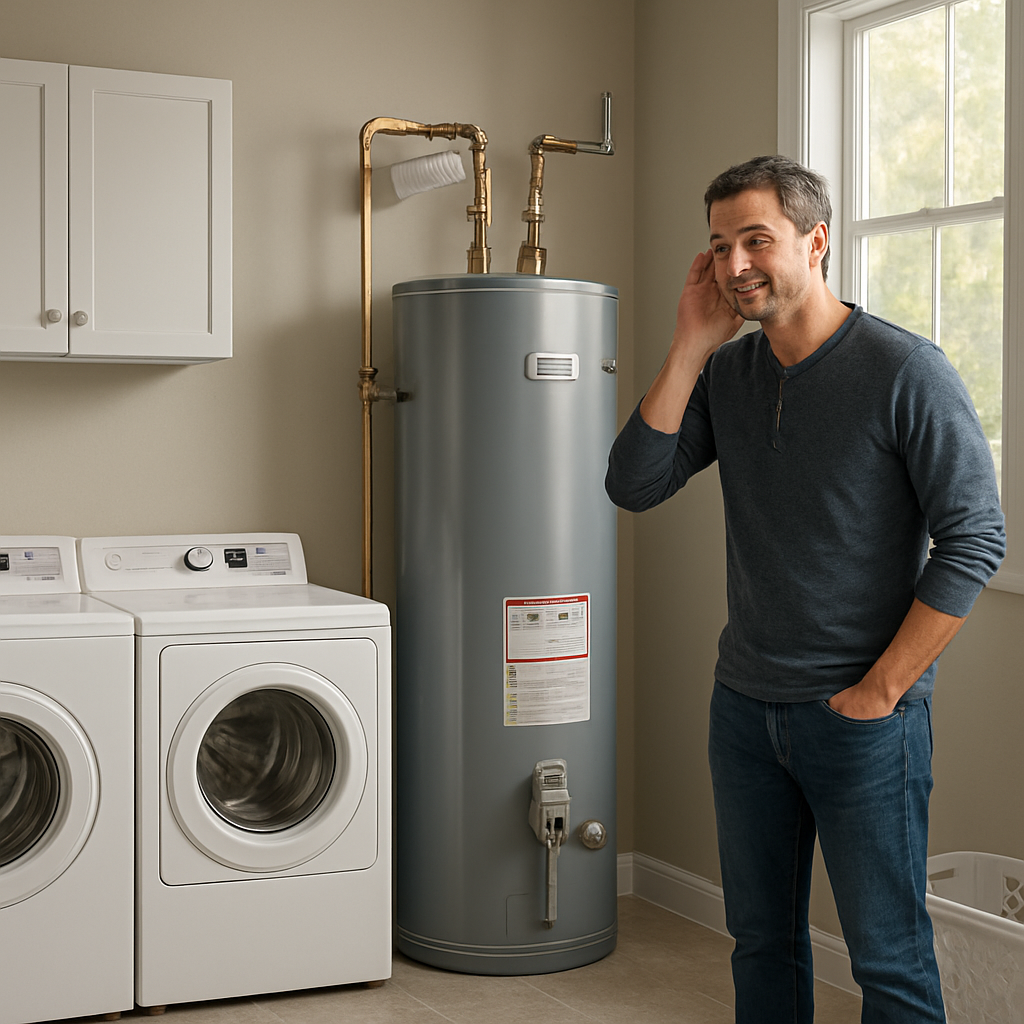
Water Heater Buzzing Noise? Electrical Issue Or Normal Vibration?
Quick Answer (Most Likely Cause)
Most buzzing complaints are normal electrical hum from the heating element being amplified by loose pipe straps, a vibrating jacket panel, or a hard-mounted tank base. First action: listen during an active heating cycle and put light hand pressure on nearby pipes and access panels to see if the buzz changes. Stop using the heater and call a technician if you see leaking, smell burning, or the breaker trips.
Identify the Noise First
Correct diagnosis depends on exactly when the buzzing happens and what it pairs with.
Only during heating cycle: points to element hum or vibration transfer from the element/tank to panels and piping.
Right after the heater starts heating: often a brief electrical hum that excites a loose cover, pipe strap, or flue draft hood (gas).
Constant buzz even when no hot water is used: could be a stuck relay/contactor (electric), controls, or vibration from something else touching the tank.
Buzz plus popping or crackling: commonly sediment causing localized overheating with steam bubble release, with the buzz coming from vibration amplification.
Buzz plus rumbling: heavier sediment layer; the tank vibrates more and makes normal electrical hum sound louder.
Intermittent buzz that comes and goes: thermostat cycling, loose panel, or a pipe making contact with framing.
New noise after plumbing work or replacement: pipe supports changed, new dielectric unions, or piping now touching the tank or wall.
Long-standing mild buzz with no other symptoms: often normal electrical hum that is being mechanically amplified.
What This Noise Usually Means
This specific complaint is usually one of two things:
True electrical source hum: an electric heating element naturally vibrates at line frequency when energized. That is normal. A relay/contactor or transformer (where present) can also hum when energized. This hum is usually steady and only happens during a call for heat.
Vibration amplifying normal hum: the tank shell, access panel, or nearby copper/PEX acting like a speaker. Loose pipe straps, rigid contact with framing, or a slightly loose element access cover can turn a normal, low-level electrical hum into a loud buzz.
Before assuming an electrical part is failing, confirm the mechanical path. Sediment can increase vibration by making the element run hotter and cycle harder, which increases the amplitude of normal hum and shakes the tank more.
Most Common Causes (Ranked by Probability)
Vibration transfer into rigid piping or loose pipe straps
What happens: energized element vibration and tank expansion transmit into copper/steel piping; pipe straps or contact points resonate.
Sound profile: steady buzz during heating, louder near the first few feet of hot outlet.
Clue: touching the pipe lightly changes or stops the buzz.
Loose access panel, junction box cover, or jacket panel acting as a soundboard
What happens: normal element hum excites a slightly loose panel; panel buzzes against the tank jacket.
Sound profile: tinny buzzing localized at a panel.
Clue: pressing on the panel or cover changes the pitch or stops it.
Element hum amplified by tank mounting/base contact
What happens: tank base on a hard surface transmits vibration into the floor or stand; the structure amplifies it.
Sound profile: low buzz or drone heard through floor, worse in quiet rooms.
Clue: louder in adjacent rooms; changes with light pressure against the tank body.
Early sediment buildup increasing localized overheating and vibration
What happens: mineral layer insulates the element; element runs hotter and creates micro-boiling and stronger vibration cycles.
Sound profile: buzz during heat plus light crackling/popping.
Clue: hot water seems to run out sooner, or noise is worse after heavy hot water use.
Heavier sediment layer causing rumble that masks as buzzing
What happens: trapped water under sediment flashes to steam and releases; tank shakes and any electrical hum gets loud.
Sound profile: rumble or gravelly growl with a buzz component.
Clue: noise persists longer into the heating cycle; sometimes reduced hot water recovery.
Load-related strain from high watt density element or high demand cycling
What happens: long heating runs and rapid cycling increase vibration and panel resonance; not a failure by itself.
Sound profile: buzz mainly after big draws (showers, laundry).
Clue: quiet at night, noisy after morning usage.
True electrical component hum from relay/contactor (where used) or thermostat chatter
What happens: magnetic components hum when energized; worn contact surfaces can chatter and cause a harsher buzz.
Sound profile: sharper buzzing at the control area; may be intermittent.
Clue: buzz is localized at the upper control area and does not change when you touch piping.
Internal mechanical wear or failure (least likely for a pure buzz)
What happens: failing element can vibrate more or arc internally; this is uncommon compared to vibration amplification.
Sound profile: abnormal harsh buzz, sometimes with inconsistent heating.
Clue: breaker trips, repeated resets, or hot water performance changes noticeably.
How to Check Safely
Do not remove covers, expose wiring, or open the tank. Use observation and external checks only.
Confirm it is tied to heat: run a hot tap for 2–3 minutes to trigger heating, then listen for the buzz starting within a few minutes.
Locate the amplification point: with dry hands, lightly touch the hot and cold pipes near the heater and nearby straps. If the buzz changes, it is vibration transfer, not a failing electrical component.
Press-test panels externally: press gently on the visible access panel area and the top junction box cover (without removing). If sound changes, suspect a loose cover or jacket panel resonance.
Check for pipe-to-framing contact: look for copper/PEX touching studs, drywall, or shelving. A single contact point can amplify a normal hum.
Look for sediment indicators: listen for popping/crackling with the buzz, check if hot water runs out sooner, and note if noise is worse after high-use periods.
If flushing is within your comfort level: perform a basic tank flush using the drain valve per manufacturer instructions. Stop if the drain valve leaks, won’t close, or discharge is rusty chunks that persist.
Use reset button only if needed: if you lost hot water and the high-limit tripped, you can press reset once. If it trips again, stop and call service.
Stop and call a technician immediately if there is water leaking at the tank, any burning smell, scorching, repeated reset trips, or a breaker that trips.
Normal Operating Sound vs Warning Signs
✔ Normal: mild steady hum only during heating, with no performance issues and no odor.
✔ Normal: occasional ticking/soft snap from thermal expansion of piping after a heating cycle.
Warning: buzz that becomes much louder over weeks, especially if it is easily heard across the room.
Warning sediment buildup: buzz combined with popping/crackling, rumbling, or reduced hot water volume.
Warning electrical source issue: harsh buzzing localized at controls that does not change when you touch pipes or panels, or occurs when no heat should be called for.
Overheating indicator: repeated high-limit resets, very hot water unexpectedly, or intermittent loss of hot water.
Failure indicator: breaker trips, visible scorching at the exterior, or water leaking from the heater.
When Professional Service Is Recommended
Buzz is constant and not tied to a heating cycle.
Breaker trips or a fuse blows at any point.
Reset button trips more than once or you lose hot water repeatedly.
Persistent rumbling or heavy popping that flushing does not improve.
Visible leaks at the tank, elements area, drain, or piping connections.
Buzz is causing piping movement or loosening supports, or you can see pipes vibrating against framing.
Diagnosis points to control/relay hum and external vibration checks do not change the sound.
How to Prevent This Problem
Support piping correctly: add or tighten appropriate pipe straps and keep pipes from contacting framing or the tank jacket.
Reduce soundboard effects: ensure exterior panels and covers are snug and not rattling.
Flush sediment periodically: frequency depends on water hardness; more often if you hear popping or see cloudy discharge.
Maintain correct operating temperature: avoid unnecessary high settings that increase cycling intensity and vibration.
Address hard water: consider water treatment where hardness is high to slow sediment accumulation.
Annual inspection: have a technician check element condition, controls, and sediment level if noise trends upward.
Related Water & Pump Noise Problems
Water heater popping after years of use, especially after long showers
Rumbling sound from water heater that continues through most of the heating cycle
Water heater ticking in the wall right after the heat cycle ends
Buzzing that started immediately after replacing the water heater
Pipe banging near the water heater when hot water starts
Sump pump humming but not discharging water due to impeller obstruction
Loud sump pump during heavy rain from high head pressure or discharge restriction
Sump pump short cycling from a stuck float or incorrect check valve orientation
Check valve thump after pump shutoff causing pipe vibration through the basement ceiling
New vibration noise after plumbing work changed pipe supports near the tank
Conclusion
A buzzing water heater is most often normal heating element hum being mechanically amplified by loose panels, rigid pipe contact, or poor pipe support. Verify the noise only occurs during a heating cycle and use light touch tests on piping and exterior panels to locate the vibration transfer point. If the buzz is constant, paired with breaker trips, resets, or leaks, schedule professional service.
Frequently Asked Questions
Is a buzzing water heater dangerous?
A mild buzz only during heating is usually not dangerous. Stop using the heater and call a technician if you smell burning, see any water leak, the breaker trips, or the high-limit reset trips more than once. Those symptoms move the issue from normal vibration amplification to an electrical or overheating concern that needs service.
How can I tell if the buzz is electrical or just vibration?
True electrical source hum is typically steady and localized near the element/control area only when heating. Vibration amplification will change when you lightly touch nearby pipes, pipe straps, or the exterior access panel area. If touching the piping changes the sound, the electrical hum is likely normal and the problem is mechanical vibration transfer.
What is a safe temporary fix to quiet the buzzing?
Safest temporary mitigation is reducing vibration transfer: make sure nothing is leaning on the heater, stop pipe-to-wall contact where visible, and snug any obviously loose exterior covers without removing them. Avoid electrical adjustments. If noise is accompanied by rumbling or popping, reduce hot water demand and schedule a flush/service rather than forcing long heating cycles.
How much does a service call usually cost for this type of noise?
Typical costs depend on region, but many diagnoses and minor corrections like securing piping, adjusting supports, or basic element/control evaluation fall in the service-call range plus parts if needed. Sediment flushing and element replacement cost more than simple vibration corrections. If the tank is leaking, replacement is usually the cost-effective path.
Should I repair or replace the water heater if it’s buzzing?
If the heater is otherwise performing normally and the buzz is traced to vibration amplification, repair is usually simple. Replace only when there is confirmed tank leakage, repeated electrical trips/resets that indicate broader failure, or severe sediment damage and age make repairs uneconomical. Urgency is low for mild buzz, high for breakers tripping, leaks, or overheating symptoms.
That’s the whole point: the noise falls away when the thinking stays simple. The rest becomes less dramatic and more honest, like noticing the light switch you’ve walked past a thousand times.
There’s no grand reveal left to chase, just the steady shift from confusion to clarity. You can almost feel your day unclench, one small moment at a time.