Furnace Loud At Startup: Causes & What to Check
Quick Answer
Most furnace startup loudness comes from the blower motor or inducer ramping up and shaking something loose: a panel, duct, or the blower assembly itself. First, pinpoint whether the noise happens when the inducer starts (before ignition) or when the blower starts (after a short delay). If you hear grinding, metal-on-metal squeal, or repeated hard thumps that worsen, shut the system off and call a technician.
Identify the Noise First
If the noise happens immediately when the thermostat calls for heat, before burners light, focus on the inducer ramp-up. If the noise happens 30 to 90 seconds later, when warm air begins to blow, focus on the blower motor startup torque.
If the noise is a single bang right as airflow begins, suspect ductwork oil-canning or a loose panel reacting to the pressure change. If it is a short roar or rumble that fades as the blower reaches speed, suspect blower wheel imbalance or cabinet vibration transfer.
If the noise continues through the whole heating cycle, this is less about startup torque and more about a constant airflow or bearing issue. If it only happens at shutdown, that points to coast-down or duct/metal expansion, not startup.
To isolate indoor vs outdoor: furnace startup noises for this angle are at the indoor furnace cabinet and supply ducts. A heat pump also has an outdoor unit, but this specific startup-loud symptom is typically heard at the furnace/air handler area and nearby registers.
What This Noise Usually Means
At startup, the inducer and blower motors go from zero to operating speed quickly. That ramp-up creates a momentary torque twist and a pressure change in the cabinet and ducts. If anything is slightly loose, out of balance, or rubbing, that brief surge is when it will announce itself.
The inducer pulls combustion air and establishes draft; the blower pushes air through the heat exchanger and duct system. Startup loudness most commonly comes from vibration amplification (cabinet/panels/duct) or a blower/inducer wheel that is dirty, off-center, or contacting its housing during the ramp-up.
Most Common Causes
- Loose blower door or cabinet panel vibrating at startup
Clue: a buzzing or rattling that is loudest for a few seconds as the blower starts, and changes if you press gently on the panel.
- Ductwork pop or bang from pressure change when the blower starts
Clue: a single loud pop right as airflow begins at registers; then normal operation with no ongoing noise.
- Dirty blower wheel causing imbalance during acceleration
Clue: a rumble or wobble sound that is strongest at startup and smooths out once the blower is up to speed; airflow may feel weaker than usual.
- Blower wheel set screw loose or wheel slipping on the shaft
Clue: a clunk or thump at startup, sometimes followed by a light scraping; noise can be intermittent and may worsen over days.
- Inducer wheel or housing vibration during ramp-up
Clue: noise begins immediately on a heat call before ignition, often a brief growl or rattle that changes as the inducer stabilizes.
- Blower motor mounts or brackets loose
Clue: cabinet shake or a low-frequency thrum on startup; you may feel vibration on the furnace sheet metal or nearby duct.
- Blower wheel rubbing the housing due to shifted assembly
Clue: a scrape or chirp right as it starts, sometimes going away when fully running; can return at the next cycle.
- Motor or inducer bearings starting to wear
Clue: a squeal, dry whine, or grinding tone most noticeable at startup and shutdown; tends to get louder over time.
How to Check Safely
- Listen to the timing
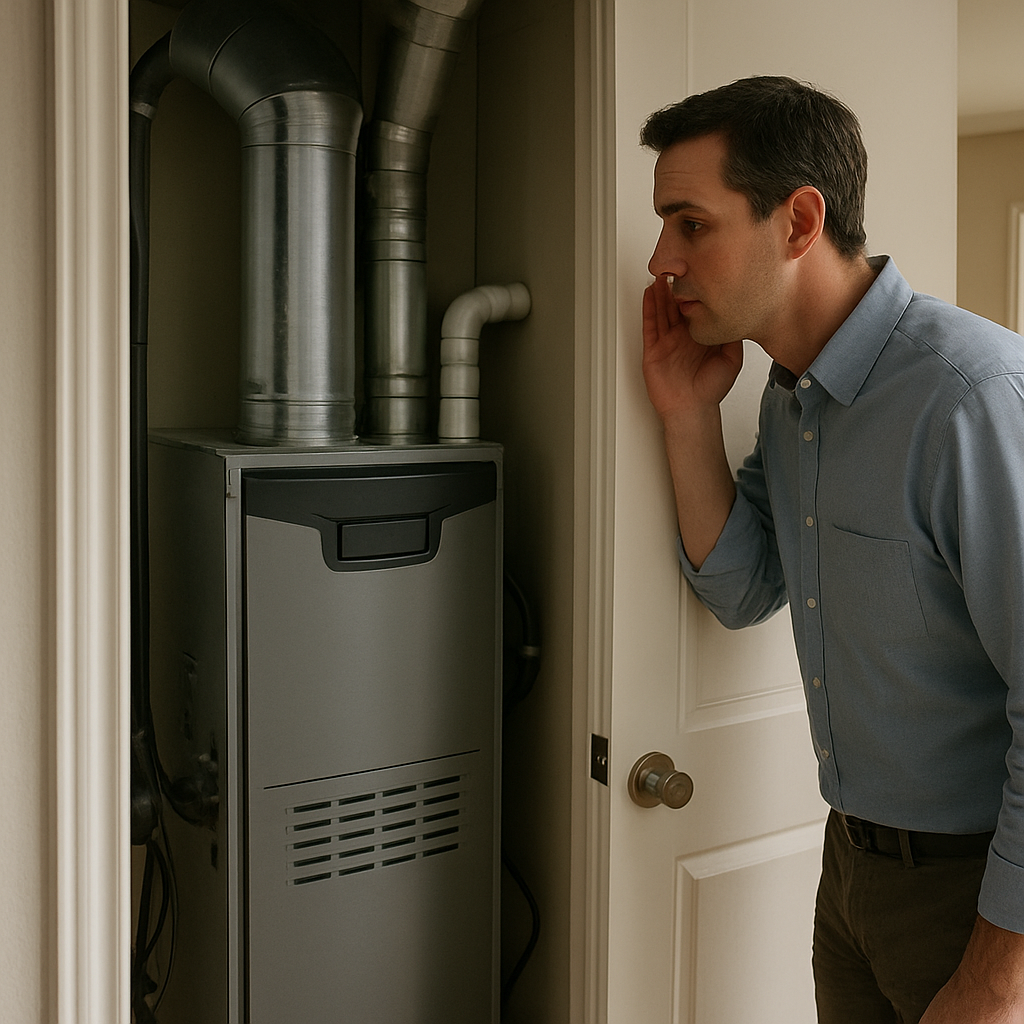
Stand near the furnace and note whether the noise starts immediately (inducer) or after the warm-up delay when air begins at the vents (blower).
- Repeat the cycle once
Turn the thermostat off for a minute, then back to heat, and see if the sound repeats at the same stage. Repeatable stage-based noise strongly narrows the cause.
- Check the blower door and panels for fit
With the furnace running, apply light hand pressure to the front panel/door (do not remove it). If the sound changes, vibration amplification is likely.
- Look for obvious cabinet contact points
Check for refrigerant lines (if present), drain tubing, gas flex line, or low-voltage wiring touching the cabinet and rattling when the blower starts. Do not move gas piping; just note contact points.
- Check the filter and return grille
A collapsed or highly restricted filter can increase cabinet pressure noise. Replace the filter if it is visibly loaded or bowed inward.
- Listen at a few supply registers
If the bang/pop is loudest at one area of ductwork and not at the furnace cabinet, it is more likely duct oil-canning than a motor problem.
- Confirm all registers are open
Closed registers can raise static pressure and make startup louder. Open them and see if the startup noise reduces.
- Check for loose items around the furnace
Nearby shelving, a return air platform, or anything leaning on ductwork can buzz when the blower starts.
- Stop and call if you hear grinding or metal scraping
Grinding, persistent scraping, or a squeal that does not fade can indicate wheel rub or bearing failure. Continued operation can damage the wheel, housing, or motor.
Normal vs A Problem
Usually normal: a brief whoosh as the blower comes on, a mild thump in ductwork once per cycle, or a short increase in airflow noise that stabilizes within a few seconds.
Likely a problem: a startup rattle that is getting louder week to week, repeated banging on every cycle, scraping or grinding sounds, or vibration you can feel strongly in the cabinet or duct. Also treat it as a problem if you notice reduced airflow, the furnace short-cycling, a burning smell, or the blower fails to start consistently.
Age trend matters: a new noise on an older furnace that is repeatable at the same moment of startup typically indicates something loosened, shifted, or wore enough to show up during acceleration.
When to Call a Technician
- Noise is grinding, scraping, or squealing at startup
These point to blower/inducer wheel rub or bearing wear and should be corrected before the motor or housing is damaged.
- Startup thump is strong and repeats every cycle
Can indicate a slipping blower wheel, loose mount, or shifting assembly that needs internal inspection and tightening.
- Inducer startup noise happens before ignition and the furnace struggles to light
May involve inducer performance or draft proving issues that require tools and combustion-safe checks.
- Blower hesitates, surges, or fails to reach speed
This can be motor or control related and should be diagnosed professionally rather than repeatedly reset.
- Any breaker trips, burning odor, or visible vibration of the blower compartment
Shut it down and get service to prevent motor/control damage.
How to Prevent This Problem
- Change filters on schedule
Lower static pressure reduces startup strain and minimizes duct and cabinet noise.
- Keep supply registers open and unblocked
Reduces pressure spikes that trigger duct popping when the blower starts.
- Schedule routine furnace maintenance
Cleaning the blower wheel and checking mounting hardware prevents imbalance and startup vibration.
- Secure nearby items from contacting ductwork
A small contact point can sound like a major mechanical issue during blower ramp-up.
- Address new rattles early
A minor loose panel or bracket is simpler to correct before it enlarges holes or loosens additional fasteners.
- Use the correct filter type
Overly restrictive filters can raise static pressure; match the filter to the system and duct sizing.
Related HVAC Noise Problems
- Noise before ignition only: inducer rattle or growl during pre-purge ramp-up
- Single boom from ducts: duct oil-canning when blower starts
- Buzz that stops if you press the door: loose blower door or cabinet resonance
- Scrape only on startup: blower wheel rubbing the housing when torque twists the assembly
- Whine that rises then fades: motor bearing starting to dry out
- Rattle at one register only: loose damper or grille reacting to the initial airflow surge
- Click then loud airflow change: blower speed change triggering duct vibration
- Repeated thump then normal run: loose blower wheel on shaft
- Vibration felt in nearby duct: loose mount or duct strap transferring startup torque
- Noise mainly at shutdown: blower coast-down or duct expansion, not startup torque
Conclusion
A furnace that is loud at startup is most often reacting to blower motor startup torque or inducer ramp-up shaking a loose panel, duct section, or a slightly imbalanced wheel. Use timing to separate inducer-start noise from blower-start noise, then check for vibration amplification and airflow restrictions. If you hear grinding, scraping, or a worsening thump each cycle, shut it off and schedule service.
Frequently Asked Questions
Why is my furnace loud only when the blower first turns on?
That points to blower startup torque and the sudden pressure change in the duct system. The most common reasons are a loose cabinet door/panel, ductwork popping, or a dirty/imbalanced blower wheel that is roughest during acceleration.
My furnace makes a loud noise right away before it lights. Is that still the blower?
Usually no. A noise immediately on a call for heat is more often the inducer motor ramping up. If it is a rattle or growl that stabilizes, look for vibration transfer. If it strains, grinds, or the furnace has ignition trouble, have the inducer assembly inspected.
Is one loud pop at startup dangerous?
A single pop from ductwork at blower start is often just sheet metal flexing and is not typically damaging. If it becomes frequent, very loud, or is paired with poor airflow, check filter/register restrictions and have a technician evaluate duct support and static pressure.
Can a dirty filter really make startup louder?
Yes. A restricted filter increases resistance and can raise cabinet and duct pressure changes when the blower starts. That can make panels buzz and ducts pop more noticeably, and it can increase strain during ramp-up.
What sound means I should stop running the furnace?
Stop and call for service if you hear grinding, persistent scraping, metal-on-metal squeal, or a heavy thump that repeats every cycle and gets worse. Those signs fit wheel rub, a loose wheel, failing bearings, or shifting mounts that can escalate damage.
There’s a strange comfort in finally watching the noise clear out and leaving something solid behind. Not dramatic, not cinematic—just the kind of change that makes the world feel a little less tilted.
Now you can get back to the real stuff: noticing ordinary days, moving through them without friction, and letting the answers do their job quietly. The best part is how quickly your patience stops feeling like a scarce resource.