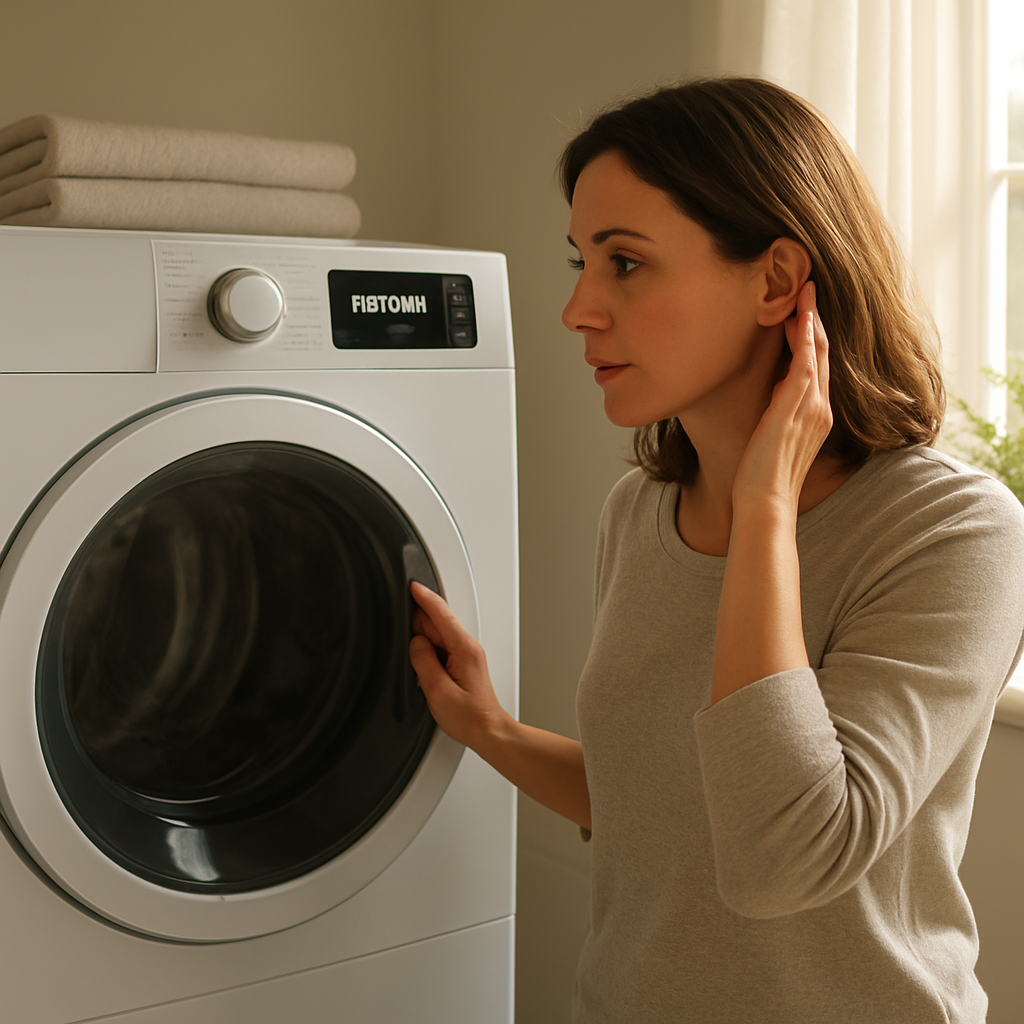
If your dryer makes a thump, squeal, or brief grinding sound right as it stops, the most likely cause is a worn or contaminated drum brake or other deceleration parts (common on some Whirlpool, Maytag, Kenmore, and Speed Queen-style designs). First action: stop using high heat for now, unplug the dryer, and inspect the brake area for black dust, glazing, or a loose brake spring/band. A failing brake can quickly damage the drum shaft or bearing.
Identify the Noise First
This article is only about noises that occur as the drum is slowing down or at the exact moment it stops. Use this guide to confirm you are chasing a brake/deceleration issue, not a rotation or blower issue.
During drum rotation: A steady squeal, scrape, or rumble while running usually points to rollers, idler pulley, belt, or drum glides, not the stop-brake.
At startup: A chirp or squeal only at the first second of start is commonly the idler or belt slip, not a brake grabbing at shutdown.
During heating: A ticking or pinging that comes and goes with heat is often metal expansion, not a brake problem.
During cooling cycle: If the sound happens at the end of cool-down as the drum coasts to a stop, that matches a brake/deceleration concern.
Constant: A constant grinding is rarely a brake-only issue. Brakes act mainly at stop; constant noise suggests bearings, rollers, or blower contact.
Intermittent: A single thump or short squeal only when stopping strongly suggests brake glazing, a weak brake spring, or a worn brake pad/band.
Best match for this article: the dryer runs fairly normal, but the last second includes a squeal, thump, or brief grind as the drum decelerates.
What This Noise Usually Means
On dryers that use a mechanical drum brake, the brake is applied as power is removed to stop the drum quickly. If the brake lining is glazed, contaminated (lint/softener residue), misaligned, or the spring tension is wrong, the brake does not apply smoothly. Instead, it can grab and release as the drum slows, causing a sharp squeal, a thump, or a short scraping sound right at shutdown.
Some designs also rely on belt and idler behavior to control coast-down. A belt that is whipping or an idler that snaps back as the motor stops can mimic a brake noise, but the stop-only timing is the key clue.
Most Common Causes
Glazed brake lining or brake drum surface: Creates a squeal right as the brake grabs.
Lint-packed or contaminated brake area: Lint can make the brake apply unevenly; residue can make it grabby.
Weak or stretched brake spring (or incorrect spring position): Brake slams on or chatters on coast-down.
Worn brake pad/band: Extra clearance can cause a thump as the brake finally catches, or a short grind if metal begins contacting.
Brake lever/pivot wear or binding: Brake does not release cleanly during run or does not apply squarely at stop.
Motor stop behavior transmitting through belt: Less common for stop-only noise, but a loose belt, worn idler arm stop, or idler bushing can snap at shutdown and be mistaken for braking.
How to Check Safely
These checks are aimed at confirming a brake/deceleration issue without guessing. If you are not comfortable opening the cabinet, skip to calling a technician.
1) Confirm it is truly a stop-only noise
Run the dryer empty on air-fluff (no heat) for 3 to 5 minutes.
Listen during the final second when you turn it off or when the cycle ends.
If the noise happens only at shutdown and not while running, keep going. If it happens while running too, you likely have a roller/idler/glide issue instead.
2) Do a coast-down feel test
Unplug the dryer.
Open the door and spin the drum by hand clockwise.
Let go and observe the stop. A smooth coast with a soft stop is normal. A sudden grab, jerky stop, or squeal as it halts supports a brake grabbing or misalignment.
3) Access and inspect the brake area (only if your model uses a drum brake)
Unplug the dryer. If gas, close the gas shutoff valve as well.
Remove the necessary panel(s) per your service manual layout. On many brake-equipped designs, the brake is near the drum support/bearing area.
Locate the brake band/pad and surrounding drum surface.
Look for black dust piles, shiny glazed lining, scoring, or uneven wear.
Check the spring is intact, seated correctly, and not stretched or deformed.
Move the brake lever by hand (with belt tension released if required). It should pivot smoothly without sticking.
4) Clean only what is appropriate
Vacuum lint from the brake area and cabinet base.
Do not lubricate the brake and do not oil pivots unless the service literature specifically calls for it. Oil on the lining makes noises worse and reduces braking.
If the lining is glazed or worn, cleaning rarely fixes it for long. Plan on replacement.
5) Re-test after reassembly
Run on air-fluff and listen for stop noise.
If improved briefly but returns quickly, the brake lining is usually at end-of-life or the spring/lever geometry is off.
When This Is Normal vs A Problem
Usually normal: A soft single thud as the drum comes to rest, especially with a heavy load, with no squeal and no smell, and the dryer stops consistently.
Likely a problem: A sharp squeal, brief grinding, repeated chatter, or a hard bang at every shutdown.
Stop using and inspect soon: Noise gets louder over a week or two, the drum stops abruptly like it hit a wall, or you see black dust around the brake area.
Urgent: Burning smell at shutdown, visible scoring on the brake drum surface, or the drum intermittently fails to start afterward (brake not releasing or parts overheated).
When to Call a Technician
Your dryer is gas and you are not comfortable removing panels and reassembling correctly.
You confirm the noise is stop-only and find glazing, heavy dust, a damaged spring, or uneven brake wear.
The brake linkage is binding, bent, or does not return smoothly.
You have repeated shutdown banging that feels stronger than normal load shift, or the drum stop is violent.
You are unsure whether your model uses a drum brake and cannot locate it quickly with the model number documentation.
Brake service often involves precise spring tension and alignment. Replacing the wrong part or misrouting the spring can create worse noise or poor braking.
How to Prevent This Problem
Reduce lint accumulation: Clean the lint screen every load and keep the exhaust venting clear to limit fine dust inside the cabinet.
Avoid chronic overloading: Heavy, dense loads increase stopping torque and accelerate brake wear and glazing.
Don’t ignore light stop squeals: Early brake glazing is easier to address before it wears the drum surface.
Keep dryer level and stable: A rocking cabinet can make a minor stop-brake thump sound like a major bang.
Use correct cycles: Repeated manual stopping mid-cycle can increase brake cycles and wear on brake-equipped designs.
Related Dryer Noise Problems
Squealing only when starting: Often idler pulley or belt slip, not brake.
Rumbling that gets worse during the entire run: Drum rollers or rear bearing, not deceleration parts.
Scraping sound that continues after the drum stops: Blower wheel contact or loose debris in the blower housing.
Bang during tumbling, especially with small loads: Baffle or drum seam issue, not shutdown braking.
Clicking at the end of cycle with no drum movement: Timer or relay noise, not mechanical braking.
Conclusion
A dryer that only makes noise as it stops usually points to the brake or parts that control coast-down. Confirm the timing first, then check for brake glazing, lint contamination, and spring or linkage problems. If you find wear or binding, plan on brake service rather than continued use, because a grabbing brake can damage nearby support parts.
Frequently Asked Questions
My dryer makes a squeal only when it stops. Is that the belt?
If the squeal is truly only at the last second of shutdown and the dryer is quiet while running, the belt is less likely. A stop-only squeal fits a glazed or contaminated brake lining or a brake spring/lever issue on brake-equipped models. Belt or idler noise usually shows up at startup or during rotation.
Why does the noise happen more with heavy towels or bedding?
Heavier loads store more rotational energy. When power cuts, the brake has to absorb more force to stop the drum, so a glazed lining or weak spring is more likely to grab, chatter, or thump. If the noise is load-dependent but always at stop, brake wear is a strong suspect.
Can I lubricate the brake to stop the squeal?
No. Lubricating a brake lining can make it grab unpredictably and reduces braking effectiveness. The correct fix is cleaning lint contamination and replacing worn or glazed brake components, and correcting spring tension or linkage binding if present.
Is a single thump when the dryer stops always a brake problem?
No. A soft thump can be normal load settling, especially with a large item. It becomes a brake/deceleration problem when the thump is sharp and repeatable every shutdown, the drum stop feels abrupt or jerky, or it is paired with squeal/grind noise.
How do I know if my dryer even has a drum brake?
Check your model number and parts diagram for a brake band, brake pad, or brake assembly near the drum support area. If the parts list shows a brake spring and brake lever, it is brake-equipped. If it only shows rollers/glides and an idler system with no brake components, focus on belt/idler coast-down behavior instead of a brake.
What’s striking is how quickly the noise turns into something readable. The point lands, and the rest starts to feel less dramatic than it did at the beginning.
Nothing needs to be fought for anymore, just noticed. After that, the day can get back to being ordinary—thankfully, with fewer tangled thoughts.