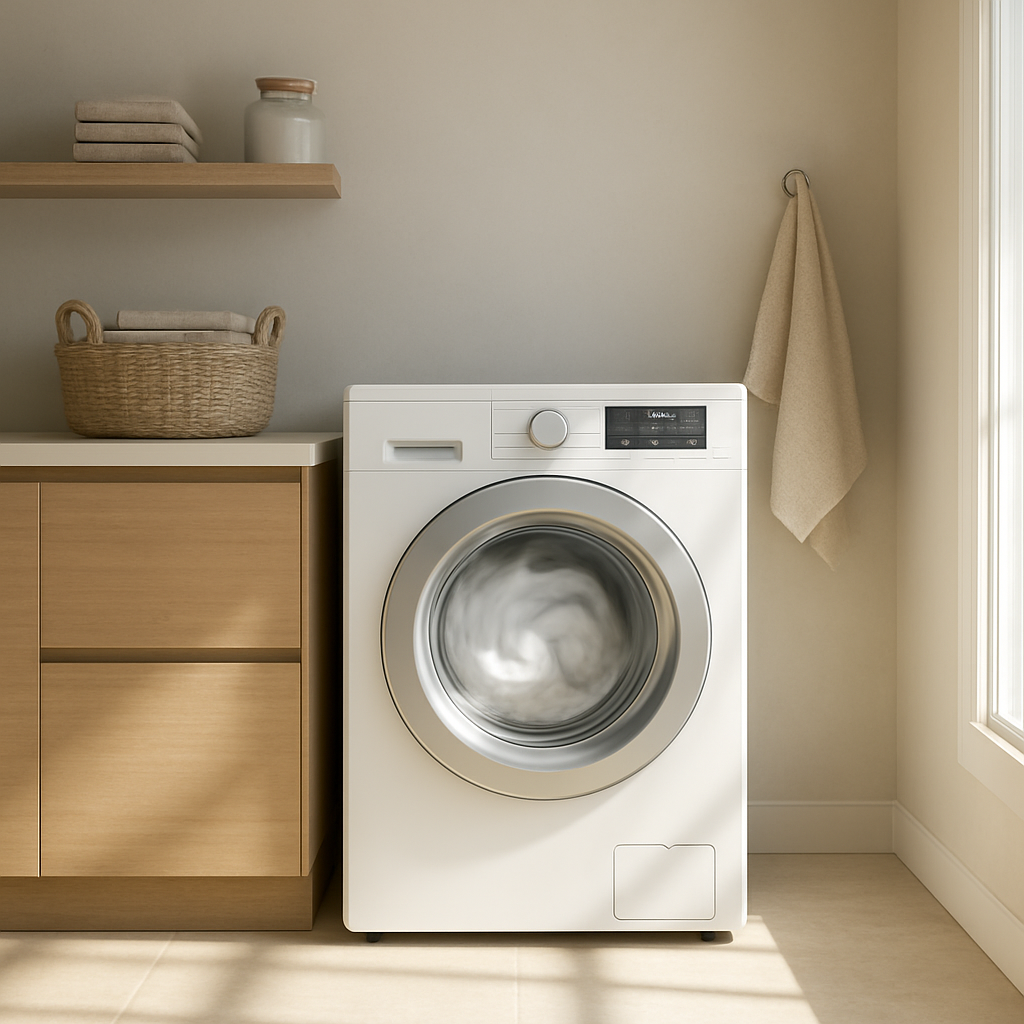
A rattling that shows up mainly when the dryer accelerates into high-speed spin is usually caused by a vibration-sensitive part: an out-of-balance load, the dryer not sitting solidly, or a loose blower wheel or mount that only chatters at higher RPM. First action: stop the dryer, redistribute the load, and confirm all four feet are firmly on the floor and the cabinet does not rock.
Identify the Noise First
High-speed vibration problems change with drum speed. Use this guide to match what you hear to the most likely direction.
During drum rotation (most noticeable near the end of ramp-up to full speed): Classic sign of balance or support issues (feet, floor, suspension/rollers) or a loose rotating part that only rattles at higher RPM (blower wheel).
At startup only (first 5 to 20 seconds): Load thump from items settling, or a slightly flat-spotted roller that tap-taps until it smooths out. If it turns into a rapid rattle as speed increases, treat it as a high-speed vibration issue.
During heating: If the rattle starts after several minutes and tracks with higher airflow noise, suspect the blower wheel or something vibrating in the exhaust path (loose vent, lint/debris near the blower housing).
During cooling cycle: If it happens late in the cycle when the drum is still fast but heat is off, vibration is more likely than a heat-related expansion noise. Re-check load balance and cabinet stability.
Constant (same rattle at all speeds): Less likely to be a high-speed vibration component. Look for a loose object inside the drum, loose baffle, or a failing support part that is noisy at any RPM.
Intermittent (comes and goes, often on certain loads): Strong indicator of balance and vibration transmission. Large items (blankets, towels) and mixed loads are the trigger.
What This Noise Usually Means
When a dryer reaches full spin speed, the drum, load, and drive system generate much higher centrifugal forces. Small problems that are quiet at low speed can become loud when vibration peaks:
Any uneven load creates a wobble that shakes the cabinet and makes panels, feet, or internal brackets rattle.
A loose rotating part (most commonly the blower wheel) can chatter on its shaft only at higher RPM.
A support component that controls drum alignment (rollers, idler arm, mounts) may allow the drum to oscillate, turning normal rotation into a cabinet-shaking condition.
This is why rattling that is tied to spinning speed is a diagnostic clue: it points toward parts that react to vibration rather than parts that squeal or grind from constant friction.
Most Common Causes
Out-of-balance or single heavy item: One large item or a small load of heavy pieces can wrap and create a repeated knock/rattle as speed rises.
Dryer not level or rocking: A slightly lifted foot or soft flooring lets the cabinet move. That motion turns otherwise minor vibration into a loud rattle.
Loose blower wheel or cracked hub: The blower can wobble and rattle against the housing at higher airflow speed, often louder during the last ramp into full speed.
Loose rear or front drum support rollers: Worn roller bearings can allow extra drum movement. This usually starts as a light rattle and progresses to thumps or rumble.
Loose idler pulley arm or weak tensioner spring: Belt tension fluctuations can create vibration that shows up under high-speed load changes.
Loose cabinet panel, console screw, or internal duct/bracket: Vibration makes sheet metal buzz or rattle, especially after prior service or moving the dryer.
External vent or transition duct vibrating: High airflow plus cabinet vibration can make a metallic rattle right as the dryer reaches full speed.
How to Check Safely
These checks focus on vibration-related causes without requiring you to run the dryer open or defeat safety switches.
Stop the cycle and open the door. Pull items out and check for a single heavy piece (wet blanket, rug, jeans) wrapped into a ball. Spread items evenly and restart.
Do a quick empty-drum test. Run the dryer empty for 2 to 3 minutes. If the rattle disappears, the issue is almost certainly load balance or the way the load is interacting with the drum.
Check for cabinet rock. With the dryer off, push on opposite top corners. If it rocks or clicks, adjust the leveling feet until solid on all four points. Re-check behind the dryer for anything touching the cabinet (shelf, pipe, washer) that could rattle.
Inspect the lint filter and housing area. Remove the lint filter and look down the filter slot for debris. A pen cap or buildup can shift airflow and contribute to vibration noise. Do not reach into sharp metal areas.
Check the exhaust connection. Confirm the transition duct is not crushed and is firmly attached. Thin foil ducts can rattle easily; if you hear metallic chatter at high speed, hold the duct lightly while running a short test (door closed, normal operation). If the noise changes, the duct is a contributor.
Listen for blower-wheel style rattle. A blower-related rattle often sounds like fast plastic tapping or rapid scraping that increases with airflow. If the noise is strongest near the back or lower front (varies by model) and less affected by load size, suspect the blower wheel.
Check for loose panels. With power off, snug any accessible screws on the rear panel, lint housing cover (if accessible), and top/rear corners. Do not remove panels unless you are comfortable reinstalling them correctly.
If the rattle persists with an empty drum and a stable, level cabinet, the next most likely causes are internal: blower wheel looseness, worn rollers, or idler assembly vibration.
When This Is Normal vs A Problem
Usually normal: A brief thump at startup as clothes drop into place, or a light, momentary cabinet buzz that stops once the load redistributes.
Not normal: Rattling that grows louder as the dryer reaches full speed, rattling heard with an empty drum, or a vibration strong enough to walk the dryer or make the top panel visibly shake.
Urgent to address: Any rattle that turns into scraping, a burning smell, repeated belt-like slaps, or the drum momentarily slowing during the rattle. Those signs suggest a loose rotating part or support failure that can worsen quickly.
When to Call a Technician
Call if the rattle happens with an empty drum after you have confirmed the dryer is level and not contacting surrounding objects.
Call if you suspect the blower wheel (airflow-linked rattle, tapping/scraping near the blower area). Access often requires removing panels and inspecting the wheel hub and shaft fit.
Call if the dryer is shaking heavily or moving across the floor. Excess vibration can damage supports, vent connections, and internal mounts.
Call if you hear scraping or metal-on-metal sounds during the rattle. That crosses from vibration nuisance into component damage territory (rollers, drum support, blower housing contact).
How to Prevent This Problem
Load for balance: Avoid drying one heavy item alone. Add a few similar items to distribute weight.
Do not overload: Overpacked drums force clothes into one mass and amplify wobble during high-speed spin.
Keep the dryer level: Re-check leveling after moving the dryer or after floor changes. A stable cabinet reduces rattle from minor vibration.
Maintain airflow: Clean the lint filter each load and keep the vent path clear. Smooth airflow reduces blower strain and vibration noise.
Secure the vent connection: A firm clamp and a non-crushed duct prevent metallic rattles that mimic internal problems.
Related Dryer Noise Problems
Dryer thumping only with bulky items: Often load distribution, not a failing part.
Dryer vibrating and walking across the floor: Leveling/foot contact or severe imbalance.
Rapid clicking from the back when running: Blower wheel contact or debris in blower housing.
Rumbling that gets louder over weeks: Drum roller wear progressing from vibration to bearing noise.
Buzzing or panel vibration at certain speeds: Loose cabinet panel, internal duct, or vent resonance.
Conclusion
A rattling noise that lines up with high-speed spinning is usually a vibration-driven issue: load balance, cabinet stability, or a rotating component that loosens under higher RPM. Start with an empty-drum test and a leveling check. If it still rattles empty, plan for an internal inspection of the blower wheel and drum support components or schedule service.
Frequently Asked Questions
Why does my dryer rattle only when it speeds up, then quiet down?
That pattern matches peak vibration during acceleration. An uneven load or a slightly rocking cabinet can rattle during the ramp-up, then settle once the load redistributes. If it also does it with an empty drum, suspect a loose blower wheel or a support part allowing drum oscillation.
How can I tell if the blower wheel is causing the rattling?
Blower wheel rattles usually track with airflow: louder as the dryer gets up to speed, sometimes more noticeable after heating starts, and often localized low in the cabinet near the blower housing. The noise is typically a fast tapping or light scraping sound rather than a slow thump. If the rattle is unchanged by different loads, blower wheel looseness moves up the list.
My dryer rattles with towels but not with small loads. Is that a part problem?
Often it is load balance. Towels and blankets can bunch into a heavy lump that creates a repeating wobble at high speed. Try mixing items for distribution and avoid drying one large item alone. If the dryer still rattles empty or on every load type, then shift focus to internal vibration components like rollers, idler assembly, or the blower wheel.
Can an uneven floor cause a rattling dryer even if it seems level?
Yes. A dryer can read level but still rock if one foot is not firmly planted or the flooring compresses under vibration. The quick test is pushing on opposite top corners; any click or movement means the cabinet is transferring vibration into rattle. Adjust feet until it is solid and re-check after a cycle.
Is it safe to keep using the dryer if it rattles only sometimes?
If it is clearly tied to certain loads and stops after you redistribute, it is usually safe to continue while you correct loading and leveling. If the rattle starts happening with the drum empty, becomes scraping, or the dryer begins walking, stop and schedule service to avoid damage to the blower housing, drum supports, or mounting brackets.
What’s left now isn’t a mystery, just a change in how you look at ordinary days. The problem stops feeling sticky the moment the solution stops feeling theoretical.
There’s a small kind of relief in that, like setting down a bag you didn’t realize you’d been carrying. Not dramatic, not cinematic—just enough to breathe easier.