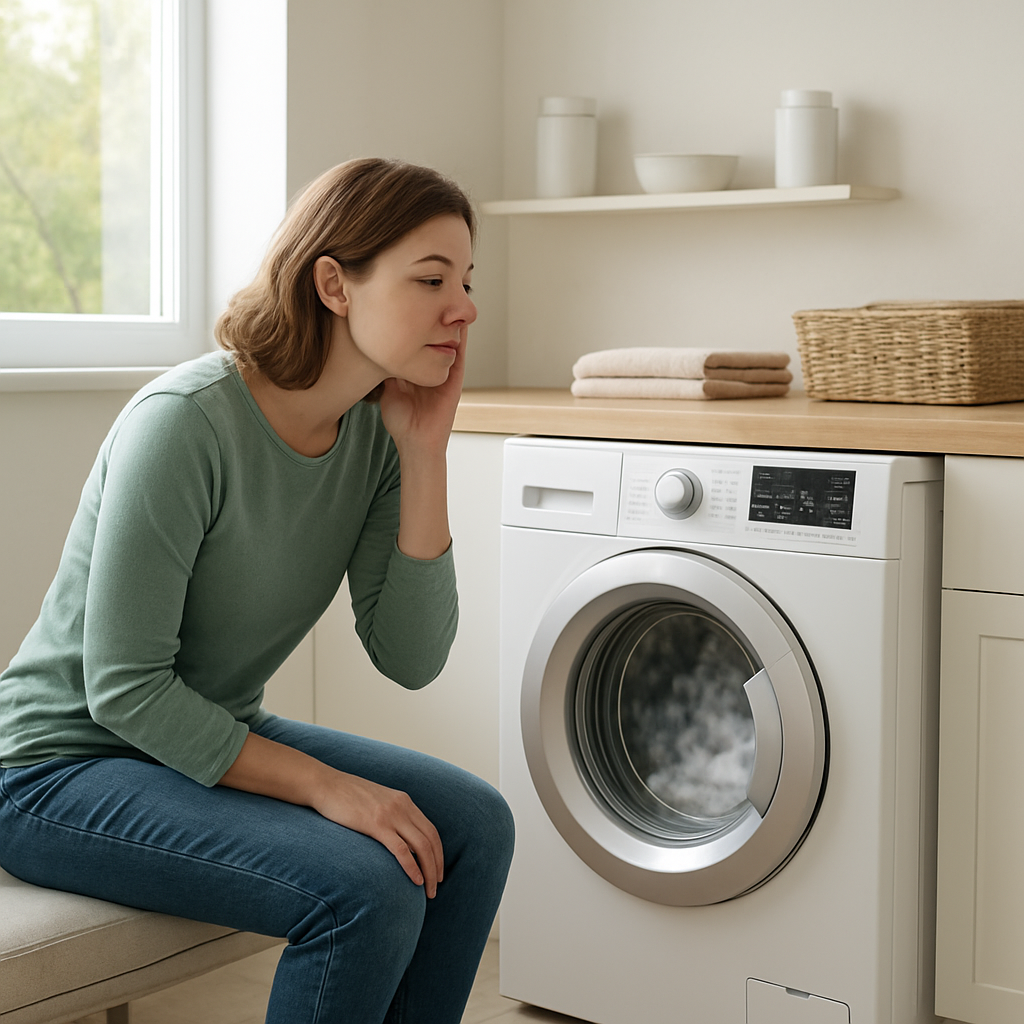
Washing Machine Loud When Slowing Down? Is It Normal?
Quick Answer
A brief roar, hum, or soft clunk right as the spin slows is often normal: the motor control is actively braking the drum and managing a shifting load. First action: run a spin cycle with the drum empty. If the noise is only during deceleration and disappears empty, focus on load balance and mounting. If it persists empty or includes grinding, scraping, or banging, inspect for looseness or worn parts.
Identify the Noise First
The fix depends on exactly when the noise happens. Use this quick guide to pin down the situation.
During spin (steady high speed): constant rumble, roar, or vibration that stays the same until the machine slows. Usually a balance, suspension, or bearing issue, not a deceleration-only behavior.
Only when slowing down from spin (last 1–10 seconds of spin): brief growl, moan, humming surge, or a single clunk as the drum drops and load shifts. This points to spin deceleration mechanics.
During drain (pump running, drum not spinning fast): rattling, buzzing, or grinding near the bottom/front. Often pump debris, not deceleration.
During fill (water entering): loud rushing, hammering, or squeal at the valves. Not deceleration-related.
Constant through multiple stages: continuous scraping/metallic contact suggests a foreign object or a failed bearing, not normal braking behavior.
Intermittent (comes and goes with rotation): clicking once per drum revolution can be a trapped item or tub-to-drum contact that becomes more obvious as the drum slows.
If your noise is strongest at the moment the drum slows or stops, keep reading: that is where braking, load shift, and suspension rebound show up.
What This Noise Usually Means
When a washer decelerates from spin, the machine is doing two things at once: reducing drum speed under control and catching the moving mass as it settles.
Electronic or mechanical braking: Many modern washers use the drive system to slow the drum in a controlled way. That braking can produce a short growl, a deeper hum, or a brief change in motor tone that you do not hear at steady speed.
Load shift and suspension rebound: As speed drops, centrifugal force decreases and the clothes fall away from the drum wall. The tub assembly re-centers on its springs/struts and can make a thump or clunk if the load drops unevenly.
Backlash in the drive line: Directional forces change during braking. Any play in the basket drive, coupler, pulley, or splines can sound like a single knock right at the transition.
A noise that only appears during deceleration is usually about that transition moment: braking force changes plus the tub settling.
Most Common Causes
Normal controlled braking noise: brief motor tone change or low roar as the controller slows the drum.
Off-balance load dropping at slowdown: heavy items (towels, jeans, blankets) release and thump as the tub re-centers.
Washer not level or feet not locked: the tub shifts more during slowdown and amplifies the deceleration thump.
Worn or weak suspension (front-load shocks or top-load suspension rods): the tub rebounds harder at the end of spin, causing a louder clunk or repeated knocks during the last seconds.
Loose rotor/stator hardware or pulley fastener (model dependent): a knock that happens only when torque reverses during braking.
Drive coupler/splutch/clutch wear (top-load designs): a brief ratcheting, chirp, or clunk on slowdown as engagement changes.
Early-stage bearing wear: can be quiet at steady speed but growl as the drum slows through certain speeds. Usually progresses to noise during the full spin.
Foreign object moving as spin slows: underwire/coin can shift and scrape when the drum transitions, sometimes sounding worse at low speed.
How to Check Safely
These checks focus on confirming whether the sound is normal deceleration behavior or a sign of looseness or wear. If you are unsure, stop and call a technician.
Run an empty spin cycle. Listen specifically to the last 10–15 seconds as it slows. A mild change in motor tone or a single soft thump can be normal. Loud banging or grinding is not.
Run a small, balanced test load. Use 4–6 similar-weight items (no single heavy piece). If the noise largely disappears, the issue is load shift at deceleration, not a failing component.
Check leveling and foot lock. With the machine empty, push on opposite corners. If it rocks, adjust feet until stable, then tighten lock nuts (if equipped). Deceleration is when rocking shows up most.
Inspect for cabinet contact marks. Look for fresh scuffs around the inside of the cabinet or along the top panel edge (top-load) where the tub may be contacting during slowdown. Contact indicates excess tub movement.
Front-load: check shock response. With the door open, push the drum/tub down firmly and release. It should return smoothly without repeated bouncing. Multiple oscillations often mean weak shocks, which clunk at decel.
Top-load: check tub centering and suspension feel. Open the lid and push the basket to the side gently. It should resist and return to center without a harsh knock. Easy side travel and a hard return often points to worn suspension rods.
Listen for pump-only noises separately. Start a drain/spin and cancel it early to force a drain on many models, or run a drain function if available. If the noise happens with the drum barely moving, it is likely pump-related rather than deceleration.
Look for simple foreign-object clues. Check the door boot (front-load) for small items and inspect the drum holes. If you hear scraping that changes as the drum slows, a trapped object may be shifting during decel.
When This Is Normal vs A Problem
Usually normal if all of the following are true:
The noise happens only as the drum slows, not during the full high-speed spin.
It is brief (a few seconds) and repeatable at the end of spin.
There is no walking, severe shaking, or repeated banging.
An empty spin is quiet or only mildly louder at the slowdown point.
Performance is normal: spin completes and clothes are properly extracted.
Likely a problem if you notice any of these:
Loud banging or multiple impacts right as it slows, especially with average loads.
Grinding, scraping, or metal-on-metal sounds during slowdown.
The machine lurches, walks, or the tub hits the cabinet at the end of spin.
The noise is getting worse over weeks.
You also have symptoms like poor spin, wet clothes, or spin errors/imbalance stops.
When to Call a Technician
Grinding or scraping at deceleration that you can reproduce on an empty spin: higher chance of bearing, rotor, or object-in-tub damage.
Repeated hard banging at slowdown after leveling and after testing a balanced load: likely suspension or mount wear that needs parts.
Any sign of tub-to-cabinet contact (fresh scuffs, denting, or the drum visibly shifting excessively): risk of further damage if used.
Deceleration noise plus spin issues (won’t reach full spin, stops and redistributes repeatedly, error codes): needs proper diagnostic mode checks.
You suspect drive hardware looseness (single heavy knock on torque change): tightening/inspection often requires disassembly and correct torque specs.
How to Prevent This Problem
Load for balance: avoid one heavy item alone. Mix similar weights and distribute evenly; this reduces the load drop that makes decel loud.
Do not overload: an overpacked drum cannot redistribute before braking, so the tub settles harder when it slows.
Keep the machine level: re-check after moving or after flooring changes. Leveling matters most at the end of spin.
Use the right cycle and spin speed: for bulky items, a lower spin or bulky cycle reduces the severity of the slowdown transition.
Check pockets and small items: reduce chances of objects shifting and scraping during the speed change.
Related Washing Machine Noise Problems
Loud bang at the end of spin only with towels or blankets (load drop and tub rebound, often suspension-related).
Washer roars at a specific speed band while slowing down (bearing or rotor resonance showing up during deceleration).
Rattling during drain but not during spin (pump debris mistaken for deceleration noise).
Clicking once per drum revolution at low speed (foreign object shifting as the drum slows).
Washer walks forward when spin stops (leveling/foot grip or suspension allowing excess movement at brake).
Conclusion
A washing machine that gets louder only when slowing down is often reacting to controlled braking and the tub settling as the load drops. Confirm it by running an empty spin and then a small balanced load. If the sound is brief and there is no banging, walking, or scraping, it is usually normal. If it persists empty or includes impacts or grinding, stop using it and schedule a proper inspection.
Frequently Asked Questions
Why is my washer quiet at high-speed spin but loud right when it slows?
High-speed spin can be smooth because the load is held evenly against the drum by centrifugal force. As the machine brakes, the clothes drop and shift, and the tub re-centers on the suspension. That transition can create a short roar from braking plus a thump from the tub settling. If it is brief and not violent, it is often normal.
Is a single clunk at the end of spin normal?
One soft clunk can be normal, especially with mixed loads, because the basket and tub assembly settles as speed falls. It becomes abnormal if the clunk is loud, repeats several times, or is paired with cabinet contact, walking, or an empty-spin clunk.
What if the noise only happens with heavy loads like towels?
That pattern usually points to load shift during deceleration rather than a failing motor. Test with a smaller balanced load and reduce spin speed on bulky loads. If it still bangs hard after balancing and leveling, suspect worn suspension components.
Can worn bearings be louder when slowing down?
Yes. Some bearings growl more as the drum passes through certain speeds during deceleration. However, bearing problems typically progress to noise during the entire spin and may come with roughness when turning the drum by hand. If you can reproduce a growl on an empty spin, get it checked.
Should I stop using the washer if it’s loud only at slowdown?
If it is a mild, brief noise with no shaking or scraping, you can usually continue while you test balancing and leveling. Stop using it and arrange service if you hear grinding/scraping, repeated banging, the tub hits the cabinet, or the noise is getting worse.
That weight lifts in a way you don’t notice until you try to go back to the old normal. The problem doesn’t feel dramatic anymore—it just fades into the background, where it belongs.
What’s left is a calmer kind of clarity, the sort that lets ordinary days move faster. Not fireworks, no big speech—just a steadier rhythm and a little less friction in the air.