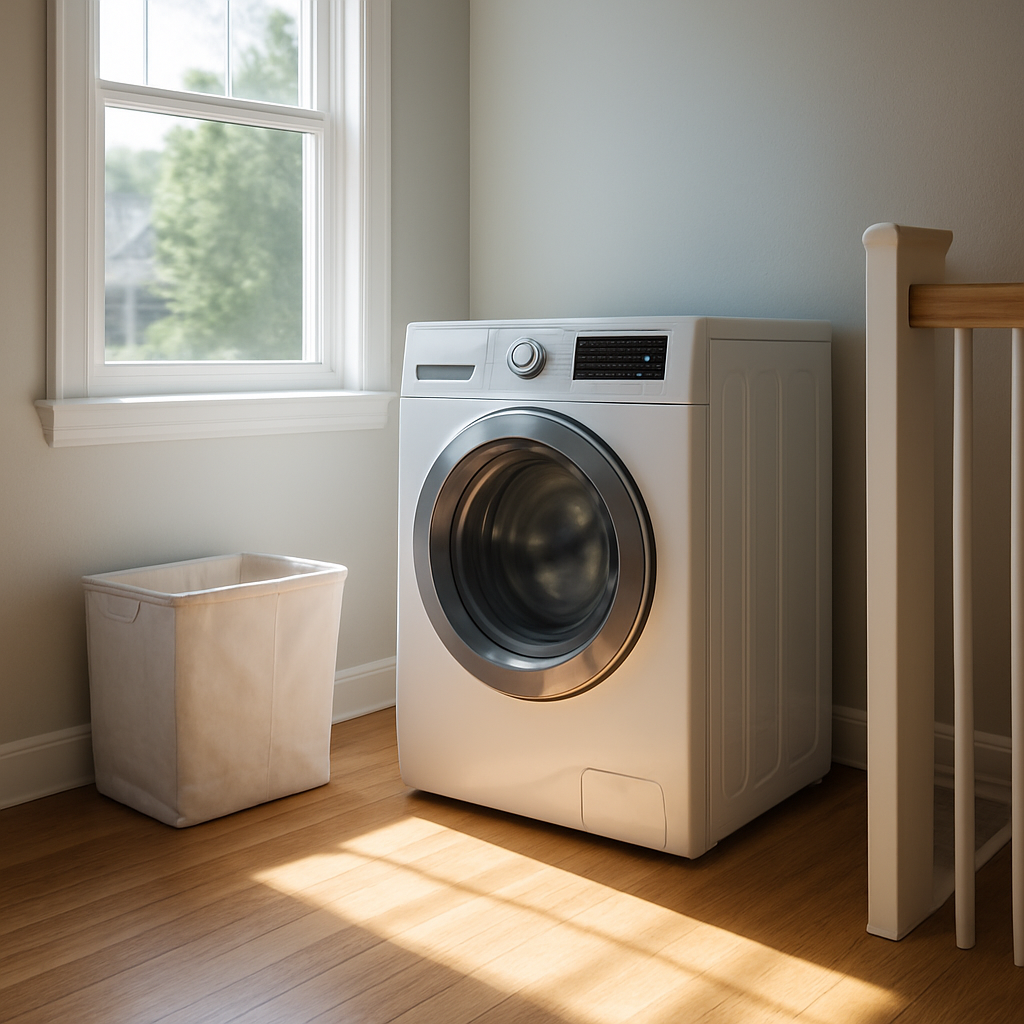
If your washer is upstairs and sounds much louder downstairs, the most common cause is structural vibration transmission: the spin cycle shakes the floor, and the framing carries that vibration like a speaker. First action: confirm the noise is worst during high-speed spin, then check leveling and movement. If the machine can rock or walk, fix that before assuming a washer part has failed.
Identify the Noise First
Pinpointing when the noise happens tells you whether you are hearing the washer itself or the house amplifying normal vibration.
During spin (especially high-speed spin): Low-frequency thumping, rumble, or a bass-like “whole floor” vibration. Often louder in rooms below than in the laundry room.
During drain: A short buzz or hum from the pump area. If it is mainly heard downstairs as a vibration, look for the washer touching a wall/pipe or a loose floor surface acting like a sounding board.
During fill: Rattling pipes or a knocking sound in walls/ceilings. This can be plumbing vibration traveling through the structure rather than the washer tub.
Constant (even when not spinning): Less likely to be structural transmission. A constant grind or squeal points more toward a component noise you’d hear equally nearby.
Intermittent (comes and goes as the load shifts): Classic for an unbalanced load causing changing forces into the floor. Often described as “it’s fine, then suddenly starts pounding.”
What This Noise Usually Means
Upstairs washers can transfer normal operating vibration into the building structure. During spin, the rotating wet load creates dynamic forces that push into the washer feet. If the washer is even slightly out of level, on a flexible floor, or allowed to move, those forces couple into the subfloor and joists. The ceiling below can act like a resonator, so the noise is perceived as louder downstairs than at the machine. This is why the “loudness” often tracks spin speed and load size more than any single washer component.
Most Common Causes
Washer not level or feet not firmly planted: The cabinet rocks and injects strong vibration into the floor.
Unbalanced loads: Heavy items (towels, bath mats, jeans, a single blanket) clump and create a repeating thump that the structure amplifies.
Washer “walking” and contacting something: The unit taps a wall, baseboard, door trim, dryer, or cabinetry and turns vibration into loud impact noise.
Inadequate or flexible upstairs floor under the washer: Some laundry closets are framed light; the floor deflects and amplifies spin vibration.
Vibration transmitted through rigid connections: Drain hose, fill hoses, or the standpipe touches framing and carries vibration into the wall/ceiling.
Shipping bolts not removed (front-loaders): Causes severe vibration and structural booming, especially on spin.
Worn suspension components: If shocks/struts/springs are weak, the tub movement increases and the structure receives stronger pulses. This is less common than leveling/load issues but very real when vibration suddenly worsens over time.
How to Check Safely
These checks focus on reducing vibration transfer and identifying whether the house is amplifying normal spin forces.
Step 1: Confirm it matches spin. Run a rinse-and-spin or spin-only cycle. If the downstairs noise begins as the spin ramps up and changes with speed, structural transmission is likely the main issue.
Step 2: Check for rocking. With the washer off, open the door/lid and push on opposite corners of the top. Any rocking means at least one foot is not solid on the floor.
Step 3: Level it correctly. Adjust the feet so all four contact firmly. Tighten the locknuts on adjustable feet so they cannot back off. Recheck for rocking afterward.
Step 4: Look for contact points. Pull the washer slightly forward and ensure it is not touching the wall, baseboard, dryer, shelving, or a drain box. Even light contact can turn vibration into loud knocking downstairs.
Step 5: Inspect hoses and drain line routing. Make sure fill hoses are not hard against the wall and the drain hose is not wedged tightly into a standpipe or rubbing studs. You want gentle curves, not tensioned lines.
Step 6: Do a controlled load test. Run a medium, well-distributed load (mixed items, not one heavy piece). If the downstairs noise improves dramatically, your main issue is load balance and vibration coupling, not a failing bearing.
Step 7: For front-loaders, verify shipping bolts are removed. If the machine is new or recently moved, confirm the transit bolts and spacers are out. A front-loader with shipping bolts installed can shake the structure aggressively.
Step 8: Observe tub movement (only visually). During early spin ramp, watch through the door (front-load) or open lid only if safe and allowed by the machine design (top-load). Excessive tub sway that looks out of control suggests suspension wear, especially if leveling and loads are correct.
When This Is Normal vs A Problem
Usually normal: A low-frequency hum or mild vibration downstairs that appears only in high-speed spin, with no walking, no cabinet banging, and no worsening over time. Upstairs installations often transmit some vibration even when the washer is operating correctly.
Likely a problem: Any of the following means the vibration is excessive or turning into impact noise and should be corrected.
Walking or shifting position during spin
Sharp banging (cabinet striking something) rather than a steady hum
Vibration that suddenly became much worse with the same types of loads
Repeated out-of-balance stoppages or spin that never stabilizes
Visible tub slamming or extreme sway even with balanced loads
When to Call a Technician
You have properly leveled the washer, cleared all contact points, and tested balanced loads but the downstairs vibration remains severe.
The tub movement is excessive and does not settle as spin speed increases (possible failed shocks/struts/springs).
You hear grinding, roaring, or metal-on-metal sounds in addition to the vibration (not typical structural transmission).
The washer is installed in a tight closet where modifications may be needed to prevent contact and manage vibration safely.
You suspect the floor structure is the main contributor (significant bounce or flex). A technician can confirm washer condition, and a contractor may need to address floor reinforcement.
How to Prevent This Problem
Keep loads balanced. Mix item sizes so weight distributes evenly. Avoid spinning one heavy item by itself.
Do not overload. Overloading increases out-of-balance forces and pushes vibration into the floor.
Recheck leveling after moving or cleaning. Even a small shift can reintroduce rocking.
Maintain clearance. Leave space so the washer cannot touch walls, trim, or the dryer during spin.
Route hoses with slack. Prevent hoses and drain lines from acting like vibration bridges into framing.
Use the appropriate spin setting. If the floor is flexible, a slightly lower spin speed can reduce transmitted vibration dramatically on some installs.
Related Washing Machine Noise Problems
Washer thumps only on high-speed spin but is quiet at low spin
Washer walks forward and hits the closet door or baseboard
Loud banging in the ceiling below when the washer drains
Shaking starts after the washer was moved or installed
Pipes knock in the wall when the washer fills upstairs
Conclusion
An upstairs washer that sounds loud downstairs is most often a vibration transmission issue, not a “loud washer” problem. Focus on when it happens (usually spin), then correct leveling, prevent contact with surrounding surfaces, and test with balanced loads. If vibration remains severe after these checks, have a technician evaluate suspension wear and confirm the installation isn’t amplifying normal forces.
Frequently Asked Questions
Why is my washer louder downstairs than in the laundry room?
Because the floor/joists and the ceiling below can amplify low-frequency vibration from the spin cycle. You may be hearing the structure acting like a speaker panel, not additional noise from the washer itself.
Will anti-vibration pads fix an upstairs washer that shakes the house?
Pads can help if the issue is minor and the washer is properly leveled with solid foot contact. They will not fix a rocking washer, a machine that is touching a wall, or a worn suspension. Treat pads as a finishing step after leveling and clearance checks.
How do I know if it is an unbalanced load or a machine problem?
If the noise comes and goes as the load shifts, improves with a mixed, medium load, and is worst with single heavy items, it is usually load balance and vibration coupling. If it is consistently violent even with balanced loads and correct leveling, suspect suspension wear or an installation issue.
My washer is level, but the upstairs floor still vibrates a lot. What now?
Confirm the washer is not contacting anything and that hoses are not bridging vibration into the wall. If those are clear, the remaining issue may be floor flexibility. A technician can verify the washer suspension is controlling tub movement; if it is, you may need building-side solutions such as improved floor stiffness under the laundry area.
Is it normal for an upstairs front-load washer to make a low rumble during spin?
A mild low-frequency rumble that scales with spin speed can be normal upstairs because the structure carries vibration. It is not normal if it becomes a hard pounding, the washer walks, or it recently got much worse with the same loads.
That’s the whole shape of it—plain enough to feel obvious after the fact. The hard part is usually waiting for the noise to quiet down, then realizing nothing magical was required.
Now the page can stop spinning. Let the rest of the day do what it was always going to do, just with fewer mental sticky notes.