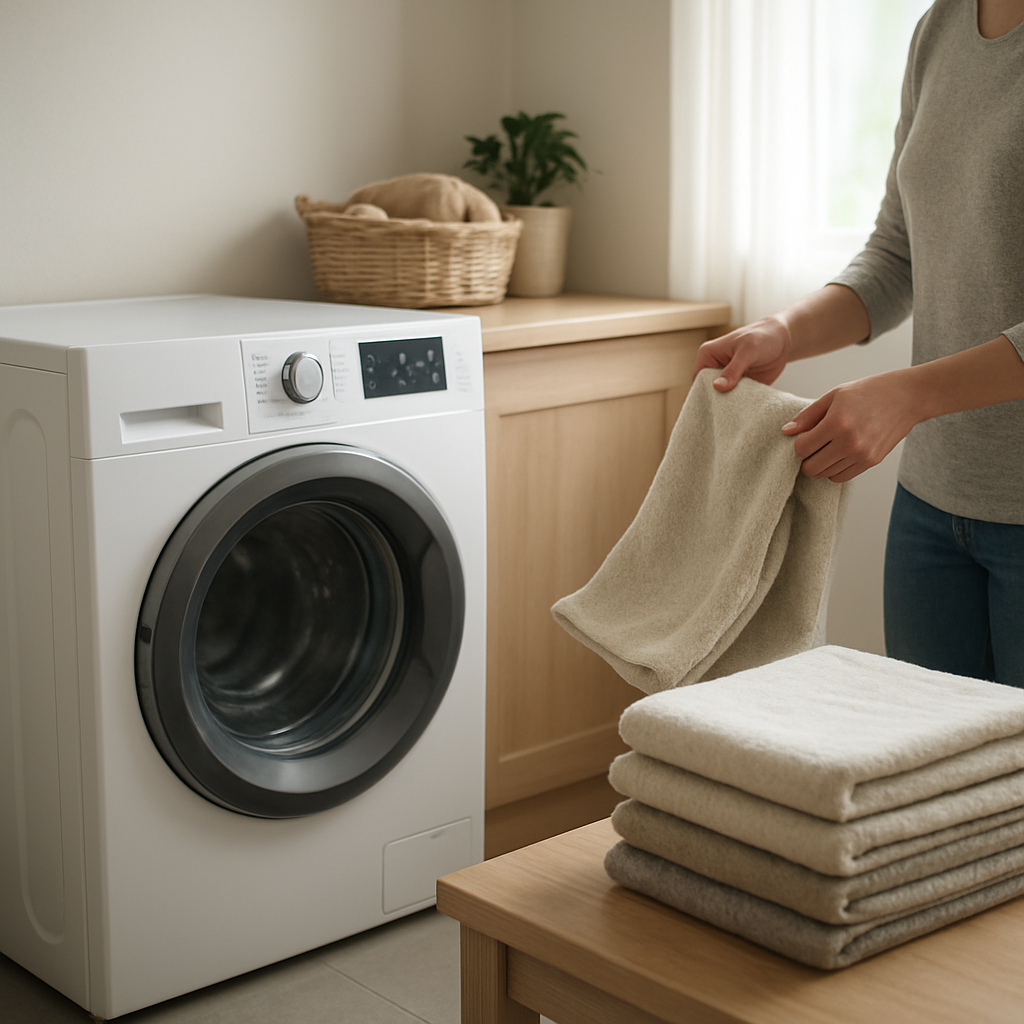
Washing Machine Loud After Leveling? What Could Be Wrong
Quick Answer
If your washer got louder right after you leveled it, the most likely issue is an incorrect leveling adjustment: one foot isn’t firmly loaded, the cabinet is twisted, or the lock nuts aren’t tightened. First action: verify all four feet are in solid contact and the washer doesn’t rock corner-to-corner. Then re-level using the correct method for your floor and tighten the lock nuts.
Identify the Noise First
The timing and style of the noise usually points to a leveling mistake versus a separate mechanical failure. Use this quick guide to match your situation.
During spin: Loud banging, thumping, or the machine walking. Most consistent with a rocked cabinet, uneven foot loading, or too much lift at one corner.
During drain: Buzzing/humming or a rattling that starts exactly when water pumps out. Leveling can shift the base so a hose, pump cover, or cabinet panel touches and vibrates.
During fill: Sharp tapping or vibration when valves open. After leveling, the rear may sit closer to the wall so inlet hoses or the drain hose slap the cabinet.
Constant: A steady vibration or rattle anytime the drum moves. Often caused by the washer now contacting a wall/cabinet, or feet not locked so they resonate.
Intermittent: Random knocks that happen as the load shifts. Leveling that leaves one foot light can make the cabinet “snap” under changing weight.
What This Noise Usually Means
Leveling isn’t just making the top look flat. It sets how the washer’s weight is distributed across the four feet. If one foot is barely touching, the cabinet can rock. During spin, that rocking amplifies tub movement and turns a normal out-of-balance correction into banging or walking. If you raised or shifted the washer during leveling, you can also create new contact points: hoses touching the cabinet, the back panel touching the wall, or the drain hose vibrating against the standpipe.
Most Common Causes
One foot not firmly on the floor (washer rocks when you push on opposite corners)
Feet adjusted unevenly, twisting the cabinet (top may read level, but the frame is “loaded” diagonally)
Lock nuts not tightened so the feet slowly back off and rattle under vibration
Washer now closer to a wall or cabinet after repositioning, causing contact during spin
Drain hose or inlet hoses moved during leveling and now slap the cabinet or wall
Leveling done on a soft or uneven surface (vinyl over foam, weak subfloor, thick anti-vibration pads that squish unevenly)
Feet installed on debris (grit, a small tile spacer, detergent cap) creating a “point load” that clicks or rocks
How to Check Safely
These checks focus on confirming whether the noise is caused by the leveling adjustment and correcting it without taking the machine apart.
Unplug the washer. If it’s a gas dryer/stack or combo setup, keep the area ventilated and don’t strain gas lines while moving anything.
Do the rock test. With the washer empty, place one hand on the top front-left corner and press down, then the front-right, then rear corners. Any click, shift, or movement indicates at least one foot is not loaded.
Confirm all four feet contact the floor. Use a flashlight and look at each foot. If you can slide a thin piece of paper under a foot easily, it’s likely not carrying weight.
Re-level correctly (don’t chase the bubble only).
Back off the lock nuts on the feet (if equipped).
Adjust the feet in small turns, aiming for no rocking first, then level.
Check level side-to-side and front-to-back, but prioritize solid contact at all four corners.
Tighten the lock nuts. Once stable, tighten each lock nut against the washer base so the foot can’t rotate. This prevents the washer from “settling loud” over the next few loads.
Check new contact points caused by repositioning.
Pull the washer slightly forward so it has clearance behind it (a small gap is enough).
Make sure inlet hoses form a relaxed loop and aren’t tapping the back panel.
Verify the drain hose is not stretched tight or vibrating against the standpipe or wall.
Run a controlled test. Plug in, run a rinse-and-spin with the washer empty. If it’s quiet empty but loud with clothes, the leveling is improved and you may be seeing normal load balance sensitivity. If it’s still loud empty, recheck rocking and contact points.
When This Is Normal vs A Problem
Usually normal after a leveling adjustment:
Brief ramp-up noise as the washer transitions into high spin
Minor vibration that does not move the machine and does not repeat as banging
A short self-correction where the washer slows and rebalances once
A problem that typically points back to incorrect leveling:
Washer walks, rotates, or creeps forward during spin
Repeated banging that starts as soon as it hits higher spin speeds
Rocking you can feel by hand on the top panel
Noise appeared immediately after you adjusted the feet or moved the washer
When to Call a Technician
You cannot eliminate rocking even after adjusting feet and tightening lock nuts (may indicate floor flex or a damaged foot/bracket)
The washer is loud even when empty after confirming stability and clearance (needs a hands-on check to rule out suspension or drive issues)
The washer is stacked or hard-plumbed and moving it risks damaging lines, venting, or the stack bracket
You see a broken or bent leveling leg mount or the foot won’t tighten securely
How to Prevent This Problem
Level for stability first. No rocking matters more than a perfect bubble reading.
Always tighten lock nuts. Loose feet are a common reason a washer becomes loud days after leveling.
Keep clearance behind the washer. Leave enough space so hoses don’t tap the cabinet during spin.
Recheck after a week. Floors and feet can settle; a quick rock test catches it early.
Address soft flooring. If the surface compresses, use a solid washer platform instead of thick pads that deform unevenly.
Related Washing Machine Noise Problems
Washer bangs only with heavy blankets after leveling (stable cabinet but load distribution triggering imbalance correction)
Washer walks forward during spin even though it looks level (one foot light or lock nuts loose)
Rattling rear panel right after moving the washer back (hose or cord contacting the cabinet)
Buzzing during drain after leveling (pump vibration amplified by cabinet contact or base shift)
Thumping that disappears when you pull the washer away from the wall (cabinet-to-wall contact rather than internal failure)
Conclusion
A washer that gets loud right after leveling is usually reacting to the way the feet are loaded or what the cabinet is touching. Focus on eliminating rocking, tightening lock nuts, and restoring clearance around hoses and the wall. If it’s still loud when empty after those checks, schedule service to rule out issues beyond leveling.
Frequently Asked Questions
My washer is level, but it still rocks. How is that possible?
A washer can read level while one foot is still light. The cabinet twists slightly and the bubble looks fine, but it rocks under changing weight in spin. Adjust the feet to eliminate rocking first, then confirm level, and tighten the lock nuts.
Should all four feet touch the floor firmly?
Yes. All four feet should be in solid contact and carrying load. If one foot is barely touching, the washer will shift and bang during acceleration and high spin.
Do anti-vibration pads cause more noise after leveling?
They can. Some pads compress unevenly and make it harder to keep all four feet evenly loaded, especially on flexible flooring. If noise started after leveling and pads are installed, try removing them and re-leveling on a solid surface.
Why did the noise start only after I tightened the feet up higher?
Raising the washer changes the center of gravity and can reduce how much weight is on a foot if adjustments aren’t even. It can also bring the cabinet closer to the wall or tighten the hose routing. Re-level for no rocking and verify nothing touches the back panel.
What if it’s quiet empty but loud with clothes after leveling?
That usually means the cabinet is more stable now, but certain loads are becoming unbalanced in spin. Confirm the washer still doesn’t rock, avoid overloading, and wash bulky items with similar items for balance. If it bangs with normal loads consistently, revisit leveling and floor support.
There’s a strange comfort in seeing the mess turned into something readable. The conversation stops circling and starts landing where it should.
What follows feels less like a fix and more like a return to normal life—quiet, practical, and oddly satisfying. After all that noise, it’s just… steadier.