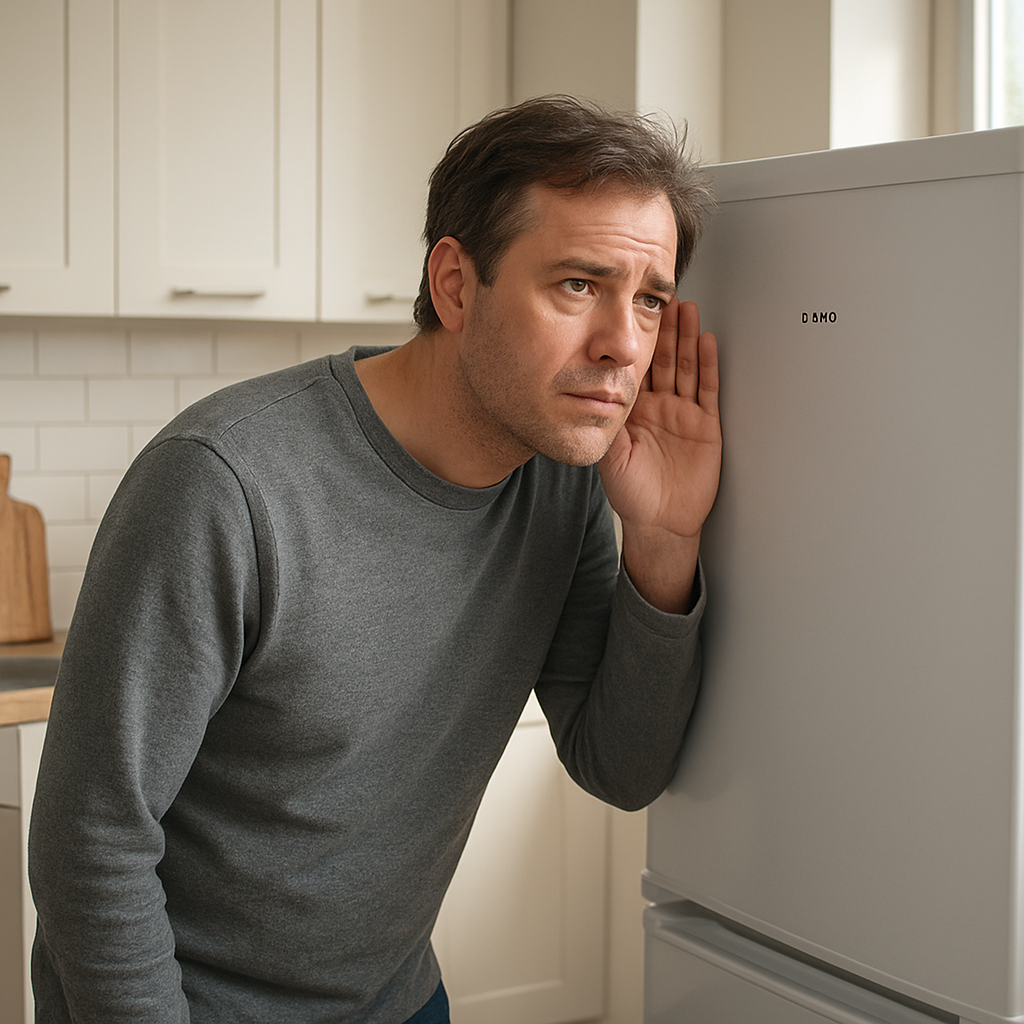
After a move, the most common reason a freezer suddenly gets noisy is transport-related misalignment: the cabinet is no longer level/square, it’s touching a wall, or a fan shroud/panel shifted and is now rubbing. First action: pull the unit out, confirm it’s level front-to-back and side-to-side, and verify nothing is contacting the cabinet (walls, flooring, drain pan, shelves, or fan cover).
Identify the Noise First
Use this quick timing guide. The goal is to match the sound to a place where misalignment typically creates contact or vibration.
If the noise starts exactly when the compressor starts: suspect cabinet vibration, rear lines or drain pan rattling, or the unit touching the wall due to a shifted position.
If the noise happens while the compressor is running: suspect a resonance issue from leveling/clearance, or a condenser fan area vibration (if equipped) caused by the cabinet sitting twisted after transport.
If the noise happens right after the compressor stops: suspect the drain pan shifting or a cabinet panel “oil can” pop that became noticeable because the refrigerator is no longer sitting evenly.
If the noise shows up during defrost or shortly after: suspect ice/water placement changes causing expansion sounds to echo differently, or a shifted evaporator cover letting the fan graze frost/ice.
If the noise happens when the ice maker runs or fills: suspect the ice bin or bucket shifted and is vibrating, or the water line is tapping the cabinet because the refrigerator is now closer to the wall.
If the noise is only when the evaporator fan is running (freezer side): open the freezer door. If the sound changes immediately, suspect fan rubbing from a shifted rear panel, a loose bin/rail, or ice/frost contact caused by airflow changes after the move.
If the noise is only when the condenser fan is running (rear/bottom, if equipped): listen at the back/bottom. A new rattle often points to a shifted lower access panel, drain pan, or the unit sitting unevenly.
If the noise is constant: check for something physically touching (refrigerator-to-wall contact, toe grille, rear cover, shelves/bins) or a fan blade contacting a shroud continuously.
If the noise is intermittent: focus on vibration points that only resonate at certain compressor speeds or fan cycles, commonly tied to leveling and clearance changes after transport.
If it’s louder at night and quieter during the day: slight misalignment can make vibration travel through quiet floors/walls more noticeably when the house is quiet; this often improves after leveling and adding proper clearance.
What This Noise Usually Means
Moving a refrigerator can leave it sitting slightly twisted, pitched too far, or pressed against a wall/cabinet. That small change is enough to turn normal operating vibration into a rattle, hum, or buzzing noise. Transport can also shift lightweight parts such as the rear lower cover, drip/drain pan, interior shelves/bins, or freezer back panel. When the chassis is no longer stable, fans and panels can sit just close enough to rub, or the cabinet can resonate like a speaker.
In most after-move cases, the refrigerator is still mechanically healthy; the noise is a contact or vibration problem created by misalignment, not a failing compressor.
Most Common Causes
Unit not level after placement: new buzz/hum or rattling that changes when you press on a front corner or slightly lift the cabinet.
Refrigerator touching the wall, cabinet, or water line: vibration/rattle that stops when you pull the unit forward a few inches.
Drain pan or rear lower access panel shifted: plastic rattle or tapping from the back/bottom, often worse when the compressor first starts.
Evaporator fan rubbing due to a shifted freezer back panel or displaced bin/rail: scraping or ticking that changes when the freezer door opens and the fan slows/stops (model-dependent).
Condenser fan area vibration (if equipped) from cabinet twist: buzzing or rapid ticking near the bottom rear that changes when you slightly rock the unit.
Items inside the freezer repositioned into a vibration point: bottles, pans, or the ice bin touching a wall/panel and rattling only during compressor run.
Door not sealing evenly after the move: fan noise gets louder due to frost buildup or airflow restriction, often paired with longer run times and new whooshing/whistling.
How to Check Safely
These checks target alignment and contact points created by transport. No tools beyond a flashlight and a basic level are required.
Start with clearance: Pull the refrigerator out so it is not touching the wall, cabinets, or the water line. Run it for 10 minutes. If the noise improves, you have a contact/vibration issue, not a component failure.
Check leveling and cabinet rock: With both doors closed, place a level on the cabinet (front edge and side edge). Adjust the front leveling legs so the unit is stable with no rocking. A properly set unit should not teeter when you press on opposite corners.
Listen for change with light pressure: While it’s running, press lightly on the top front and each side panel. If the sound changes significantly, that points to resonance caused by twist/uneven feet or a panel touching something.
Inspect the base area: Remove the front toe grille if it snaps off easily. Look for anything loose or vibrating (cardboard, flooring transitions, a shifted drain pan edge). Do not reach near moving fan blades.
Check the rear lower area visually: With a flashlight, look behind the unit for a loose rear cover or a drain pan that is not seated. If you see a panel corner fluttering, reseat it if it’s a simple clip/screw-on cover. If access requires removing multiple covers or you’re unsure, stop and schedule service.
Rule out internal items: Reposition freezer contents so nothing touches the back wall or side walls, and make sure drawers/bins are fully seated on their rails. A slightly mis-seated bin after moving can create a repetitive rattle.
Door seal and alignment check: Close the freezer door on a piece of paper and gently tug. Resistance should be consistent around the perimeter. If one area is loose, the cabinet may be out of level or the door may be slightly misaligned after the move.
Fan-related quick test: If the noise seems to come from inside the freezer, open the freezer door and listen for an immediate change. If it changes quickly, suspect evaporator fan rubbing or airflow restriction that can be worsened by a shifted panel or poor door seal.
Condenser coil surface dust check: If you can access the front/bottom intake area, remove lint buildup. Restricted airflow can increase running time and make vibration more noticeable, especially if the cabinet is slightly twisted and resonating.
If you smell burning, hear repeated clicking with no start, or the unit trips the breaker, stop and call a technician.
When This Is Normal vs A Problem
Usually normal after a move if cooling is good and the sound is a mild hum or brief rattle that goes away after you level the unit and give it clearance. It’s also normal to hear occasional pops or creaks from panels as temperatures stabilize, especially right after relocation.
Likely a problem if any of the following are true:
Scraping or grinding persists, especially from the freezer area, suggesting fan-to-shroud contact that has not corrected with leveling.
Rattle is loud enough to hear clearly in other rooms and does not change after pulling the unit away from the wall and stabilizing it.
Repeated clicking or buzzing with no cooling improvement, which is not a misalignment symptom and can indicate a start device or compressor issue.
Noise is paired with warming temperatures, heavy frost, or prolonged run times, suggesting airflow or defrost problems sometimes triggered by door misalignment/seal issues after moving.
Water on the floor after relocation, which can happen if the drain pan shifted or a line is contacting and vibrating loose.
When to Call a Technician
Fan scraping that continues after you’ve confirmed the unit is level, not touching surrounding surfaces, and internal bins/panels are seated.
Loud buzzing plus poor cooling or a compressor that tries to start repeatedly (buzz/click cycle). This is not typical of transport misalignment and needs electrical diagnosis.
Breaker trips or electrical smell at any point.
Condenser fan noise you cannot access safely because the repair requires removing covers near wiring or moving fan blades.
Door alignment/seal problems you cannot correct with leveling, especially if frost is building up and the evaporator fan is hitting ice.
How to Prevent This Problem
Level the refrigerator immediately after placement: stable feet prevent cabinet twist and vibration transfer.
Maintain proper clearance: keep the back and sides from contacting walls, water lines, or cabinetry so vibration cannot transmit and rattle.
Secure and reseat bins and shelves after moving: verify drawers are fully on tracks and the ice bin is properly seated.
Keep freezer vents unblocked: overpacked items can redirect airflow and encourage frost patterns that lead to fan noise, which is easier to trigger if the door is slightly out after a move.
Clean accessible condenser intake areas periodically: stable airflow reduces long run times and reduces vibration exposure.
Protect door seals: wipe grime from gaskets and confirm even contact so minor cabinet misalignment doesn’t turn into frost and fan interference.
Related Refrigerator Noise Problems
Rattling from the back after pushing the refrigerator against the wall
Freezer fan ticking that stops when the door opens
Buzzing noise that starts only when the compressor turns on
Drip pan vibrating on the floor after relocating the unit
Condenser fan noise after cleaning or moving the refrigerator
New humming resonance after replacing flooring or moving to uneven tile
Ice maker fill line hammering against the cabinet after repositioning
Popping and creaking sounds that got louder after a move
Grinding noise from freezer after door doesn’t seal evenly
Intermittent vibration noise that stops when you steady the cabinet by hand
Conclusion
A freezer that gets noisy after moving is most often dealing with misalignment and contact points created during transport, not a sudden major failure. Start by giving the unit clearance, leveling it until it cannot rock, and reseating panels, bins, and the drain pan area. If you still have scraping, repeated start attempts, or noise paired with warming temperatures, schedule service to prevent fan or electrical damage.
Frequently Asked Questions
Why did my freezer get louder right after we moved it?
Most commonly the cabinet is no longer sitting square: one leveling foot is unloaded, the refrigerator is touching the wall, or a panel/bin shifted. That turns normal compressor and fan vibration into a louder rattle or hum. Pull it out, level it so it does not rock, and make sure nothing is contacting the cabinet.
My freezer makes a scraping sound now. Is that from misalignment?
Often, yes. After transport, the freezer rear panel, drawers, or an ice bin can sit slightly out of place and a fan blade will graze a shroud or frost. If the sound changes when you open the freezer door, that’s a strong clue it involves the evaporator fan area and alignment/clearance.
Should I worry if the noise only happens when the compressor starts?
If it’s a brief rattle/buzz and cooling is normal, it usually points to vibration resonance: the unit is touching something or the drain pan/rear cover is loose from the move. If it’s a loud buzz followed by clicking and the unit struggles to cool, that’s different and needs a technician.
How do I know if it’s the wall causing the noise?
Pull the refrigerator forward a few inches so nothing touches the back or sides and run it for 10 to 15 minutes. If the sound drops significantly, the noise is being transmitted into the wall/cabinetry or a line is tapping the wall. Reposition for clearance and re-level.
Will the noise go away on its own after the unit settles?
Minor creaks and pops can fade as temperatures stabilize, but vibration rattles caused by misalignment usually do not. If the cabinet is rocking or touching the wall, it will keep making noise until you correct leveling and clearance.
It’s nice how quickly the noise fades when the piece finally clicks into place. The problem stops feeling slippery, and the path ahead looks less like a riddle and more like a hallway with lights on.
There’s a quiet relief in that. No fireworks, no grand speeches—just the steady return of your attention to the things that actually need it.