Garbage Disposal Grinding Noise? What It Means & How To Fix It
Quick Answer (Most Likely Cause)
A garbage disposal grinding noise is most often hard object contact between the impeller and the grind ring, typically from a fallen utensil, bone fragment, fruit pit, bottle cap, or glass. Stop running it immediately to prevent scoring the grind ring and bending an impeller. Turn power off, look into the mouth with a flashlight, remove the object with tongs, then test with a short water-assisted run.
Identify the Noise First
Correct diagnosis depends on when the grinding occurs and whether the motor is actually turning.
Grinding starts instantly at startup and continues: object is already trapped between impeller and grind ring; do not keep cycling the switch.
Grinding happens only after food is added: a hard item is in the load or a previously trapped object shifts under load and contacts the ring.
Unit hums but does not spin: impeller is jammed by an object; this is not a normal running sound.
Motor spins and water drains, but intermittent grinding pops in and out: small hard debris is bouncing around the grind chamber, making brief metal contact.
Water pools and drains slowly while grinding occurs: obstruction is restricting flow and the impeller is churning a partially blocked outlet; hard debris may also be present.
After pressing reset, it runs but still grinds: reset cleared overload only; the physical cause is still hard contact in the chamber.
Grinding only at the very end while chamber is nearly empty: small hard item is now free to rattle and strike the ring because there is no soft food to cushion it.
What This Noise Usually Means
The grinding sound is metal-on-hard-material contact inside the grind chamber. The impellers ride on a rotating plate driven by the motor. When a hard object wedges between an impeller and the fixed grind ring, the impeller strikes, drags, or shaves the object each revolution. That impact transfers vibration into the sink and cabinet, making the noise seem louder than it is. Continued operation can burr the grind ring, nick the impeller edges, or bend an impeller so the grinding persists even after the object is removed.
Most Common Causes (Ranked by Probability)
Utensil or small metal item in the chamber
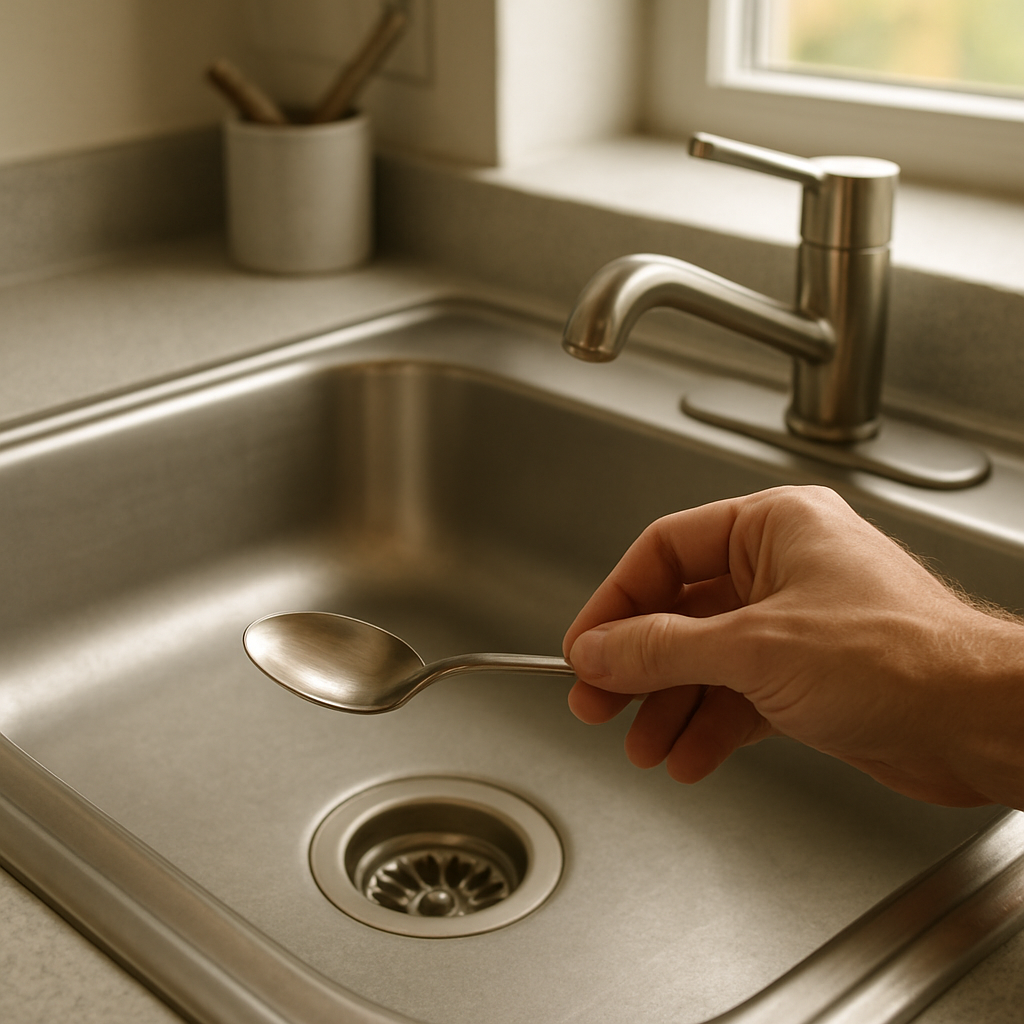
What happens: spoon, fork tip, straw, or bottle cap wedges between impeller and grind ring.
Sound profile: harsh metallic grind, often rhythmic with rotation.
Identifying symptom: noise starts immediately; may see metal in the throat with a flashlight.
Fruit pit, bone fragment, or hard seed trapped at the ring
What happens: hard organic piece jams at the outer ring; impeller repeatedly impacts it.
Sound profile: sharp cracking grind; may vary as the piece shifts.
Identifying symptom: grinding is worse under load; fragments may flush out after removal of the main piece.
Glass shard or broken ceramic piece
What happens: shard rides the outer channel and gets pinched between impeller and ring.
Sound profile: abrasive, sand-like grinding; may be continuous.
Identifying symptom: sparkly debris visible; noise persists even with no food present until debris is cleared.
Hard object bounced into the sidewall by low water flow
What happens: inadequate water allows a hard piece to ricochet and repeatedly strike the grind ring.
Sound profile: intermittent clacks and short grinding bursts rather than a steady grind.
Identifying symptom: noise reduces significantly when a strong water stream is running.
Obstruction sitting in the anti-splash baffle, dropping in during operation
What happens: an object rests on the rubber baffle and falls into the chamber when vibration starts.
Sound profile: sudden onset mid-run; loud initial hit followed by grinding.
Identifying symptom: nothing visible at first; repeated starts produce a new impact each time.
Partially cleared jam causing impeller-to-ring rub
What happens: after a jam event, an impeller may be slightly bent or the ring may be burred; contact occurs even without the original object.
Sound profile: steady scraping or cyclic rub once per rotation.
Identifying symptom: grinding continues after the chamber is visually clear and flushed.
Mounting vibration amplifying normal contact sounds
What happens: loose mounting ring or sink flange transmits and amplifies the impact so it sounds like severe grinding.
Identifying symptom: noise gets louder when you touch the sink or cabinet; disposal feels excessively shaky while running.
Internal wear after extended grinding against a hard object
What happens: repeated hard contact stresses bearings and impeller hardware, increasing mechanical noise even after debris removal.
Sound profile: rougher run sound, more vibration, possible growl mixed with grinding.
Identifying symptom: performance drop, frequent stalls, or new vibration that was not present before the incident.
How to Check Safely
1) Stop immediately
Flip the switch off the moment grinding starts. Repeated on-off cycling often drives the object deeper into the ring.
2) Cut power at the source
Unplug the disposal under the sink, or turn off the correct breaker. Confirm it cannot start.
3) Inspect from above with light only
Use a flashlight and look past the splash baffle. Do not put your hand into the chamber.
If you see a hard object, remove it using tongs or pliers.
4) Check for free movement
If your model has a hex socket on the bottom, insert the correct hex key and rotate back and forth to confirm it turns without binding.
If there is no hex socket, use a wooden handle from above to gently nudge an impeller and confirm it can move. Stop if it will not budge.
5) Press the reset only after clearing the cause
Press the red reset button on the bottom only after the disposal spins freely. Resetting without clearing the obstruction usually results in another stall.
6) Flush test
Run a strong stream of cold water, then start the disposal for 2 to 3 seconds.
If it sounds normal, run 10 to 15 more seconds with water to clear fines.
7) If grinding persists with an empty chamber
Power off and re-inspect for small debris like glass or a pit fragment lodged at the outer ring.
If the chamber is clear and it still scrapes, stop using it. That pattern indicates damage or misalignment from the earlier hard contact.
Normal Operating Sound vs Warning Signs
Normal function sounds
Steady, smooth motor sound with a consistent pitch.
Short, soft rattling only as small food scraps enter, then it clears quickly with water.
Developing problem sounds
Intermittent clack or grind that comes and goes, suggesting a small hard item is still circulating.
Increased vibration or cabinet resonance that points to loosened mounting after a jam event.
Scraping that continues briefly after shutoff, indicating an object is caught and dragging as it coasts.
Immediate danger indicators
Metal-on-metal grinding that is continuous and loud with no food present.
Humming without spinning, or repeated trips to the reset button.
Burning smell, hot housing, or the unit stalling within seconds of startup.
Grinding accompanied by slow or no drainage, indicating obstruction plus load stress.
When Professional Service Is Recommended
Grinding persists after all visible hard objects are removed and the unit rotates freely by hand but still scrapes during powered operation.
Disposal repeatedly hums and stalls even after clearing debris and using the bottom hex rotation method.
There is sustained leakage from the housing or seams after the grinding event, suggesting internal damage.
The mounting assembly is loose or the sink flange is moving, and tightening does not stabilize it.
There is a clear performance drop: slow grinding, frequent stalling, or repeated resets following the object incident.
How to Prevent This Problem
Keep a sink strainer in the non-disposal basin and avoid leaving utensils in the disposal-side sink where they can slide in.
Run a strong stream of cold water before starting, during grinding, and for 10 to 15 seconds after to carry hard fines out of the chamber.
Feed scraps gradually; do not dump a mixed load that can hide pits, bones, or twist ties.
Do not grind glass, ceramic, metal, or bottle caps, even in small pieces; they lodge at the grind ring and score it.
After any jam or hard-object incident, stop and inspect immediately instead of trying to grind through it.
Periodically lift and rinse the splash baffle area to prevent items from sitting on it and dropping into the chamber.
Related Appliance Noise Problems
Humming but not spinning: jammed impeller from a hard object; motor is energized but cannot rotate.
Grinding only with food load: a pit or bone fragment is in the scraps, not the disposal hardware.
Noise started after dropping something in the sink: high probability of utensil or cap lodged at the grind ring.
Rattling after cleaning the sink: brush head, cap, or small cleaning tool fell past the baffle.
Sudden harsh grind after weeks of normal use: new foreign object contact, not normal wear.
Disposal runs but water backs up: obstruction at the outlet increases load and can keep hard debris trapped in the chamber.
Repeated reset button trips: overload from a jam event; physical obstruction is still present or damage occurred.
Grinding plus strong vibration through the sink: hard contact plus loose mounting transferring the sound.
Scraping sound with empty chamber: burr or bent impeller from prior hard-object contact.
Short clack, then normal operation: small hard particle cleared; verify by flushing and listening for recurrence.
Conclusion
A grinding garbage disposal is most commonly the impeller striking a hard object against the grind ring. The correct response is to stop immediately, cut power, remove the object with tools, confirm the unit turns freely, then retest with strong cold water. If grinding continues with an empty, cleared chamber, treat it as damage from the contact and schedule service or replacement.
Frequently Asked Questions
Can I keep running the disposal to grind the object down?
No. Hard objects do not grind like food. They wedge and force repeated impeller-to-ring impacts, which can burr the grind ring or bend an impeller, creating a permanent scraping noise.
Why does it grind for a second and then sound normal?
That pattern usually means a small hard piece is bouncing in the chamber and occasionally gets pinched at the ring. Flush with strong cold water and recheck for remaining debris. If the brief grind repeats, something is still inside.
It only makes the grinding noise when I add food. What does that indicate?
Most often the hard item is in the food load, such as a pit, bone fragment, or shell, and the disposal is striking it. Stop, remove the load, inspect the chamber, and restart with only water to confirm the noise is gone.
What if it hums but will not spin after the grinding started?
The impeller is jammed by the object. Turn power off, remove the obstruction if visible, then free the rotor using the bottom hex socket if equipped. If it will not rotate freely, stop and schedule service.
After removing the object, it still scrapes. Is the disposal ruined?
Not always, but persistent scraping with an empty chamber indicates physical damage or misalignment from the hard-object event, such as a burred ring or bent impeller. Continued use can worsen vibration and stalling, so service or replacement is recommended.
What’s left now isn’t puzzling it out—it’s letting the noise fade. The contrast between the mess and the fix feels almost unfair, like the problem was never as big as it sounded.
Once it clicks, you can get back to the ordinary stuff. Even the days that still feel mildly chaotic end up with a calmer edge, and that counts.