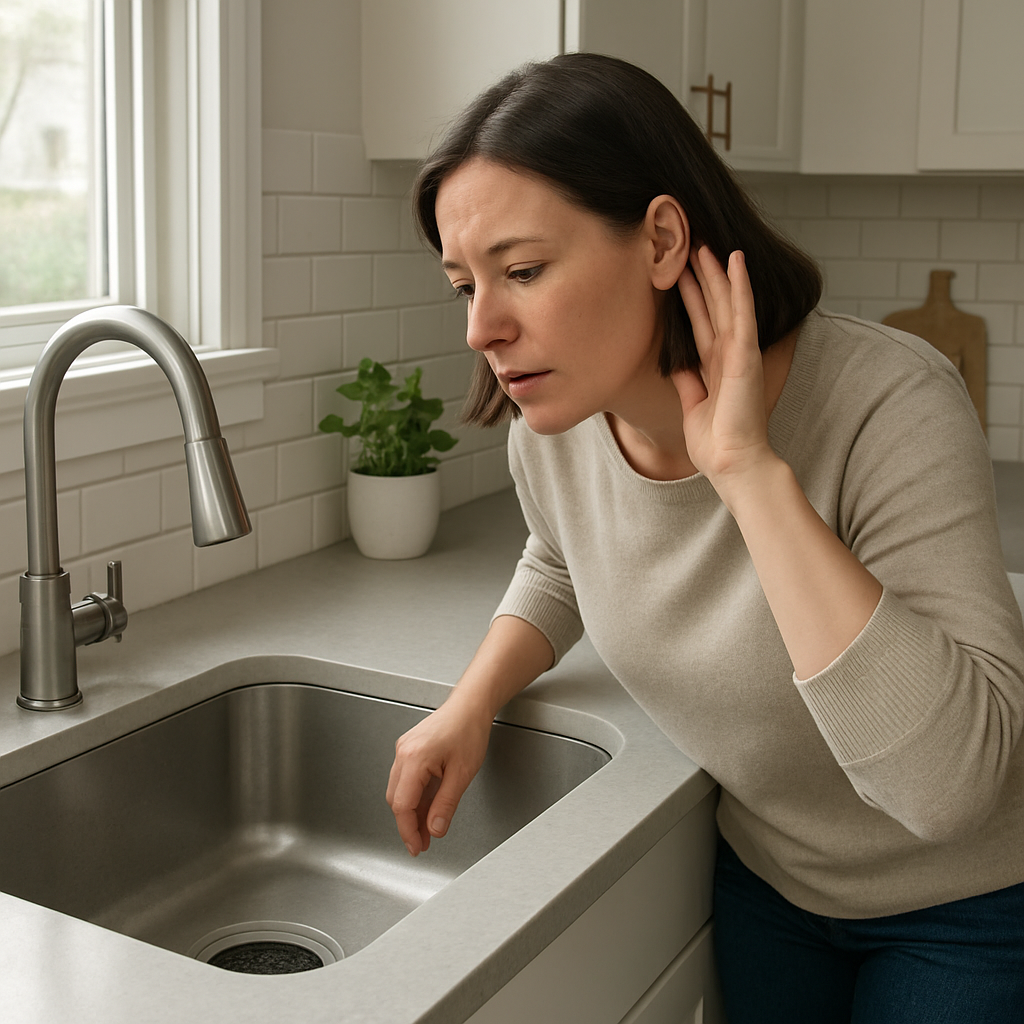
Garbage Disposal Humming Noise? Stuck Motor Or Something Else?
Quick Answer (Most Likely Cause)
A garbage disposal that hums but does not spin is most commonly a stalled motor caused by a jammed impeller or seized turntable. The motor is energized and pulling current, but the rotor cannot turn, so you hear a steady electrical hum. Stop running it immediately, switch it off, and clear the jam or free the impeller using the manufacturer-provided hex port or a manual turn method before restoring power.
Identify the Noise First
Correct diagnosis depends on when the hum occurs and whether the disposal turns.
Hums immediately on startup and does not spin: classic stall condition. You will not hear the normal ramp-up to a grinding water noise.
Hums briefly, then trips off or goes quiet: overload protection is opening due to stalled current draw.
Runs only if you help-start it with a tool, then hums again: partial jam, tight bearings, or failing start circuit (less common than a jam).
Hums but water drains normally and no grinding is heard: motor is powered, impeller is not moving, so nothing is being processed; drain flow is unrelated if the sink trap is clear.
Hums only under load after it was spinning: the impeller is being stalled by material packing, a hard object, or restricted discharge creating a heavy load.
Hums after you pressed the reset and it still will not spin: jam is still present, or the motor will not start (possible start components or internal mechanical bind).
Buzzing or chattering instead of a steady hum: intermittent contact or a loose mounting/vibration issue, not a pure stall.
What This Noise Usually Means
The hum is the sound of the energized motor field while the rotor is not turning. In a disposal, the impeller plate and lugs must rotate freely. When an object wedges between the impeller plate and the grind ring, or when packed debris locks the plate, the motor cannot accelerate. The motor then draws high current at near-zero speed. That current produces a strong 60 Hz electrical hum that is often amplified by the sink and mounting flange. This is not a normal operating sound; it is a motor stall condition until proven otherwise.
Most Common Causes (Ranked by Probability)
Foreign object jammed between impeller plate and grind ring
What happens: a hard item wedges at the perimeter and mechanically locks rotation.
Sound profile: steady hum, no spin-up, no grinding water noise.
Identifying symptom: disposal never reaches normal sound; you may feel no vibration of rotation, only electrical hum.
Debris packing causing a stalled impeller
What happens: fibrous or starchy waste compresses and binds the lugs/plate, especially after running without enough water.
Sound profile: hum on startup or shortly after starting under load.
Identifying symptom: problem appears after disposing peels, rice/pasta, or heavy food sludge; may restart after clearing and flushing.
Reset/overload trip from repeated stalls
What happens: thermal overload opens due to high stall current; motor stops until reset and cool-down.
Sound profile: hum for a moment, then silence; or no response until reset.
Identifying symptom: red reset button popped; unit works briefly then repeats.
Vibration transfer making normal electrical hum seem worse
What happens: mount ring, splash guard, or sink basin resonates, amplifying motor hum.
Sound profile: lower-volume hum while spinning normally, often with a droning tone through the sink.
Identifying symptom: disposal still spins and processes; hum changes when you press lightly on the sink flange or mounting area.
Discharge restriction increasing load until stall
What happens: partial blockage at the discharge elbow or trap causes backpressure; heavy slurry load can stall the impeller.
Sound profile: normal start then bogging, then hum when it locks.
Identifying symptom: slow draining during or after use; disposal struggles only when pushing water and waste out.
Worn bearings or internal mechanical drag (developing)
What happens: increased friction prevents the motor from starting under normal torque.
Sound profile: hum with occasional slight movement, or a sluggish start that quickly stalls.
Identifying symptom: recurring stalls with minimal or no debris present; manual rotation feels tight or rough.
Failed/weak start circuit in the motor (least common compared to jams)
What happens: motor does not develop adequate starting torque, so it hums without accelerating.
Sound profile: steady hum; may run if spun free and unloaded, then fail again.
Identifying symptom: impeller turns freely by hand but hums on power; repeated resets do not change behavior.
How to Check Safely
1) Stop the cycle immediately
Turn the wall switch off. Do not keep trying to start it. A stalled motor overheats quickly.
2) Cut power before hands-on checks
Unplug the disposal under the sink if it has a cord.
If hardwired or no plug is accessible, turn off the correct breaker.
3) Confirm the exact symptom
Restore power briefly and switch on for 1 second only.
If you get a steady hum with no spin-up, switch off immediately and proceed to mechanical checks.
4) Look for an obvious jam from above
Use a flashlight into the throat. Do not put fingers inside.
Remove visible objects with tongs or needle-nose pliers only.
If you see metal-on-metal contact marks or a wedged object you cannot remove safely, stop and schedule service.
5) Free the impeller with the manual turn method
With power off, insert the correct hex key into the bottom center hex port if your model has one.
Work it back and forth until resistance breaks and it rotates freely.
If there is no hex port, use a wooden spoon handle from above to nudge the impeller plate lugs. Do not use metal tools that can chip the grind ring.
If it will not move with moderate force, stop. Forcing can crack internal components.
6) Press the reset only after freeing movement
Press the red reset button on the bottom of the unit if it is popped.
Restore power and test with a strong cold-water flow and no food load.
7) Load test correctly
Run cold water first, switch on the disposal, then introduce small amounts of waste.
If it bogs and returns to humming under light load, treat it as a mechanical drag or restriction problem.
8) Check for discharge restriction without disassembly
Observe drain speed during operation. If water rises quickly in the sink, stop using the disposal to push waste through.
If the sink is already backing up, the disposal may be fine but working against a clogged drain line, which can trigger stalls.
Normal Operating Sound vs Warning Signs
Normal function sounds
Quick spin-up to a steady grind tone
Consistent water-and-grind sound that changes as food clears
Brief metal tick only when a small non-food item is contacted and then cleared immediately
Developing problem sounds
Sluggish start before reaching full speed
Repeated bogging under normal food amounts
Lower pitched droning that increases over weeks, indicating rising friction or mounting resonance
Immediate danger indicators
Steady hum with no rotation
Hums then trips off repeatedly, requiring frequent resets
Hot, acrid odor from the unit housing after a stall
Harsh metal grinding that does not clear within 1–2 seconds
Visible smoke or sparking at the switch area or under-sink wiring route
When Professional Service Is Recommended
Impeller will not rotate manually after removing visible debris and attempting the hex-port method with reasonable force.
Repeated hum-stall-reset cycle returns within the same day under light load and good water flow.
Impeller rotates freely by hand but hums on power, indicating a likely start circuit or internal motor fault.
Persistent metal-on-metal grinding that suggests a deformed grind ring or internal part damage from a hard object.
Electrical symptoms beyond humming: buzzing at the switch, intermittent power, breaker tripping, or heat at the cord/connection point.
Drain restriction that cannot be resolved externally: disposal stalls because discharge plumbing or downstream drain is blocked and requires plumbing service.
How to Prevent This Problem
Run cold water at full flow before and during disposal use to prevent packing that can stall the impeller.
Feed waste gradually; do not dump a bowl of scraps at once, which overloads torque and promotes jams.
Keep hard foreign objects out: utensils, bottle caps, pull tabs, bones, and fruit pits are frequent direct stall causes.
Avoid fibrous and swelling foods in large quantities; if used, process in small amounts with plenty of water.
Do not run the disposal dry; dry grinding increases friction and the likelihood of debris binding.
After use, flush 10–15 seconds to clear slurry from the grind chamber and discharge elbow.
Related Appliance Noise Problems
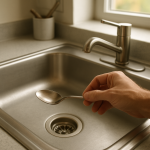
Humming but not spinning after a spoon fell in: object jam at the grind ring; remove and free rotation before reset.
Disposal is silent and does nothing: no power, tripped breaker, failed switch, or open overload without hum.
Runs but makes a loud rattling: loose debris bouncing in the chamber, not a motor stall.
Runs normally but the sink vibrates and drones: mounting resonance amplifying normal motor hum.
Starts normal then bogs and hums with potato peels: fibrous packing stall; clear and flush, reduce load.
Hums after cleaning with ice: dislodged debris can wedge; treat as a jam and free the impeller.
Hums and then the reset pops every time: repeated stall current, either persistent jam or internal mechanical drag.
Grinding noise continues with no food present: possible deformed grind ring or trapped hard object; stop and inspect.
Hums only when water level is high in the sink: discharge restriction increases load; address drain flow issue first.
Works but suddenly much louder than usual: loose mounting screws, shifted flange, or internal wear increasing vibration transfer.
Conclusion
A humming garbage disposal that does not spin is most reliably diagnosed as a stalled motor caused by a jammed impeller. The hum is the energized motor under locked rotation, which overheats quickly. Shut it off, cut power, remove visible obstructions, free the impeller using the hex port or safe manual turn method, then reset and test under running cold water. If it still hums with free rotation or repeats stalls under light load, schedule service.
Frequently Asked Questions
Is it safe to keep trying the switch when my disposal only hums?
No. A hum with no rotation is a stall condition. Repeated starts drive high current through a non-rotating motor, overheating windings and tripping the overload. Stop and clear the jam or confirm free rotation before any further testing.
Why does pressing the reset not fix the humming?
The reset only re-closes the overload protector after it opens from heat/current. If the impeller is still jammed, the motor will stall again and hum. Reset is the last step after the impeller can rotate freely.
How can I tell if the hum is electrical failure or just a jam?
If the impeller cannot be rotated manually, it is a mechanical jam. If the impeller rotates freely by hand but the motor still hums and will not start, that points to a motor start problem or internal motor fault rather than obstruction.
My disposal hums and then the breaker trips. What does that indicate?
That typically indicates high current draw from a hard stall, a shorted motor, or a wiring/switch issue. If the disposal was jammed, clearing it often stops breaker trips. If it still trips with a freely rotating impeller, stop using it and have the circuit and disposal evaluated.
Can a drain clog cause a humming disposal?
Yes, indirectly. A restricted discharge can load the disposal heavily until it bogs and stalls, after which it will hum. If water backs up quickly during operation, stop using the disposal to force the blockage and address the drain restriction first.
There’s a point where the noise stops and everything clicks into place, not with fireworks, but with a calm kind of clarity. The best part is how ordinary the fix feels once it’s been named and placed in front of you.
What follows is quieter than you’d expect—less wrestling with the same thought, more moving on. It won’t turn every day into a movie scene, but it does make the next step feel lighter.