Garbage Disposal Making Loud Noise? Causes, Fixes & Warning Signs
Quick Answer (Most Likely Cause)
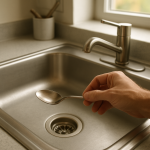
A sudden loud rattling, clanking, or grinding from a garbage disposal is most often a foreign object inside the grind chamber striking the impellers and shredder ring. This is actively damaging if the noise is metal-on-metal or if the unit stalls. Turn the disposal off immediately, cut power at the switch or breaker, and inspect the chamber with a flashlight. Remove the object with tongs, not your hand.
Identify the Noise First
Correct diagnosis depends on exactly when the noise happens and whether the motor is actually turning.
- Loud clank or rapid rattling at startup: Object is bouncing in the chamber and getting hit as the plate accelerates.
- Loud noise only when food is added: A hard item is entering with the load, or a small object is pinned and begins striking only under resistance.
- Constant grinding that does not change with water flow: Object is wedged between the spinning plate and shredder ring, or the shredder ring is being contacted due to internal damage.
- Humming but not spinning (no grinding sound): Jammed rotor, often caused by an object locked between the impeller and ring.
- Intermittent clunking every few seconds while it runs: Object is being carried around and dropped, or an impeller is contacting something once per revolution.
- Noise plus slow draining or backing up: Object or debris is restricting the outlet or trap, causing material to recirculate and strike repeatedly.
- Noise after you pressed the reset: Jam is still present; reset only restores power, it does not clear impact points.
What This Noise Usually Means
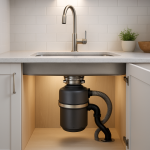
Impact noise in a disposal is produced when a hard item contacts moving steel parts inside the grind chamber. The rotating plate and impellers fling material outward into the shredder ring. When a non-grindable object is present, it does not break down. Instead, it ricochets between the impellers, plate, ring, and chamber wall. That creates rapid metallic clanking, sharp rattling, or grinding.
If the object wedges, the motor stalls. You may hear a hum while the rotor cannot turn, or a brief clunk followed by silence. Continued attempts can overheat the motor, trip the overload, and damage internal bearings and the shredder ring.
Most Common Causes (Ranked by Probability)
- Silverware, bottle cap, pull tab, small screw, or broken glass in the chamber
- What happens: Hard object bounces between impellers and shredder ring.
- Sound profile: Loud rattling or clanking that is immediate and sharp.
- Identifying symptom: Noise appears suddenly after loading the sink; may stop and restart as the object moves.
- Hard food item acting like a foreign object (bone fragment, fruit pit, shell)
- What happens: Item resists grinding and repeatedly impacts the ring until it fractures or wedges.
- Sound profile: Heavy knocking or thudding mixed with grinding.
- Identifying symptom: Noise is worst right after adding that specific load; may improve as the item breaks or exits.
- Object wedged between impeller and shredder ring (partial jam)
- What happens: Rotor turns but strikes or drags at one point each revolution.
- Sound profile: Rhythmic clunk, scrape, or tick once per rotation.
- Identifying symptom: Noise is consistent and repeatable; unit may slow under load.
- Foreign object lodged in the splash guard folds
- What happens: Object contacts the rotating plate intermittently as it drops through the guard.
- Sound profile: Rattle near the top opening, sometimes louder with water flow.
- Identifying symptom: Noise seems higher in the throat; flashlight inspection shows something caught above the chamber.
- Debris recirculating due to restricted discharge (impact repeating instead of clearing)
- What happens: Material cannot exit quickly, so hard pieces keep circling and striking parts.
- Sound profile: Extended grinding and clattering that lasts longer than normal.
- Identifying symptom: Sink drains slowly while disposal runs; improves if you stop and let water level drop.
- Loose internal grind component after a hard impact (damaged impeller, bent plate, chipped ring)
- What happens: A prior object impact deforms a component, creating ongoing contact.
- Sound profile: Persistent metal scraping or grinding even with no food.
- Identifying symptom: Noise remains after chamber is cleared; may have vibration and reduced grinding performance.
- Loose mounting hardware or sink flange amplifying impact noise
- What happens: Normal internal impacts are transmitted and amplified by a loose mount.
- Sound profile: Rattle or buzzing around the sink basin, not just inside the chamber.
- Identifying symptom: Noise changes when you press down lightly on the disposal body or sink flange area (do not do this while running; test only when off).
- Worn bearings after repeated jams (less likely than a current object)
- What happens: Shaft support wears, allowing rotor wobble and contact under load.
- Sound profile: Growl or grinding that increases with load, not a sharp clank.
- Identifying symptom: History of repeated resets/jams; new noise persists when chamber is clear.
How to Check Safely
- 1) Stop the disposal immediately. Turn it off at the wall switch. If it is still humming or you suspect repeated start attempts, shut off the breaker.
- 2) Confirm it cannot start. Try the switch once after power is cut to verify it is dead, then leave it off.
- 3) Look into the chamber with a flashlight. Identify obvious foreign objects resting on the plate or wedged at the ring.
- 4) Remove the object with tools only. Use tongs or needle-nose pliers. Do not put fingers into the disposal opening.
- 5) Check for a jam before restoring power. Insert the manufacturer hex key into the bottom socket (if equipped) and rotate back and forth until it turns freely. If you do not have a hex socket, use a wooden spoon handle from above to nudge the plate only with power off.
- 6) Press the reset only after the jam is cleared. If the button clicks and stays in, it has reset. If it trips again immediately, stop and move to professional service triggers.
- 7) Test run with a controlled flush. Restore power. Run a strong cold-water stream, start the disposal, and listen for remaining impact. Do not add food during this test.
- 8) Load test only if the chamber is quiet. Add a small amount of soft waste. If impact noise returns, stop immediately because an object may still be trapped.
Normal Operating Sound vs Warning Signs
- Normal function sounds
- Steady, even grinding or whooshing sound that does not have sharp metallic clicks
- Brief increase in sound when food enters, then returns to steady tone as it clears
- Minor water splash noise at the sink opening
- Developing problem sounds
- Light rattling that comes and goes, especially right after washing utensils or glassware
- Rhythmic ticking or clunking that repeats predictably, suggesting something wedged and contacting once per revolution
- Extended grinding time and louder operation because material is not clearing normally
- Immediate danger indicators
- Metal-on-metal grinding that continues after you stop adding food
- Humming with no rotation, or rotation that stops under light load
- Burning smell, hot disposal body, or repeated overload trips after reset
- Leak that begins right after the loud noise event, indicating possible housing or seal damage
When Professional Service Is Recommended
- The chamber is clear but metal scraping persists with no load, indicating internal damage from impact
- The disposal hums but will not rotate after you have verified free rotation with the hex key
- The unit trips the reset repeatedly after debris removal and free-rotation confirmation
- You find broken internal parts visible in the chamber, or the plate wobbles noticeably when moved with a tool (power off)
- There is a new leak from the disposal body or from the bottom area after the noise incident
- The disposal spins but has major performance loss and extended run time, suggesting a damaged shredder ring or impellers
How to Prevent This Problem
- Keep utensils out of the sink bowl while running water and loading the disposal area
- Use a sink strainer when washing items that can drop small hardware, glass fragments, or pull tabs
- Run cold water before starting, during grinding, and for 10–20 seconds after the sound returns to normal to flush objects out instead of recirculating them
- Feed waste steadily, not in large dumps, to reduce the chance of pinning a hard object against the ring
- Do not grind known impact items such as bones, fruit pits, shells, or non-food debris
- If something falls in, do not hit the switch; remove it first with power off
Related Appliance Noise Problems
- Humming but not spinning: jammed rotor from a wedged object; reset alone will not fix it
- Loud only when food is added: hard item entering with the load or a trapped object that only strikes under resistance
- Noise started after cleaning the sink: brush cap, sponge piece, or small plastic part dropped into the chamber
- Sudden new metallic clank but disposal still runs: small object bouncing that has not wedged yet
- Grinding sound even when empty: object still trapped or ring/impeller damage after an impact event
- Rattle seems louder in the sink than the cabinet: object caught in splash guard or throat area
- Disposal runs but sink drains slowly: recirculation causing repeated impacts; possible downstream restriction
- Reset button popped out after the noise: jam or overload from an object lock; clear first, then reset
- Brief clunk, then silence: object locked the rotor and overload opened; do not keep cycling the switch
- Vibration in the cabinet with light rattling: mount may be loose, amplifying internal impacts
Conclusion
A loud clanking, rattling, or grinding garbage disposal is most commonly a foreign object striking the impellers and shredder ring. Treat it as active damage until proven otherwise. Shut it off, cut power, inspect with a flashlight, and remove the object with tools. If the noise continues with an empty chamber or the unit hums without turning, schedule service because internal impact damage or a locked rotor is likely.
Frequently Asked Questions
Why did my garbage disposal suddenly start making a loud rattling noise?
A sudden rattle is most consistent with a hard object dropping into the grind chamber, commonly a spoon, cap, pull tab, or bone fragment. The object is being thrown into the shredder ring and repeatedly struck. Turn it off and remove the item before running again.
Is it safe to run the disposal if it is making a metal grinding sound but still works?
No. Metal-on-metal grinding indicates contact that can damage the shredder ring, impellers, and bearings. Stop use and clear the chamber. If the sound persists when empty, treat it as internal damage and move to professional service.
My disposal hums but will not spin after it made a loud noise. What does that mean?
This points to a jam: an object is wedged tightly enough to stall the rotor. Cut power, remove the object, and free the rotor with the bottom hex key before pressing reset. Repeated humming attempts can overheat the motor.
What if I cannot see anything inside but the clanking continues?
Small objects can pin under the rotating plate edge or against the shredder ring where they are hard to spot. Cut power, use the hex key to rotate and reposition the plate, then recheck with a flashlight. If clanking continues after free rotation and inspection, internal parts may be damaged and service is justified.
Can a loose mounting assembly cause a loud noise that sounds like something inside?
Yes, but it typically amplifies and broadcasts the noise rather than creating sharp internal clanks by itself. If the chamber is confirmed clear and the sound seems to radiate through the sink and cabinet, have the mount and fasteners inspected. Continuous internal scraping still indicates an impact or damage condition.
What’s left after the dust settles is almost mundane, which is oddly satisfying. The big noise fades, and the day keeps moving like it always has—just with one less snag to poke at.
There’s room again to pay attention to the parts that actually matter. Not dramatic, not perfect, but steadier, and that counts.