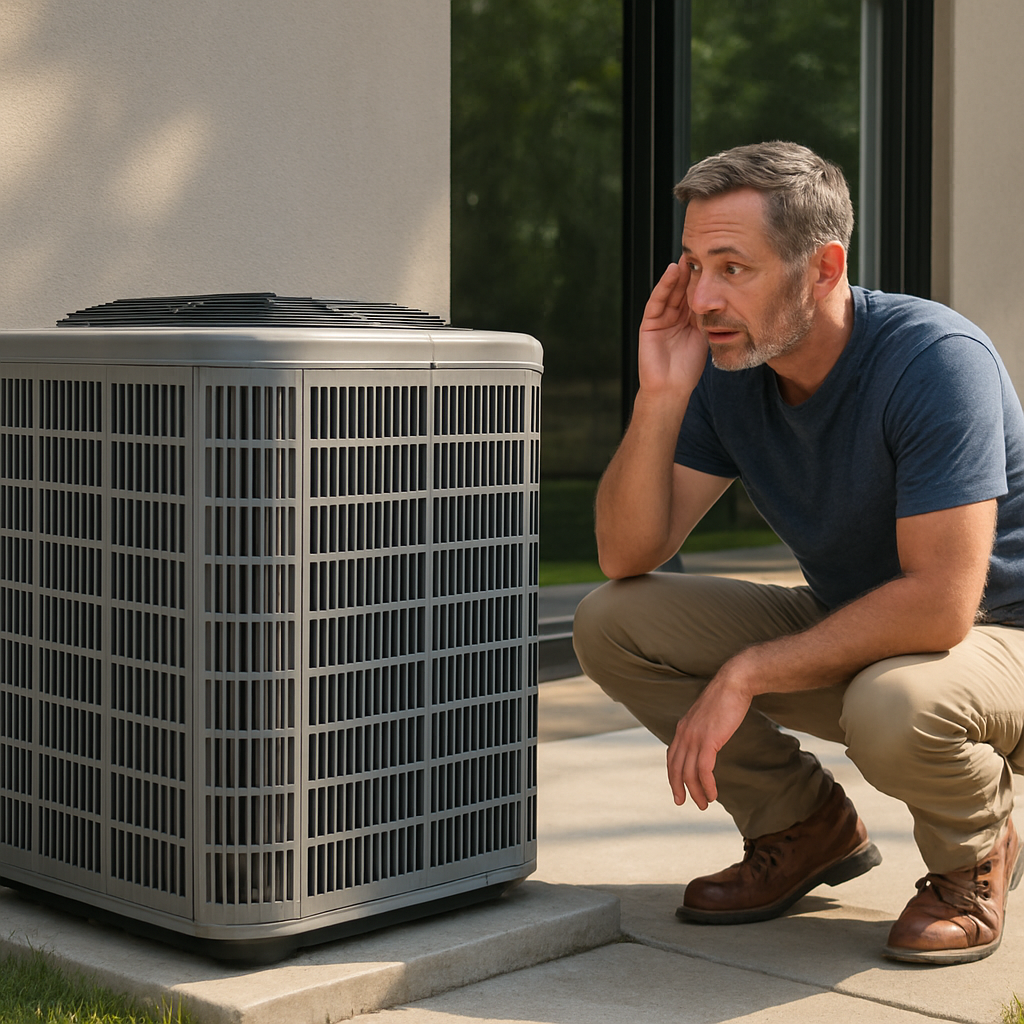
Most outside unit noises come from a loose panel, debris in the condenser fan, or a fan blade rubbing the shroud. Start by turning the thermostat off, then inspect the top grille and side panels for looseness, sticks, leaves, or anything touching the fan. If you hear grinding, metal-on-metal squeal, loud electrical buzzing, or repeated hard-start clicking, shut the system off and call a technician to prevent motor or compressor damage.
Identify the Noise First
If the noise happens only at compressor start, suspect a contactor buzz, hard-start difficulty, or a brief fan blade rub as the fan spins up.
If it happens only while running, focus on condenser fan vibration, blade imbalance, cabinet resonance, or refrigerant line contact against the cabinet.
If it happens at shutdown, look for a loose panel snapping, lines tapping as pressure equalizes, or the fan coasting into a rub point.
If it is constant even when the system is off, it is usually not the outdoor unit itself; verify the thermostat is off and the unit is not still running after a call for cooling.
If it is louder at night, it is often normal electrical hum being amplified by a loose panel or a line touching the cabinet, or sound carrying farther in cooler, quieter conditions.
To confirm it is outdoor-only, stand near the condenser with the system running. If the sound is strongest at the outdoor cabinet and not at indoor vents, keep diagnosis focused on the condenser fan/compressor section.
What This Noise Usually Means
Outdoor unit noise is typically one of two things: vibration being created by the condenser fan motor and blade, or vibration and electrical hum coming from the compressor and its switching components. The cabinet panels, top grille, and refrigerant lines can act like a speaker if anything is loose or touching metal. When the fan is failing mechanically, you hear rubbing, squealing, or rattling that tracks with fan speed. When the compressor is struggling to start, you often hear repeated clicking, buzzing, or a brief groan followed by a shutdown.
Most Common Causes
Loose access panel or top grille: Rattle or buzzing that changes when you press on a panel; often worse when the fan ramps up.
Debris in the fan or against the coil: Ticking, clicking, or scraping; may be intermittent as leaves or small sticks move with airflow.
Refrigerant lines touching the cabinet or each other: Steady hum or buzzing that seems louder than it should be; changes if the line is gently moved at an accessible point.
Condenser fan blade hitting the shroud: Rhythmic scrape or tick that matches fan rotation; sometimes only at startup or shutdown as the motor shifts.
Fan blade imbalance or bent blade: Wobble you can see from above; vibration that grows with speed and may make the whole cabinet shake.
Worn condenser fan motor bearings: Squeal, chirp, or grinding; often gets louder over time and may be worse in high heat.
Contactor coil chatter or arcing: Loud buzzing from the electrical compartment area while the unit is commanded on; may come with flickering start attempts. Do not ignore.
Compressor hard-start symptoms: Click-buzz-click cycles or a strained groan at startup; may trip the breaker or shut off on overload. Shut off and call a technician.
Internal compressor wear: Knocking or clanking that persists while running, not tied to fan speed; often paired with reduced cooling performance and higher noise over time.
How to Check Safely
Listen for timing: Note whether the sound occurs at startup, steady running, or shutdown. This narrows fan rub vs electrical switching vs compressor issues.
Turn the thermostat to Off: Confirm the outdoor unit stops. If it keeps running or continues buzzing, stop troubleshooting and call a technician.
Inspect panels and screws: With the unit off, check that side panels and the top grille are snug. Do not remove panels.
Clear visible debris: Remove leaves and sticks from around the base and from the top grille surface. Do not push anything through the grille.
Check clearance around the unit: Keep vegetation and objects at least 24 inches away to reduce turbulence and vibration noise.
Look for obvious fan wobble: With the unit running, observe from above at a safe distance. A wobbling fan suggests imbalance or a failing motor.
Do a gentle panel-pressure test: While it is running, press lightly on an exterior panel (not near the fan opening). If the noise changes, it is likely vibration amplification from a loose panel or cabinet resonance.
Check for line contact: Look for copper lines touching the cabinet where visible. If you can safely create a little gap without forcing the line, see if the sound reduces. Do not kink, bend sharply, or pry lines.
Repeatability test: Turn cooling on for a few minutes, then off, then on again. Repeated clicking/buzzing at each start is a red flag for electrical switching or hard-start strain; shut the system off and call a technician.
Stop if you notice warning signs: Burning smell, breaker trips, loud grinding, or rapid click-buzz cycles are not homeowner-fix items.
Normal vs A Problem
Usually normal: A steady, low-level hum while running; a soft whoosh of air; a brief change in tone at startup; mild vibration that does not worsen and does not affect cooling.
Usually a problem: Rattling that gets louder over weeks, metal scraping, squealing, grinding, or a fan that visibly wobbles. Electrical buzzing that is loud or persists is not normal, especially if paired with dimming lights, repeated start attempts, or warm air inside.
Practical thresholds: If the sound is new, suddenly louder, causes the cabinet to shake, coincides with reduced cooling, or leads to a breaker trip, treat it as a repair issue. If you smell burnt insulation or hear click-buzz-click patterns, shut it off.
When to Call a Technician
The outdoor unit makes repeated clicking with buzzing and does not start cleanly.
You hear grinding, squealing, or metal-on-metal scraping from the fan area.
The noise is a loud electrical buzz localized near the electrical compartment area and continues while running.
The fan does not spin, spins slowly, or wobbles heavily.
The unit trips the breaker, blows fuses, or shuts off and restarts on its own.
Noise is paired with poor cooling, warm air indoors, or unusually frequent cycling.
You see oil staining near the compressor or lines, or any damaged wiring (do not touch).
How to Prevent This Problem
Keep debris and vegetation cleared around the condenser so airflow stays smooth and the fan does not ingest leaves.
After storms or yard work, do a quick top-grille visual check for twigs and seed pods.
Maintain panel tightness by having a technician snug fasteners during annual service.
Make sure the condenser sits on a stable, level pad to reduce vibration and fan rub risk.
Replace a failing fan motor early if bearings get noisy; it is cheaper than collateral damage to the fan blade or coil.
Schedule periodic service to check contactor condition and electrical connections so chatter and arcing do not progress.
Related HVAC Noise Problems
Rattling only when the outdoor fan starts, but stops if you press on the top grille
Ticking from the condenser that matches fan blade rotation
Loud buzzing from the outdoor unit that sounds like a transformer hum
Click-buzz-click startup attempts with no fan or compressor run
Squealing from the outdoor fan that gets worse on hot afternoons
Humming outdoors with a vibrating copper line tapping the cabinet
Clanking outdoors during shutdown as pressures equalize
Outdoor unit roaring or whooshing after coil cleaning due to panel misalignment
Outdoor fan runs but compressor is loud and cooling is weak
Noise louder at night due to cabinet resonance and sound carry
Conclusion
Most outside unit noise problems come down to loose panels, debris, or condenser fan issues before they are a compressor failure. Start with safe visual checks and simple vibration clues, then listen for whether the sound is tied to fan speed or startup. If you hear electrical buzzing with hard-start clicking, grinding, or repeated failed starts, shut the system off and get a technician.
Frequently Asked Questions
Why is my outside AC unit buzzing but still running?
Often it is normal electrical hum being amplified by a loose panel or a refrigerant line touching the cabinet. If the buzz is loud, new, or seems to come from the electrical compartment area, it can be contactor chatter or arcing and should be checked by a technician.
My condenser makes a rattling noise only when the fan is on. What is it?
Most commonly it is a loose grille/panel, debris near the fan, or a fan blade that is slightly off-center and tapping the shroud. If the rattle matches fan rotation or you see fan wobble, stop it and schedule service to prevent blade or motor damage.
Is a clicking sound from the outdoor unit normal?
A single click at startup or shutdown can be normal contactor operation. Repeated clicking, especially paired with buzzing or the unit failing to start, points to a hard-start or electrical switching problem and should be serviced.
Can I keep running my AC if the outdoor fan is squealing?
No. Squealing commonly indicates dry or failing fan motor bearings and can lead to motor seizure or blade damage. Turn the system off and have the condenser fan motor and blade inspected.
What if the sound goes away when I push on the unit panel?
That strongly suggests vibration amplification from a loose panel, grille, or cabinet resonance. You can safely confirm screws are snug without removing panels, but if the noise returns or the cabinet shakes excessively, have a technician correct the source vibration and check the fan assembly.
What used to feel like a foggy argument now lands as something concrete, almost mundane. The big effort is over; the mind can finally stop turning the same thoughts over like loose change.
There’s a quiet relief in how clean it reads when the noise drops away. Not everything gets fixed, but the direction is unmistakable, and that’s enough to breathe easier.