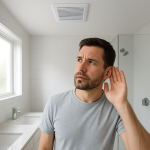
Most inside-unit AC noises come from the indoor blower area: a loose access panel, a dirty filter causing whistling, or the blower wheel rubbing due to debris or a shifted housing. First step: set the thermostat to Fan Only and listen at the indoor unit to confirm the noise happens with the blower running. If you hear grinding, metal-on-metal scraping, or smell electrical burning, shut it off and call a technician.
Identify the Noise First
If the noise happens only when you hear/feel air moving at the vents, it points to the indoor blower or airflow restrictions. If the noise happens when cooling starts but stops when you switch the thermostat to Fan Only, the source may be elsewhere, so re-check whether the sound is actually coming from the outdoor unit and traveling through ductwork.
If the noise starts exactly when the indoor blower starts after a short delay, suspect the blower wheel, motor mounts, or cabinet vibration. If it gets louder as the blower ramps up, suspect airflow-related noise or a loose panel resonating.
If the noise is constant even with the thermostat Off, it is usually not the blower. Confirm by switching the thermostat to Off, waiting several minutes, and listening at the indoor unit door and at the return grille.
To isolate indoor vs outdoor: stand next to the indoor air handler/furnace cabinet when the noise occurs. If it is loudest there and you can feel vibration on the cabinet, it is likely indoor. If the indoor cabinet is quiet but the ducts or vents seem to carry the sound, check outside as well.
What This Noise Usually Means
Indoor AC noise tied to the blower section typically comes from three mechanisms: vibration transfer through the cabinet, turbulent airflow across a restriction, or mechanical contact inside the blower assembly. The evaporator coil sits next to the blower and can contribute indirectly when a dirty filter or blocked return drives higher static pressure, changing how the blower sounds. In many cases, the motor is fine and the noise is the cabinet, panel, or blower wheel reacting to airflow or imbalance.
Most Common Causes
Loose blower door or access panels
Symptom clue: rattling or buzzing that changes when you press on the cabinet door or panel edge; often worse at higher fan speed.
Debris in the blower wheel or near the intake
Symptom clue: ticking, tapping, or light scraping that starts with the fan and may come and go as the wheel rotates; sometimes after filter changes or return grille work.
Dirty, restrictive, or collapsed air filter
Symptom clue: whistling, whooshing, or high-pitched hiss at the return; airflow at vents reduced; noise may lessen with blower speed on a multi-speed system.
Return grille or filter rack vibration
Symptom clue: buzzing or drumming at the return opening; the noise quiets when you hold the grille frame or slightly open the return door.
Blower wheel out of balance or dirty buildup
Symptom clue: steady vibration or humming that increases with RPM; cabinet shake; may have a rhythmic thump if buildup is uneven.
Blower wheel rubbing the housing
Symptom clue: consistent scraping or chirp that starts immediately with the blower; sometimes after ductwork shifts, cabinet gets bumped, or the blower assembly loosens.
Worn blower motor bearings
Symptom clue: squeal, growl, or rumble that continues as long as the blower runs; often louder at startup and progressively louder over weeks.
Loose motor mounts or blower assembly hardware
Symptom clue: clunk or rattle on blower start/stop; changes as the unit ramps down; may be worse after service if a fastener was left loose.
Electrical hum amplified by cabinet resonance
Symptom clue: low hum that seems louder with the blower door installed, quieter when you press on panels; the hum is not a separate electrical fault until vibration sources are ruled out.
How to Check Safely
Confirm it is the blower
Set thermostat to Fan Only. If the noise happens with cooling off, the issue is in the indoor fan/airflow/cabinet area.
Listen for where it is loudest
Compare sound at the cabinet door, return grille, and a supply vent. A return-side whistle usually means restriction; cabinet rattle usually means a panel or mount.
Check filter condition and fit
Turn system Off, remove the filter, and inspect for heavy dust or collapse. Reinstall correctly with the airflow arrow aimed toward the blower. If the filter is very dirty, replace it before further testing.
Check return grille and nearby objects
Make sure the grille is tight and not vibrating. Remove nearby items that can buzz against the grille or wall.
Lightly press on panels while the blower runs
If the noise changes when you apply gentle pressure to a door edge or panel seam, the likely fix is tightening latches/screws or adding proper isolation by a technician.
Look for obvious contact points
With the system Off, check that refrigerant lines, drain line, or thermostat wire are not touching the cabinet in a way that can transmit vibration.
Check supply registers for whistle
Open any closed registers and listen again. A loud hiss at one vent can be a partially closed damper/register causing high-velocity noise.
Repeatability test
Cycle Fan Auto to On and back, or run Fan Only twice. A consistent start/stop clunk points to mounts or blower wheel shifting.
Stop if you detect warning signs
Grinding, sharp metal scraping, burning smell, or a blower that struggles to start are reasons to shut it off and call a technician. Do not open electrical compartments.
Normal vs A Problem
Usually normal: a soft airflow whoosh, a mild start thump as ducts pressurize, and a steady low fan sound that does not change over time.
Usually a problem: rattling that gets louder each week, a whistle that appeared suddenly after a filter change, rhythmic ticking that matches fan rotation, or scraping/grinding. Any burning smell, repeated blower shutdowns, breaker trips, or noticeable airflow drop along with the noise points to a real fault, not just normal operation.
When to Call a Technician
Grinding, metal scraping, or growling from the indoor unit
Suggests bearing wear or wheel-to-housing contact that can damage the motor or blower wheel.
Blower won’t start reliably or sounds strained
Could be a failing motor, control issue, or capacitor on certain systems; not a DIY check.
Noise plus poor cooling or weak airflow
Often indicates airflow restriction, dirty blower wheel, or coil issues adjacent to the blower area that need proper inspection.
Persistent cabinet vibration after filter and panel checks
Points to imbalance, loose mounts, or blower assembly alignment.
Any electrical odor, visible scorching, or buzzing that seems like arcing
Shut off and schedule service. Electrical faults are not homeowner-safe to investigate inside the cabinet.
How to Prevent This Problem
Change the filter on schedule
A restrictive filter drives whistle and increases blower strain and vibration.
Use the correct filter size and type
Loose-fitting filters can whistle and allow bypass dust that loads the blower wheel.
Keep return grilles unobstructed
Blocked returns increase noise and turbulence at the grille and through the blower.
Keep supply registers reasonably open
Over-closing vents can raise static pressure and make the indoor unit louder.
Have the blower assembly cleaned during routine maintenance
Blower wheel buildup is a common cause of imbalance and vibration.
Address new rattles early
Small panel or mount looseness is easier to correct before it becomes a persistent vibration problem.
Related HVAC Noise Problems
Whistling at one vent only
Often a partially closed register or damper causing high-velocity airflow noise.
Banging when the blower starts
Duct oil-canning or a loose blower mount can mimic more serious issues.
Buzzing at the indoor unit that stops when you press the door
Cabinet resonance amplifying normal hum.
Ticking that matches fan speed
Debris in the blower wheel or a wheel rub point.
Squealing for the first minute then quiet
Bearing wear or belt-related noise on older blower setups.
Rumbling that feels through the floor
Blower imbalance transferring vibration into framing.
Whooshing that suddenly got louder after a filter change
Wrong filter thickness, poor fit, or higher-MERV filter increasing restriction.
Fluttering or popping at the return grille
Return restriction or grille vibration from pressure change.
Humming that seems electrical but changes with cabinet pressure
Vibration amplification rather than a true electrical fault.
Clunk at shutdown
Blower wheel shifting, loose mounts, or duct pressure equalizing abruptly.
Conclusion
Most AC noises from the inside unit trace back to the indoor blower area: loose panels, airflow restriction, or a blower wheel that is dirty, rubbing, or out of balance. Use Fan Only to confirm the noise is tied to the blower, then check filter fit and obvious vibration points. If you hear grinding/scraping or the blower struggles to run, shut it off and bring in a technician.
Frequently Asked Questions
Why does my inside AC unit rattle only on high fan speed?
Higher speed increases airflow force and cabinet vibration. The most common causes are a loose blower door/panel, a vibrating return grille, or a blower wheel that is slightly out of balance. If pressing on the cabinet changes the sound, the problem is usually vibration-related rather than a failing motor.
Can a dirty filter really make the indoor unit noisy?
Yes. A restrictive filter increases static pressure, which can create whistling at the return and make the blower sound harsher. It can also increase vibration because the blower is working against higher resistance.
What does a scraping sound from the indoor unit usually indicate?
Most often it is the blower wheel rubbing the housing or debris contacting the wheel. Because scraping can quickly damage the wheel or motor bearings, turn the system off and schedule service if it persists after basic panel and filter checks.
Is a low hum from the air handler always an electrical problem?
No. Many hum complaints are normal electrical/magnetic hum being amplified by a loose panel, door, or a line touching the cabinet. Rule out panel looseness and vibration transfer first. If the hum is accompanied by burning smell, intermittent operation, or visible scorching, call a technician.
Why is the noise louder at night?
Ambient background noise is lower and the home is often quieter, so normal airflow and cabinet vibration are more noticeable. If it is clearly louder over time or paired with new vibration, reduced airflow, or start/stop clunks, treat it as a developing blower or airflow issue.
There’s a strange relief in seeing the mess laid out plainly, and then watching it settle. For once, the problem doesn’t get bigger in your head—just… thinner.
What remains feels almost mundane, like closing the drawer all the way and realizing it wasn’t a mystery at all. The world keeps going, but you’re finally on the same page as it.