Garbage Disposal Rattling Sound? Fast Troubleshooting & Safe Fixes
Quick Answer (Most Likely Cause)
A garbage disposal that rattles is most often vibrating because a loose mounting connection or a small metal object is bouncing inside the grind chamber. First action: turn power off, look into the chamber with a flashlight, remove any debris with tongs, then check the mounting ring for movement. If the rattle is metal-on-metal, the unit stalls, or it trips reset repeatedly, stop using it until corrected.
Identify the Noise First
Rattling diagnosis depends on exactly when it happens. Use these timing patterns to pin down the situation before you touch anything.
Rattles immediately at startup (even with no food waste): Most consistent with a loose mount, loose splash guard, or a small object already in the chamber.
Rattles only when water is running and the unit is on: Often a loose mounting assembly transferring vibration into the sink flange, drain lines, or dishwasher inlet hose.
Rattles only under load (when grinding scraps): Vibration is being amplified by a partial obstruction, hard item, or overloaded chamber.
Rattle + unit still spins freely and drains normally: Usually vibration transfer or a small object intermittently contacting the rotating plate.
Rattle + slow rotation or frequent stalling: Obstruction or excessive load creating resistance; the rattle is the symptom of intermittent contact.
Hums but does not spin (no rattle or brief rattle then hum): Jammed condition. This is not a normal rattle scenario; treat as a jam and stop running it.
Rattles after a recent cleaning or installer work: Commonly a loosened mount, mis-seated baffle/splash guard, or a tool/screw dropped into the chamber.
Rattle appears when you bump the sink or move the drain pipe: Strong indicator of a loose mounting ring or loose plumbing contact point.
What This Noise Usually Means
A rattling disposal is almost always a vibration problem, not an electrical problem. The motor and rotating plate create normal vibration. If anything is loose at the sink flange, mounting ring, discharge elbow, or nearby plumbing, that normal vibration becomes a sharp rattle as parts tap each other. The other common mechanism is chamber debris: a small hard object (coin, bone fragment, glass, screw) is being thrown against the grind ring or rotating plate, producing rapid metallic ticks or clacks. In both cases, the unit may still run, but repeated contact can damage the grind components, loosen mounts further, or crack plastic drain fittings.
Most Common Causes (Ranked by Probability)
Foreign object bouncing in the chamber
What happens: A hard object gets caught on the rotating plate lugs and is repeatedly flung against the grind ring.
Sound profile: Fast metallic rattle or clacking that changes with water flow and load.
Identifying symptom: Rattle starts instantly when switched on; may briefly stop if water shifts the object, then returns.
Loose mounting ring or sink flange connection
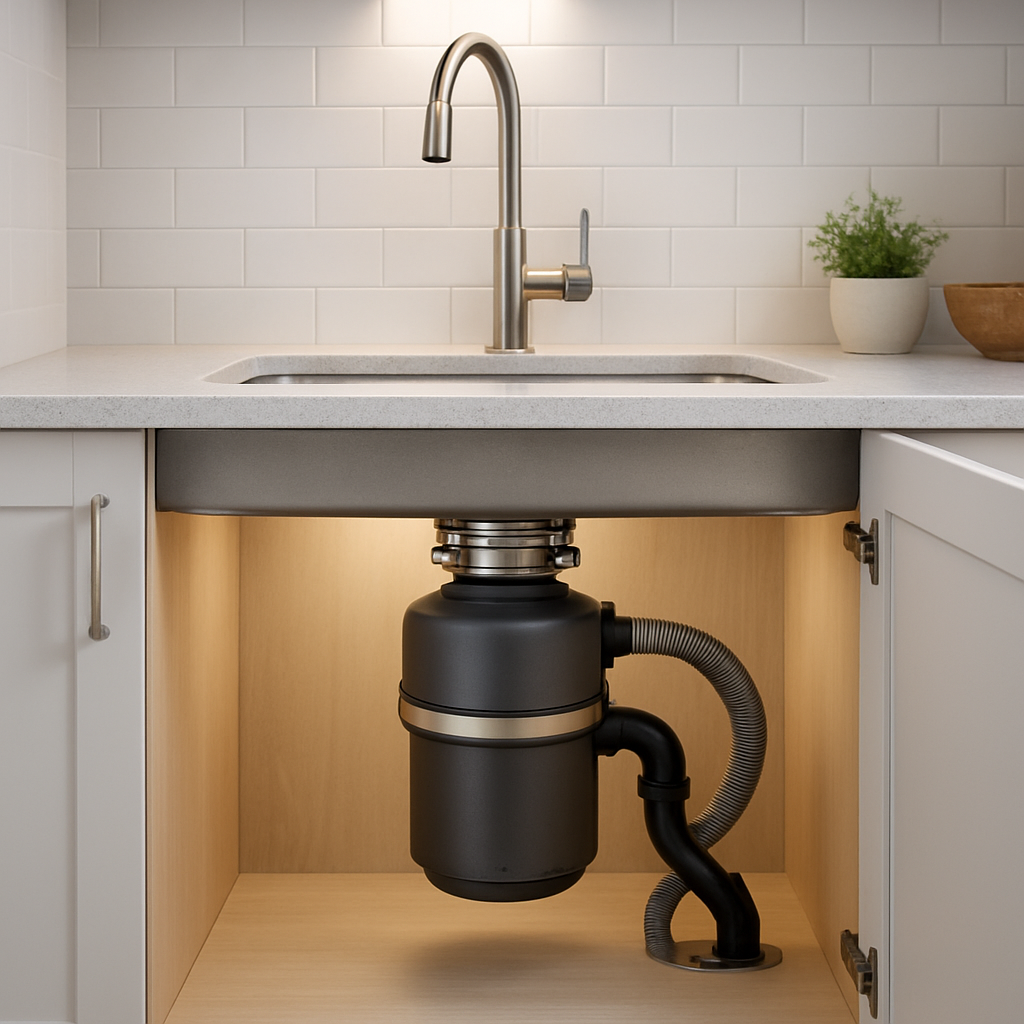
What happens: The disposer body vibrates and the mount allows tapping between the mounting assembly and sink flange, or the unit can be moved by hand.
Sound profile: Hollow, sink-amplified rattle; often louder at the sink than at the disposer body.
Identifying symptom: You can gently rock the disposer and feel movement at the top mount; noise may change if you support the unit from below.
Loose discharge elbow, clamp, or drain line contact
What happens: Vibration causes the metal elbow or PVC trap arm to tap the cabinet wall, dishwasher hose, or another pipe.
Sound profile: Rhythmic rattle that sounds external to the chamber, often louder in the cabinet.
Identifying symptom: You can reproduce or stop the rattle by lightly holding the elbow/pipe while the unit runs (hands kept clear of the chamber and moving parts).
Loose dishwasher inlet fitting or hose tapping
What happens: The dishwasher hose or inlet nipple vibrates against the disposal or cabinet.
Sound profile: Light plastic rattle, higher pitch than a metal chamber rattle.
Identifying symptom: Noise is strongest near the small dishwasher inlet area; changes when you reposition the hose.
Mis-seated or damaged splash guard/baffle
What happens: A loose baffle lip or torn section flutters and contacts the rotating plate area intermittently.
Sound profile: Soft slapping or irregular rattling, usually not metallic.
Identifying symptom: The sound is worse with higher water flow; visual inspection shows the guard not seated evenly.
What happens: Excess waste restricts movement; the motor labors and vibration increases, making existing looseness or minor contact points rattle.
Sound profile: Rattle plus a deeper, strained motor tone; may surge as material shifts.
Identifying symptom: Rattle is brief at first, then worsens as the chamber fills; improves when feeding smaller amounts.
Worn mount cushioning or aged mounting hardware
What happens: Rubber/insulation elements compress over time; vibration transfers into the sink and cabinet more directly.
Sound profile: Persistent rattle/buzz that has gradually increased over months.
Identifying symptom: No debris found, plumbing is secure, but sink resonance is strong and movement at the mount is detectable.
Mechanical wear inside the grind assembly
What happens: Worn lugs/rotating plate or a deformed grind ring allows abnormal contact or increased vibration.
Sound profile: Harder, rougher rattle that may include intermittent scraping under load.
Identifying symptom: Rattle persists after debris removal and mount/plumbing stabilization; grinding performance is reduced.
How to Check Safely
These checks isolate loose mount vibration versus chamber debris without disassembly or electrical exposure.
1) Shut off power
Switch the disposer wall switch off.
For certainty, turn off the disposer breaker if others can access the switch.
2) Confirm the rattle is not a jam
If the unit previously hummed without spinning, do not keep testing. Treat it as a jam and stop until cleared using manufacturer-approved methods.
3) Inspect the chamber for debris
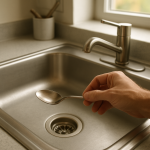
Use a flashlight. Look for coins, bottle caps, bone shards, glass, screws, or twist ties.
Remove objects with tongs or needle-nose pliers. Do not use fingers inside the chamber.
Rotate the visible plate gently with a wooden spoon handle to see if something is catching and clicking.
4) Run a controlled listening test
Restore power.
Run a thin stream of cold water.
Turn the disposal on for 2 to 3 seconds only.
Interpretation: A sharp metallic clack points to remaining debris or internal contact. A hollow cabinet/sink rattle points to mounting/plumbing vibration transfer.
5) Check for mount looseness (external only)
With power off again, support the disposer body with one hand and gently try to rock it.
Finding: Any noticeable movement at the top connection suggests the mounting ring is loose or not seated.
If the disposer shifts enough to change the alignment of the discharge pipe, do not keep operating it until the mount is secured.
6) Identify external contact points
With the unit off, look for places the discharge elbow, trap arm, dishwasher hose, or cabinet wall touches the disposer body.
Reposition hoses so they do not rest against the unit or cabinet panels.
If a pipe is under stress or forced into position, correct the alignment; forced plumbing transmits vibration and causes rattles.
7) Re-test briefly under light load
Run water and switch the disposal on.
Drop in a few small ice cubes if you normally use ice for cleaning and your disposer manufacturer allows it; this can help reveal remaining chamber debris. Stop immediately if rattling becomes harsh or metallic.
If the rattle is gone at no-load but returns when grinding scraps, reduce feed rate and confirm no hard items are present.
Normal Operating Sound vs Warning Signs
Normal function sounds
Steady motor hum with a smooth, consistent tone.
Brief increase in noise when grinding soft food waste, then returning to steady sound.
Light water and swirl noise without sharp tapping.
Developing problem sounds
Intermittent rattling that stops and starts as water flow changes, especially with no food load.
Rattle that is louder in the sink/cabinet than at the disposer body, indicating mount or plumbing vibration transfer.
Rattle that appears after installation work, drain cleaning, or hose replacement.
Immediate danger indicators (stop using)
Metal grinding or repeated hard clacks that do not clear within seconds.
Disposer stalls, then restarts repeatedly, or trips the reset button more than once.
Burning smell, visible smoke, or the unit gets hot quickly while not clearing the noise.
Humming without spinning, especially if the chamber cannot rotate freely with a non-metal tool.
New leak at the mount or discharge connection occurring with the rattle.
When Professional Service Is Recommended
Mount movement at the sink flange: If the disposer can be rocked and the mounting assembly is not stable, service is recommended to prevent leaks and further loosening.
Persistent metallic rattle after debris removal: Indicates internal contact or damaged grind components requiring evaluation.
Repeated stalling or reset trips: Suggests excessive mechanical resistance or motor stress; continued operation risks motor damage.
Leak appears with vibration: Vibration plus leaking at the flange, discharge elbow, or dishwasher inlet should be corrected before further use.
Noise localized to the motor housing (not sink/cabinet): If the sound is a harsh internal rattle rather than vibration transfer, internal wear is likely.
How to Prevent This Problem
Keep metal and hard items out of the sink: Most chamber rattles start with a dropped utensil fragment, bottle cap, screw, or bone.
Run water before and after grinding: This flushes small debris through and reduces the chance of an object bouncing in the chamber.
Feed waste gradually: Overloading increases vibration and makes small looseness issues audible.
Verify plumbing does not touch the disposer body: Maintain clearance between hoses/pipes and the housing to prevent vibration tapping.
After installation or drain work, re-check for contact points: A slightly shifted trap arm or hose is a common cause of new rattles.
Do not use the disposer as a catch basin: Avoid letting small non-food items sit in the chamber where they can be thrown into the grind ring.
Related Appliance Noise Problems
Humming but not spinning: A jam or seized condition, not a simple rattle. Stop and clear the jam properly.
Loud only when grinding fibrous scraps: Load resistance is rising; vibration increases and reveals a loose mount or pipe contact.
Rattle started right after a dishwasher install: Dishwasher hose or inlet fitting is tapping the disposer or cabinet.
Noise after cleaning the sink flange area: Splash guard may be mis-seated or the mount may have been bumped loose.
Rattle only when the sink is full of water and draining: Drain turbulence and pipe movement is amplifying vibration through a loose trap or bracket.
Sudden metallic clatter then it becomes quiet: Object may have shifted; it can return. Power off and inspect the chamber.
Rattle but it still works normally: Typical of external vibration transfer or a small object intermittently contacting the grind ring.
Rattle plus a new drip under the sink: Vibration is stressing a loose discharge elbow clamp or a compromised flange seal.
Rattle only at certain angles when cabinet door is open: A pipe or hose is contacting the cabinet panel and acting like a soundboard.
Rattle changes when you press up on the disposer body: Confirms mount looseness or mount cushioning wear.
Conclusion
A rattling garbage disposal is most commonly loose mounting vibration or a small hard object bouncing in the grind chamber. Identify whether the sound is internal metallic clacking or sink/cabinet vibration transfer, then remove chamber debris and verify the disposer mount and drain connections are stable. If the unit stalls, trips reset repeatedly, leaks, or continues metallic impact noise after clearing debris, stop using it and schedule service.
Frequently Asked Questions
Can I keep using my disposal if it rattles but still grinds?
Only if the rattle is confirmed to be external vibration transfer and the unit is stable with no leaks. If the sound is metallic contact inside the chamber, continued use can damage the grind components and should be stopped until the object is removed or the cause is corrected.
How do I tell if the rattle is inside the chamber or from the mount?
Internal chamber noise is sharper and metallic, often changing rapidly as the rotating plate throws an object. Mount or plumbing vibration is usually hollow and louder through the sink or cabinet panels, and it often changes if you steady the disposer body or reposition a nearby pipe.
Why did the rattling start after I ran only water with no food?
This pattern typically indicates a loose mount or a foreign object already in the chamber. Water alone does not create a new internal grinding event, but it can shift a small object so it begins tapping the rotating plate or grind ring.
Is a loud electrical hum the same as a rattle?
No. A hum is electrical/motor tone. A rattle is mechanical vibration or impact. If you hear hum without spinning, treat it as a jammed condition and stop running it; a true hum with no rotation will overheat the motor quickly.
What is the clearest sign my mounting is loose?
With power off, you can gently rock the disposer body and feel movement at the top flange connection, or the discharge alignment shifts when you support the unit. That movement commonly produces a sink-amplified rattle during operation and should be corrected before continued use.
There’s a small relief in seeing it laid out plainly, without the usual fog. The path has been there the whole time, just easy to miss when everything else is loud.
Now the page can close without dragging you back through the same arguments. The issue feels less slippery, and that’s the best kind of quiet confidence.