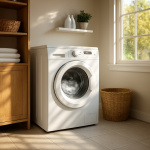
Washing Machine Loud Thumping Sound? Causes and Solutions
Quick Answer
A loud, repeating thump is most often the tub hitting the cabinet during spin because the load is off-balance or the machine is not level. First action: stop the cycle, redistribute or reduce the load, and run a spin-only cycle. If the thumping continues with a small, balanced load, suspect a worn suspension (front-load shocks or top-load rods) or a loose counterweight.
Identify the Noise First
Heavy impact repetition has a pattern. Use this to match your situation before you open anything.
During spin: thump-thump-thump that speeds up as RPM increases, often worse with bulky items (towels, blankets). Most common scenario.
During drain: short burst of thumping right as the pump starts, then it settles. Often a load shifting as water leaves, or the tub swinging on weak suspension.
During fill: rare for true heavy thumping. If it happens while unlocking/locking or at the first tumble, think load slapping the drum because it is bunched and dry.
Constant through the whole cycle: not typical for impact repetition. A constant noise is usually rubbing, grinding, or a pump issue, not a cabinet-hit thump.
Intermittent: thumping appears only at certain speeds or only with certain loads. This strongly points to balance, leveling, or suspension control rather than a motor or pump.
What This Noise Usually Means
A repeated thump is usually the wash tub assembly moving too far and striking the cabinet or base. During spin, centrifugal force amplifies any imbalance. The suspension system is supposed to keep the tub centered and limit travel. If the load is uneven, the tub swings. If the suspension is weak or a counterweight is loose, the swing becomes an impact event that repeats at drum rotation frequency.
Most Common Causes
Off-balance load: one heavy item or all weight on one side causes the tub to orbit and hit the cabinet, especially in high-spin.
Machine not level or feet not locked: a rocking washer lets tub movement translate into cabinet impacts.
Overloaded drum: too much mass prevents redistribution and increases tub travel; impact repetition is common as spin ramps up.
Worn suspension: front-load shocks/struts weak or leaking; top-load suspension rods stretched. Tub bangs even with a small balanced load.
Loose or cracked counterweight (front-load common): concrete weight bolts loosen, or weight fractures, creating heavy, dull impacts and excessive vibration.
Broken or detached snubber/strap (some top-load designs): tub no longer controlled smoothly during spin, so it slams.
Shipping bolts left installed (new front-load installs): severe thumping and walking on first spins because the tub cannot float on suspension.
How to Check Safely
These checks are designed to confirm whether the thump is a balance/control problem or a failing support component.
1) Stop the cycle and open the door/lid. If the tub is visibly off-center or the load is packed to one side, correct that first.
2) Do a controlled test load. Run a spin-only cycle with 3–5 similar items (e.g., several T-shirts) or a few towels spread evenly. Avoid a single heavy item for this test.
3) Watch the cabinet, not just listen. If the washer walks, rocks, or the top panel visibly jerks with each thump, you are dealing with excessive tub travel.
4) Level check. With the machine empty and powered off, push on opposite corners. If it rocks, adjust the feet until stable, then tighten the lock nuts (if equipped).
5) Quick suspension check:
Front-load: with the door open, grab the stainless drum rim and pull it upward then release. It should return smoothly without a hard bounce. A pronounced bounce or clunk suggests weak shocks or loose mounts.
Top-load: press down on the tub rim and release. It should rise smoothly and settle quickly. If it continues to bounce or hits the cabinet, suspect suspension rods or a missing/damaged dampening component.
6) Inspect for obvious counterweight issues (front-load). Unplug the washer. If you can access the front/top panel per your model, look for concrete weights that are loose, cracked, or leaving gray dust. Do not run the washer if a weight is visibly loose.
7) Confirm shipping bolt removal (new installs). If the machine is newly installed and thumps aggressively from the first use, check the rear panel area for shipping bolts still installed (refer to the installation guide for your model).
When This Is Normal vs A Problem
Usually normal: one or two brief thumps as the washer redistributes and begins to spin, then it smooths out and reaches full speed without walking.
Likely a problem: the thump repeats for more than 10–15 seconds during spin, grows louder as speed increases, or causes the washer to move.
Strong warning signs: thumping with a small, balanced load; thumping that starts suddenly after months of quiet operation; visible tub off-center; loud impact even at low spin; or a new grinding/rubbing noise combined with thumps.
When to Call a Technician
Call if thumping persists with the test load and proper leveling. Suspension parts are likely worn and need replacement.
Call immediately if you suspect a loose counterweight. Continued use can damage the tub, cabinet, and mounts.
Call if the tub is visibly tilted or rubbing the door boot (front-load) or cabinet (top-load). That indicates structural movement beyond a simple imbalance.
Call if you are not able to access panels safely. Counterweights and suspension mounts can be heavy and awkward; improper handling can cause injury or further damage.
How to Prevent This Problem
Load for balance, not just capacity. Mix item sizes; avoid washing one heavy piece alone. If you must, add a few similar towels to balance it.
Don’t pack the drum. Overloading prevents redistribution and increases impact during spin ramps.
Keep the washer stable. Recheck leveling after moving the machine or after floor changes. Tighten foot lock nuts.
Use the right cycle. Bulky/bedding cycles use different spin profiles to reduce imbalance events.
Address small changes early. If you start hearing occasional thumps that didn’t exist before, correct leveling and load habits before suspension wear accelerates.
Related Washing Machine Noise Problems
Loud banging only with one blanket or comforter: load-induced imbalance that mimics suspension failure.
Washer walking forward during spin: often leveling/feet issues paired with imbalance, not a motor problem.
Front-load drum hitting the door boot: excessive tub travel from weak shocks or a loose counterweight, often misdiagnosed as a torn gasket issue.
Top-load clunk when shifting into spin: a single engagement clunk is different from repeated cabinet impacts.
Rattling or knocking in spin without cabinet movement: can be items in the drum paddles or a loose internal fastener, not heavy impact repetition.
Conclusion
A repeating thump is almost always the tub assembly striking the cabinet because it is swinging too far during spin. Start by correcting load balance and leveling, then test with a small, even load. If the thumping remains, stop using high spin and plan for suspension or counterweight inspection/repair before the impacts cause secondary damage.
Frequently Asked Questions
Why does my washer thump only at high spin speed?
High spin amplifies small imbalances and any weakness in the suspension. A load that seems fine during wash can become unstable as RPM increases. If balancing the load and leveling the machine doesn’t stop it, the suspension may no longer be controlling tub movement at higher speeds.
My washer thumps with almost every load now. What changed?
When thumping becomes frequent across normal loads, it usually points away from user loading and toward control components: worn shocks/struts (front-load), stretched suspension rods (top-load), or a developing counterweight/mount issue. Confirm with a small balanced test load; if it still thumps, schedule service.
Can a loose counterweight cause a repeated heavy thump?
Yes. A loose or cracked counterweight produces deep, heavy impacts and strong vibration because the tub’s stabilizing mass is no longer firmly attached. If you see concrete dust, cracks, or looseness, stop using the washer until it is tightened or replaced.
Is it safe to keep using the washer if it’s thumping?
If it’s a brief thump that settles quickly, it’s typically safe. If it repeatedly hits hard, moves across the floor, or thumps even with a small balanced load, continued use can damage mounts, the cabinet, hoses, and the door boot (front-load). Reduce spin speed and arrange a repair.
What’s the fastest way to tell imbalance from a suspension problem?
Run a spin-only test with a small, evenly distributed load after leveling the machine. If the thumping disappears, it was load/level related. If the thumping persists and the tub visibly bounces or shifts excessively, suspect suspension wear or a loose counterweight.
There’s relief in how plain it feels on the other side. The noise thins out, and the day goes back to being about regular things instead of wrestling with the same problem.
What’s striking is how quickly the background turns cooperative. Not everything changes at once, but the friction does—quietly, almost politely—until you notice you’ve stopped bracing for it.