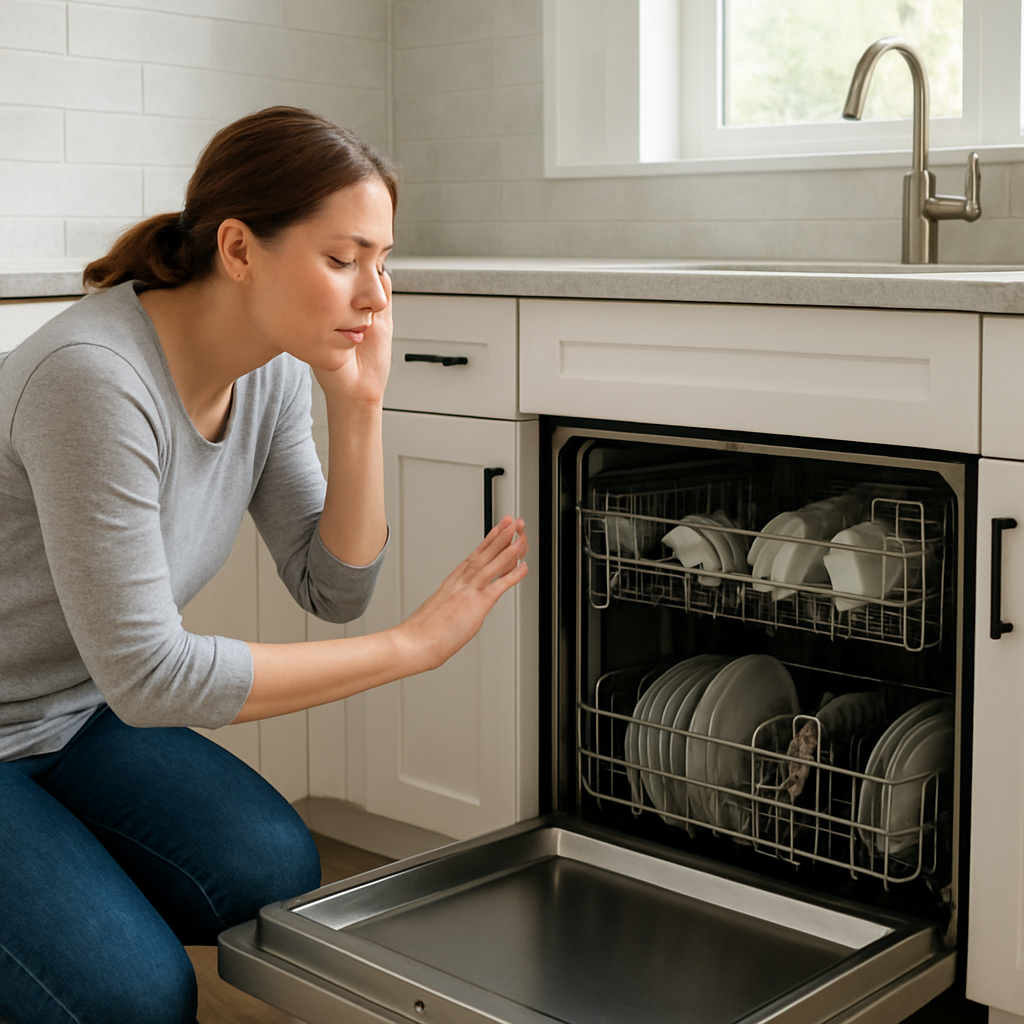
Dishwasher Noise After Installation: Normal or a Problem?
Quick Answer
Most post-installation dishwasher noise comes from improper leveling or loose mounting, letting the tub or panels vibrate against the cabinet. It happens because the machine is rigidly coupled to wood, stone, or metal surfaces that act like a speaker. First action: run a short cycle and press firmly on the door and toe-kick during the noisy moment—if the sound changes, you’re chasing vibration/fitment, not an internal failure.
Identify the Noise First
Start by matching the noise to a cycle phase, because installation-related vibration usually gets louder when the dishwasher is physically shaking the most.
During water fill: If the noise is a sharp ticking or buzzing that stops once filling ends, it may be the inlet line or hose tapping the cabinet as water pressure pulses.
During spray / circulation: If it’s a steady hum with added rattling or a drumming sound, that’s when tub movement and panel resonance are highest—classic for leveling/mount issues.
During draining: A rough growl with cabinet buzzing often points to the drain hose or air gap line vibrating against the sink cabinet wall.
During heating: Heating itself is usually quiet; if the noise appears here, look for expansion creaks or a toe-kick/panel that’s preloaded and snapping as parts warm.
At start of cycle: Clunks right when the unit starts can be the machine shifting on feet that aren’t planted, or a loose anti-tip bracket contact.
At end of cycle: Rattles during final drain/dry fan time are often toe-kick or side insulation/panel fluttering due to airflow or vibration.
Constant: Vibration transmitted into the cabinet that doesn’t track a specific function usually means the chassis is hard-contacting the countertop, side panels, or floor.
Intermittent: A rattle that comes and goes as spray direction changes is commonly a harness, hose, or loose panel tapping only when the tub vibrates in a certain direction.
To isolate the stage, stand near the machine with the room quiet and note when the sound starts and stops. If opening the door pauses the sound immediately, you’re likely in a spray/drain segment; if it continues briefly, you may be hearing cabinet resonance from a line or panel that’s still vibrating.
What This Noise Usually Means
After installation, the dishwasher’s vibration path changes. A unit that’s not level, not firmly mounted, or pinched too tightly into the opening can transfer normal operating vibration into the cabinet, countertop, toe-kick, or adjacent plumbing. That turns a normal motor hum into a louder rattle, buzz, or drumming because thin panels and wood cavities amplify it. The “problem” is usually contact points: chassis-to-cabinet, toe-kick-to-frame, hose-to-wall, or a loose mounting bracket letting the dishwasher rock.
Most Common Causes
Dishwasher not level front-to-back or side-to-side: One foot floating or over-extended lets the chassis rock, creating a repeating rattle during spray/drain segments.
Loose or missing mounting screws/brackets: If the unit isn’t anchored to the countertop or side cabinets (as designed), it can shift and buzz against the opening.
Toe-kick (kick plate) vibrating: The panel or its clips/screws can chatter against the frame, especially at certain motor speeds.
Unit wedged too tightly in the opening: Side insulation, tub edges, or frame rails can rub the cabinets, making a squeak/creak that worsens when the machine warms up.
Drain hose or fill line tapping the cabinet wall: A line routed with tension or touching a panel can knock during flow changes.
Countertop contact or anti-tip bracket contact: The top frame can buzz against stone/wood, or a bracket can click if the unit shifts under load.
How to Check Safely
1) Confirm cycle stage
Run a short cycle. Note the exact minute and function when the noise starts (fill, spray, drain). Installation vibration is usually strongest during spray/drain and changes if you touch panels.
2) Isolate load factor
Run the same short cycle with the dishwasher empty. If the noise remains, it supports an installation/fitment issue. If it changes drastically only when loaded, focus on how the chassis shifts when racks move (still an install/level issue, not a pump diagnosis).
3) Inspect relevant components (no electrical exposure)
With power off at the breaker, remove the toe-kick panel only if it’s a simple front panel. Check for loose screws, missing clips, or the panel touching the frame. Verify the dishwasher is centered and not pressing hard into either cabinet side.
4) Confirm or rule out contact/obstruction points
Look for rub marks on the cabinet sides, countertop underside, and toe-kick. Lightly tug the drain hose and fill line where visible to ensure they aren’t under tension or knocking against the cabinet. Make sure insulation blankets (if present) aren’t hanging into the toe-kick area where they can flutter.
5) Perform a controlled test
Restore power and run the noisy segment. Apply firm hand pressure to one area at a time: toe-kick, left cabinet side, right cabinet side, and top corners of the door frame. If the sound changes when you press a specific spot, you’ve found the vibration path. Next, correct that contact point by leveling feet evenly, tightening mounting screws, re-seating the toe-kick, or re-routing the line so it doesn’t touch the cabinet.
When This Is Normal vs A Problem
Normal after a new install: A steady, smooth hum during washing that doesn’t change with light pressure on the door or toe-kick; a brief water-line sound during fill that doesn’t include cabinet rattling; minor expansion ticks during warm-up that occur once or twice and stop.
Problem indicators tied to installation: A buzz/rattle that clearly changes when you press on the toe-kick or door edges; a knocking that matches hose movement during fill or drain; a drumming sound that gets worse when the dishwasher is pushed tighter into the opening; visible rocking when you pull the door open slightly (machine shifts in the hole).
When to Call a Technician
If the dishwasher cannot be leveled because the floor is uneven, the opening is out of square, or the legs are bottomed out or stripped.
If tightening mounting points isn’t possible due to stone countertop requirements or missing side-mount hardware.
If the machine is hard-contacting plumbing/electrical in a way you can’t safely reroute.
If vibration is severe enough that the unit walks forward, leaks at the door due to misalignment, or the door no longer closes smoothly after adjustments.
How to Prevent This Problem
Level the dishwasher with a torpedo level on the tub lip (not the door), then confirm all feet are firmly planted.
Secure the unit using the correct mounting method for your countertop (top-mount or side-mount brackets as specified).
Install the toe-kick with all clips/screws and verify it doesn’t touch the frame or insulation.
Route drain hose, fill line, and wiring so they have slack and do not touch cabinet walls where they can tap.
After pushing the unit into place, re-check level and re-check that the sides and top are not jammed tight against cabinetry.
Related Dishwasher Noise Problems
Rattling toe-kick only during drain on a newly installed dishwasher
Buzzing when the door is closed but quieter when held firmly
Knocking from the sink cabinet during fill due to water line tapping
Vibration after replacing countertops (mounting brackets not reinstalled correctly)
Squeaking/creaking as the dishwasher heats because the unit is wedged in the opening
Dishwasher “walking” forward over several cycles due to feet not gripping the floor
Conclusion
If a dishwasher gets noisy right after installation, the most likely cause is vibration from poor leveling, loose mounting, or a panel/line contacting the cabinet. Identify the cycle stage, then use targeted hand-pressure testing to locate the vibrating surface. Once you find the contact point, correct it by leveling, securing brackets, and re-seating the toe-kick or rerouting lines.
Frequently Asked Questions
Why does the noise get quieter when I press on the door or toe-kick?
That’s a vibration signature. Your hand is damping the panel and changing its resonance, which means the sound is being amplified by a loose panel, loose mounting, or cabinet contact—not created by an internal component failing.
Can an unlevel dishwasher really make it sound like something is grinding?
Yes. When one foot is unloaded, the chassis can oscillate and make the toe-kick, side panels, or adjacent cabinet walls chatter. The frequency can mimic a rough mechanical sound even though the source is panel-on-frame vibration.
What’s the fastest way to confirm it’s not an internal issue without taking anything apart?
Run the noisy portion and do a controlled “damping” check: press the toe-kick, then each side of the cabinet opening, then the top corners of the door frame. Any clear change in sound points to a vibration path or contact point you can correct with leveling or mounting.
Should the dishwasher touch the cabinets on the sides?
No hard contact. It can sit close, but if it’s wedged, normal vibration transfers directly into the cabinet and becomes loud. A slight clearance with proper mounting is quieter than a tight friction fit.
After leveling, the noise improved but didn’t disappear. What’s next?
Go after the secondary transmitters: tighten mounting screws/brackets, re-seat or pad the toe-kick so it can’t buzz, and confirm hoses/lines aren’t tapping the cabinet wall during fill or drain.
What’s striking is how quickly the noise fades once the facts are in the open. The problem doesn’t get smaller, but it stops taking up residence in your head.
There’s a kind of quiet relief in that—like unclenching a jaw you didn’t realize you’d been holding. From here, it’s less about wrestling and more about moving on with your day.