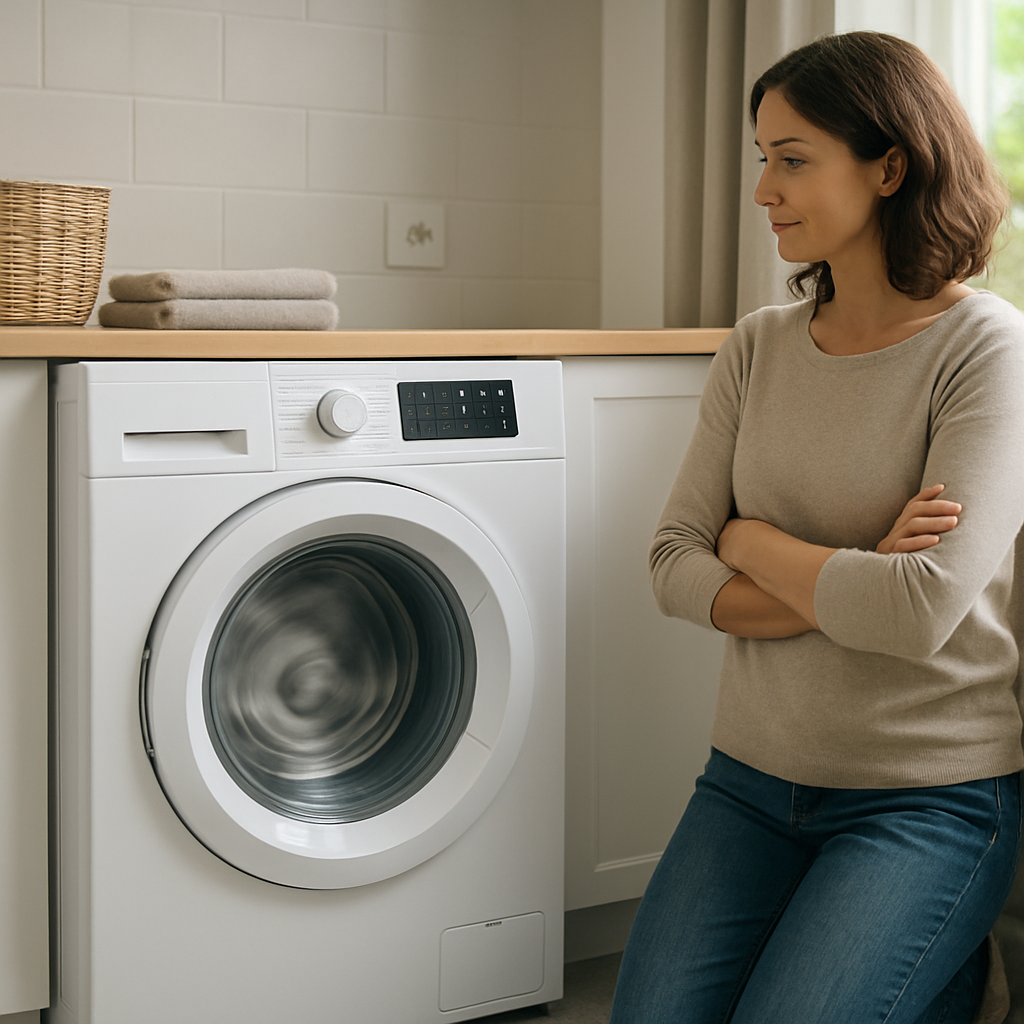
Washing Machine Loud Only During Spin Cycle? Causes and Fixes
Quick Answer
If your washer is loud only during spin, the problem is usually in the spin system: an unbalanced load, a loose or damaged suspension, or a worn tub bearing. First action: run a short spin with the drum empty and listen. If the noise largely disappears, focus on load balance and installation. If it stays loud with an empty drum, suspect bearings, suspension, or a rubbing/loose component.
Identify the Noise First
This article is about isolating a true spin-phase noise. Use this quick guide to confirm you are diagnosing the right phase.
Loud only during spin (high-speed): Noise ramps up as the drum accelerates, peaks at high speed, then fades as it slows. This points to suspension, bearings, a loose tub/drum component, or something rubbing only at high RPM.
Loud during drain, then it may also spin: A harsh buzz, rattle, or grinding starts when water pumps out, sometimes continuing into spin. This often points to the drain pump or debris, not the spin hardware.
Loud during fill or tumble: Screeching, clicking, or grinding at low speed is usually unrelated to spin-only faults (inlet valve noise, agitator/tumble issues, or foreign objects contacting the drum at any speed).
Constant noise all the time: A continuous hum or rubbing through fill, wash, drain, and spin typically indicates a stuck pump, motor/coupler issues, or something dragging continuously.
Intermittent thump or banging only at certain moments of spin: Often an out-of-balance load or the tub contacting the cabinet as the machine tries to correct balance.
If the sound is clearly tied to high-speed spin and not present during wash/tumble, continue below. Otherwise, isolate drain pump noise first before chasing spin components.
What This Noise Usually Means
During spin, the wash basket and tub assembly are at their highest speed and highest load. Any weakness that is minor during wash becomes obvious: the tub wants to orbit, the suspension has to control movement, and bearings have to run smoothly under high RPM. That is why many machines are quiet while washing but loud in spin. Spin-only noise usually comes from one of three things: the load is forcing the tub out of balance, the tub is moving too far and hitting something, or a rotating part is worn and noisy at speed.
Most Common Causes
Unbalanced or bulky load: One heavy item or a tangled load makes the basket wobble and the tub bangs the cabinet or base.
Washer not level or feet not locked: A slightly rocking cabinet amplifies spin vibration and creates knocking even with a normal load.
Foreign object between inner drum and outer tub: Coins, bra wires, screws, or small items can scrape or tick at low speed but often get much louder at high RPM.
Worn tub bearings (common spin-only roar): A deep rumble, growl, or airplane-like roar that rises with speed and remains with an empty drum is a classic bearing symptom.
Loose tub pulley/drive pulley or worn belt (belt-drive models): Slapping, chirping, or rhythmic knocking during spin as torque peaks.
Suspension faults (front-load shocks, top-load rods/springs): Excessive tub travel, banging, and repeated rebalancing attempts; the machine may stop and restart spin.
Broken or loose counterweight (front-load): Very loud banging and heavy thuds during spin, often worsening quickly.
Clutch, splutch, or mode shifter issues (some top-load designs): Grinding or rattling mainly when transitioning into spin or under high-speed load.
Drain pump noise mistaken for spin noise: Many washers drain right before and sometimes during spin; a noisy pump can seem like a spin-only problem.
How to Check Safely
These checks are designed to isolate spin-phase causes without disassembly. Stop if you smell burning, see smoke, or the machine is walking hard.
1) Confirm it is truly spin-only
Run a rinse and spin or spin-only cycle.
Listen for when the noise starts: at the drain-out, during acceleration, only at full speed, or while slowing down.
If the noise begins exactly when draining starts, inspect the drain pump path first.
2) Run an empty drum spin test
With the drum empty, run a spin cycle.
If the noise is mostly gone, suspect load balance, leveling, or a single heavy item causing the tub to hit.
If the noise remains, suspect bearings, suspension, pulley/belt, counterweight, or internal rubbing.
3) Check for simple out-of-balance causes
Redistribute the load: mix large and small items, avoid one heavy item alone.
Remove bulky items (bath mats, single comforter) and spin them with a few towels to balance.
Verify you are not overloading; most spin banging complaints are load-related.
4) Level and stabilize the cabinet
With the machine empty, press down on opposing corners. If it rocks, adjust the feet until stable.
Lock the feet (jam nuts) if your model has them.
Make sure the floor is solid; a weak floor can make a normal spin sound like a failure.
5) Identify the sound type during spin
Deep rumble/roar that rises with speed: Turn the drum by hand with the machine off. A rough, gravelly feel or growl supports bearing wear.
Repeated banging/thudding: Look for tub movement. If the tub visibly swings far or hits the cabinet, suspect suspension or counterweight.
Metallic scraping/ticking: Shine a light into the drum holes and door gasket area (front-load). Check for small metal items. Scraping that gets worse at speed often means something trapped between tubs.
Squeal or slap: More common on belt-drive models; can be belt slip, a damaged belt, or pulley issues.
6) Quick visual checks (no tools or minimal tools)
Front-load: inspect the door boot for tears or signs of the drum contacting the gasket (rub marks).
Top-load: check the tub ring (if equipped) for looseness; a loose ring can rattle during high-speed spin.
Look underneath with a flashlight for anything dangling or rubbing (shipping materials left in place, loose hoses, or a fallen object).
When This Is Normal vs A Problem
Usually normal if the sound is a steady whoosh or soft hum that increases smoothly with speed, with only light vibration and no cabinet banging. Some models also make brief balance corrections during spin that sound like short pauses or speed changes.
A problem if you notice any of the following during spin:
Machine walks, hops, or repeatedly slams the cabinet.
Deep roaring or grinding that is present even on an empty-drum spin.
Metal scraping, ticking, or a sharp rhythmic knock that worsens with speed.
Frequent spin aborts, repeated ramp-up attempts, or error codes tied to imbalance.
New loudness that is clearly worsening over a few loads.
When to Call a Technician
Noise persists in an empty-drum spin and sounds like roaring/grinding: tub bearing or drive system diagnosis often requires disassembly and special tools.
Severe banging with visible tub travel even when leveled and empty: suspension, counterweight, or structural issues can cause collateral damage if run.
Metal scraping that you cannot locate: trapped objects and tub contact points can require removal of panels, heater access, or tub work.
Any sign of water leakage alongside spin noise: leaks plus spin vibration can quickly damage bearings, motor, or electrics.
Strong burning smell or belt dust: stop using the washer and have the drive system inspected.
How to Prevent This Problem
Load for balance: avoid single heavy items; add a few towels for stability when washing bulky pieces.
Keep the washer level and the feet locked; recheck after moving or flooring work.
Empty pockets and use garment bags for small items and underwire bras to prevent tub-to-tub debris.
Do not overload; high-speed spin punishes overloaded suspension and bearings.
Address minor changes early: a new rattle or slight thump often becomes a major spin noise if ignored.
Related Washing Machine Noise Problems
Washer loud during drain but not during spin: drain pump debris, worn pump impeller, or a restricted drain path.
Grinding noise when transitioning into spin: clutch/splutch or shifter issues on certain top-load designs.
High-pitched squeal only at the start of spin: belt slip or pulley drag on belt-driven washers.
Rattle at low-speed tumble but worse at high-speed spin: foreign object between tub and drum.
Thumping only with towels or bedding: load distribution and absorption imbalance, not a failed part.
Conclusion
When a washer is loud only during the spin cycle, isolate the phase first: empty-drum spin test, then load and leveling checks. If the noise disappears empty, fix balance and stability. If it stays loud empty, focus on bearings, suspension, pulleys/belt, counterweights, or trapped objects and schedule service if the sound is grinding, roaring, scraping, or the tub is moving excessively.
Frequently Asked Questions
Why is my washing machine quiet when washing but very loud when spinning?
Spin is the highest RPM part of the cycle, so any imbalance, worn bearing, loose pulley, or weak suspension becomes much louder. The fastest way to narrow it down is an empty-drum spin test: quiet empty points to load/leveling; loud empty points to mechanical wear or rubbing.
How can I tell if it is a bearing problem without taking the washer apart?
Bearings commonly sound like a deep rumble or roar that rises with spin speed and is still present with an empty drum. With the machine off, rotate the drum by hand. A rough feel, growling sound, or noticeable play supports bearing wear, though a technician may need to confirm.
My washer bangs during spin but only with blankets or a single heavy item. Is something broken?
Often no. Single bulky items can hold water unevenly and force the basket off-center, making the tub hit the cabinet. Try adding a few towels to balance, reduce the load size, and verify the machine is level. If it bangs even empty, then suspect suspension or counterweights.
The noise starts right before spin begins. Should I still follow spin diagnostics?
Not immediately. Many washers drain right before spin, and a noisy pump can start at that moment and be mistaken for a spin problem. If the sound begins exactly when draining starts (water rushing out), check for pump rattling, debris, or restricted drainage first.
Is it safe to keep using the washer if it is loud only during spin?
If it is mild and tied to an occasional unbalanced load, correcting the load and leveling is usually safe. Do not keep using it if there is grinding/roaring on an empty spin, metal scraping, severe cabinet banging, walking, or any burning smell. Those symptoms can indicate wear or contact that worsens quickly.
Now the noise drops away. The arguments feel less like a debate and more like matching a familiar pattern, finally clicking into place.
That shift isn’t dramatic, but it’s real—less friction in the day, fewer stalled thoughts at the end of it. You can almost hear the exhale you didn’t know you’d been holding.