AC Loud But Cooling Fine: Is It Safe to Ignore?
Quick Answer
If your AC is loud but still cooling normally, the most common cause is mechanical vibration from a loose panel, mounting screw, or something touching the cabinet or refrigerant lines. First action: pinpoint whether the noise is from the outdoor unit or indoor blower, then check for loose panels, debris, and line contact. If you hear grinding, metal-on-metal screeching, or loud buzzing with flickering/no-breaker trips, shut it off and call a technician.
Identify the Noise First
Use timing to narrow it down. If the noise happens only at compressor start, suspect cabinet vibration, a shifting fan guard, or a brief hard-start strain rather than a cooling problem. If it’s loud only while running steadily, suspect a vibrating panel, fan imbalance, or refrigerant line contact. If it happens at shutdown, look for a panel that “pings” or a fan that coasts and rubs.
If the sound is outside at the condenser, stand a few feet away and listen with the indoor fan set to Auto. If the sound is inside at a vent or near the furnace/air handler, switch the system to Fan Only. If the noise continues in Fan Only, it’s the indoor blower or duct vibration. If the noise only occurs in Cooling, it’s more likely the outdoor unit or refrigerant line vibration transferring indoors.
If it’s louder at night, that often points to vibration transfer and resonance. Lower outdoor background noise makes normal hum and mild rattles seem much louder, especially if a panel is loose or the unit sits against a wall or pad that amplifies vibration.
What This Noise Usually Means
When cooling performance is fine, the noise is usually energy moving through the structure, not a refrigeration failure. The compressor and fan create normal vibration. If panels are loose, screws are missing, the unit is slightly out of level, or the refrigerant lines are touching the cabinet or each other, that normal vibration gets amplified into a rattle, buzz, or drumming sound.
Airflow can also create noise without hurting cooling: a restrictive filter or a partially blocked return can make the indoor blower sound louder, and high-velocity air at a grille can whistle. These issues can exist while the system still reaches set temperature.
Most Common Causes
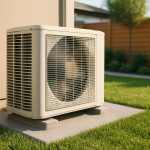
- Loose outdoor panels or service door: Rattling or buzzing that changes when you press lightly on the cabinet (do not put hands near the fan). Often worse in wind.
- Debris in the outdoor unit: Clicking, ticking, or rattling from leaves, twigs, or a small stone bouncing on the base pan, usually while the fan is running.
- Refrigerant lines touching the cabinet or each other: A steady buzz or vibration that may be heard indoors as well, especially when the compressor is running.
- Outdoor fan guard or top grille slightly shifted: Rhythmic rattle or a light scraping sound that follows fan speed, sometimes only at startup or shutdown.
- Unit base or pad transmitting vibration: Low-frequency hum or drumming that seems worse near a wall or inside a room adjacent to the condenser location.
- Indoor airflow restriction (filter/return/closed registers): Louder blower noise, rushing air, or whistling at grilles, while cooling still appears normal.
- Blower wheel or indoor cabinet vibration: Rattle or ticking behind the return grille or air handler panel, often changing with fan speed settings.
- Outdoor fan motor bearing wear (early stage): Mild growl or roughness that is new but not yet affecting airflow, typically gets gradually louder over weeks to months.
- Electrical hum being amplified, not an electrical failure: Normal contactor or motor hum becomes loud due to a loose panel or conduit touching the cabinet; sound reduces when the cabinet is stabilized.
How to Check Safely
- Confirm location: Run Fan Only for 3–5 minutes. If noise is present, focus on the indoor blower/ducts. If it’s quiet, switch to Cooling and listen outside.
- Note the timing: Start only, running only, shutdown only, or intermittent. Write it down. Timing is a strong clue for vibration vs wear.
- Check the outdoor unit perimeter: Clear leaves, mulch, and any objects within 2 feet that could touch the cabinet or lines and transmit vibration.
- Inspect visible panels: With the system off at the thermostat, gently check for loose screws on the exterior panels and obvious gaps. Do not open the electrical access panel.
- Look for line contact: Visually inspect the insulated suction line and the smaller copper line where they enter the unit and the wall. If they are touching the cabinet, each other, or a bracket, that can cause a loud buzz.
- Listen for fan rub: From a safe distance, look through the top grille while running. If you hear scraping or see wobble, shut the system off and call a technician.
- Check the filter: Replace a dirty filter and confirm the return grille isn’t blocked. If blower noise drops immediately, airflow restriction was a contributor.
- Check supply vents: If one vent whistles, open it fully or adjust the register vanes; partially closed registers raise air velocity noise.
- Repeatability test: Turn Cooling off for 5 minutes, then back on. If the same rattle occurs at the same moment each time, it’s often a repeatable vibration point or fan guard issue.
- Stop and call if the sound is harsh: Grinding, loud screeching, or a sharp buzzing that seems like arcing are not ignore-and-see noises.
Normal vs A Problem
Usually normal: A steady low hum outside, mild airflow rush at vents, a brief soft thunk at startup/shutdown, or light compressor/fan ramp-up noise that hasn’t changed over time.
Needs attention: Any noise that is new and trending louder week to week, vibration that can be heard inside rooms that used to be quiet, or rattling that starts only when the condenser runs. Also treat it as a problem if the noise is accompanied by burning smell, breaker trips, indoor lights dimming abnormally on startup, or any drop in cooling performance.
Don’t run it: Metal-on-metal grinding, a squeal that suggests a slipping or failing motor bearing, or loud electrical buzzing that sounds like rapid chattering. These can accelerate mechanical damage even if cooling still seems fine today.
When to Call a Technician
- Grinding, squealing, or scraping from the outdoor fan area or indoor blower housing.
- Fan wobble, or the sound clearly tracks the fan rotation and has gotten worse recently.
- Loud buzzing or chattering at the outdoor unit that is not fixed by tightening exterior panels or clearing debris.
- Noise plus symptoms: intermittent shutdowns, breaker trips, burning odor, or cooling that starts to lag in the afternoon.
- Vibration you cannot isolate: if the noise seems to come from inside walls/ceilings, refrigerant line isolation and mounting checks typically require a technician.
How to Prevent This Problem
- Keep clearance around the condenser: trim plants back and keep objects from leaning against the cabinet.
- Replace filters on schedule: restricted airflow makes blowers louder and increases vibration and duct noise.
- Keep supply registers open: avoid closing many vents; it increases air velocity noise and can make the blower sound harsh.
- Seasonal exterior inspection: after mowing or storms, check for debris in the base pan and obvious loose exterior screws.
- Control vibration transfer: ensure the condenser isn’t touching siding, a fence, or a bracket that can act like a sounding board.
- Address small rattles early: minor panel buzzes often turn into louder resonance as screws loosen further.
Related HVAC Noise Problems
- Outdoor unit buzzes loudly only at startup, then quiets down
- Condenser rattles only on windy days
- Indoor vents whistle after a filter change
- Blower gets louder when more bedroom doors are closed
- Rattling sound right where the refrigerant lines enter the wall
- Clicking outside every few minutes while cooling continues normally
- Low-frequency hum that vibrates a nearby wall or window
- Outdoor fan makes a rhythmic ticking but air is still cold
- Noise is quiet outside but loud inside a specific room
- Outdoor unit is louder after landscaping or pressure washing nearby
Conclusion
If your AC is loud but cooling fine, the odds favor vibration, a loose panel, debris, or line contact rather than a refrigerant problem. Isolate whether the sound is indoor or outdoor, then check for obvious vibration points and airflow restrictions. If the noise is harsh like grinding, scraping, or loud buzzing that suggests electrical trouble, stop running it and schedule service.
Frequently Asked Questions
Can an AC be loud and still be healthy?
Yes. Many loud-but-cooling cases are cabinet vibration, a loose panel, or duct/register noise. It’s still worth finding the source, because vibration can loosen parts over time.
Is the outdoor unit supposed to vibrate?
Some vibration is normal. What’s not normal is vibration that creates a new rattle, makes a wall resonate, or suddenly becomes much louder. That usually means something is loose or touching.
Why is it louder at night even though it cools the same?
Ambient noise drops at night, so normal compressor and fan sounds are more noticeable. Also, mild cabinet resonance can stand out more when the neighborhood is quiet.
If it’s electrical buzzing but it still cools, can I keep running it?
First rule out vibration amplification of normal hum by checking for loose panels and anything touching the cabinet. If the buzzing is loud, harsh, or sounds like rapid chattering, shut it off and call a technician because contactor or motor electrical strain can worsen quickly.
Will a dirty filter make the AC louder without stopping cooling?
Yes. A restrictive filter can make the blower sound louder and increase airflow noise at vents while the system still reaches set temperature, especially in mild weather. Replace the filter and recheck the noise.
It’s one of those quiet wins that doesn’t make a headline, but shows up anyway—in the way conversations move faster, plans actually stick, and the background stress fades out of the room.
Call it relief, if you want. The best part is how ordinary it feels once it’s finally in place, like the world didn’t need fixing so much as aligning.