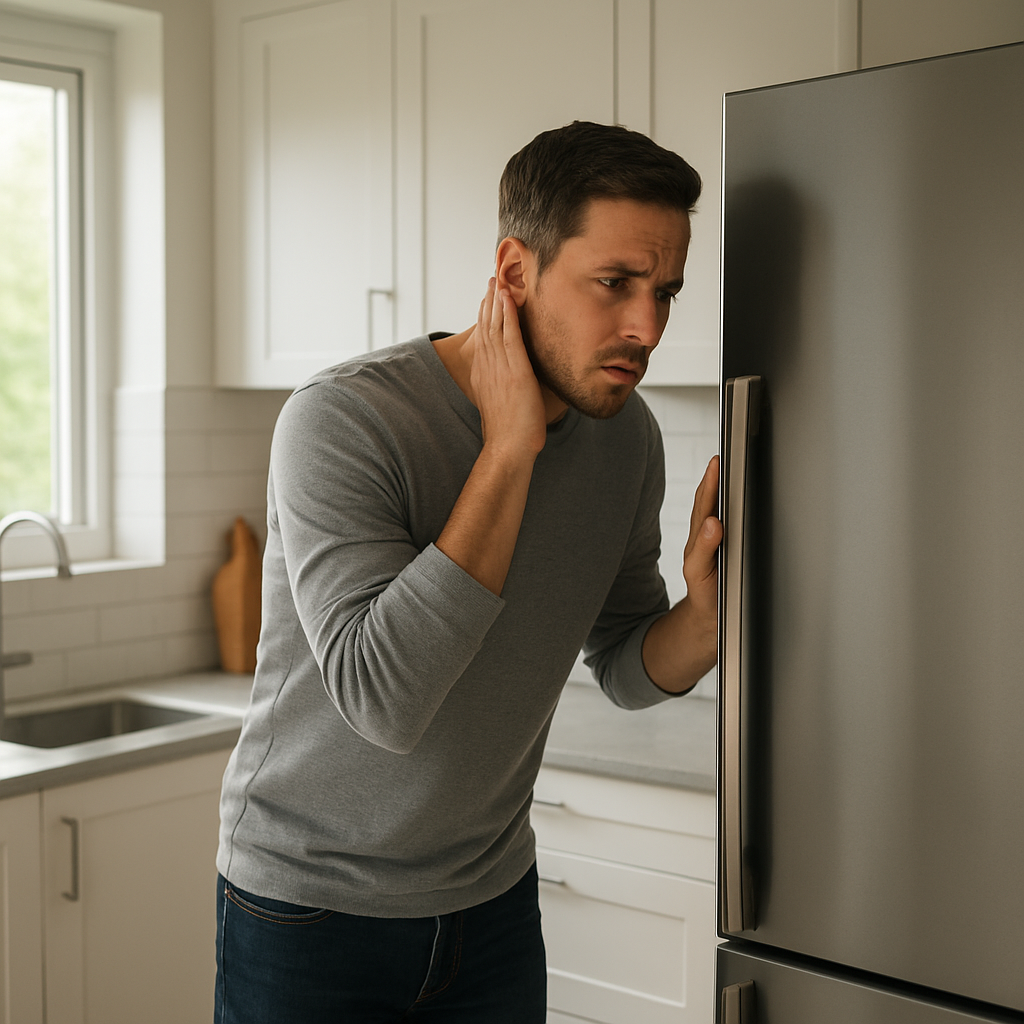
Fridge Loud Intermittently? Why It Happens And How To Fix It
Quick Answer
If your fridge is quiet most of the time but suddenly gets loud in short bursts, the most common cause is a fan or moving part that only runs in certain cycles, usually the evaporator fan (freezer) or the ice maker fill/harvest. First action: time the noise. Note whether it happens when the compressor is running, during defrost, or when the ice maker cycles. That timing narrows the cause faster than guessing by sound alone.
Identify the Noise First
Intermittent noise diagnosis is about matching the sound to a specific operating event. Use this quick decision guide.
- If the noise starts exactly when the compressor starts and lasts 1–5 seconds: suspect start-related vibration, a rattling drip tray, or a condenser fan that hits debris only at startup.
- If the noise happens only while the compressor is running and stops when it stops: suspect condenser fan noise (rear/bottom) or vibration from the compressor/lines transmitting into panels.
- If the noise happens right after the compressor stops for 5–30 seconds: suspect refrigerant equalization gurgle, cabinet popping, or a relay shutting down with a rattle. These are often normal unless harsh or new.
- If the noise shows up during defrost or within 0–30 minutes after: suspect sizzle/hiss from water on the heater (normal) or an evaporator fan scraping ice as it restarts (abnormal).
- If the noise matches ice maker behavior (you hear it, then later see new ice or water refilled): suspect fill valve hum, ice maker motor/gear chatter, or ice pieces jamming the ejector. Intermittent by design.
- If the noise changes when you open the freezer door: many models stop the evaporator fan with the door open. If the noise stops immediately, the evaporator fan area is your primary suspect.
- If the noise is from the rear/bottom and comes and goes: suspect the condenser fan, a vibrating drain pan, or a line/panel rattle that happens only at certain speeds.
- If it is constant (never goes away): this is not an intermittent pattern problem. Look for a constant fan scrape, continuous compressor noise, or a stuck ice maker component.
- If it is intermittent (quiet, then loud, then quiet): keep focusing on what cycle event is starting when the noise begins.
- If it is louder at night: often normal perception plus higher duty cycle (warmer kitchen after cooking, doors closed longer, ice maker catching up). Confirm by checking whether the compressor is running more often during those periods.
Two fast eliminators: If the noise stops when you open the freezer door, think evaporator fan/ice interference. If the noise is clearly at the back/bottom, think condenser fan/drain pan/vibration.
What This Noise Usually Means
An intermittently loud refrigerator is usually not randomly failing. It is cycling through loads that only run at certain times: compressor on/off, fans that start and stop with cooling demand, defrost cycles, and ice maker actions. When a component is slightly out of alignment, has minor ice buildup, or is vibrating against something, you will only hear it during the specific part of the cycle when that component runs.
That is why timing matters. A bad bearing in a fan can sound fine cold and quiet, then roar when it speeds up. A small ice ridge can be silent until the evaporator fan restarts after defrost and taps it. A drain pan can sit quietly until the compressor’s vibration hits a certain frequency. Intermittent loudness is a pattern problem first, a parts problem second.
Most Common Causes
- Evaporator fan hitting ice after defrost: loud ticking, rubbing, or a brief growl that appears after a quiet period, often after defrost; may stop when the freezer door opens.
- Evaporator fan motor bearing noise: intermittent roaring or buzzing while cooling; sound can change with temperature and fan speed; may be worse at certain times of day.
- Condenser fan contacting debris or a shroud: intermittent rattle or scraping from the back/bottom, often only when the compressor is running.
- Drain pan or drip tray vibrating: brief rattling during compressor run or at startup; often changes if you lightly press on the rear panel (do not touch moving parts).
- Refrigerant flow and pressure equalization: intermittent gurgle, whoosh, or brief hiss right after compressor stop or start; typically normal unless very loud and new.
- Ice maker fill valve hum: a 5–10 second hum at predictable intervals (commonly after ice harvest); normal unless it becomes loud, chatters, or leaks.
- Ice maker jam or loud harvest: intermittent grinding/clicking during harvest; often coincides with misshapen cubes or ice stuck in the tray.
- Cabinet popping/creaking from temperature change: intermittent pops as plastic liners expand/contract; normal if not accompanied by performance issues.
- Compressor relay/start device chattering: repeated clicking or buzzing in a pattern of start attempts; intermittent at first, then frequent; usually abnormal and needs service.
How to Check Safely
These checks focus on confirming the timing pattern without exposing you to electrical or sealed-system risk.
- Step 1: Log the event timing. For two or three noise events, write down: time, duration, and what the fridge was doing (compressor running, just stopped, ice maker running, defrost suspected).
- Step 2: Do the freezer-door fan test. When the noise happens, open the freezer door. If the noise stops instantly, the evaporator fan area is implicated. If it continues unchanged, it is likely the condenser area, compressor, or a cabinet rattle.
- Step 3: Locate the sound zone. Listen near: freezer rear wall (evaporator fan), back/bottom of fridge (condenser fan and drain pan), and inside the fresh-food section (air damper area on some models). You are narrowing zones, not diagnosing by ear alone.
- Step 4: Check clearance and contact points. Ensure the cabinet is not touching the wall, cabinets, or water line. A small contact point can turn normal vibration into intermittent loud rattling when the compressor load changes.
- Step 5: Level the refrigerator. If the unit rocks or a front corner is light, adjust feet until stable. Intermittent rattles often disappear when the frame is not twisting during compressor torque changes.
- Step 6: Empty the easy rattle sources. Remove items that can buzz: glass bottles touching, loose bins, items on top of the fridge, and anything vibrating against the back interior panel.
- Step 7: Check the ice maker pattern. If you have an ice maker, listen for a short water-fill hum. Note if the noise occurs right after you hear ice dumping. If the noise lines up with those events, focus on ice maker fill/harvest rather than fans.
- Step 8: Inspect for visible frost clues. Without disassembly, look at the freezer’s rear interior panel. Heavy, uneven frost buildup can correlate with fan scraping after defrost. If you see frost that keeps returning and the noise follows defrost, plan for service.
- Step 9: Check the condenser area for dust. If accessible without tools, look at the front toe-kick intake or rear intake for lint buildup. Reduced airflow can increase fan noise and compressor run time. Clean only what you can reach safely.
- Stop and call a technician if you smell burning, hear repeated clicking every few minutes, or notice warming temperatures along with buzzing.
When This Is Normal vs A Problem
Usually normal (intermittent by design):
- Brief gurgle/whoosh after the compressor stops or starts, lasting under 30 seconds.
- Short sizzle/hiss during defrost or shortly after.
- Occasional ice maker fill hum lasting roughly 5–10 seconds.
- Single pops/creaks from cabinet expansion, especially after long cooling runs.
Usually a problem (pattern indicates contact, wear, or failed starts):
- Fan scraping or ticking that repeats every time the fan runs, especially right after defrost.
- Intermittent roaring that is getting louder week to week while the compressor is running (fan bearings commonly).
- Grinding during ice maker harvest with distorted cubes, overflowing cubes, or a jam that repeats.
- Repeated clicking followed by a buzz, then silence, in a cycle of start attempts (possible start device/compressor issue).
- Noise changes accompanied by worse cooling, warmer freezer temps, water leaks, or new frost patterns.
When to Call a Technician
- Repeated start attempts: clicking every few minutes, buzzing with no sustained compressor run, or the fridge warms while this happens.
- Persistent fan scraping: noise stops with freezer door open and returns every time it closes, or scraping persists after a full day and you see recurring frost buildup.
- Condenser fan issues: loud rattling from the rear/bottom that continues after cleaning obvious lint, or the fan intermittently stops and the unit runs hot.
- Any electrical warning signs: burning smell, melted plastic odor, scorch marks, or breaker trips.
- Intermittent noise plus performance problems: food softening, ice cream not firm, or the fridge running much longer than usual.
How to Prevent This Problem
- Maintain clearance: keep a small gap so the cabinet and water line are not vibrating against the wall.
- Keep the unit stable: level the refrigerator so it does not rock; vibration is the multiplier that makes intermittent cycles sound loud.
- Clean condenser intake areas regularly: lint buildup increases run time and fan load, making intermittent noises more frequent.
- Avoid blocking freezer vents: overpacked freezers drive longer fan run time and more defrost stress, increasing the chance of ice-related fan contact.
- Keep door gaskets sealing: a leaking gasket increases frost and raises the odds of post-defrost fan scraping.
- Watch ice quality: hollow or clumped cubes often precede ice maker jams that sound intermittent and harsh.
Related Refrigerator Noise Problems
- Fridge makes a loud noise right after defrost ends
- Freezer fan noise that stops when the door opens
- Rattling from the back of the refrigerator only when it is running
- Clicking every few minutes and the fridge is not cooling well
- Buzzing for a few seconds then silence, repeating
- Ice maker makes a grinding noise during harvest
- Humming for 10 seconds at random times near the water line
- Gurgling or whooshing sounds after the compressor shuts off
- Popping or cracking noises from the cabinet at night
- Vibration noise when the fridge is pushed back into place
Conclusion
An intermittently loud fridge is best diagnosed by pattern, not by guessing the part. Match the noise to the cycle event first: compressor start/stop, fan operation, defrost restart, or ice maker action. Then use simple checks like the freezer-door fan test, clearance/leveling, and confirming ice maker timing. If the sound is scraping, repeated clicking, or tied to warming temperatures, schedule service before it escalates.
Frequently Asked Questions
Why does my fridge get loud for a few minutes and then go quiet again?
That pattern usually means a component that does not run constantly, most often a fan. Start by checking whether the noise stops when you open the freezer door. If it stops immediately, focus on the evaporator fan area. If it does not, listen at the back/bottom for the condenser fan or a vibrating drain pan.
The noise happens at night more than during the day. Is that a bad sign?
Not automatically. Nights are quieter so normal sounds seem louder, and many households have longer door-closed periods that let the fridge run longer cycles and make more ice. Treat it as a timing clue: confirm whether the noise aligns with longer compressor runs, defrost, or ice maker cycles.
How do I tell evaporator fan noise from condenser fan noise without tools?
Use location and the door test. Evaporator fan noise is strongest inside the freezer and often stops when the freezer door opens. Condenser fan noise is strongest at the rear/bottom and usually continues with the doors open because it tracks compressor operation.
My fridge makes a loud buzzing for a few seconds, then stops. What is that pattern?
If it buzzes briefly and then everything goes quiet, watch for a repeat cycle every few minutes. That pattern can indicate a failed start attempt (start device or compressor problem). If it repeats and cooling suffers, stop troubleshooting and call a technician.
When the ice maker runs, I hear a loud clunk and sometimes a grind. What should I check first?
Check the cubes and the bin. Large fused clumps, misshapen cubes, or cubes stuck in the ice maker can cause intermittent grinding during harvest. Empty the bin, clear clumps, and confirm the freezer temperature is stable. If grinding continues every harvest cycle, the ice maker module or gear train may be failing and typically needs replacement.
It settles into that rare feeling of things finally lining up—the kind of relief that doesn’t announce itself, just makes the rest of your day a little easier.
Without all the noise, the world looks mostly the same, which is almost funny; the difference is that you can breathe in it.