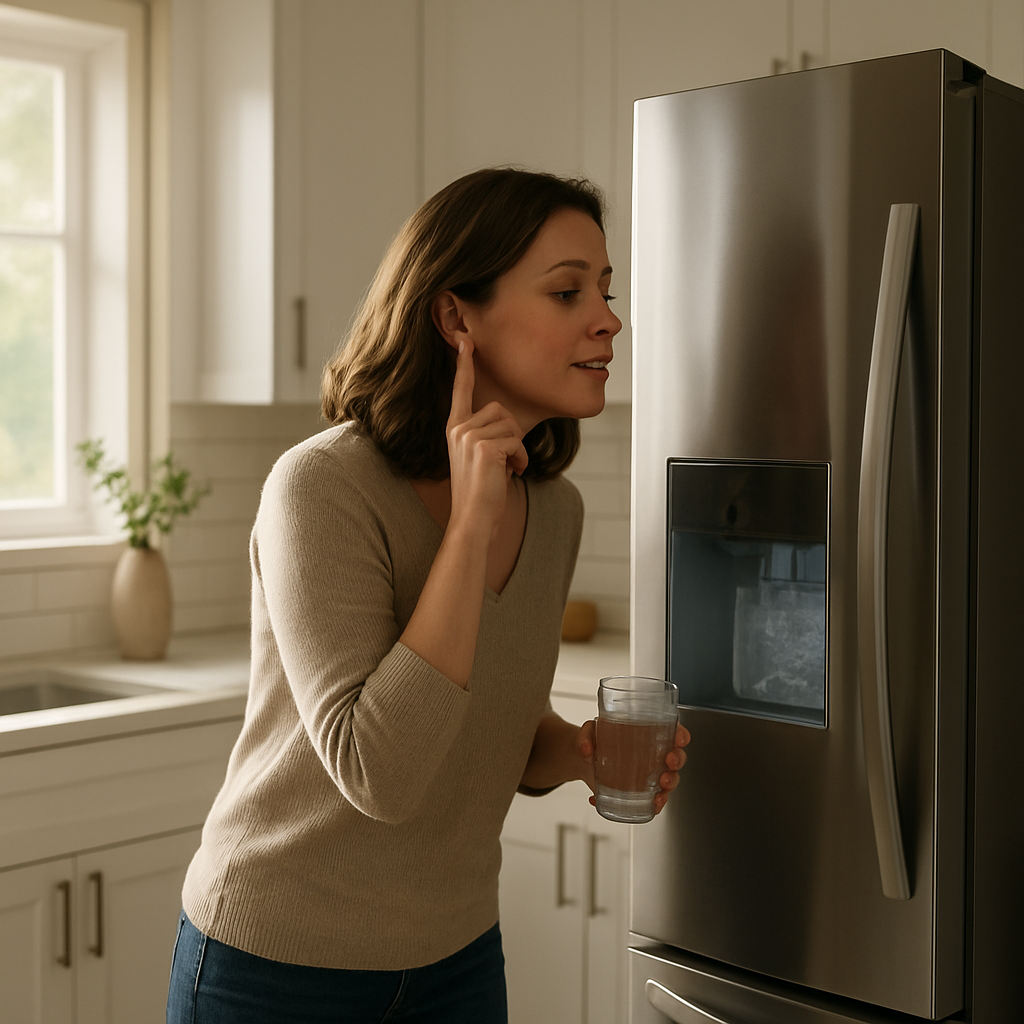
Freezer Loud When Making Ice? Normal Or Problem
Quick Answer
If your freezer gets loud specifically when making ice, the noise is usually from the ice maker’s mechanical cycle: a motor turning the ejector, the ice being forced out of the mold, or the fill valve energizing. First action: listen and time it. If the noise happens in a predictable 30–90 second burst right before cubes drop, it’s often normal. If it grinds, bangs hard, or repeats excessively, inspect the ice maker and ice bin for jams.
Identify the Noise First
Use this quick guide to confirm the noise is tied to ice making and not a fan or compressor issue.
- If the noise happens when the compressor starts: likely not the ice maker. Look for a brief click/buzz from the machine compartment instead.
- If the noise is while the compressor is running and continues steadily: not typical ice maker behavior. Suspect fans or vibration.
- If the noise occurs right after the compressor stops: can be refrigerant equalizing or cabinet settling, not an ice maker cycle.
- If the noise happens during defrost (or shortly after): listen for sizzling/dripping. Not an ice maker mechanical cycle.
- If the noise happens when the ice maker runs or fills: proceed below. This is the most common match for loud, short bursts.
- If the noise happens when the evaporator fan is running (freezer side): open the freezer door. If the noise changes dramatically when the door is opened/closed, it points more to the fan than the ice maker.
- If the noise happens when the condenser fan is running (rear/bottom): the sound is usually behind or under the unit, not inside the freezer near the ice bin.
- If the noise is constant: not an ice maker cycle. The ice maker runs intermittently.
- If the noise is intermittent and repeats in the same pattern every 45–120 minutes: that timing matches many ice maker harvest cycles.
- If it is louder at night / quieter during the day: often normal. The house is quieter, so you notice the harvest and cube drop more.
Now pinpoint which ice-maker-linked sound you have:
- Buzzing or humming for 5–10 seconds at the start or end of a cycle: often the water inlet valve filling the mold.
- Ratcheting, whirring, or a strained motor sound for 20–60 seconds: the ice maker motor and gear driving the ejector.
- A clunk, snap, or crack followed by cubes dropping: the ejector pushing cubes out and cubes falling into the bin.
- Grinding, repeated clicking, or loud banging during harvest: more likely a jammed ejector, overfrozen mold, or a worn ice maker drive.
What This Noise Usually Means
An automatic ice maker is a small motorized machine. During a harvest cycle it typically warms the mold briefly so cubes release, then a motor turns a gear train that sweeps the ejector across the mold to push the cubes out. After that, the ice maker calls for water and a valve opens to fill the mold.
Louder-than-expected sound during this process usually comes from the mechanical load increasing. Common reasons are cubes stuck in the mold, the ejector hitting an obstruction (ice pile, mis-seated bin, cubes bridged together), or worn gears causing chatter. A separate but related sound is the fill valve buzz; it can get louder if water flow is restricted or the valve is wearing.
Most Common Causes
- Ice cubes jammed at the ejector or in the rake path: loud clicking/ratcheting during the harvest, often followed by no cubes dropping or partial ejection.
- Ice bin overfilled or mispositioned: cubes pile up and contact the ejector area, causing banging when the mechanism cycles.
- Clumped or bridged ice in the bin: harvest sounds normal, but the cube drop becomes a loud thud and you may hear cubes “avalanche” as the clump breaks.
- Ice maker mold overfreezing or cubes too large: ejector strains, sounds louder, and may stall or repeat the cycle; often tied to fill issues or temperature conditions around the ice maker.
- Worn ice maker motor module or gear train: rhythmic loud ticking, grinding, or intermittent stalling that gradually worsens over weeks.
- Water inlet valve buzzing loudly during fill: a strong buzz only when water should fill; may be accompanied by small cubes (underfilling) if flow is restricted.
- Loose ice maker mounting screws or bracket vibration: normal harvest sounds but amplified; noise reduces if you gently hold the ice maker housing during a cycle.
How to Check Safely
- Step 1: Confirm it is the ice maker
- Turn the ice maker off for 8–12 hours (or lift the shutoff arm if equipped).
- If the loud noise disappears completely, you’ve confirmed the source is the ice maker cycle or fill.
- Step 2: Time the noise
- Note if it lasts roughly 30–90 seconds and ends with cubes dropping. That pattern points to harvest/eject.
- Note if it lasts 5–10 seconds with no cube drop. That pattern points to water fill/valve buzz.
- Step 3: Check the ice bin and cube pile
- Pull the bin out and look for a mound that is contacting the ice maker area or chute.
- Break up clumps and dump old ice if it is fused together.
- Re-seat the bin fully. A bin sitting crooked can cause repeated banging during harvest.
- Step 4: Inspect for obvious ice obstructions
- With the bin removed, look under the ice maker for stray cubes, frost chunks, or a slab of ice that could interfere with moving parts.
- If you see heavy icing around the ice maker, do not chip aggressively. Turn the ice maker off and let it thaw with the door closed as much as possible, or schedule service if icing returns quickly.
- Step 5: Listen for fill-valve buzz vs harvest noise
- Fill-valve buzz usually sounds like a low hum from the back of the refrigerator, not inside the freezer.
- Harvest noise typically sounds like it is inside the freezer near the ice maker housing.
- Step 6: Reduce vibration and amplification
- Confirm the refrigerator is level and stable. A cabinet that rocks can make normal ice drops sound like a bang.
- Make sure the unit is not touching the wall or cabinet panels; vibration can transfer and get louder.
- Step 7: Check for airflow and temperature conditions that affect ice making
- Keep items from blocking freezer vents near the ice maker; poor airflow can create uneven freezing and harder ejection.
- Verify the freezer door closes and seals well. Excess humidity can create frost/ice interference around the ice maker.
- Stop and call a technician if you smell burning, hear electrical arcing, see water leaking at the back, or the noise is a harsh grind that repeats continuously.
When This Is Normal vs A Problem
Usually normal when:
- The noise happens intermittently and predictably, then stops.
- You hear a brief whir/ratchet followed by cubes dropping into the bin.
- The volume is consistent over time and ice production is normal.
- The loudest moment is the cube drop, especially with an emptier bin (cubes hit harder).
Usually a problem when:
- The sound changes suddenly from normal to much louder, sharper, or harsher.
- You hear grinding, repeated rapid clicking, or a motor that sounds like it is straining for more than 1–2 minutes.
- The ice maker cycles repeatedly but produces little/no ice, or cubes are deformed (tiny shards, hollow cubes, oversized fused cubes).
- The noise is accompanied by warming freezer temps, heavy frost buildup near the ice maker, or water leaks.
- A loud buzz occurs during fill and ice cubes get smaller over time (possible flow/valve issue).
When to Call a Technician
- Persistent grinding or loud clicking during the harvest cycle that returns after you clear the bin and remove obstructions (likely failing ice maker drive/module).
- Repeated cycling with little/no ice even though the freezer temperature is normal (mechanical failure or control issue within the ice maker).
- Loud buzzing at fill paired with slow/weak water flow symptoms or visible leaking at the back connection or valve area.
- Heavy icing around the ice maker that keeps coming back (can indicate airflow/sealing problems or a fill leak that freezes in place).
- Any electrical smell, sparking sounds, or breaker trips: stop using the ice maker and get service.
How to Prevent This Problem
- Keep the ice level below the shutoff point and break up clumps regularly; fused ice makes harvest noise worse and can jam the mechanism.
- Ensure the bin is seated correctly every time after scooping ice.
- Set the freezer to a stable, manufacturer-recommended temperature; frequent big adjustments can change cube release behavior and cause harder ejection.
- Maintain door seals and close the door firmly to limit frost and ice buildup near the ice maker.
- Do not block freezer vents, especially near the ice maker area.
- Provide clearance behind the refrigerator and keep the condenser area reasonably clean so the unit runs normally and ice cycles stay consistent.
Related Refrigerator Noise Problems
- Buzzing noise for a few seconds right before the ice maker fills with water
- Ice maker clicking repeatedly but not dumping ice
- Loud clunk when ice drops into the bin, worse when the bin is empty
- Grinding noise from the ice maker area only during cube ejection
- Rattling noise in freezer that stops when the ice bin is removed
- Ice cubes freezing into a solid block and causing loud harvest cycles
- Water line hammering or thumping when the ice maker refills
- Freezer fan noise mistaken for ice maker noise during ice production
- Condenser fan vibration that seems louder when the ice maker runs
- Ice maker overfills and causes ice buildup and banging during harvest
Conclusion
A freezer that gets loud specifically when making ice is most often reacting to the ice maker’s mechanical harvest cycle or the fill valve energizing. Confirm the timing, clear the bin and any obstructions, and re-test with the ice maker turned off and back on. If the noise is harsh, repeats frequently, or ice production changes, the ice maker drive or fill system usually needs professional diagnosis or replacement.
Frequently Asked Questions
Why does my freezer make a loud cracking or popping sound when it makes ice?
That is usually the cubes releasing and being pushed out of the mold, plus cubes dropping into the bin. A sharp crack right before the drop can be normal, especially with cold, dry cubes. If it turns into repeated banging or the ice maker seems to struggle, check for a jammed cube pile or clumped ice.
My ice maker is loud and seems to be trying over and over. What does that mean?
Repeated cycling with loud clicking/ratcheting often means the ejector is encountering resistance: jammed cubes, an overfilled bin, or a worn gear/motor. Clear the bin, remove stray cubes, and test. If it still repeats, the ice maker module is a likely failure point.
Is a loud buzzing sound during ice making coming from the ice maker itself?
Often it is the water inlet valve at the back of the refrigerator energizing during the fill. A brief buzz can be normal. If the buzz is loud and ice cubes are getting smaller or hollow, it can indicate restricted water flow or a valve that is wearing.
Why is the ice maker louder when the bin is empty?
Cubes hitting an empty plastic bin sound much louder than cubes landing on top of other cubes. If the rest of the cycle sounds normal and ice production is steady, this is typically not a fault.
Should I turn off the ice maker if it is making a grinding noise?
Yes. Turn the ice maker off to stop the cycle and prevent further damage or a full jam. Then check for bin overfill, clumped ice, or an obstruction. If grinding returns immediately after clearing, schedule service for the ice maker drive/components.
The whole point was never to make this feel dramatic. It’s more like finally catching the rhythm after fumbling with the same lock for too long—no fireworks, just the sudden sense that things can move again.
Now there’s room for the rest of the day, the part that actually counts. The noise fades, and what’s left feels almost boring—in the best possible way.