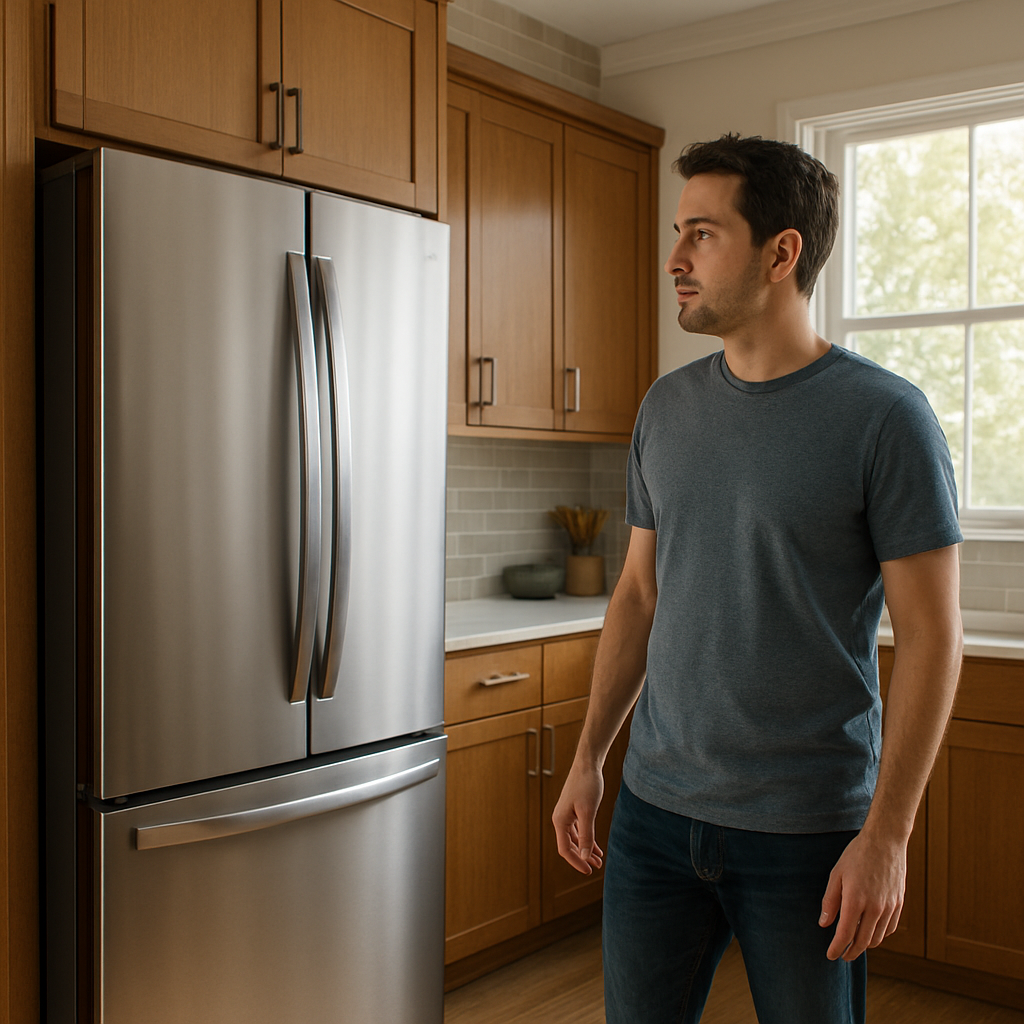
A brief thump or low buzz right as the compressor starts is often normal, especially after it has been off for a while. What is not normal is a loud buzzing or repeated clicking where the compressor fails to start. First action: stand by the fridge and time it. If the start noise lasts under 2–3 seconds and cooling is normal, monitor. If it buzzes longer or retries repeatedly, stop and schedule service.
Identify the Noise First
Use this timing-based guide. Your answer should point to whether this is truly a compressor start noise or something that only sounds like it.
If the noise happens exactly when cooling begins (you can often hear a change in hum right after): go to the compressor start checks below.
If the noise continues the whole time it runs and does not fade after the first few seconds: this is a running noise, not just a start sound.
If the noise happens right after it shuts off (a pop, tick, or whoosh): that is usually shutdown equalization, not a start issue.
If it happens during defrost or shortly after (sizzling, dripping, cracking): likely defrost-related, not compressor start.
If it happens when the ice maker runs or fills (brief buzzing, water rushing): verify it lines up with ice maker cycles, not compressor starts.
If opening the freezer door changes the noise immediately (noise stops or changes): suspect the evaporator fan, not the compressor start.
If the noise is loudest at the rear/bottom and changes with airflow (or stops when you pull the fridge forward): suspect the condenser fan or cabinet vibration, not the compressor itself.
If it is constant (always present regardless of cycling): not a start-only issue.
If it is intermittent and tied to cooling cycles (every 10–60 minutes): proceed with compressor start sound evaluation.
If it is louder at night: often normal because the house is quieter, but also check for cabinet vibration against a wall or floor resonance.
Now narrow it down further:
If you hear a single dull thump followed by a steady hum: commonly normal compressor mounting or refrigerant equalization at start.
If you hear a loud buzz for 3–10 seconds, then a click, then silence: classic failed start attempt.
If you hear repeated click-buzz-click cycles every few minutes: strong sign of a start device or compressor problem.
If you hear a metallic rattle at the moment of start: often vibration of a panel, drip tray, or line touching the cabinet.
What This Noise Usually Means
At compressor start, current draw spikes and the compressor motor has to overcome internal pressure. A normal start may produce a short buzz and sometimes a soft thump as the compressor loads up and mounts flex. If pressures are not fully equalized, the start can sound stronger than usual for a moment.
Abnormal start noise is different: the compressor struggles to spin, the overload trips, and you hear buzzing followed by a click. That sequence means the compressor attempted to start but did not successfully run. The most common reasons are a weak start relay/capacitor, poor power supply, or a mechanically tight compressor.
Most Common Causes
Normal compressor start thump (no performance issues): a brief thud or low buzz under 1–2 seconds, then smooth running sound.
Fridge touching wall/cabinet causing start-up vibration amplification: noise is much louder when the compressor kicks on, especially if the back is close to the wall or a cabinet panel resonates.
Unit not level or feet not firmly planted: at startup the compressor torque makes the cabinet shimmy or rattle; noise changes when you press on the top or side.
Rear cover, drip pan, or tubing rattle at start: metallic chatter right at startup that can be reduced by lightly holding the rear panel (do this only if accessible and safe).
Condenser fan starting at the same time (models with a fan near the compressor): can sound like a short growl/rattle that continues while running, not just at the initial start.
Hard start condition from a failing start relay or capacitor: loud buzz for a few seconds, then a click as it gives up; fridge may still cool sometimes but gets worse over days/weeks.
Low voltage or overloaded circuit: startup buzz is worse when other appliances run; lights may dim when the compressor tries to start.
These checks focus on confirming whether the sound is a normal start signature or a failing start event. Do not remove electrical covers or touch wiring.
Time the noise: Stand by the unit and listen for the start event. A normal start sound usually settles into a steady hum within 1–2 seconds. Buzzing that lasts longer than about 3 seconds is suspicious.
Listen for the click pattern: If you hear buzz then a distinct click and the fridge goes quiet, that is often the overload protector opening after a failed start.
Check cooling performance: Verify the freezer is keeping food hard-frozen and the fresh food section holds temperature. If temperatures are rising along with louder starts, treat it as a problem.
Pull the fridge slightly forward: Ensure it is not touching the wall, water line, or cabinet. Start noises that drop sharply after moving it point to vibration transfer, not a bad compressor.
Level and stabilize: With the fridge in place, make sure it does not rock. Adjust the front leveling feet so all corners are stable. Start noise that becomes duller/shorter after leveling is usually vibration-related.
Check for loose items: Remove anything on top of the fridge that can rattle. Inside, make sure glass shelves, drawers, and bins are seated. Startup vibration can make poorly seated parts chatter.
Inspect the rear/bottom for airflow and dust: If you can access the front grille or rear lower area safely, remove visible lint/dust with a vacuum brush. A hot compressor area can worsen hard-start behavior.
Door test for fan confusion: If opening the freezer door changes the noise immediately, you are likely hearing the evaporator fan, not the compressor start. That is a different diagnosis.
Confirm ice maker timing (if equipped): If the noise happens at predictable intervals and sounds like buzzing/valve hum with water flow, it may be a fill cycle coinciding with compressor cycling.
Stop and call if the compressor repeatedly fails to start: Repeated buzzing/clicking can overheat components and lead to a no-cool situation.
When This Is Normal vs A Problem
Usually normal if:
The sound is a single thump or brief buzz under 1–2 seconds.
The compressor then runs with a steady, smooth hum.
The sound is consistent over months and has not gotten louder.
Temperatures are stable and recovery after door openings is normal.
No burning smell, no repeated clicking, and no breaker trips.
Likely a problem if:
You hear a loud buzz for 3–10 seconds followed by a click and the compressor does not run.
It retries repeatedly (every 1–10 minutes), especially after being unplugged and plugged back in.
The start noise suddenly became much louder than usual.
Cooling is weak, freezer is softening, or the fridge is warming.
You notice an electrical or hot plastic smell near the rear/bottom.
The compressor area is excessively hot and the unit is cycling off abnormally fast.
When to Call a Technician
Repeated start attempts: buzz-click cycles or clicking every few minutes, especially with warming temperatures.
Loud buzzing with no sustained run: the compressor does not transition into a steady hum.
Breaker trips or outlet gets hot: stop using the unit and get service; this is an electrical risk.
Burning smell or visible scorching at the rear/bottom: unplug and call for service.
Compressor is extremely hot and cooling is poor: could be a start device, control issue, or compressor problem that requires electrical testing.
Noise is clearly inside sealed-system components (harsh knocking that continues once running): sealed-system or compressor internal issues are not DIY.
How to Prevent This Problem
Keep proper clearance: leave space behind and above the fridge so startup vibration is not amplified by contact with walls or cabinets.
Level the refrigerator: stable footing reduces startup shake and rattle that sounds like a loud compressor start.
Clean condenser areas periodically: remove lint from accessible grilles/coil areas to reduce heat load that can contribute to hard starts.
Use sensible temperature settings: extreme cold settings can increase run time and cycling stress.
Do not block internal vents: overpacked freezer airflow restrictions can increase load and lead to more frequent starts.
Maintain door seals: clean gaskets and ensure doors close firmly to reduce short-cycling and frequent starts.
Keep the ice maker fill tube and bin area orderly: prevents knock-on issues where ice maker noises get mistaken for compressor trouble.
Related Refrigerator Noise Problems
Fridge makes buzzing then clicking and stops cooling
Refrigerator clicks every few minutes from the back
Compressor hums but won’t start after a power outage
Refrigerator loud humming only when running (not just at start)
Rattling noise at the back when the fridge turns on
Condenser fan rattling near the compressor area
Evaporator fan noise that stops when freezer door opens
Popping or cracking sounds after the compressor shuts off
Gurgling or whooshing sounds right after startup
Ice maker buzzing during fill cycle mistaken for compressor noise
Fridge louder at night due to cabinet vibration and floor resonance
Conclusion
Evaluate the sound by timing: a short thump or brief buzz that immediately becomes a steady run is typically normal compressor start behavior or simple vibration. Buzzing that lasts several seconds, followed by a click and repeated retries, points to a failing start event. If you confirm buzz-click cycles or any cooling decline, schedule service before it becomes a no-cool situation.
Frequently Asked Questions
Why does my fridge make a loud thump when the compressor kicks on?
A single thump at startup is commonly the compressor loading up and its mounts flexing, sometimes combined with refrigerant pressure equalizing. If it is brief and the compressor then runs smoothly with normal temperatures, it is usually not a failure.
My fridge buzzes for a few seconds, then clicks and goes quiet. What is that?
That pattern usually means the compressor tried to start but could not. The buzz is the start attempt, and the click is the overload protector shutting it down. If it repeats and cooling is affected, it needs diagnosis of the start components and compressor circuit by a technician.
Can a fridge being too close to the wall make the compressor start sound louder?
Yes. A normal start vibration can be amplified when the cabinet or rear cover touches a wall, water line, or cabinetry. Pulling the unit forward slightly and ensuring clearance often reduces the perceived startup noise immediately.
Is it normal for the compressor start noise to be louder after a power outage?
It can be temporarily louder if the system restarts under different pressure conditions, and some units delay restart to protect the compressor. If it returns to a normal brief start sound and cooling stabilizes, monitor. If it buzzes and clicks without starting, get service.
How loud is too loud for a compressor start?
Use behavior, not a decibel number. Normal is a brief sound that settles within 1–2 seconds and does not change over time. Too loud is a prolonged buzz, a harsh metallic clank, or any start sound that is followed by clicking, repeated retries, warming temperatures, odor, or electrical symptoms.
There’s a strange calm that comes after the noise clears. The hard part is mostly over, and the rest feels less like solving and more like letting things be.
Not every day gets exciting, but at least the same old friction doesn’t keep taking the stage. The result is quieter than you’d think—like exhaling after holding your breath too long.