Fridge Loud On Startup? Normal Compressor Sound Or Problem
Quick Answer
A fridge that is loud right when it starts is usually reacting to high startup compressor load: the compressor is pushing against refrigerant pressure, the start device engages, and the cabinet vibrates briefly. First action: stand by the rear/bottom and confirm the noise happens only for the first 1–3 seconds of compressor start, then settles into a steady hum. If it buzzes, clicks, and fails to start, treat it as a problem.
Identify the Noise First
Use timing and repetition to pinpoint whether this is normal startup load noise or a fault.
- If the noise happens exactly when the compressor starts (you hear a brief surge, then it smooths out): likely normal startup load or vibration.
- If it buzzes for 2–10 seconds, then clicks off and repeats every few minutes: compressor fails to start under load (start device/overload/capacitor or compressor issue).
- If it is loud while the compressor is running and does not quiet down after the first few seconds: vibration, mounting issue, condenser fan issue, or a compressor with abnormal internal noise.
- If the noise occurs right after the compressor stops (short hiss/pressure equalization): normal, especially after long run times.
- If it appears during defrost or shortly after (sizzling, dripping, brief fan change): likely unrelated to startup load; confirm by listening for the compressor being off during the sound.
- If it occurs when the ice maker runs or fills (water valve buzz for 5–10 seconds, ice dumping clunks): not a compressor startup issue unless it is being mistaken for one.
- If it occurs when the evaporator fan is running (freezer side whir, occasional tick): fan or ice contact, not startup load; check whether the sound continues with compressor off.
- If it occurs when the condenser fan is running (rear/bottom fan whoosh or scraping): can be confused with startup noise; confirm by listening from the back as the unit starts.
- If the noise is constant: not startup load behavior.
- If the noise is intermittent and lines up with cooling cycles: points back to compressor start/stop events.
- If it’s louder at night: often normal geography and load behavior you notice more (quiet house) or slightly higher startup strain after long off-cycles; still verify it settles quickly and cooling is normal.
What This Noise Usually Means
At startup the compressor has the hardest job: it has to begin turning and pumping while refrigerant pressures may not be fully equalized. That creates a brief increase in torque demand and vibration. Most refrigerators make a stronger sound for a moment at the exact start, then drop to a smoother running hum once the compressor is up to speed and pressure stabilizes.
When the sound is not normal, it usually shows up as a longer buzz followed by a click (the overload protector opening) because the compressor cannot start turning under that initial load. That pattern matters more than “loud” by itself.
Most Common Causes
- Normal high-load startup hum (1–3 seconds) with minor cabinet vibration: noise is brief, predictable, and cooling is normal.
- Fridge not level or touching a wall/cabinet: the startup surge makes the cabinet or rear cover resonate; noise is worse at first second of startup and improves if you pull the unit forward slightly.
- Loose drip pan, rear access cover, water line, or cord vibrating at startup: a rattle or buzzing only as the compressor kicks on, often disappearing once running stabilizes.
- Dirty condenser area causing higher head pressure and harder starts: startup sounds become harsher over weeks/months, run times increase, and the unit feels hotter at the sides or near the machine compartment.
- Weak start relay/overload or failing start capacitor (if equipped): buzzing lasts several seconds, then a click; may start sometimes and fail other times, especially after a short off cycle.
- Compressor struggling mechanically: repeated failed starts, noticeable warming, louder-than-usual growl that does not settle, or breaker trips; requires professional diagnosis.
How to Check Safely
- Time the noise: use a phone timer. A normal startup surge is typically 1–3 seconds, then it smooths out. Buzzing longer than that, especially followed by a click, is a red flag.
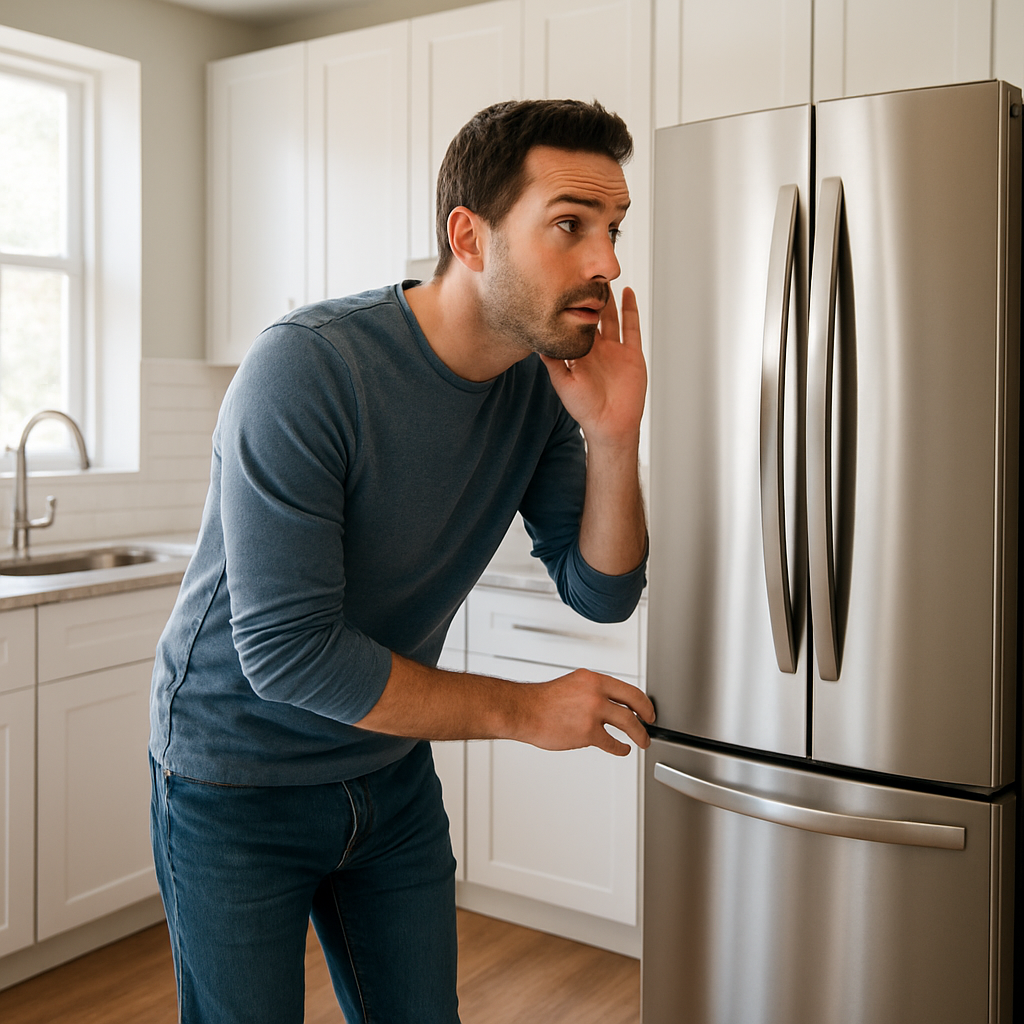
- Listen from the right place: stand at the rear/bottom (or lower back panel area). Compressor startup load noise is strongest there. If it’s louder in the freezer, suspect evaporator fan/ice contact instead.
- Confirm the start/click pattern: if you hear buzz → click → silence → repeat every few minutes, stop forcing cycles and plan for service. That pattern is classic start failure under load.
- Check clearance and contact points: pull the refrigerator 1–2 inches away from the wall. Make sure it is not touching cabinets, trim, or a water line. Re-test for the next startup.
- Level the unit: adjust the front leveling legs so it is stable and not rocking. A small tilt back is typical for door closing, but the key is stability. Re-test for startup vibration.
- Inspect for loose parts you can reach: with the unit in place (no disassembly), check the kickplate area for a loose drip pan (front-access designs) and check behind/under for anything tapping the cabinet (water line, cord). Do not remove electrical covers if you are not trained.
- Clean accessible dust: vacuum the front grille intake (if present) and the floor area under the unit. If you cannot safely access the condenser region without removing panels, stop and schedule maintenance.
- Door test for load changes: when the compressor starts, open the fridge door briefly. If the noise changes mainly with door open/close, you may be hearing a fan airflow change rather than compressor load.
- Check cooling performance: verify the freezer is holding temperature and food is staying solid. Startup noise with normal temps is usually vibration/load related; startup noise plus warming points to a real starting or compressor problem.
When This Is Normal vs A Problem
Usually normal if:
- The sound is a brief stronger hum or low buzz only at startup and settles within 1–3 seconds.
- It happens a few times a day (more in hot weather or heavy use).
- Cooling is stable and there is no burning smell.
- No repeated clicking and no long buzzing.
Likely a problem if:
- Buzzing lasts more than 3–5 seconds and is followed by a click, then repeats (failed starts under load).
- The startup sound is getting progressively louder week to week.
- The compressor never transitions to a steady running hum, or you hear harsh grinding/metal-on-metal that continues.
- Temperatures rise, ice cream softens, or the fridge warms while the noise pattern continues.
- You smell hot plastic/electrical odor, the back area is excessively hot, or the breaker trips.
When to Call a Technician
- Buzz-click-repeat start attempts every few minutes, especially with warming temperatures.
- Compressor buzzes but does not start, or starts only after multiple attempts (start relay/overload/capacitor testing needed).
- Breaker trips during startup or you notice an electrical or burning smell near the machine compartment.
- Noise stays loud beyond the first few seconds and you have confirmed it is not a fan, wall contact, or a loose external part.
- Any sealed-system or compressor suspicion (poor cooling plus hard starting). These are not DIY repairs.
How to Prevent This Problem
- Maintain clearance: keep space behind and above as recommended so pressures stay reasonable and startup load stays lower.
- Keep the condenser area clean: vacuum front grille areas and schedule periodic deep cleaning if your model traps dust underneath.
- Level and stabilize the cabinet: reduces resonance when the compressor hits its startup load.
- Avoid blocking airflow inside: don’t pack items tightly against freezer vents; poor airflow raises run time and operating pressures, making starts harder.
- Use stable temperature settings: extremes can increase run time and stress startups.
- Keep door gaskets sealing: air leaks drive longer run times and higher heat load, which can make startups sound harsher.
- Keep the ice maker fill line properly routed: prevents vibration contact noises that mimic compressor startup.
Related Refrigerator Noise Problems
- Buzzing then clicking every few minutes and fridge not cooling
- Compressor hums loudly all the time instead of settling after startup
- Rattle at the back of the fridge only when the compressor turns on
- Fridge vibrating against the wall when cooling starts
- Loud condenser fan noise that starts with the compressor
- Evaporator fan scraping or ticking that changes when the freezer door opens
- Hissing or gurgling sound right after the compressor shuts off
- Water valve buzz during ice maker fill mistaken for compressor noise
- Drip pan vibration noise during compressor cycles
- Intermittent popping/creaking as the cabinet warms and cools around cycles
Conclusion
A loud moment at startup is often normal compressor load behavior, especially if it lasts a couple seconds and then smooths out. Your next step is to time the noise and check for vibration causes like leveling and wall contact. If you hear buzz-click-repeat or the unit is warming, stop troubleshooting and schedule service for a start circuit or compressor load issue.
Frequently Asked Questions
Why is my fridge loud only for a second when it kicks on?
That is typically the compressor taking a higher load at startup and briefly vibrating the cabinet. If it consistently settles into a normal hum within 1–3 seconds and cooling is normal, it is usually not a fault.
What does it mean if I hear buzzing for several seconds and then a click?
That pattern usually means the compressor is not starting under load and the overload protector is opening. Causes often include a weak start relay/overload, a failed start capacitor (on models that use one), or a compressor that is mechanically tight. It should be checked by a technician.
Can dirty coils make the compressor louder on startup?
Yes. Restricted condenser airflow can raise operating pressures, which increases startup load and can make starts sound harsher. It can also increase run time. Cleaning accessible intake areas can help, but if the condenser is not safely reachable, schedule maintenance.
How do I tell compressor startup noise from a fan noise?
Compressor startup load noise is strongest at the rear/bottom and is brief at the exact moment the cooling cycle begins. Fan problems often sound like scraping, ticking, or a steady whoosh and may change when you open a door or when the fan runs with the compressor already stable.
Is a louder startup noise at night a sign something is failing?
Not by itself. Houses are quieter at night, and after longer off-cycles the compressor may start against higher pressure differences, making the start more noticeable. Treat it as normal if it stays brief and cooling remains consistent. If it turns into buzz-click-repeat, that is not normal.
With the page finally turned, the whole thing feels less like a puzzle and more like a decision that’s already been made. The noise quiets down; the details stop nagging at the edges of your day.
What’s left is strangely plain—almost anticlimactic. That’s the best kind, though: no dramatic overhaul, just a steadier kind of normal.