Dishwasher Loud With Plastic Dishes: Is It Normal?
Quick Answer
Usually, yes. The most common cause is plastic ware shifting, floating, or flexing and deflecting the spray, which makes the spray arm “slap,” tick, or chatter as jets hit plastic or the arm clips it. It happens because plastic is light and moves in the wash. First action: pause the cycle during spray, open the door, and check for any plastic items contacting or blocking the spray arm’s rotation path.
Identify the Noise First
Match the noise to the cycle phase so you don’t chase the wrong problem. Plastic spray deflection noise happens during spray/circulation: a repeating tick, rapid tapping, or hollow rattling that often changes when the spray arm changes speed or direction. It typically stops when you open the door (spray halts) and returns when you close it.
- During water fill: ignore for this issue; plastic deflection won’t occur before spraying starts.
- During spray / circulation: target phase. Listen for rhythmic contact sounds that speed up or slow down with spraying.
- During draining: if it only happens at drain, it’s not plastic spray deflection.
- During heating: occasional plastic “popping” can occur, but that’s a slow snap, not a repetitive tick tied to spray arm rotation.
- At start/end of cycle: brief noises here are rarely caused by plastic deflecting spray.
- Constant: constant noise through all phases is not typical for this angle.
- Intermittent: common for plastic deflection; it comes and goes as light items shift or float.
To isolate stage: start a cycle, wait until you hear water clearly spraying, then crack the door open enough to stop spraying. If the noise stops immediately and resumes when spraying resumes, you’ve confirmed the spray/load interaction.
What This Noise Usually Means
The spray arm throws high-velocity jets. Lightweight plastic containers, lids, and utensils can float up, tip over, or flex under the spray force. When the spray stream hits a plastic surface, it can redirect the water back into the arm or into the tub wall, creating a louder “slap” sound. If plastic contacts the spray arm, the arm can strike it once per revolution, producing a consistent ticking cadence that matches arm rotation.
This is not a motor failure pattern. It’s a mechanical contact or hydraulic deflection caused by how plastic moves and how water jets react when blocked.
Most Common Causes
- Plastic item protruding into the spray arm path: a handle, lid edge, or tall container corners into the arm’s sweep, causing a steady tick once per rotation.
- Floating plastic lids or shallow containers: lidar-thin pieces lift and get pushed into the arm or rack, making intermittent rattle or rapid tapping.
- Light plastics flipping over mid-cycle: a cup or bowl changes position and starts catching water, suddenly getting loud after being quiet earlier.
- Overloaded rack allowing plastics to flex outward: crowded plastics bow into the spray path when jets press on them.
- Spray jets striking large plastic surfaces at a “drum” angle: wide, flat plastic (cutting boards, large lids) can amplify spray impact into a hollow thumping without direct arm contact.
- Loose or poorly seated plasticky rack insert or utensil basket component: spray turbulence makes it chatter, often mistaken for spray arm contact because it only happens during spray.
How to Check Safely
1) Confirm cycle stage
- Run the machine until you hear active spraying.
- Open the door to stop spraying. If the noise stops immediately, keep the focus on spray/load interaction.
2) Isolate load factor
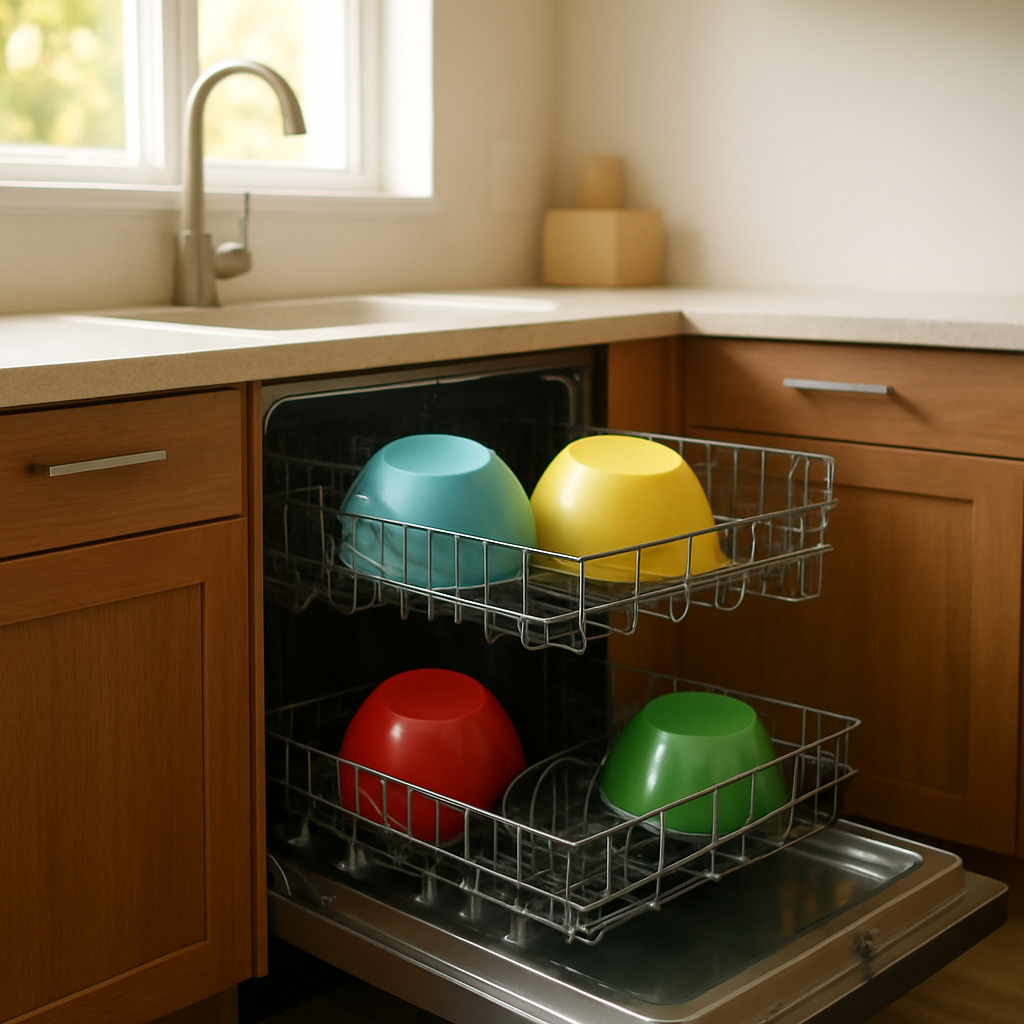
- Rearrange only plastics: secure lids, flip concave items so they don’t “scoop” water, and move tall plastics to the sides.
- If the noise disappears after only changing plastic placement, you’ve confirmed the source.
3) Inspect relevant components (no tools required)
- With the unit off and cool, spin the lower and upper spray arms by hand. They should rotate freely without grazing dishes, racks, or baskets.
- Check for telltale scuff marks: shiny rubbed spots on the spray arm or fresh scrape marks on plastic items.
4) Confirm or rule out obstruction related to plastics
- Look for fallen plastic pieces (lids, labels, utensil tips) sitting on the spray arm or wedged at the arm hub area.
- Confirm no plastic bag ties, shrink-wrap, or thin film is draped across the arm holes where it can flap under pressure.
5) Perform a controlled test
- Run a short cycle with the dishwasher empty or with only heavy items (no plastics). If the noise is gone, the sound was load-induced.
- Then add plastics back in small groups until the noise returns. The last group added usually contains the offender or the placement that causes deflection/contact.
When This Is Normal vs A Problem
Normal: a light, intermittent tapping or “spray slapping” sound only when plastic is loaded; noise changes as items reposition; stops immediately when the door is opened; no performance issues afterward; no signs of grinding or burning smell.
A problem: a hard, consistent clack once per revolution that continues every cycle (indicates repeated spray arm contact); plastics show gouges or the spray arm shows deep scarring; the arm doesn’t rotate smoothly by hand; noise occurs even with no plastics loaded (rules out this angle and points away from load deflection).
When to Call a Technician
- The noise persists with the dishwasher empty (not load-related).
- You find the spray arm is wobbling, scraping the tub, or won’t spin freely after clearing dishes.
- The sound is a harsh repetitive knock that does not change with rearranged plastics and leaves recurring damage marks.
- Spray performance drops (poor cleaning) at the same time the noise starts, even after correcting plastic loading.
How to Prevent This Problem
- Anchor lightweight plastics: use top rack positions designed for cups/lids; avoid placing lids flat where they can lift.
- Keep spray arm clearance: no tall plastics in the center zone above the lower arm; keep handles from extending into the arm sweep.
- Avoid “scoops”: load bowls and containers at angles so they don’t catch and redirect jets upward.
- Use secure zones for small pieces: put baby bottle parts, small lids, and light accessories in a covered basket or dedicated holder if available.
- Don’t overcrowd plastics: leave space so items can’t flex into the spray path under water impact.
Related Dishwasher Noise Problems
- Ticking noise caused by a spray arm striking a tall metal pan (same symptom, different load material).
- Rattling sound from lightweight utensil handles contacting the spray arm during wash.
- Thumping noise when a large flat item (cutting board or lid) “drums” under spray pressure.
- Intermittent clicking from a loose rack accessory or fold-down tine vibrating only during spray.
- Plastic items “popping” during heating/drying (thermal contraction/expansion, timing differs from spray deflection).
Conclusion
If your dishwasher gets loud only with plastic dishes, the most likely cause is plastic shifting or floating and deflecting the spray, or contacting the spray arm once per revolution. Confirm it happens during spray by stopping the cycle with the door, then correct the load: secure plastics and restore spray arm clearance. If the noise remains with an empty load, stop treating it as a plastic issue and get the spray arm/drive checked.
Frequently Asked Questions
Why does the noise get worse halfway through the cycle?
Plastics often move after they warm up and become slightly more flexible, and after they collect some water. A lid that stayed down can float up, or a container can tip and start catching spray. That changes the spray deflection angle or creates new contact with the spray arm, so the noise can appear later even if loading looked fine at the start.
How can I tell if it’s spray deflection versus the spray arm actually hitting plastic?
Deflection is usually more of a hollow slap or irregular rattle that changes rapidly. Actual contact is typically a consistent tick or clack with a steady rhythm that matches spray arm rotation. After stopping the cycle, check for a specific contact point: scrape marks on one item edge and matching scuffing on the spray arm are strong confirmation.
Is it okay to keep running it if it’s just plastic making noise?
If it’s intermittent and there are no scrape marks, it’s usually harmless. If you hear a hard, repeated clack and see damage to the spray arm or plastics, don’t keep running it that way. Repeated contact can crack a spray arm or wear the hub area, turning a loading issue into a parts issue.
Which plastic items most commonly cause this?
Thin lids, shallow food containers, lightweight cups, and long-handled plastic utensils. Anything wide and flat can “drum” under spray impact, and anything light can float into the spray arm path. Tall, narrow plastics placed near the center can also get clipped by the lower arm if they lean.
What’s the fastest test to confirm it’s the plastics?
Run a short wash with no plastics at all. If the dishwasher becomes quiet during the spray phase, add plastics back in small groups until the noise returns. That isolates the problem to a specific item type or placement pattern without guessing.
It settles in a way that feels almost rude—like the answer was there all along, and we just walked past it. The noise fades, and the day starts behaving again.
Not everything gets magically simpler, of course, but the main friction is gone. You can breathe a little easier, and somehow that changes everything.