Dishwasher Noise From Door Area: Causes & Fixes
Quick Answer
The most common door-area noise is a buzzing or rattling from the vent flap or door latch vibrating as the machine builds spray pressure and heats. It happens when the vent damper is loose, obstructed, or the latch isn’t pulling the door tight, letting the inner door panel resonate. First action: identify the exact cycle phase the noise starts, then press lightly on the door near the vent/latch to see if the sound changes.
Identify the Noise First
Door latch and vent noises usually correlate with door pressure changes, fan operation, or panel vibration. Pinpoint the phase, then verify by a simple “touch test” on the door area.
- During water fill: If the sound is at the door only during fill, suspect the door not being pulled tight (latch play) allowing the door skin to buzz as the tub starts to load with water.
- During spray / circulation: A rattling/buzzing that begins a minute or two after fill often tracks to pressure pulses inside the tub making a loose vent flap chatter, or a slightly loose latch letting the door panel vibrate.
- During draining: If it happens only at drain starts/stops, look for pressure changes causing the vent damper to flutter, especially on models that manage airflow during drain transitions.
- During heating: A clicking or rapid ticking near the vent area often points to the vent assembly cycling or a warped/dirty vent seal allowing the flap to oscillate as hot air moves.
- At start of cycle: A brief rattle right after you close the door usually indicates latch strike misalignment or a worn latch not fully seating.
- At end of cycle: Many units open or run the vent at the end for drying; buzzing here strongly implicates the vent flap/damper or vent fan housing.
- Constant: A constant buzz localized to the vent area during dry typically indicates a vent fan/vent damper assembly vibrating or a loose vent cover.
- Intermittent: Intermittent chatter often matches the vent flap flapping with pressure pulses or a door panel resonance that only happens at certain spray intensities.
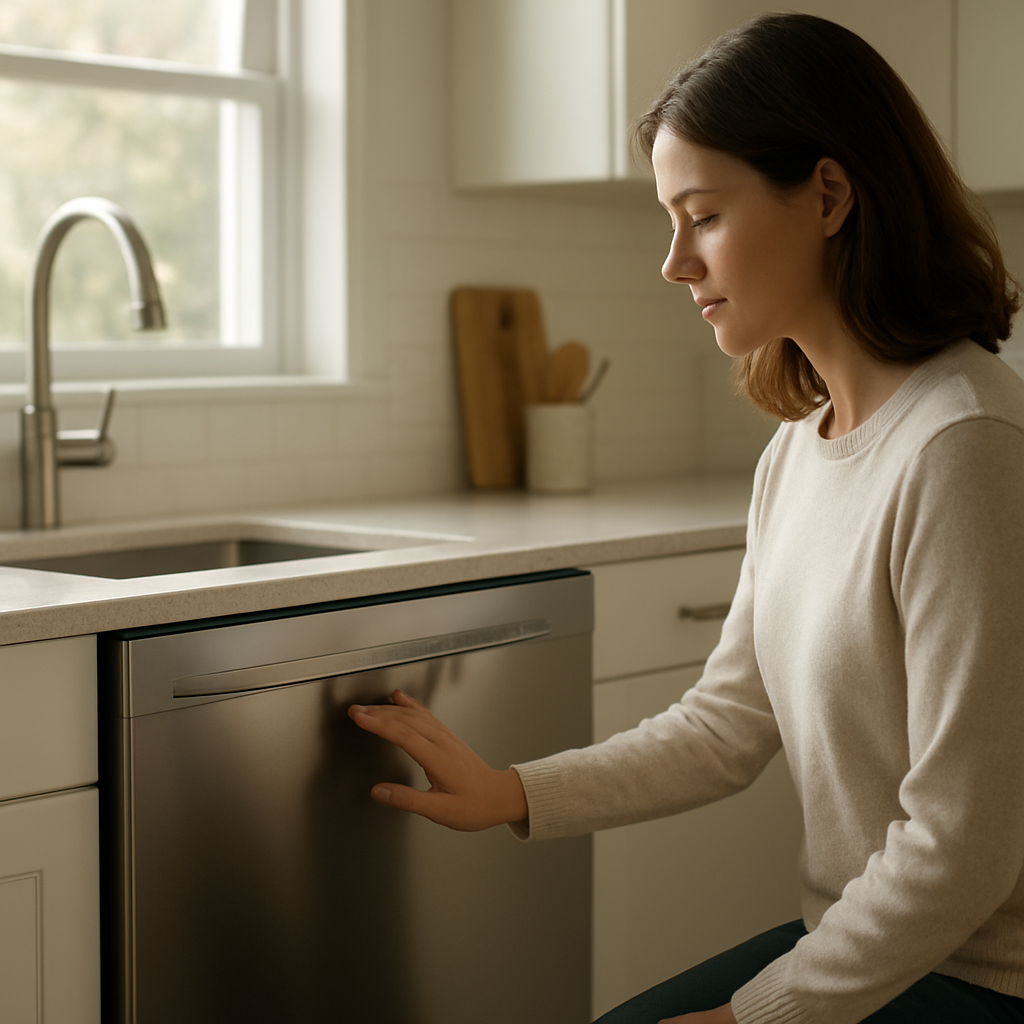
Isolation tip: while the noise is happening, press gently on the door near the latch area first, then near the vent location. If the sound changes or stops, you’ve confirmed a door-component vibration rather than an internal pump noise.
What This Noise Usually Means
Door-area buzzing and rattling is typically a vibration problem: the latch isn’t clamping the door tight enough, or the vent flap (damper) is chattering against its seat. When spray pressure surges or the vent opens for drying, small gaps let parts oscillate. The inner door panel can act like a soundboard, amplifying a minor flap movement into a noticeable rattle.
The key diagnostic clue is that the sound is strongest at the door surface and changes when you apply light pressure to the door or vent cover area.
Most Common Causes
- Loose or sticking vent flap (damper) chattering: Food residue, mineral scale, or a slightly warped damper lets it flutter instead of sealing smoothly, especially during dry or pressure transitions.
- Vent assembly cover/housing loose: A loosened vent trim ring or cover vibrates against the inner or outer door panel when the vent activates or when tub pressure pulses.
- Worn door latch mechanism (play in latch): A latch that “catches” but doesn’t pull the door fully tight allows the door panel to buzz during spray, especially on louder wash segments.
- Misaligned latch strike (door not drawn in square): If the strike is shifted, the latch may hold but not compress evenly, causing local vibration near the latch corner.
- Debris at vent outlet or gasket edge: A small piece of debris at the vent opening or seal can prevent full closure and create a rapid tick/chatter as airflow/pressure changes.
How to Check Safely
These checks stay on the door latch and vent system. Do not run the dishwasher with the door unlatched or with safety switches bypassed.
- 1) Confirm cycle stage: Start a cycle and note when the noise begins (wash, dry, end-of-cycle venting). Repeat once to confirm it’s consistent.
- 2) Isolate load factor: Run the unit with racks properly seated and nothing contacting the door. If the noise remains unchanged, it supports a latch/vent source rather than an item bumping the door.
- 3) Localize by touch: With the machine running and latched, apply light hand pressure to the outer door near the latch, then near the vent area. A clear change in sound identifies the vibration point.
- 4) Inspect relevant components (power off): Turn off power at the breaker before disassembly. Check the vent cover for looseness, cracked plastic, or missing fasteners. Inspect around the vent opening for residue buildup. Check the latch strike for looseness and visible misalignment marks.
- 5) Confirm or rule out obstruction: Clean visible residue around the vent flap area and door seal edge with a damp cloth. If the vent flap is accessible, ensure it moves freely without sticking and sits flat when closed. Do not force it.
- 6) Perform a controlled test: Reassemble, restore power, and run a short cycle. Listen specifically during the phase that previously triggered the noise. If tightening the vent cover or correcting latch strike position reduces the noise, you’ve confirmed the cause.
When This Is Normal vs A Problem
Normal: A brief single click when the vent opens/closes near the end of the cycle, or a mild, short-lived plastic tick as components warm up during heating/drying.
A problem: Rapid buzzing, machine-gun rattling, or repeated chattering from the vent area; a rattle that stops when you press on the door; or any latch-area vibration that coincides with visible door movement. If the door feels “springy” when latched or requires lifting/pushing to stay quiet, the latch/strike fit is no longer correct.
When to Call a Technician
- If the latch will not consistently engage, pops open, or allows the door to shift during operation.
- If the vent flap appears damaged, warped, or will not return to a closed position after cleaning.
- If tightening accessible screws doesn’t change the vibration and the noise is loud enough to be heard in adjacent rooms.
- If accessing the vent/latch requires removing inner door panels and you’re not comfortable working around wiring in the door.
How to Prevent This Problem
- Keep the vent area clean: wipe the vent outlet and nearby door gasket edge regularly to prevent residue that makes the flap stick.
- Close the door firmly and squarely: avoid slamming, which loosens vent trim and wears latch parts.
- Don’t hang heavy towels over the door during operation: extra weight can alter latch alignment and increase panel vibration.
- Address early symptoms: if a light buzz starts, check vent cover tightness and latch strike screws before wear enlarges the play.
Related Dishwasher Noise Problems
- Clicking at the end of the cycle from the vent opening for drying (normal vs repeated chatter).
- Rattle that stops when you press the door, caused by a loose inner door panel screw near the vent trim.
- Buzzing only when the door is slightly pushed inward, pointing to latch strike misalignment.
- Intermittent ticking from the vent area due to residue causing the vent damper to stick and release.
- Door corner vibration during wash caused by uneven latch compression (door not clamped flat).
Conclusion
If the noise is strongest at the door and changes when you press near the latch or vent, the fix is almost always in the latch fit or the vent flap/cover. Identify the exact cycle phase, localize the vibration point with light pressure, then inspect for looseness, misalignment, or a sticking vent damper. Correcting the clamp-up at the latch or restoring smooth vent flap movement usually stops the door-area rattle.
Frequently Asked Questions
Why does the noise get worse during drying or at the end of the cycle?
That’s when the vent is most likely to open, close, or manage airflow. A vent damper that’s loose or sticking will chatter more during those airflow changes, so end-of-cycle noise is a strong indicator the vent flap or vent cover is vibrating.
If I press on the door and the noise stops, what does that prove?
It proves the noise is vibration-related at the door, not a pump or spray arm sound traveling through the tub. Pressing changes the door panel’s resonance and increases compression at the latch or vent cover, which temporarily stops a loose flap or panel from rattling.
Can a worn latch cause noise even if there’s no leak?
Yes. A latch can have enough play to allow panel vibration without leaking. The gasket may still seal, but the door isn’t being pulled tight, so the inner/outer door panels and vent trim can buzz during pressure pulses.
What should the vent flap feel like when I check it?
It should move smoothly without gritty resistance and should sit flat against its seat when closed. If it hangs up, feels sticky, or doesn’t settle fully, it can flutter and chatter during airflow changes.
Is it okay to keep using the dishwasher if it’s only a vent rattle?
If the door latches securely and the noise is minor, it’s usually not an immediate safety issue. If the latch engagement is inconsistent, the door shifts, or the rattle is accompanied by steam escaping at the vent seam or door edge, stop and correct the latch/vent issue to prevent damage to the door components.
There’s a peculiar relief in seeing the problem stop taking up space in your head. The kind of friction that used to feel loud now just fades into the background, like a radio you finally turn down.
What’s left is smaller and steadier: fewer unnecessary moments, cleaner days, and a sense that things are, at last, behaving themselves. You don’t need fireworks—just the quiet rightness.