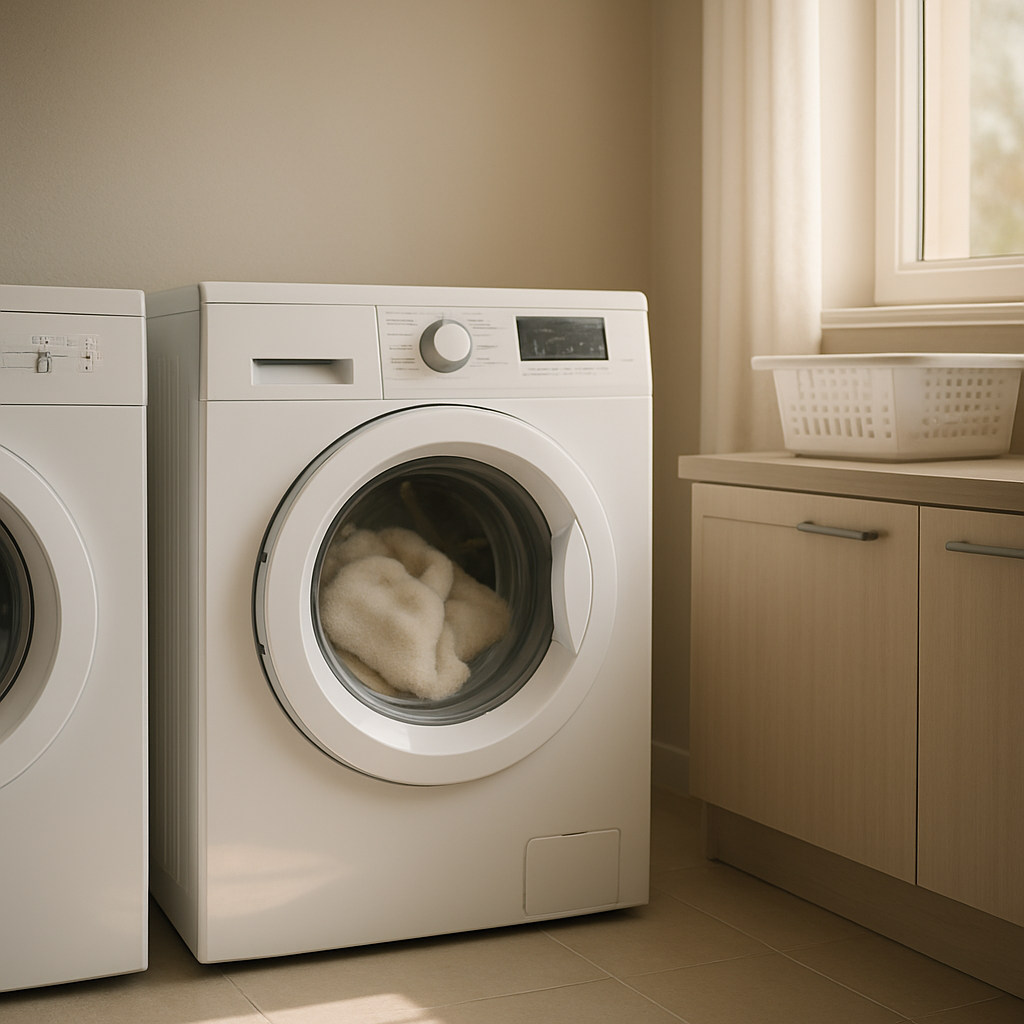
Yes, a dryer can get noisier when it is underloaded because the drum becomes less stable and the load cannot dampen small balance shifts. The drum can “hunt” on its supports and create thumps, light rattles, or a rhythmic knocking. First action: stop the cycle and redistribute or add a few similar items to create a more even, slightly heavier load, then restart and listen for change.
Identify the Noise First
Use this quick guide to match the noise to drum balance instability versus something else.
During drum rotation: Rhythmic thump or light knocking that speeds up and slows down with drum speed often points to an uneven load causing drum wobble.
At startup: A brief thud in the first few revolutions can be normal with a small load as items drop and the drum “finds” its running position. Repeated banging every revolution is not normal.
During heating: If the noise starts after the dryer warms up, check for a small load riding up the drum and falling repeatedly. Balance-related noises usually change when you add items; heat-related component noises do not.
During cooling cycle: Underload noises often get quieter as fabrics stop clinging and tumble more freely. If it gets louder late-cycle, suspect a loose baffle or worn support allowing more drum movement.
Constant: A constant scraping, squeal, or grinding is usually not an underload balance issue. Balance issues tend to come and go with how the items land.
Intermittent: Intermittent thumps that disappear when you pause, open the door, and rearrange the items strongly supports an underloaded/uneven load condition.
What This Noise Usually Means
When the dryer is properly loaded, the fabric mass acts like a stabilizer. It spreads out, tumbles consistently, and helps keep the drum’s center of mass relatively steady. With too few items, the load can clump, stick to the drum surface, and then drop in one spot repeatedly. That creates brief drum imbalance forces that make the drum rock slightly on its supports. The rocking transfers into the cabinet as a thump, light knock, or dull bump. If the dryer already has minor wear in drum supports, an underloaded cycle makes that instability more noticeable.
Most Common Causes
Too-small load allowing the drum to rock: One or two items (especially heavy or absorbent) can repeatedly land in the same spot and create a rhythmic thump.
Mixed-weight items in a small load: One heavy item with a couple light items causes the heavy piece to dominate the balance.
Items “slapping” the drum baffles: Sheets, small blankets, or long items can catch and release, sounding like a knock even though the drum is fine.
Minor drum support wear revealed by underloading: Slightly flattened rollers, a worn idler pulley, or a tired rear bearing can be quiet with normal loads but noisy when the drum is allowed to wobble more.
Dryer not level or feet not planted: Underload makes cabinet movement more likely; an unlevel dryer amplifies it into a louder bump or rattle.
How to Check Safely
These checks focus on confirming drum balance instability without disassembly.
Step 1: Pause and redistribute. Stop the dryer, open the door, separate tangled items, and spread them evenly around the drum. Restart and listen for improvement.
Step 2: Add stabilizing items. Add 2 to 4 similar, dry items (like towels of similar size) to increase mass and improve tumble consistency. If the noise significantly reduces, imbalance was the main driver.
Step 3: Run a short timed dry test. Use timed dry (no sensor) for 5 minutes. Listen for a repeating pattern that matches each revolution. If it disappears as the load spreads out, it supports an underload issue.
Step 4: Check dryer leveling and footing. With the dryer off, confirm it does not rock when you press opposite corners. Adjust feet until stable. An underloaded drum wobble can sound much worse when the cabinet can move.
Step 5: Inspect for simple internal causes. Check the drum baffles for looseness by gently pushing on them. Also check pockets and the drum for a single hard object that could be creating a repeating knock in a small load.
Step 6: Watch for drum wobble signs. With the door open, rotate the drum by hand (dryer off) and feel for rough spots or side-to-side movement. A little play can be normal, but obvious wobble suggests support wear that underloading reveals.
When This Is Normal vs A Problem
Usually normal:
Light, occasional thumps with one or two items that improve when you add more laundry.
A brief thud at the start as items drop into place, then the cycle settles.
Noise that changes noticeably when you pause and redistribute the load.
More likely a problem:
Heavy banging that persists even with a properly sized, evenly distributed load.
Consistent thump every drum revolution regardless of what is in the dryer.
New cabinet vibration or walking that was not present before, especially if the dryer is level.
Any scraping, squealing, grinding, or burning smell along with the noise (not typical of simple underload imbalance).
Visible drum wobble or rubbing marks around the door opening.
When to Call a Technician
The noise does not change with load size. If adding similar items does not reduce the thump/knock, the issue is likely worn drum supports or a loose drum component.
You detect scraping or grinding. That points away from balance instability and toward contact or bearing/roller issues that require service.
The drum has noticeable side-to-side movement. Excess play can indicate roller, shaft, or bearing wear that should be corrected before it damages the drum or cabinet.
The dryer vibrates excessively or walks. After leveling and confirming load size, continued movement suggests an internal support issue.
You find a loose baffle or drum hardware. Loose internal hardware can worsen with imbalance and should be tightened or repaired correctly.
How to Prevent This Problem
Avoid single heavy items. If you must dry one item, add a few similar towels to stabilize tumbling.
Keep load weights consistent. Dry heavy items together and light items together instead of mixing one heavy piece into a small load.
Shake out large items. Sheets and blankets should be loosened before drying to reduce balling and repeated drop-thumps.
Level the dryer and stabilize the floor contact. A stable cabinet reduces how much you hear normal balance corrections.
Do not ignore new noises. Underloading can expose early roller or bearing wear; addressing it early prevents louder operation later.
Related Dryer Noise Problems
Loud thumping with a full load: Often points to a flat drum roller or a damaged idler rather than simple underload wobble.
Scraping sound that changes with drum rotation: Can be drum rubbing from worn glides or a shifted drum position.
Squealing that starts after a few minutes: Common with idler pulley or roller bearing wear, not load balance.
Rattle only with jeans or items with hardware: Usually buttons/zippers hitting the baffles or a foreign object in the drum.
Dryer walks forward during operation: Often leveling/footing, but can be worsened by drum support wear.
Conclusion
Noise with an underloaded dryer is often normal drum balance instability: the load cannot dampen the drum, so small shifts become audible thumps or knocks. Confirm it by adding a few similar items and checking leveling. If the noise persists with a normal load or you hear scraping, squealing, or grinding, plan for a drum support inspection and repair.
Frequently Asked Questions
Why does my dryer thump only when there are one or two items inside?
With a very small load, items tend to clump, stick to the drum, and drop in the same spot repeatedly. That creates a repeating imbalance that makes the drum rock slightly. Add a few similar items; if the thump fades, it was underload instability.
Is it bad to run a dryer underloaded?
Occasionally is fine, but frequent underloaded cycles can make normal drum movement louder and can accelerate wear if supports are already borderline. If you often dry single items, add a couple towels to stabilize the drum.
My dryer bangs at the start, then quiets down. Should I worry?
Usually no. A short startup thud can happen as the load drops and spreads out. Worry if the bang repeats every revolution, continues after redistribution, or happens with properly sized loads.
How can I tell imbalance noise from a bad roller?
Imbalance noise changes when you add or redistribute laundry and may come and go. A bad roller often produces a steady thump at a consistent rhythm even with normal loads, and it typically gets worse over time rather than improving with load changes.
Will leveling the dryer really make a difference with underload noise?
Yes. Underload wobble transfers into the cabinet. If the cabinet can rock or a foot is not firmly planted, that small movement becomes louder and can sound like a bigger internal problem. Leveling will not fix worn supports, but it reduces noise amplification.
After the noise settles, the whole thing feels less dramatic—more like a door finally closing instead of constantly rattling. That shift matters, even if nobody applauds it.
What’s left is quieter: everyday life fitting back into its usual rhythm, without the same nagging weight in the background. Small, steady relief beats grand gestures more often than people like to admit.