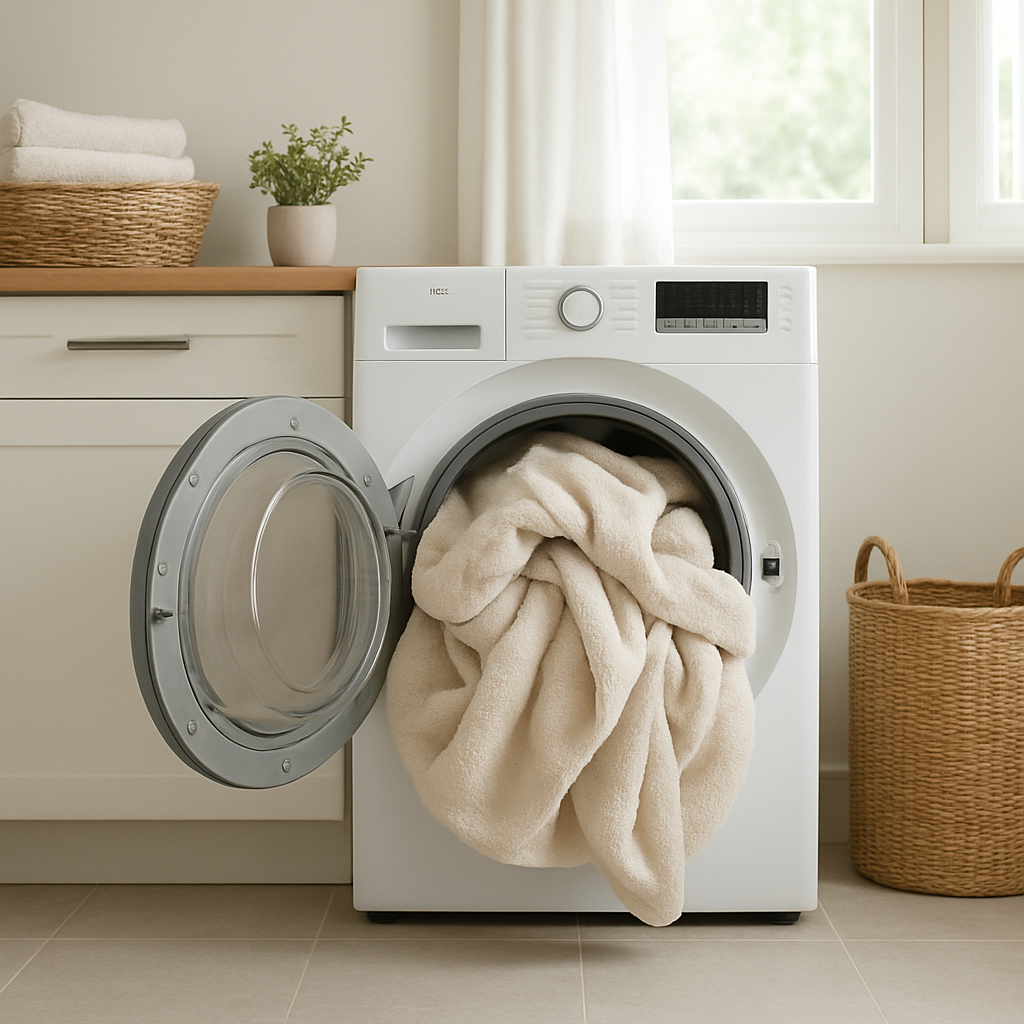
If your dryer gets noisy only when it is packed full, the most likely cause is overload strain: the motor and belt are working harder, the drum can sag slightly, and the load can slap the drum baffles. First action: stop the cycle, remove about a third of the load, and restart. If the noise goes away, you are not dealing with a random failure; you are confirming an overload-related noise.
Identify the Noise First
Use this quick guide to pin down what is happening. Overload strain has a clear pattern: the noise changes noticeably with load size.
During drum rotation: Thumping or rhythmic bumping that matches drum speed, especially with heavy items. Often improves when you reduce the load or redistribute it.
At startup: A brief groan, hum, or squeal as the motor starts and the belt takes tension. Overload strain is likely if it struggles only when full.
During heating: A sharper squeal or rubbing sound that appears after a few minutes can be overload-related if heat expansion plus a heavy load increases contact on worn glides or rollers.
During cooling cycle: If the noise fades during cool-down, it often points to heat-related friction made worse by a heavy load.
Constant: Noise that is the same whether empty or full is usually not overload strain. Look for worn rollers, idler issues, or blower wheel problems.
Intermittent: Noise that comes and goes as the load shifts is typical of overload strain, especially with bulky bedding or mixed heavy items.
What This Noise Usually Means
Overloading changes how the dryer is stressed. A heavy, compacted load increases drum torque demand and belt tension, and it can force the drum slightly down onto its support points. That extra drag amplifies small wear in the support system (rollers, glides, idler pulley) and makes normal contact noises louder. It also causes the load to ride as a single mass instead of tumbling freely, leading to thumps, slap noises, and start-up strain that you will not hear with a normal load.
Most Common Causes
Load slap and out-of-balance mass: Bulky items or tightly packed loads lift and drop as a lump, hitting baffles and the drum.
Normal start-up strain under high torque: The motor labors briefly. A mild groan is common only when overloaded.
Worn drum support rollers amplified by load weight: Rollers may sound fine on light loads but rumble or thump when heavily loaded.
Worn drum glides/felt causing rub under sag: The drum rides lower with a heavy load, increasing friction and creating scraping or squealing.
Idler pulley noise under extra belt tension: A chirp or squeal that shows up mainly on heavy loads can be an idler bearing starting to wear.
Belt slip or belt glazing: A brief squeal at start or during heavy tumbling. Often worse with overloads.
How to Check Safely
These checks focus on confirming overload strain versus a part that is failing regardless of load.
Step 1: Do a controlled load test. Run the dryer empty for 2 to 3 minutes. Then run it with a normal-sized load. Then run it with your usual overloaded load. Note exactly when the noise appears. Overload strain is confirmed if noise is minimal empty/normal and obvious only when packed.
Step 2: Reduce the load mid-cycle. Pause, remove several items (about one-third), close the door, and restart. If the noise drops immediately, you are dealing with overload effects, not a constant mechanical fault.
Step 3: Redistribute bulky items. For bedding or towels, shake them out and reload loosely. If the thump turns into normal tumbling noise, the issue was load slap and balance, not parts.
Step 4: Listen for the noise type. Thump usually points to load/balance or rollers. Squeal points to belt/idler/glides being stressed. Scrape points to glides/felt rubbing when the drum is loaded down.
Step 5: Check for drag by hand (power off). Unplug the dryer. Spin the drum by hand with the door open. It should turn smoothly. Now press down gently on the top of the drum opening and spin again. If you can reproduce rubbing or roughness only when pushing down, overload strain is likely exposing worn supports.
Step 6: Inspect what you can without disassembly. Look for a string, bra wire, or small item caught at the drum edge that only scrapes when the drum droops under load. Also check the lint screen area for unusual vibration that could be mistaken for drum noise.
If the noise is loud, metallic, or persists with an empty drum, stop using the dryer until it is checked further. That pattern is not overload strain.
When This Is Normal vs A Problem
Usually normal if:
The noise happens only when the dryer is stuffed full and goes away when you remove items.
You hear mild thumping with large towels or bedding during the first few minutes, then it smooths out as the load loosens.
There is a short startup groan but normal running sound once the drum is moving.
A problem if:
The noise continues with a normal load or empty drum.
Squealing lasts more than a few seconds after startup or appears repeatedly throughout the cycle.
You hear scraping, grinding, or a rhythmic thud that is present regardless of load size.
The drum seems harder to turn by hand, or you smell hot rubber (possible belt slip) after an overloaded run.
When to Call a Technician
Call if the noise occurs on normal loads after you have corrected loading habits. That points to worn rollers, glides, idler pulley, or belt that overloads have accelerated.
Call if you hear scraping/metal-on-metal, grinding, or a constant squeal. Those are not typical overload sounds and can lead to further damage if ignored.
Call if the drum is difficult to rotate by hand or you notice the drum sagging at the front. That suggests support wear that needs internal inspection and parts replacement.
DIY caution: Internal dryer repairs require safe disassembly and correct reassembly of belt routing and drum supports. If you are not comfortable working around sharp panels and electrical components, schedule service.
How to Prevent This Problem
Load for tumbling, not volume. Leave enough space for items to lift and fall. If the drum looks packed with no free movement, it is overload territory.
Separate heavy items. Dry towels separately from jeans, and avoid combining one very heavy item with light items that can wrap and create a single mass.
Dry bulky bedding in smaller batches. Comforters and blankets are common overload triggers because they trap like a parachute and slam the drum.
Do not ignore early squeals. Overloading often reveals a weak idler pulley or glazed belt. Fixing it early prevents a no-heat or no-tumble breakdown later.
Keep airflow strong. Clean the lint screen every load and keep the vent system clear. Poor airflow increases cycle time and heat, which can worsen friction noises under heavy loads.
Related Dryer Noise Problems
Dryer thumps only with one heavy item (comforter or blanket)
Dryer squeals briefly at startup but runs quiet when warm
Dryer makes a scraping noise that gets worse as the cycle heats up
Dryer rumbles on heavy loads but seems fine on small loads
Dryer makes a chirping sound that changes with drum speed
Conclusion
Noise that shows up mainly when the dryer is overloaded is usually overload strain: the load is slapping the drum and the extra weight is amplifying wear in supports and belt components. The best next step is a controlled test: run a normal load and confirm the noise disappears. If it does, change loading habits. If the noise persists on normal loads or becomes a squeal/scrape, plan for inspection of rollers, glides, idler pulley, and belt.
Frequently Asked Questions
Why does my dryer only thump when it is really full?
A packed drum tends to rotate as a single heavy mass instead of tumbling. That mass lifts and drops, causing rhythmic thumps. If removing a third of the load stops it, the noise is load slap or out-of-balance behavior, not a mystery part failure.
My dryer makes a squeal only when overloaded. Is the belt going bad?
Often, yes. Overloading increases belt load and can make a slightly glazed belt or a dry idler pulley squeal. If the squeal is more than a moment at startup or starts happening with normal loads, the belt and idler should be inspected.
Can overloading damage drum rollers and glides?
Overloading does not instantly ruin them, but it accelerates wear. Rollers and glides that are marginal may sound fine on light loads and get noisy on heavy loads because the extra weight increases friction and flattening at the contact points.
How full is too full for a dryer?
Too full is when items cannot tumble freely and the load behaves like one tight bundle. Practically, if you cannot easily fit your hand between the top of the load and the drum or the load barely moves when running, reduce the batch.
The noise went away when I removed clothes, but it came back later in the cycle. Why?
As fabrics heat and dry, they can clump differently and create a new imbalance. Also, heat can increase friction if glides or felt are worn. If the noise is mild and load-dependent, it is still consistent with overload strain. If it becomes a sustained squeal or scraping, move toward a mechanical inspection.
It feels strange how much space this topic can take up, considering how ordinary it becomes when it’s handled. The loud parts fade, and what’s left is just life—messy, moving, and still yours.
There’s a quiet relief in that. Not dramatic, not cinematic, just steadier, like your day finally lines up with your expectations for once.