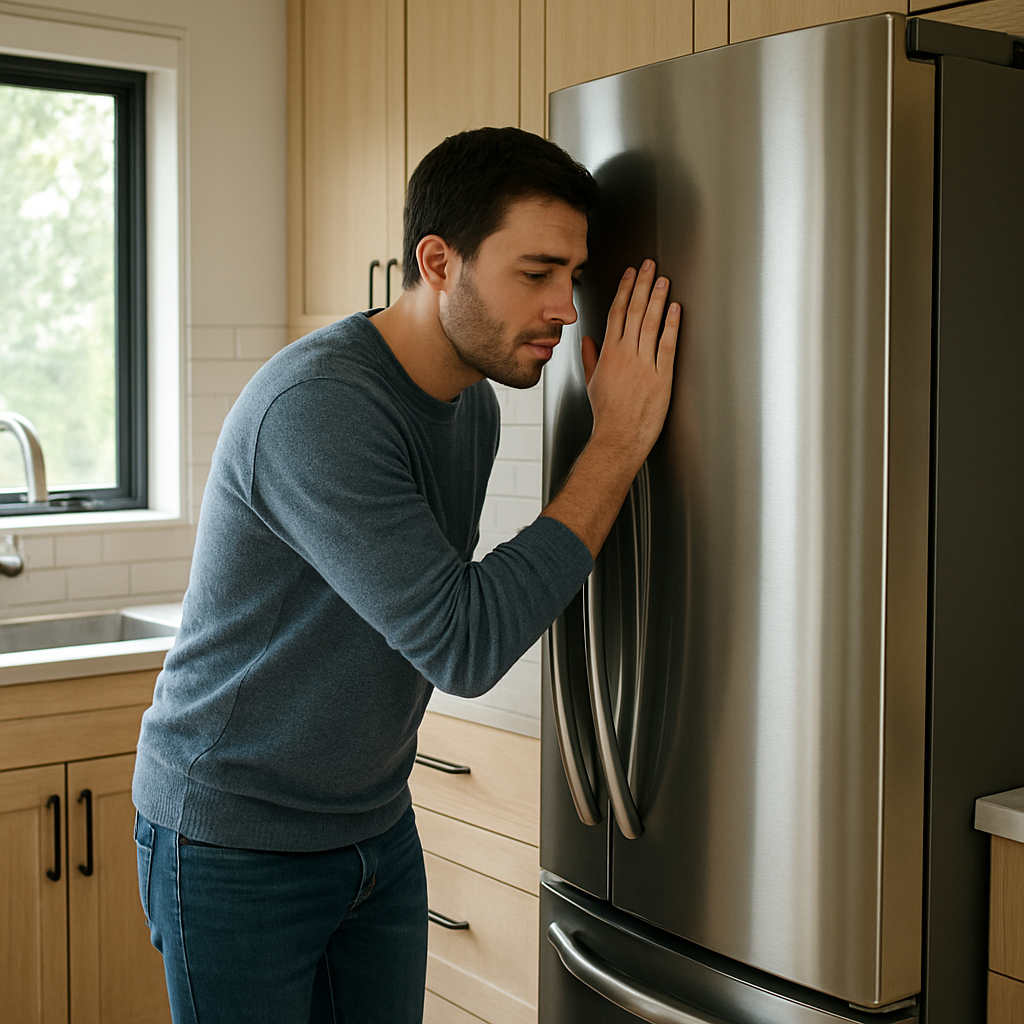
Fridge Noise During Cooling Cycle? What It Means
Quick Answer
If the noise happens specifically during active cooling, the most likely source is a fan or airflow-related vibration (evaporator fan in the freezer or condenser fan at the rear/bottom), not the ice maker or defrost. First action: listen for whether the sound changes when you open the freezer door (evaporator fan) or when you pull the fridge slightly away from the wall (cabinet/line vibration or condenser area).
Identify the Noise First
Use this quick timing-based guide to match the sound to the active cooling phase.
- If the noise starts exactly when the compressor starts (you hear a solid hum begin, then the noise appears): likely compressor-start vibration, condenser fan ramp-up, or refrigerant flow sounds.
- If the noise happens while the compressor is running (steady cooling period): most often a fan brushing something, airflow restriction, or a panel/line vibrating from compressor resonance.
- If the noise happens right after the compressor stops: usually refrigerant equalizing (hiss/gurgle) or a fan coasting down; less likely your “during cooling” issue unless you mis-timed it.
- If it happens during defrost or shortly after (often every 8–12 hours on many models): expect dripping/sizzling in freezer; not a cooling-cycle-only noise.
- If it happens when the ice maker runs or fills: you’ll hear a brief water fill (5–10 seconds) or clunks as cubes eject; separate from active cooling. Turn ice maker off for a few hours to confirm.
- If the noise lines up with the evaporator fan running (freezer side): open the freezer door. On many fridges the fan pauses when the door opens. If the noise stops immediately, suspect evaporator fan area (ice rubbing, fan blade, airflow).
- If the noise lines up with the condenser fan running (rear/bottom, if equipped): listen low at the back/bottom. Noise there during compressor run points to condenser fan, debris, or a vibrating rear cover/drain pan.
- If the noise is constant (even when the fridge is not actively cooling): not a cooling-phase profile issue; look for a continuously running fan, ice maker cycling repeatedly, or something touching the cabinet.
- If the noise is intermittent (comes and goes while cooling): often a fan blade occasionally contacting frost, wiring, insulation, or a loose panel that resonates at certain speeds.
- If it’s louder at night and quieter during the day: the fridge may cool longer at night (less door opening), making normal cooling sounds more noticeable; also home ambient noise is lower. Focus on whether the sound changed recently or got sharper/louder.
What This Noise Usually Means
During the active cooling phase, the refrigerator is moving heat aggressively: the compressor runs, refrigerant pressure changes, and one or both fans push air across coils. That combination creates a predictable sound profile: a steady hum (compressor), airflow noise (fans), and sometimes brief hissing/gurgling as refrigerant moves through the capillary/evaporator.
When the sound is abnormal during cooling, it’s usually because vibration or airflow is no longer smooth. The common pattern is a fan or a panel/line that only resonates when the compressor is running. Another common pattern is an evaporator fan contacting frost buildup, which only happens when the unit has been cooling long enough for ice to accumulate in the airflow path.
Most Common Causes
- Evaporator fan blade hitting frost or ice: scraping, ticking, or a rhythmic chirp from the freezer that may change after long run times; often worse after doors were left ajar or gaskets are leaking.
- Evaporator fan motor starting to fail: squeal, wobble, or a growl that only occurs during cooling (when the fan is energized); may quiet briefly when the door is opened if the fan stops.
- Condenser fan brushing debris or a shifted shroud (models with a condenser fan): rattling or buzzing from the back/bottom during compressor operation; sometimes changes when you move the fridge slightly.
- Refrigerant line or drain pan vibration from compressor resonance: a metallic buzz or rattle that appears only while the compressor runs; often improves if you pull the unit away from the wall or adjust leveling.
- Rear access cover, toe-kick, or interior panel vibrating: “brrrr” type vibration at a specific pitch; may worsen when the fridge is packed tightly against cabinetry.
- Normal refrigerant flow sounds misidentified as a fault: brief hiss, gurgle, or whoosh during active cooling, especially on newer high-efficiency units; usually not loud and not harsh.
- Compressor internal noise increasing under load
- This is less common but possible: a louder-than-normal hum, knocking, or clattering that tracks compressor run time and is felt through the cabinet.
- Step 1: Time the noise to the cooling cycle
- Stand near the fridge and listen for the compressor starting (a steady hum). Note whether the noise begins at start-up, a few minutes into the run, or only near the end of a long run.
- Step 2: Freezer door test for evaporator fan involvement
- When the noise is happening, open the freezer door. If the noise stops immediately or changes dramatically, the evaporator fan area is the primary suspect.
- If your model keeps the fan running with the door open, press the door switch by hand and listen for changes.
- Step 3: Locate the sound zone
- Freezer interior: points to evaporator fan, ice buildup, or an interior panel vibrating.
- Back/bottom: points to condenser fan, drain pan, rear cover, or vibrating lines.
- Inside fresh food section: often transmitted vibration, or an air damper noise that occurs while cooling.
- Step 4: Check for easy vibration causes
- Confirm the fridge is not touching the wall, cabinets, or a water line. Leave a small gap behind it.
- Check that the unit is level and stable. If it rocks, adjust the front leveling feet so it sits firmly.
- Remove items on top of the fridge and make sure interior shelves/bins are seated fully.
- Step 5: Check airflow basics that affect active cooling sounds
- Do not overpack the freezer. Keep vents clear so the fan is not “whistling” through blocked openings.
- Inspect door gaskets for gaps, tears, or areas not sealing. A poor seal can cause frost buildup that leads to fan contact noise.
- Step 6: Inspect the rear/bottom for dust and loose parts
- Unplug the refrigerator before any cleaning or reaching underneath.
- Vacuum visible dust from the condenser coil area and the grill. Dust can raise run time and intensify fan/compressor noise.
- Check that the drain pan is seated properly and not rattling.
- Stop and call a technician if you hear repeated clicking with failed starts, smell electrical burning, see damaged wiring, or the fridge warms while the noise occurs.
- Steady low hum from the compressor.
- Soft airflow or a smooth fan “whoosh.”
- Occasional brief hiss/gurgle as refrigerant flows or equalizes, especially after a start.
- Short vibration that stops when the compressor speed stabilizes.
- A new scraping or ticking from the freezer that appears only during cooling and persists across multiple cycles.
- Grinding, metal-on-metal, or a fan-like noise that changes when you open the freezer door (points to fan contact or failing fan motor).
- Loud buzzing or rattling from the back/bottom that is new and gets worse over days (often condenser fan debris or a loose cover/pan).
- Repeated clicking every few minutes with little or no cooling (start device/compressor issue rather than a normal cooling sound).
- Noise paired with rising temperatures, heavy frost, or water leaking.
- Cooling performance drops (food soft in freezer, fridge warm) while the noise is present during compressor run time.
- Repeated start attempts: click-buzz-click patterns, or the compressor hums briefly then stops repeatedly.
- Fan scraping that does not respond to basic checks (clearing vents, confirming door seal, removing loose items) and continues every cooling cycle.
- Electrical smell, sparking sounds, or breaker trips: unplug and call for service.
- Compressor noise becomes harsh (knocking/clattering) and you can feel strong vibration through the cabinet during the entire cooling run: possible compressor or mounting issue.
- Suspected sealed-system issue: unusual sound plus long run times and poor cooling, especially if the condenser is clean and airflow is good.
- Keep proper clearance behind and above the refrigerator so vibration doesn’t transfer to walls/cabinets and the condenser area can breathe.
- Clean the condenser area every 6–12 months (more often with pets). Less run time means fewer opportunities for cooling-phase noises to become noticeable.
- Maintain door seals: wipe gaskets clean, ensure doors close squarely, and stop frost before it reaches the evaporator fan area.
- Don’t block freezer vents: leave space around air returns/supply vents so the evaporator fan runs smoothly and quietly.
- Use stable temperature settings: extreme settings can increase run time and amplify normal cooling sounds.
- Ice maker care: if equipped, keep the fill tube area clear of ice and replace the water filter on schedule to avoid odd fill behavior that can be mistaken for cooling noise.
- Rattling noise only when the compressor starts
- Freezer scraping sound that stops when the door opens
- Buzzing from the back of the fridge during cooling
- Clicking every few minutes and the fridge is warm
- Gurgling or hissing noise after the compressor shuts off
- Fan running constantly even when temperatures are stable
- Vibration noise after pushing the fridge back into place
- Whistling or howling sound from the freezer vents
- Defrost sizzling or dripping sounds mistaken for cooling noise
- Ice maker fill buzzing or hammering sound
How to Check Safely
When This Is Normal vs A Problem
Usually normal during active cooling:
Usually a problem:
When to Call a Technician
How to Prevent This Problem
Related Refrigerator Noise Problems
Conclusion
A noise that tracks the cooling cycle is usually tied to the active cooling sound profile: fan airflow, vibration from compressor operation, or refrigerant movement. Identify whether the sound is coming from the freezer fan area or the rear/bottom of the unit, then correct simple vibration and airflow issues first. If the noise is harsh, new, and paired with poor cooling or repeated start clicks, schedule service.
Frequently Asked Questions
Why does my fridge make a loud buzzing sound only when it’s cooling?
During active cooling, the compressor and condenser fan (if equipped) run together. A loud buzz that appears only then is most often a condenser fan hitting debris, a vibrating rear cover/drain pan, or the refrigerator touching a wall or cabinet. Pull the unit slightly forward and listen again; if it changes, vibration or the condenser area is likely.
My freezer makes a scraping noise during cooling, but it stops when I open the door. What is that?
That pattern strongly points to the evaporator fan area. On many models the fan stops when the door opens, so the scraping stops too. The common causes are frost/ice contacting the fan blade, a loose wire/insulation touching the blade, or a worn evaporator fan motor bearing.
Is hissing or gurgling during the cooling cycle normal?
Yes, if it’s brief and not harsh. Hissing, gurgling, or a soft whoosh can be normal refrigerant flow sounds that happen when the compressor is running and pressures are changing. It becomes a concern if it’s suddenly much louder than before and you also notice long run times or warming temperatures.
Why is the fridge louder at night during cooling?
Two common reasons: the house is quieter so normal cooling sounds stand out, and the fridge may run longer uninterrupted at night because doors aren’t being opened. If the sound itself changed in character (new rattle, scraping, or buzz), treat it as a diagnostic clue rather than a normal night-time effect.
Can overpacking cause cooling-cycle noise?
Yes. Blocking freezer vents forces the evaporator fan to push against restricted airflow, which can create a louder whoosh, whistling, or fluctuating fan noise during cooling. Rearranging items to clear vents often reduces cooling-phase noise and improves temperature consistency.
There’s a strange relief in watching the noise finally settle. The hard part was never understanding—it was just making room for the obvious.
What’s left feels almost ordinary, which is its own kind of victory. The world keeps moving, and this time, it moves without the extra friction.