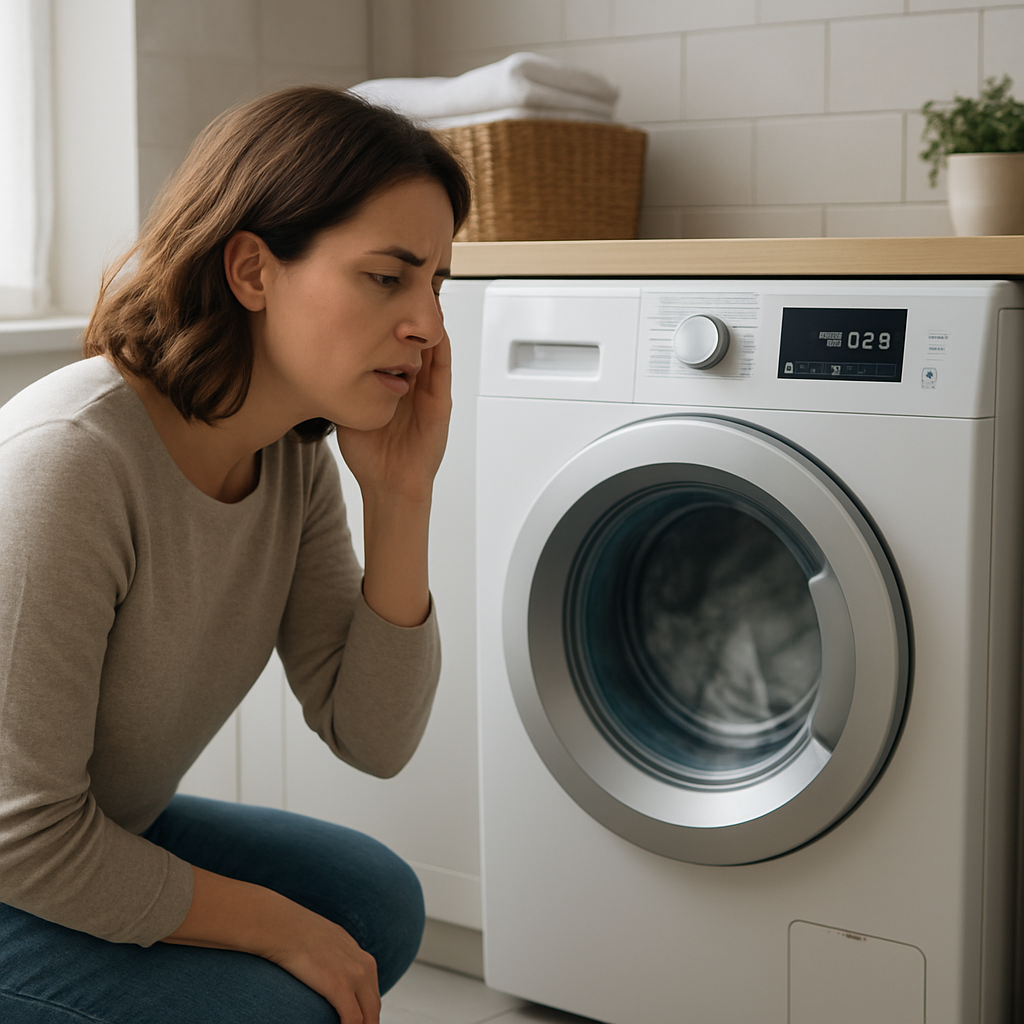
A dryer that makes a loud hum, buzz, brief squeal, or thump right as you press Start usually has an initial torque problem: the motor is struggling to overcome startup load. First action: stop the cycle, open the door, and try spinning the drum by hand. If it feels stiff, rough, or won’t coast smoothly, check for a jam, worn drum support parts, or a belt issue before running it again.
Identify the Noise First
Startup noises can be misleading. Use this quick guide to confirm you are dealing with a motor-start/initial torque issue (not a heating or airflow noise).
At startup (first 1–3 seconds): hum/buzz with slow or no drum movement, then it starts; or it needs a second push to begin. This points to high starting load or a weak start circuit/motor.
During drum rotation (after it’s running): steady squeal, scraping, rhythmic thump. That’s usually a support or drum/belt noise, not a start torque issue (though worn parts can create the excessive load that causes startup noise).
During heating (few minutes into cycle): ticking, popping, or whoosh changes. More consistent with thermal expansion or burner/element behavior, not motor start.
During cooling cycle: airflow-only roaring or light rattles. Typically blower housing, lint screen area, or vent related.
Constant noise (even with drum not turning): loud buzz/hum with no rotation is a classic motor “stalled” sound or a seized load causing stall.
Intermittent only on some starts: often points to a failing motor start switch/centrifugal mechanism, a weak start capacitor (where used), or a belt that occasionally slips and then grabs.
What This Noise Usually Means
At the moment of startup, the motor needs extra torque to overcome the drum’s inertia and any friction in the drive system. If friction is high (worn drum supports, tight idler pulley, binding blower wheel) or the motor’s start function is weak (start switch/centrifugal contacts, start capacitor on certain models), the motor may hum, struggle, or stall briefly. That sound is the motor drawing heavy current but not accelerating to full speed quickly.
In practical terms, startup noise is often the symptom of a system that is just barely able to get moving. It may run quietly once spinning, but it’s telling you the starting load or start components are marginal.
Most Common Causes
Worn drum support glides/rollers causing high friction at startup: drum may turn, but the first movement is loud or strained; drum may feel rough when rotated by hand.
Idler pulley dragging or seizing: a sticky idler adds a lot of starting resistance; may squeal briefly on start then quiet down.
Belt issues increasing startup load: belt misrouted, too tight from incorrect install, or partially damaged; can cause a short squeal or slap at start.
Blower wheel partially jammed or rubbing housing: startup buzz/strain, sometimes accompanied by a scraping sound; often worsens with lint buildup or a loose wheel.
Motor start circuit problem (model-dependent): failing centrifugal switch contacts inside the motor, weak start capacitor (if equipped), or a worn start switch. Typically presents as hum with delayed start, frequent failure to start, or needing repeated attempts.
Drum overloaded or item wedged: heavy, dense loads increase inertia; a small item caught between drum and front bulkhead can create a bind that is worst at the first movement.
How to Check Safely
These checks focus on confirming whether the motor is struggling due to excessive load or a weak start. If at any point you smell burning, hear an electrical arcing sound, or the dryer repeatedly hums without turning, stop testing.
Step 1: Do a controlled restart. With the drum empty, close the door and press Start. Note whether the drum begins turning immediately or if it hums first and then catches.
Step 2: Hand-spin test (power off). Unplug the dryer. Open the door and rotate the drum by hand.
If it spins smoothly and coasts a little, friction is probably not extreme.
If it feels stiff, gritty, or stops abruptly, suspect rollers/glides, idler pulley, or something rubbing.
Step 3: Listen for where the sound is coming from. Front area often points to glides/felt seal or a front drum support. Rear/low area often points to rollers, idler, belt path, or blower housing.
Step 4: Check for a drum obstruction. Look between the drum and the front rim for a sock edge, underwire, or small fabric caught at the seal. Remove the lint screen and look down the chute for debris that could migrate to the blower.
Step 5: Eliminate load-related inertia. If the noise only happens with heavy loads (towels, blankets), run a smaller load and see if startup becomes normal. Heavy load startup should not produce a prolonged buzz.
Step 6: If it hums and won’t start, do not keep trying. Repeated stalls overheat the motor and can damage wiring or the motor windings. At this point, the next meaningful checks require cabinet access.
When This Is Normal vs A Problem
Usually normal: a single soft thump at start as the belt tightens and the drum shifts into rotation, with immediate full-speed turning and no ongoing noise.
Likely a problem:
Humming or buzzing for more than a second before the drum starts.
Drum doesn’t start every time or starts only after multiple attempts.
Startup squeal that is sharp and repeats (often tensioner/roller related).
Breaker trips or lights dim significantly right at startup more than once (motor strain or electrical issue).
Burning smell or the motor runs but the drum doesn’t move (belt problem or jam).
When to Call a Technician
The dryer hums but the drum won’t turn and it’s not clearly an overload. This can be a seized component or motor start issue that needs internal inspection.
You’ve confirmed high resistance on the hand-spin test and the dryer must be opened to inspect rollers, glides, idler, belt path, and blower wheel.
Electrical symptoms such as repeated breaker trips, a hot plug/cord, or signs of overheating. Stop using the dryer until it’s evaluated.
Suspected motor start/capacitor issue and you are not equipped to safely test components. Misdiagnosis here leads to unnecessary parts replacement.
How to Prevent This Problem
Don’t overload heavy items. High inertia loads push a worn support system over the edge at startup.
Keep lint under control. Clean the lint screen every load and keep the lint chute area clear; excessive lint can contribute to blower drag and heat stress.
Address minor squeals early. A brief startup squeal is often the first sign of an idler or roller beginning to bind.
Use the right cycle habits. Avoid repeatedly stopping and restarting the dryer with a full load; frequent restarts increase stress on the start system.
Related Dryer Noise Problems
Loud hum with no drum movement at all (motor stall vs broken belt vs jammed blower wheel)
High-pitched squeal only for the first few seconds (idler pulley dragging or glides grabbing)
Rhythmic thump that starts immediately and continues (flat-spotted roller or damaged belt)
Scraping right as the drum begins to move (worn front glides/felt seal or foreign object at the front rim)
Rattle at start then quieter during run (loose blower wheel or debris shifting in the housing)
Conclusion
A startup-only dryer noise is most often the motor telling you it’s fighting initial load. Confirm the pattern, do the hand-spin check, and avoid repeated stalled starts. If the drum feels resistant or the dryer hums without turning, the next step is inspecting drum supports, the idler/belt path, and the blower area, or scheduling service to pinpoint whether the start system or mechanical drag is the root cause.
Frequently Asked Questions
Why does my dryer hum for a second before it starts turning?
That brief hum is typically the motor struggling to accelerate until it overcomes starting friction. Common contributors are dragging rollers/glides, a sticky idler pulley, or a blower wheel that’s rubbing. If it’s getting longer over time or sometimes fails to start, treat it as a developing start/drag problem.
If I spin the drum by hand and it starts, what does that indicate?
It indicates the motor has marginal starting torque for the current load. The usual reasons are excessive mechanical resistance (rollers, glides, idler, belt drag, blower rub) or a weak motor start function (centrifugal switch contacts or a start capacitor on models that use one). Either way, the dryer needs internal inspection soon.
Is one thump at startup normal?
Yes, a single dull thump can be normal as the belt tightens and the drum shifts into motion, especially if the load is uneven. It becomes abnormal if it’s loud, followed by humming/slow start, or if thumping continues during rotation.
Can a heavy load alone cause a startup buzz?
A heavy load increases inertia and can make a marginal dryer show symptoms, but it should not cause a prolonged buzz or repeated failure to start. If reducing the load eliminates the noise, you likely have early-stage drag or a weakening start system that’s being pushed over the limit.
Should I keep pressing Start if it just hums?
No. If the motor hums without the drum turning, repeated attempts can overheat the motor and worsen the failure. Unplug the dryer and move to the hand-spin check and obstruction checks. If the drum still won’t start reliably, schedule service to inspect the drive system and motor start components.
What’s left now feels less like a puzzle and more like a room finally getting its lights turned on. The noise thins out, and the page turns quieter, almost suspiciously so.
There’s a particular relief in that—when the story stops wrestling itself. Not every day improves, but the mind doesn’t have to work overtime anymore.