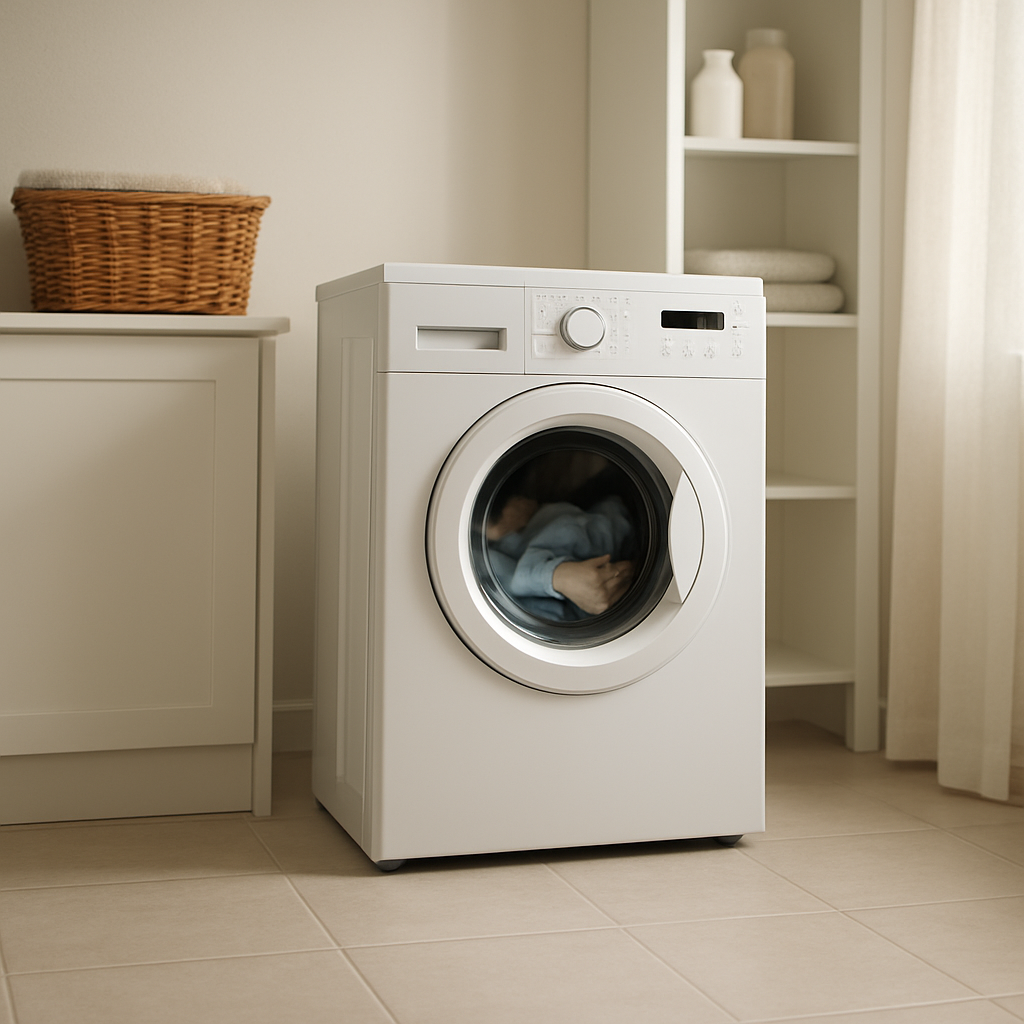
Washing Machine Noise When Underloaded? Why It Happens
Quick Answer
If your washer gets noisier with a small load, the most common reason is insufficient load stabilization. With too little laundry, the drum cannot balance itself during agitate and especially during spin, so it shifts, thumps, or rattles more easily. First action: pause the cycle and redistribute the items, or add 2 to 4 similar towels to create a more stable, even load before restarting spin.
Identify the Noise First
Use the timing and character of the noise to confirm it is an underload stabilization issue, not a separate fault.
During spin: Thumping, banging, knocking, tub hitting cabinet, or a rhythmic vibration that gets worse as speed increases. Most common underload symptom.
During drain: A short buzz or hum only while pumping out water is usually not load-related. If the machine is quiet until spin starts, focus on stabilization.
During fill: Water rushing or brief valve chatter is not load-related. Underload noise typically starts after the drum begins moving.
Constant: A constant grinding or squeal regardless of load size is unlikely to be underload stabilization. Stop and investigate further.
Intermittent: Noise that comes and goes as the drum rebalances or as items shift commonly points to an uneven or too-small load.
A strong clue: the same washer is quieter with medium or large loads, but noisy with one or two items.
What This Noise Usually Means
Washing machines rely on the laundry itself to help stabilize the rotating drum. With a normal load, items spread around the drum and provide counterbalance as the machine ramps up to spin speed. With an underloaded drum, a few items can clump into one heavy spot or stick to one side, creating an off-center mass. The suspension system can only compensate up to a point; beyond that, the tub swings more, and you hear thumps, cabinet contact, or heavy vibration.
Many machines will try to correct this by slowing down, tumbling to redistribute, and attempting spin again. That correction cycle often makes the problem feel random, but it is still the same root cause: not enough evenly distributed weight to stabilize the drum.
Most Common Causes
Too few items in the drum: Single-item loads and very small loads are the biggest trigger for imbalance noise.
One heavy item or mixed weights: A bath mat, hoodie, blanket, or pair of jeans alone can form a heavy lump that the machine cannot balance.
Items absorbing water unevenly: One thick item holds much more water than the rest, magnifying the imbalance as spin begins.
Load stuck on one side: Sheets, small rugs, or long items can wrap or bunch so the weight stays off-center.
Washer not level amplifying a small imbalance: Underload imbalance is normal, but a slightly unlevel machine makes it louder and more frequent.
Worn stabilization parts making underload noise easier to trigger: If small loads have always been fine and suddenly are not, weak suspension components can reduce the machine’s tolerance for minor imbalance.
How to Check Safely
These checks focus on confirming underload stabilization as the cause and correcting it without disassembly.
Pause and open the lid or door: Wait for the drum to stop completely. Do not reach in while anything is moving.
Redistribute the load: Spread items evenly around the drum. Break up any tight bundle or heavy clump.
Add stabilizing items: Add 2 to 4 similar towels or a few smaller items to create an even ring of weight. Avoid mixing one very heavy item with very light items.
Run a spin-only test: Restart on spin. If the noise reduces significantly after redistribution or adding items, the diagnosis is confirmed.
Check for a single-item trigger: If one item repeatedly causes banging, wash it with a few similar items rather than by itself.
Verify the washer is level: With the machine empty, push on opposite corners. It should not rock. If it rocks, adjust the feet until stable and recheck. A stable base helps the suspension control small imbalances.
Observe the correction behavior: If the machine repeatedly slows, tumbles, and retries spin, that is typical of imbalance correction. If it accelerates smoothly with a properly sized load, the machine is doing its job.
When This Is Normal vs A Problem
Usually normal:
Noise happens mainly on small loads or single heavy items and improves when you add or redistribute laundry.
The washer attempts to rebalance by slowing down and tumbling, then successfully completes the spin.
Minor vibration is present but the machine stays in place and does not strike the cabinet repeatedly.
More likely a problem:
Severe banging continues even with a medium, well-distributed load.
The washer regularly stops with an unbalanced or spin-related error despite correct loading.
The tub visibly swings excessively, or the machine walks on the floor even after leveling.
Noise changes to grinding, metal-on-metal scraping, or a high-pitched squeal that does not respond to load correction.
When to Call a Technician
You corrected the load and leveled the washer, but it still bangs on normal loads: This suggests reduced stabilization tolerance that may require suspension or mounting inspection.
The washer walks aggressively or strikes the cabinet: Continued operation can cause secondary damage. A technician can verify suspension, tub support, and mounting integrity.
Repeated unbalanced errors with proper loading: Correction logic may be working harder than it should, often due to worn stabilizing components.
Any grinding or scraping: That is not explained by underload stabilization and needs proper diagnosis.
How to Prevent This Problem
Avoid single heavy-item washes: Wash heavy items with a few similar weight items to form a balanced load.
Create an even mix: Keep the load weight distributed rather than one bulky item plus several very light items.
Do not underfill by habit: If you like small loads, use a cycle designed for it and still include enough items to balance during spin.
Load for distribution, not packing: Place items loosely around the drum so they can move and settle evenly.
Keep the washer level and stable: A stable base reduces how much an inevitable small imbalance turns into noise.
Related Washing Machine Noise Problems
Banging only with blankets or sheets: Large items can wrap and hold weight to one side, mimicking an underload imbalance.
Washer walks during spin even on normal loads: Often confused with underloading but frequently tied to leveling or reduced suspension control.
Thumping that happens at the start of spin then stops: Common when the machine initially tries to balance a small load and succeeds after redistribution.
Rattle during spin that disappears when you add more laundry: Light loads can let the tub movement transmit more vibration into panels or loose items nearby.
Rebalancing over and over without reaching full spin: Can start as underload behavior but may indicate the machine can no longer stabilize like it used to.
Conclusion
A washer that gets noisy when underloaded is most often dealing with insufficient load stabilization, not a failing part. Confirm it by redistributing the laundry or adding a few similar towels and rerunning spin. If the same noise continues with a properly sized, evenly distributed load, treat it as a stabilization system issue and schedule service.
Frequently Asked Questions
Why is my washing machine louder with fewer clothes?
With too few items, the load cannot spread into an even ring inside the drum. One clump becomes a heavy spot during spin, so the tub swings more and you hear thumping or cabinet contact. Adding a few similar items usually calms it down immediately.
Can I wash just one towel or one pair of jeans?
You can, but it commonly causes imbalance noise. One heavy, water-soaked item acts like a weight stuck on one side of the drum. For quieter spinning, add a few similar towels or comparable-weight items so the drum can balance.
My washer keeps trying to spin, stops, and tries again. Is that because of underloading?
Often, yes. That is the washer attempting to redistribute an unstable load. Pause the cycle, spread items evenly, and add a couple of similar towels. If it still cannot reach full spin with a normal load, the machine may have a stabilization issue that needs inspection.
How do I tell underload noise from a drain pump problem?
Underload noise is mainly tied to drum movement and gets louder as spin speed increases. Drain pump noise happens only while draining and usually sounds like a steady hum or buzz for a short period. If the machine is quiet until spin ramps up, focus on load stabilization.
Is it normal for a washer to shake a little on small loads?
Some vibration on small loads is normal, especially with heavier fabrics. What is not normal is repeated violent banging, the machine walking, or the same behavior on medium loads after you have leveled the washer and corrected the load distribution.
There’s a peculiar relief in how quickly the noise fades once everything clicks into place. The world doesn’t become perfect, but at least it stops feeling like you’re fighting the wrong battle.
What’s left is quieter: less second-guessing, fewer detours, and that small, steady feeling that the air has cleared. By the time you reach the end, you don’t just understand it—you can almost hear your own thoughts finally settling.