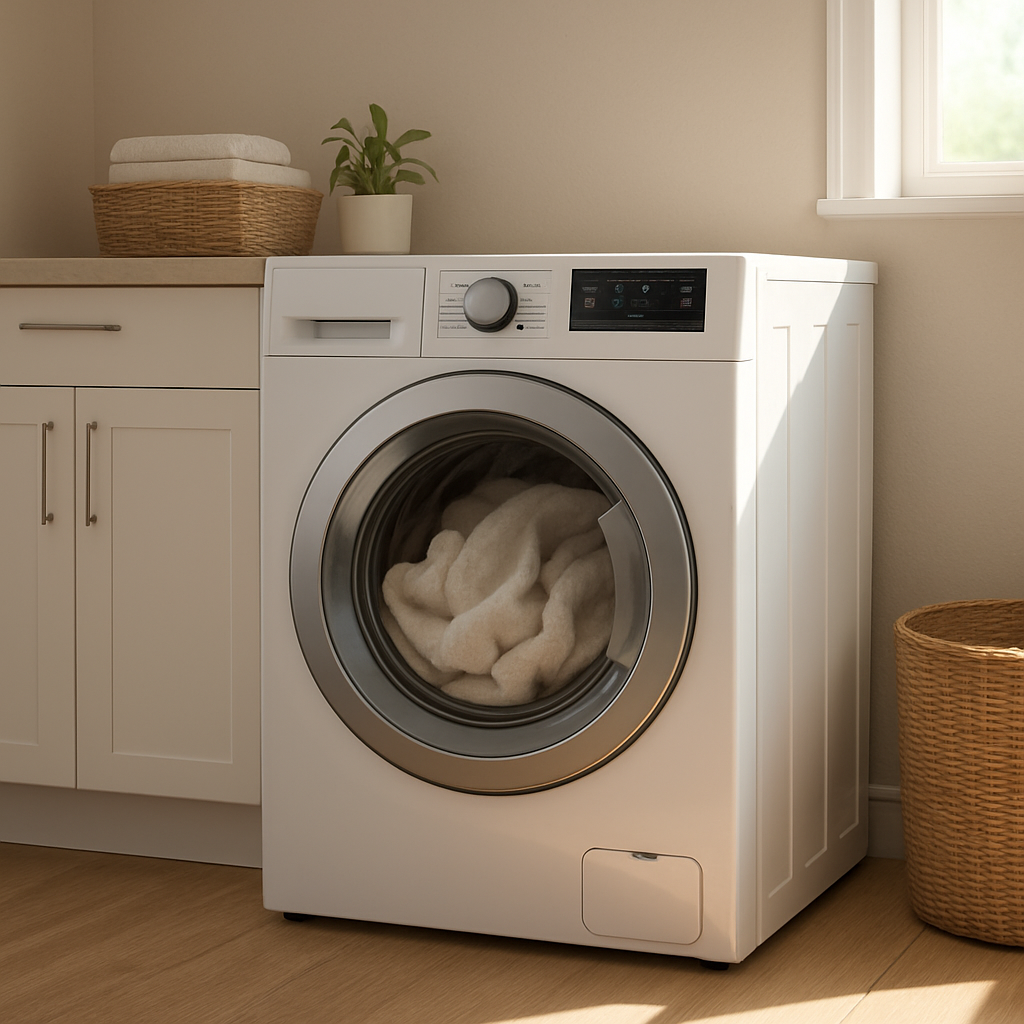
If your washer gets loud mainly with towels, the most likely cause is heavy fabric imbalance during the spin cycle. Towels clump into a dense ball that throws the tub off-center, causing banging, thumping, or a shaking cabinet. First action: pause the cycle, redistribute the towels evenly, and restart spin. If it quiets down with a smaller, better-balanced load, the machine is usually fine.
Identify the Noise First
Towel-related noise is easiest to diagnose by when it happens and how it sounds.
During spin: Thumping, banging, or the washer walking or shaking hard. Often starts as the drum speeds up.
During drain: A short, steady hum with rushing water is normal. A towel imbalance typically does not begin here, but drain can trigger the start of spin right after.
During fill: Noisy fill is usually unrelated to towels. If noise happens only when towels are in the load, focus on spin imbalance.
Constant: Noise through the whole cycle is unlikely to be a pure imbalance issue. Heavy fabric imbalance is usually most noticeable at high-speed spin.
Intermittent: Noise comes and goes as the washer tries to rebalance or changes spin speed. This is very common with towels.
If the washer is quiet with mixed clothing but loud with towels or sheets, you are almost certainly dealing with heavy fabric imbalance rather than a failed internal part.
What This Noise Usually Means
Towels hold water and pack tightly. In the basket, they can form one heavy mass instead of spreading around the drum. When spin begins, that off-center weight makes the tub wobble. The washer may try to correct it by stopping, tumbling, and reattempting spin. If it cannot balance the load, you hear the tub and suspension working hard, sometimes with the basket contacting the cabinet or bumpers. The louder the machine and the higher the spin speed, the more dramatic the effect.
Most Common Causes
One-sided towel clump: A few towels or a large bath towel forms a heavy ball on one side of the basket.
Load size mismatch: Too few towels (nothing to counterbalance) or too many towels (no room to redistribute) increases imbalance.
Mixed heavy + light items: Towels combined with lightweight items can trap smaller pieces inside the towel mass, worsening the lopsided weight.
High spin setting with heavy fabrics: Max spin speeds amplify imbalance forces, especially on thick cotton towels and bath mats.
Washer not level: A slight tilt makes it easier for towels to settle to one side and harder for the suspension to control movement.
Worn suspension components: If towels always cause violent shaking even after redistributing, the suspension may be weak and no longer controlling normal imbalance well.
How to Check Safely
These checks keep the diagnosis centered on heavy fabric imbalance without taking the machine apart.
Step 1: Confirm it is spin-related. Run the same load until it reaches spin. If the noise spikes as speed increases, that matches an imbalance pattern.
Step 2: Pause and redistribute. Stop the washer, open the lid or door (wait for the lock to release), and spread towels evenly around the basket. Break up any tight clump.
Step 3: Adjust the load size. If you had 1 or 2 towels, add a couple more similar towels to help balance. If the drum was packed full, remove a few so items can tumble freely.
Step 4: Avoid mixing extremes. Separate heavy towels from very light items for a test load. Mixed weights often create a single heavy side.
Step 5: Lower spin speed for towels. Set a medium spin and test. If the machine becomes controlled and quiet, the issue is load imbalance magnified by high speed.
Step 6: Check leveling. With the machine empty, push on opposite corners of the top. If it rocks, adjust the feet until stable. Re-test towel spin afterward.
Step 7: Do a controlled test. Wash 4 to 6 similar towels only. If that runs smoothly but a single large towel causes banging, it confirms a heavy fabric imbalance scenario.
When This Is Normal vs A Problem
Usually normal: A few thumps as the washer ramps up to spin, a brief pause where it redistributes, then it settles into a steady spin. The machine may slow and retry once or twice with towel loads.
More likely a problem:
Violent shaking even after redistributing and reducing load size.
Repeated failure to reach full spin with towels, leaving them overly wet every time.
Cabinet banging hard enough to move the washer across the floor despite the machine being level.
New noises that persist with a balanced load (for example, grinding or squealing). Towel imbalance should change noticeably when you change the load balance.
When to Call a Technician
You can’t calm the spin with any towel load adjustment and the washer shakes aggressively on multiple test loads.
The washer is level but still walks and repeatedly slams during spin, suggesting the suspension can’t control normal imbalance.
It used to handle towels fine and suddenly cannot even with the same load habits, which often points to worn supports rather than user loading.
The tub appears to sit unusually low or off-center or you see the basket contacting the cabinet consistently during spin.
How to Prevent This Problem
Load towels in a balanced ring. Place items around the basket instead of dropping them in one pile.
Keep towel loads consistent. Aim for several similar towels rather than one heavy item by itself.
Do not pack the drum tight. Towels need room to tumble and separate, especially in high-efficiency machines.
Use a lower spin for thick towels and bath mats. You reduce imbalance forces and stress on the suspension.
Separate heavy towels from lightweight items. Heavy fabrics should spin with similar-weight pieces to balance naturally.
Level the washer and keep feet tight. A stable base makes towel imbalance easier for the machine to manage.
Related Washing Machine Noise Problems
Washer bangs only with blankets or comforters: Similar heavy fabric imbalance, usually worse due to one large item.
Washer shakes during spin after moving it: Often a leveling issue that makes towel loads sound much louder.
Thumping that repeats as the washer speeds up, then stops and retries: Rebalance attempts triggered by heavy fabric loads.
Washer walks forward during towel spin: Imbalance combined with a slippery floor or uneven feet.
Excessively wet towels at end of cycle: The washer likely never reached full spin due to persistent imbalance.
Conclusion
A washer that gets loud with towels is most commonly reacting to heavy fabric imbalance during spin. Redistribute the towels, correct load size, and reduce spin speed to confirm it. If it still shakes hard when properly loaded and level, schedule service to check suspension and support components.
Frequently Asked Questions
Why is my washer quiet with clothes but loud with towels?
Clothes distribute more evenly and don’t hold as much water weight in one lump. Towels tend to clump into a heavy, wet mass that throws the basket off-balance during spin, which is when the noise shows up.
Is it better to wash one big bath towel alone or add more?
Add more similar towels. One large towel by itself often can’t balance because there’s no equal weight opposite it. A small group of similar towels tends to spread out and counterbalance better.
My washer keeps stopping and restarting the spin with towels. Is that a fault?
Not necessarily. That behavior is a common imbalance control response. If it eventually reaches a steady spin and finishes, it is typically normal. If it never reaches full spin and towels come out very wet repeatedly, the load is staying imbalanced or the suspension is struggling.
Should I use the highest spin speed for towels?
Not always. High spin amplifies any imbalance. If towels cause banging at max spin, use a medium spin setting. You may need a slightly longer drying time, but the washer will run smoother and with less stress.
What if redistributing towels doesn’t help?
First re-check that the washer is solid and level and that the load size is reasonable. If the machine still shakes violently on multiple towel loads that are properly balanced, it points to a control or support issue such as weak suspension, and a technician should evaluate it.
There’s a strange comfort in finally reaching the part where it stops being abstract and starts being real. The tension eases, not because everything magically changes overnight, but because the path forward looks less foggy.
And then, almost quietly, you notice you’re breathing differently. The world hasn’t rewritten itself—but it does feel a little more workable, like the paperwork is finally filed.