Washing Machine Noise When Overloaded? Causes and Fixes
Quick Answer
If your washer gets noisy only when you pack it full, the most likely cause is excessive load stress: the tub can’t balance correctly, so parts like the suspension and drive system get hammered during agitation or spin. First action: stop the cycle, remove 1/3 of the items, redistribute evenly, and restart on a lower spin speed. If the noise disappears, the machine is reacting to overload rather than a hard failure.
Identify the Noise First
Use this quick guide to pinpoint when the overload stress is showing up. The timing matters.
During spin: loud banging, thumping, walking, or rapid knocking that gets worse as speed increases. Often reduces when you remove a few items or lower spin speed.
During drain: rattling or buzzing right as the pump runs, often after a heavy load that sheds debris. Noise may be brief or only happen when the tub is packed.
During fill: usually not overload-related. If the noise is present only when overloaded, you’re more likely hearing items shifting or the tub already sitting off-level from weight.
Constant: a steady grind or roar throughout the cycle is less typical of simple overload. Overload can reveal a worn part, but constant noise needs closer inspection.
Intermittent: clicking or tapping that comes and goes as clothes move. Common when overloaded and items ride the drum, slap the door/boot, or shift into an off-balance state.
Best clue: if the same washer is quiet with normal loads and noisy only when packed, treat it as load stress first and diagnose from there.
What This Noise Usually Means
An overloaded washer can’t keep the load centered in the basket. The extra mass changes how the tub moves and how fast it can stabilize. During agitation and especially during spin, the machine tries to correct imbalance by changing speed and braking repeatedly. That repeated correction puts high force into the suspension (shock absorbers/struts/rods and springs), the tub support structure, and the drive components. The noise you hear is typically the tub striking its travel limits, the cabinet vibrating, or the drive system struggling under excessive torque.
Most Common Causes
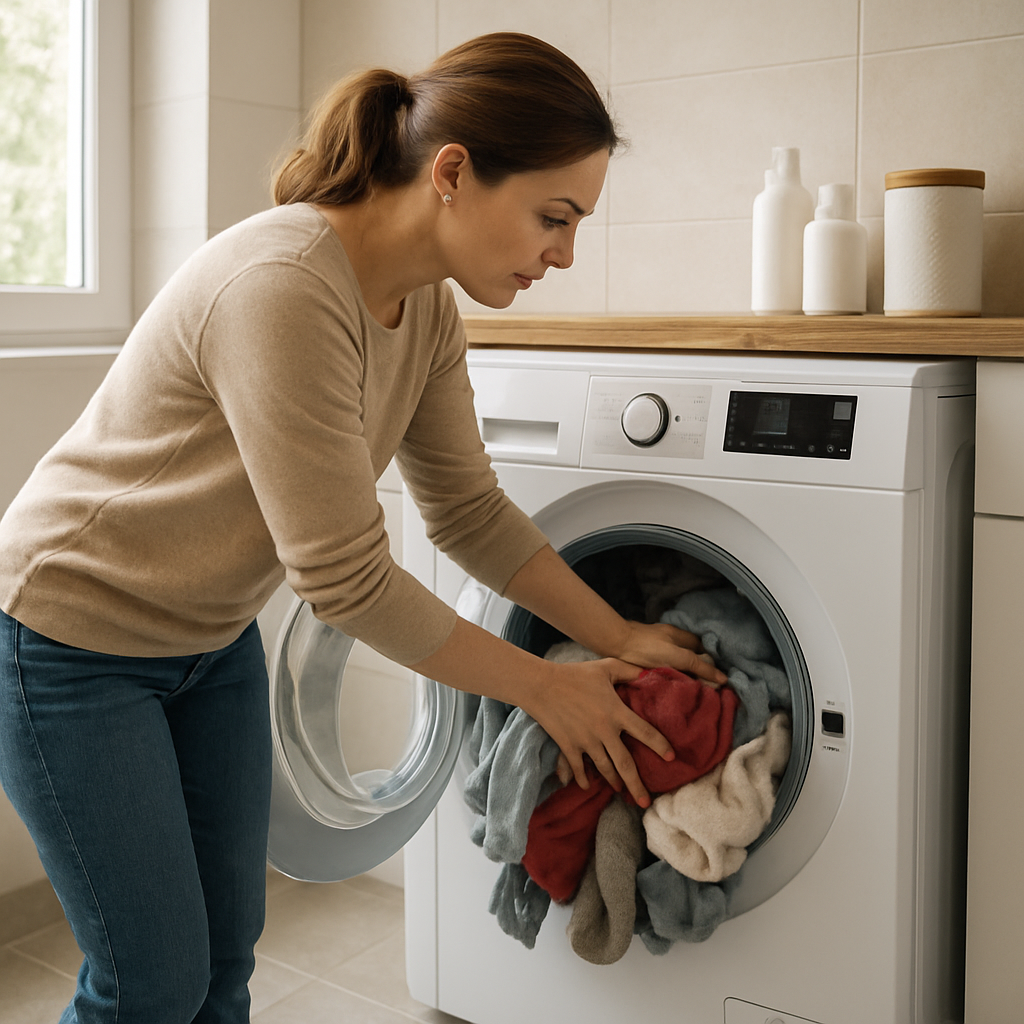
Load too large for the cycle and fabric type: heavy items (towels, hoodies, blankets) act like one solid mass and won’t distribute. This is the most common reason for banging in spin.
Poor load distribution: one large item or a few dense items on one side causes thumping even if the drum isn’t completely full.
Using max spin speed with a heavy load: higher RPM magnifies imbalance forces; the machine may slam or repeatedly ramp up and down.
Washer slightly out of level, made worse by overload: a minor leveling issue can be silent with small loads but loud with heavy ones.
Suspension components losing damping: worn shocks/struts/rods can pass normal loads but allow excessive tub movement under overload.
Cabinet contact points or loose brackets: overload vibration can make panels, counterweight hardware, or mounts rattle.
Drain pump ingesting debris released by heavy loads: coins, bra wires, or lint clumps can shift and hit the pump impeller when the tub is packed and items shed more.
How to Check Safely
These checks focus on confirming overload stress versus a true mechanical defect. Do not run extended tests with a violently banging washer.
Stop and reduce the load: pause the cycle, redistribute items evenly, and remove several pieces. Restart. If the noise drops dramatically, you’ve confirmed load stress as the trigger.
Try a controlled spin: run a spin-only or drain-and-spin with the reduced load. If it reaches full speed smoothly without banging, the machine is likely fine.
Lower spin speed: select a lower spin setting for heavy fabrics. If the noise is mainly at high RPM, it’s imbalance force, not a fill or drain fault.
Check for a single heavy item: remove bulky pieces (blanket, bath mat, heavy hoodie) and spin the rest. One item can create a persistent off-balance condition.
Verify leveling: with the washer empty, press on each corner. It should not rock. Adjust feet so all corners sit firmly. Overload exaggerates any rocking.
Listen during drain with a reduced load: if the banging stops but a harsh buzz/rattle remains only during pumping, suspect debris in the pump or filter access area (if user-serviceable).
Inspect for contact marks: with power off, look around the tub opening (front-load door boot area) for fresh scuffing, and check that the machine isn’t pushed hard against a wall. Overload can make the tub shift and rub.
When This Is Normal vs A Problem
Normal with overload:
Light thumping as the washer tries to balance, then it settles and spins normally after you reduce and redistribute the load.
Short ramp up and ramp down behavior as it corrects imbalance, without violent cabinet movement.
Minor vibration that stops when you lower spin speed.
A problem (even if overload triggered it):
Violent banging or the washer walking across the floor.
Repeated failure to reach spin speed with multiple rebalancing attempts, even after reducing the load.
Grinding, metal-on-metal sounds, or a constant roar that continues with a normal-sized load.
Burning smell, belt dust, or the machine stopping with an error after heavy loads.
Water leak appearing after an overload event (excess movement can expose a weak hose or seal).
When to Call a Technician
Noise continues with normal loads after you level the machine and confirm correct loading.
Spin banging is severe or the tub appears to strike the cabinet regularly.
Suspected suspension wear: the tub swings excessively by hand or the machine cannot stabilize even small loads.
Possible counterweight or mounting issue: heavy clunking not tied to load distribution, especially if it started suddenly.
Drain noise with poor draining: pump may be obstructed or failing, and forcing it can cause further damage.
Tell the tech it happens primarily when overloaded and describe whether it’s during spin or during drain. That detail speeds diagnosis.
How to Prevent This Problem
Load by weight, not drum fullness: a drum can look half full and still be overloaded if items are dense and water-absorbing.
Mix sizes: combine small and medium items so the load distributes instead of forming one heavy lump.
Avoid single-item heavy washes when possible: if washing one bulky item, add a few similar items to balance, but do not exceed capacity.
Use lower spin for heavy fabrics: save max spin for lighter, more even loads.
Keep the washer level: recheck feet after moving the machine or after flooring changes; overload vibration can loosen adjustments over time.
Empty pockets and use garment bags: heavy loads shake loose debris that can end up in the pump and create noise during draining.
Related Washing Machine Noise Problems
Loud banging only on final spin with towels: imbalance force from dense fabrics concentrating on one side.
Washer walking forward during high spin: overload amplifying minor leveling or suspension weakness.
Rattling during drain after washing jeans or hoodies: debris hitting the pump after heavy, linty loads.
Thumping that stops when you lower spin speed: excessive load stress at high RPM rather than a constant mechanical grind.
Front-load boot slapping noise with bulky items: overloaded drum allowing items to ride high and strike the door seal area.
Conclusion
If your washer is noisy only when overloaded, start by treating it as excessive load stress: reduce the load, redistribute it, and lower spin speed. If the machine becomes quiet and stable, the fix is loading practice and leveling. If the noise persists with a normal load or the tub movement is extreme, schedule service to check suspension, mounts, and any components stressed by repeated imbalance.
Frequently Asked Questions
How do I know if I actually overloaded the washer?
If the noise appears only with heavy fabrics (towels, blankets) or when you pack items tightly, that’s overload by weight. Another clue is improved operation after removing a few items even though the drum still looks only partly full.
Why does it bang only when it starts spinning fast?
Imbalance force increases with speed. A load that seems acceptable at low speed can become unstable at higher RPM, making the tub hit its movement limits or the cabinet vibrate. Reducing the load or spin speed usually confirms this.
Can overloading damage the washer if it only happens once in a while?
Occasional mild vibration is usually tolerated, but repeated severe banging accelerates wear on suspension parts and mounting hardware. If the machine is walking or slamming, stop and correct the load rather than letting it finish.
My washer makes a rattling noise when draining only after big loads. Is that overload?
Overload can contribute by shaking loose coins, small items, or lint clumps that reach the drain pump. If the noise is strictly tied to the pump running, check the pump filter or trap if your model has a user-accessible one, and stop using heavy loads until the noise is resolved.
Should I keep running it if it rebalances for a long time and won’t spin?
No. That pattern means it can’t stabilize the load. Reduce the load and redistribute immediately. If it still won’t spin a normal load, the suspension may be weak or the machine may have a control or sensor issue that needs professional diagnosis.
What’s left now is the simple part: watching the noise thin out in real time. The complicated feelings settle, and you can tell where the day used to snag.
There’s a quiet relief in how ordinary things look again. Not dramatic, not perfect—just more doable, like the world finally stopped adding extra steps.