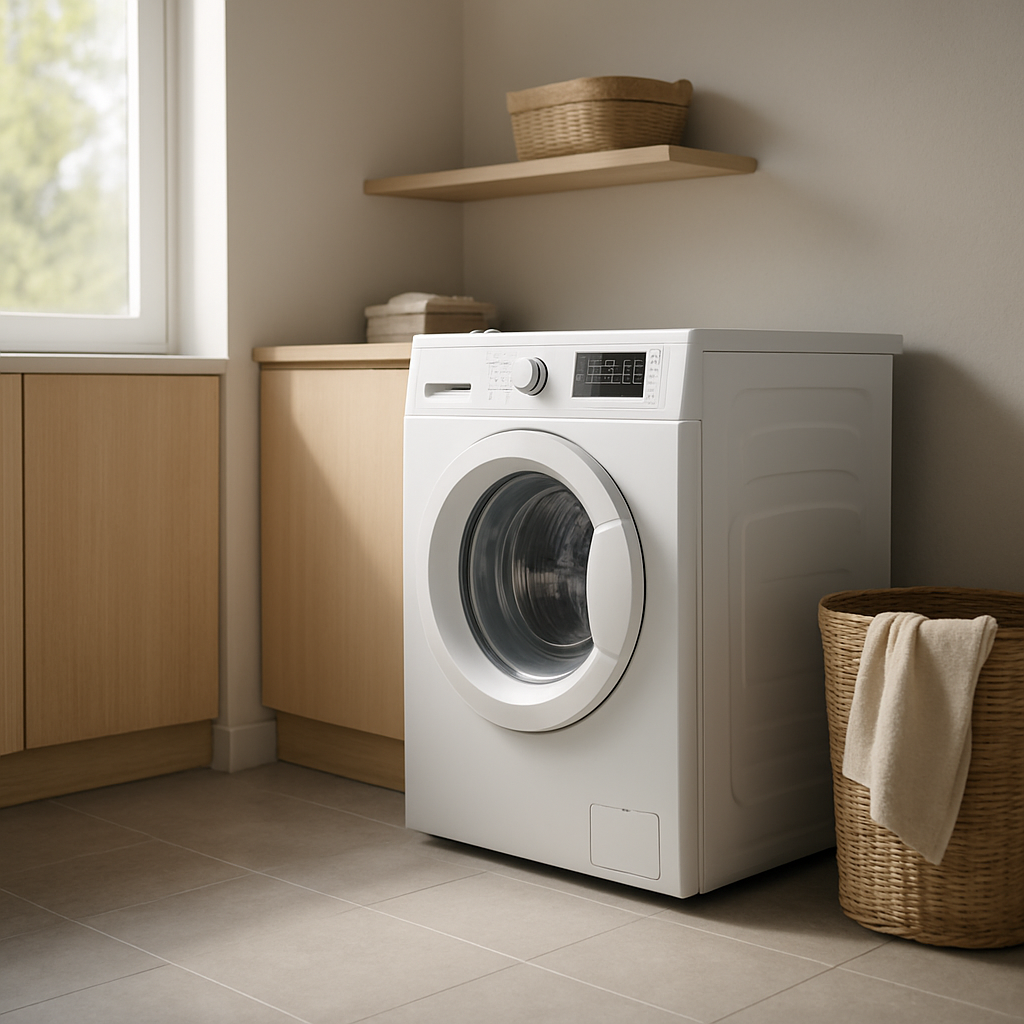
A single thud is usually one impact event: the drum or tub assembly hits something once. Most often it is an unbalanced load shifting in spin, a loose shipping/installation item, or the washer contacting the wall/cabinet. First action: stop the cycle, open the lid/door, redistribute the load or remove bulky items, then run a spin-only test with the washer pulled slightly away from the wall.
Identify the Noise First
A thud diagnosis depends on when it happens and whether it repeats.
During spin: One thud right as the machine ramps up, or a single thud after a pause/rebalance attempt. Commonly load shift or tub movement contacting the cabinet.
During drain: One thud when the pump starts or stops. Often a hose jumps, the drain hose taps the standpipe, or the machine shifts as water weight changes.
During fill: One thud when water starts/stops. Usually a fill hose or plumbing-related water hammer making the washer cabinet jump slightly.
Constant: Not a single-impact problem. A continuous knocking, grinding, or rumble points to a different diagnosis than this article.
Intermittent: True single thuds spaced far apart usually match specific events (spin ramp-up, drain start/stop, fill valve closing) or something loose intermittently contacting the drum/tub.
If you hear repeated thuds every rotation, that is not a single impact. That pattern usually indicates a persistent out-of-balance condition or a mechanical fault and needs a different approach.
What This Noise Usually Means
A single thud means the moving assembly transferred force into the cabinet once. In a washer, that force is typically the tub/drum system shifting briefly due to load distribution, suspension movement, or a momentary shake when water flow starts or stops. Less commonly, one loose item (coin, bra wire, screw, shipping bracket, hose) makes contact once and then settles.
Most Common Causes
Load shift at spin ramp-up (single heavy item or small load clumps to one side, tub moves and taps the cabinet once)
Washer contacting the wall, baseboard, or adjacent cabinet (one bump when the basket accelerates)
Not level or feet not planted (machine rocks, then drops back with a thud)
Drain hose slapping the standpipe or back panel (thud when pump starts/stops)
Fill hose or plumbing water hammer (valve closes, hose/cabinet jumps once)
Foreign object shifts and hits once (item between inner drum and outer tub, or in a front-load door boot area)
Shipping hardware left in place on some new front-loaders (tub movement is restricted and can cause a hard impact)
Worn suspension component (strut/shock/damper allows a single hard bottom-out during a specific event)
How to Check Safely
These checks focus on confirming a single-impact cause without disassembly.
Step 1: Stop and re-test intentionally
Run a spin-only cycle with the washer empty. If the thud disappears, it is likely load-related.
If it thuds empty, the issue is more likely clearance/leveling/installation or a looseness problem.
Step 2: Check clearance around the washer
Pull the washer forward so the back panel and hoses do not touch the wall.
Confirm sides are not rubbing cabinets and the drain hose is not banging the rear panel.
Step 3: Verify leveling and footing
With the washer empty, press down on each front corner. It should feel solid, not rocking.
If it rocks, adjust the leveling feet until all corners are planted, then tighten the lock nuts if present.
Step 4: Check the drain hose routing
Make sure the hose is secured and not free to whip when the pump starts.
Confirm the hose is not jammed too tightly into the standpipe and has an air gap. A jammed hose can cause surging and movement.
Step 5: Evaluate load habits
If the thud happens with a single blanket, bath mat, or one heavy item, add a few towels to balance or wash bulky items on a bulky/bedding cycle.
Avoid very small loads in high-speed spin. A couple of items can clump and trigger a one-time impact.
Step 6: Quick foreign-object check
Front-load: inspect the door boot folds for small items. Check the drum for a raised seam area where an item could be caught.
Top-load: inspect the basket holes and under the agitator area if accessible without tools on your model.
If any step changes the symptom, repeat the same cycle to confirm. Single-impact problems are best diagnosed by controlled re-tests.
When This Is Normal vs A Problem
Usually normal if you hear one thud only at spin ramp-up or after the machine pauses to redistribute, and the washer then runs smoothly with no walking, shaking, or repeat impacts.
Likely a problem if any of the following are true:
The thud happens empty or with many different loads
The washer walks, rocks, or repeatedly rebalances before/after the thud
You see the tub/basket striking the cabinet or the unit visibly lurches
The thud is followed by new noise (grinding, scraping, rumble) or water leakage
The thud occurs at every drain start/stop or every fill shutoff (points to hose/plumbing impact that should be corrected)
When to Call a Technician
The washer thuds empty after you have confirmed clearance and leveling
Repeated resets and violent movement even with properly sized, balanced loads
Signs of suspension or mount issues such as tub sitting noticeably off-center, frequent out-of-balance errors, or a harsh bottom-out feel
Suspected shipping bolt issue on a newer front-loader and you are not sure what hardware is installed
Foreign object suspected between tubs (wires, coins, screws) with scraping or intermittent snagging
These conditions often require panel removal or component inspection to avoid creating leaks or damaging the tub.
How to Prevent This Problem
Load for balance: mix item sizes, avoid single-item heavy loads, and do not wash one dense item by itself in high spin.
Use the right cycle: bedding/bulky cycles manage acceleration and redistribution more gently.
Maintain clearance: keep hoses from touching the cabinet and leave space from the wall.
Keep the washer level: recheck feet if the washer is moved or after floor settling.
Check pockets and small items: prevent single items from migrating to places where they can strike once and lodge.
Related Washing Machine Noise Problems
Repeated banging during spin (continuous out-of-balance impacts, not a single thud)
Loud clunk only when the lid locks or unlocks (actuator/lock sound mistaken for a thud)
Knocking during drain (hose slap or pump start/stop vibration)
Thumping that matches drum rotation (item stuck in the drum or a deformed tub ring, not a one-time impact)
Single pop at fill shutoff (water hammer affecting hoses and cabinet)
Conclusion
A single thud is typically one impact tied to a specific event: spin ramp-up, drain start/stop, or fill shutoff. Start by re-testing empty, then correct clearance and leveling, and confirm the drain hose is secured. If it thuds empty, becomes violent, or is paired with scraping or leaks, schedule a service call to inspect suspension, installation hardware, or foreign objects.
Frequently Asked Questions
Why does my washer make one thud at the start of spin and then it is fine?
That pattern usually indicates a load shift during acceleration. The tub moves briefly as the washer tries to distribute weight, taps once, then stabilizes. Redistribute the load, avoid single heavy items alone, and confirm the washer is not touching the wall.
My washer makes a single thud even when empty. What should I check first?
Check clearance and leveling first. An empty-basket thud is commonly the cabinet bumping the wall, a rocking foot dropping back onto the floor, or a hose hitting the rear panel. If those are ruled out, a suspension or installation hardware issue becomes more likely.
Can the drain hose cause a thud?
Yes. A drain hose can jump when the pump starts or stops, especially if it is unsecured or contacting the cabinet. Secure the hose, keep it from touching the back panel, and ensure it is not shoved tightly into the standpipe.
Is a single thud a sign the bearings are bad?
Usually no. Bearing problems more often create a continuous roar, rumble, or growl that increases with spin speed. A single thud points to an impact event rather than a rotating friction noise.
What if the thud happens when the washer fills and the plumbing also bangs?
That is often water hammer. Confirm the fill hoses are not striking the cabinet and that shutoff valves are fully open. If the plumbing bang happens elsewhere in the home too, adding water hammer arrestors or addressing household water pressure is the proper fix.
The best part is how ordinary it feels after the dust settles. No grand gestures, no dramatic reinvention—just the sense that things line up the way they’re supposed to.
There’s a quiet relief in that. The noise fades, and what’s left is simpler, cleaner, and a little more humane than it used to be.