Washing Machine Banging With Blankets? Causes and Fixes
Quick Answer
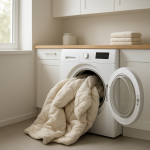
Banging with blankets is usually caused by bulky load dynamics: the blanket absorbs water, turns into a heavy lump, and the washer can’t balance it during spin. The tub tries to speed up, detects imbalance, then drops and re-tries, which sounds like banging. First action: pause the cycle, redistribute the blanket evenly, add 1 to 2 towels to help balance, and restart on a lower spin speed.
Identify the Noise First
Use when and how the noise happens to narrow it down. With blankets, most complaints trace back to imbalance during spin, but confirm the pattern.
- During spin: Loud banging or thumping that ramps up as speed increases, then may stop and restart as the washer rebalances. Most common with a single large blanket or comforter.
- During drain: A brief rattle or knocking as water pumps out, usually shorter and not tied to high-speed rotation. Often happens right before spin begins.
- During fill: Less likely to be load-related. If the noise happens during fill only, it’s usually not the blanket causing it.
- Constant: Continuous grinding or rumbling at all speeds is not typical for a simple bulky-load imbalance.
- Intermittent: Thump-thump, then quiet, then thump again is classic for the machine attempting to correct an off-balance bulky item.
If the bang only happens with blankets and not with normal mixed loads, assume a balance and load-shape issue first.
What This Noise Usually Means
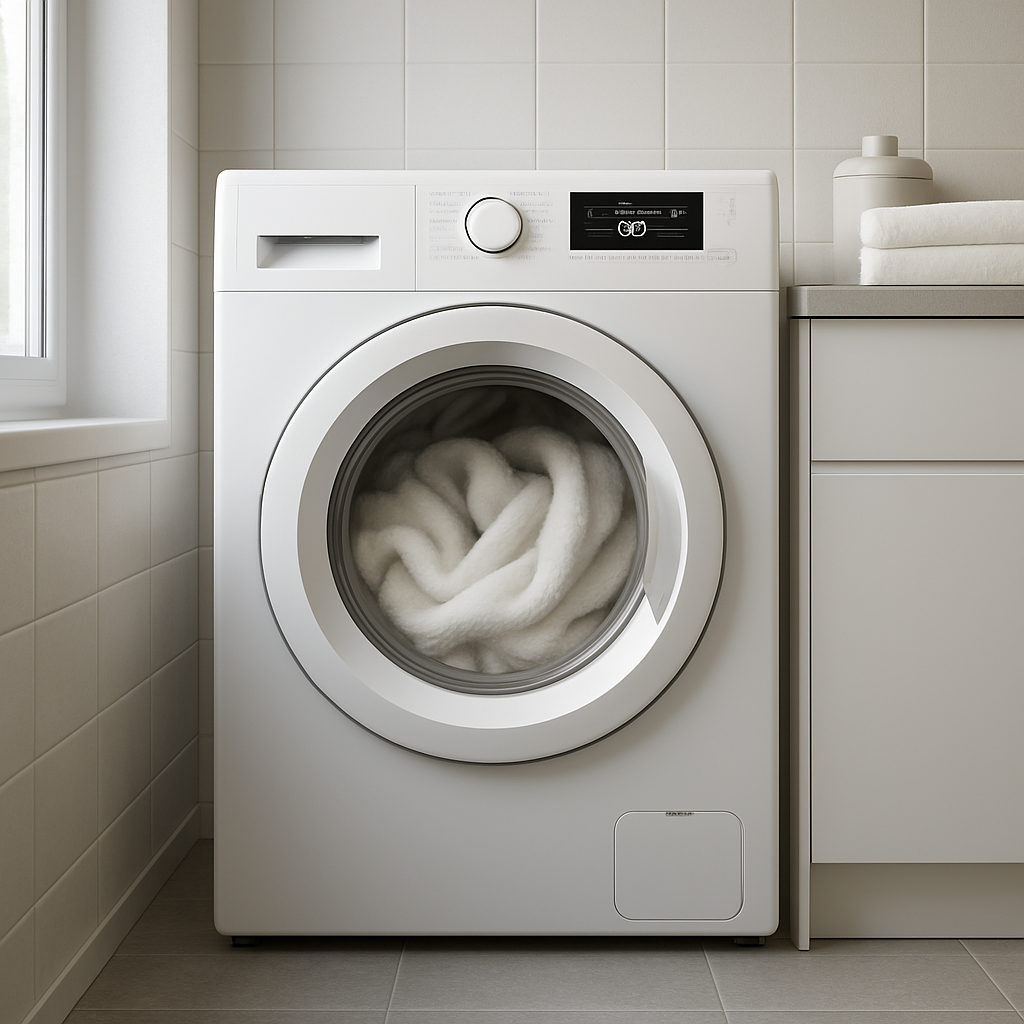
Bulky items behave differently than regular laundry. A blanket can trap water and collapse into a dense mass. During spin, that mass sticks to one side of the basket instead of spreading evenly. As the basket accelerates, the imbalance forces the tub assembly to swing against its restraints. The cabinet and suspension absorb the movement until it reaches a limit, and you hear the tub strike or the suspension hit its stop.
Modern washers often respond by slowing down, tumbling to redistribute, then trying to spin again. That repeated attempt cycle often creates multiple banging events rather than one continuous noise.
Most Common Causes
- Single bulky item spinning as a wet lump: Most common scenario with a comforter, thick blanket, or heavy throw washed alone.
- Load too small to balance the bulky item: One blanket by itself can’t counterbalance; adding a couple of towels often stabilizes the load.
- Spin speed too high for the item and machine: High RPM amplifies imbalance; some blankets need low or medium spin to stay stable.
- Overloading with multiple bulky items: Several thick items can wedge together, preventing redistribution and creating repeated imbalance.
- Washer not level or weak contact with the floor: Bulky-load forces expose leveling problems that normal loads may not.
- Suspension already marginal and bulky loads push it over the edge: Worn shocks/struts (front load) or weak suspension rods (top load) show up most clearly on heavy, wet blankets.
- Blanket size not suited to the washer capacity: Some king comforters simply exceed the drum’s practical balancing ability even if they technically fit.
How to Check Safely
These checks focus on confirming bulky load dynamics before assuming parts are bad.
- Step 1: Stop the washer when it starts banging. Pause or cancel. Do not let it continue slamming through a full spin.
- Step 2: Open and assess the load shape. If the blanket is bunched into a tight ball or pinned to one side of the basket, that is the likely cause.
- Step 3: Redistribute the blanket. Spread it around the basket like a ring. For top-loaders, drape evenly around the perimeter, not stacked in the center. For front-loaders, loosen it and distribute without packing it tight.
- Step 4: Add balancing items if appropriate. Add 1 to 2 bath towels to help create a more even distribution. Avoid adding many small items; they can get trapped inside the blanket and still clump.
- Step 5: Reduce spin demand. Choose a lower spin setting or a bulky/bedding cycle if available. If your machine allows, turn off extra-high spin.
- Step 6: Confirm the machine is stable. With the washer empty, press down on the front corners. Excess rocking suggests leveling or floor contact issues. Adjust feet so all corners feel solid and the cabinet doesn’t wobble.
- Step 7: Re-test with a controlled load. Run a short spin or rinse/spin. If it spins smoothly after redistribution and lower spin selection, the issue was load dynamics.
When This Is Normal vs A Problem
Usually normal: A few thumps early in spin as the washer attempts to balance a bulky blanket, then it settles and reaches full spin without repeated slamming. Some rebalancing pauses are normal, especially with one thick item.
More likely a problem:
- Repeated violent banging every attempt to spin even after redistributing and adding towels.
- The washer walks or shifts position noticeably on the floor during blanket spins.
- You hear hard strikes that sound like metal hitting metal, not just a heavy thump.
- The issue now happens on normal mixed loads, not just blankets.
- Frequent failure to reach spin speed with bulky items that previously spun fine in the same machine.
If the noise is exclusive to blankets and improves with redistribution and lower spin, it’s typically a load-management issue, not a mechanical failure.
When to Call a Technician
- After proper redistribution and leveling, the washer still slams hard with any medium-to-large load.
- The tub movement seems excessive when the basket is spun up, suggesting the suspension is no longer controlling heavy loads.
- You see the drum/tub sitting off-center or rubbing, which bulky loads can reveal.
- Water extraction is poor and the blanket comes out dripping even though the machine attempts high spin (could indicate a spin-control or suspension issue beyond simple imbalance).
- The machine is stable and level but still bangs violently on a standard bedding cycle with appropriate load size.
Describe to the technician that the noise occurs primarily on blankets and note whether lowering spin speed and adding towels changed the behavior. That detail helps separate imbalance dynamics from suspension or support faults.
How to Prevent This Problem
- Use the bedding/bulky cycle when available; it’s designed to manage heavy, water-holding items with controlled spin ramps.
- Don’t wash one blanket completely alone if it’s very heavy. Add 1 to 2 towels to help balance, unless the care label or capacity limits suggest otherwise.
- Avoid extra-high spin for thick blankets. Medium spin often extracts enough water without triggering severe imbalance.
- Keep the washer level and stable. Bulky loads magnify any wobble; recheck leveling if you move the machine or change flooring.
- Match blanket size to washer capacity. If the item barely fits dry, it will usually be too dense to balance when saturated.
- Shake out and fold loosely before loading. Starting with a tight bundle increases the odds it stays a lump.
Related Washing Machine Noise Problems
- Washer thumps only on high spin with jeans or towels due to dense items clumping into a single heavy mass.
- Washer bangs after draining then tries to spin repeatedly from imbalance correction cycles triggered by a wet, lopsided load.
- Washer walks across the floor during spin when a bulky load combines with poor leveling or slick flooring.
- Front-load washer knocks with a single large item because the item sticks to the drum and drops repeatedly while tumbling into spin.
- Top-load washer hits the cabinet only with bedding when heavy load swing exceeds what marginal suspension rods can control.
Conclusion
Banging with blankets is most often a balancing issue caused by how bulky items hold water and form a heavy lump during spin. Pause the cycle, redistribute the blanket, add 1 to 2 towels, and reduce spin speed. If it still slams after those steps or starts happening with normal loads, move from load management to leveling and suspension checks, and consider a technician visit.
Frequently Asked Questions
Why does my washer only bang with one blanket but not with regular clothes?
A blanket can absorb and trap a lot of water, creating a single heavy mass that sticks to one side of the drum. Regular clothes tend to spread out and balance more easily. If redistribution and a lower spin reduce the banging, it confirms the issue is bulky load dynamics rather than a general mechanical fault.
Should I wash a comforter by itself or with towels?
If the comforter is medium weight and your washer is large enough, washing it alone can work, but it’s also the most common setup for severe imbalance. Adding 1 to 2 towels often helps the load balance. Don’t add many items, and don’t overload; the goal is balance, not a packed drum.
Is it bad to let the washer keep trying to spin while it’s banging?
Repeated hard banging means the tub assembly is hitting limits of movement while the machine keeps attempting to correct imbalance. Stop and redistribute the load. Occasional light thumps can be normal, but sustained or violent banging is a sign the load isn’t balancing and needs intervention.
What spin speed should I use for blankets to stop the banging?
Use low to medium spin, or select the bedding/bulky cycle. High spin ramps up force quickly and makes any lumped blanket behave like a weight on one side of the basket. A slightly wetter blanket is preferable to a cycle that repeatedly slams or fails to complete spin.
If redistributing doesn’t help, what’s the next most likely issue?
Check leveling and floor stability next. Bulky loads expose a washer that rocks or has a foot not firmly contacting the floor. If the washer is stable and still bangs violently with properly loaded bedding, the suspension components may be worn and no longer controlling heavy, wet loads effectively.
It stops feeling like a riddle and starts feeling like regular life again, the kind where you can breathe without running mental side quests. Not dramatic, not flashy—just clean and settled.
The best part is the quiet shift in your day-to-day expectations. You notice the world is still moving, and you’re not stuck staring at the same spot.