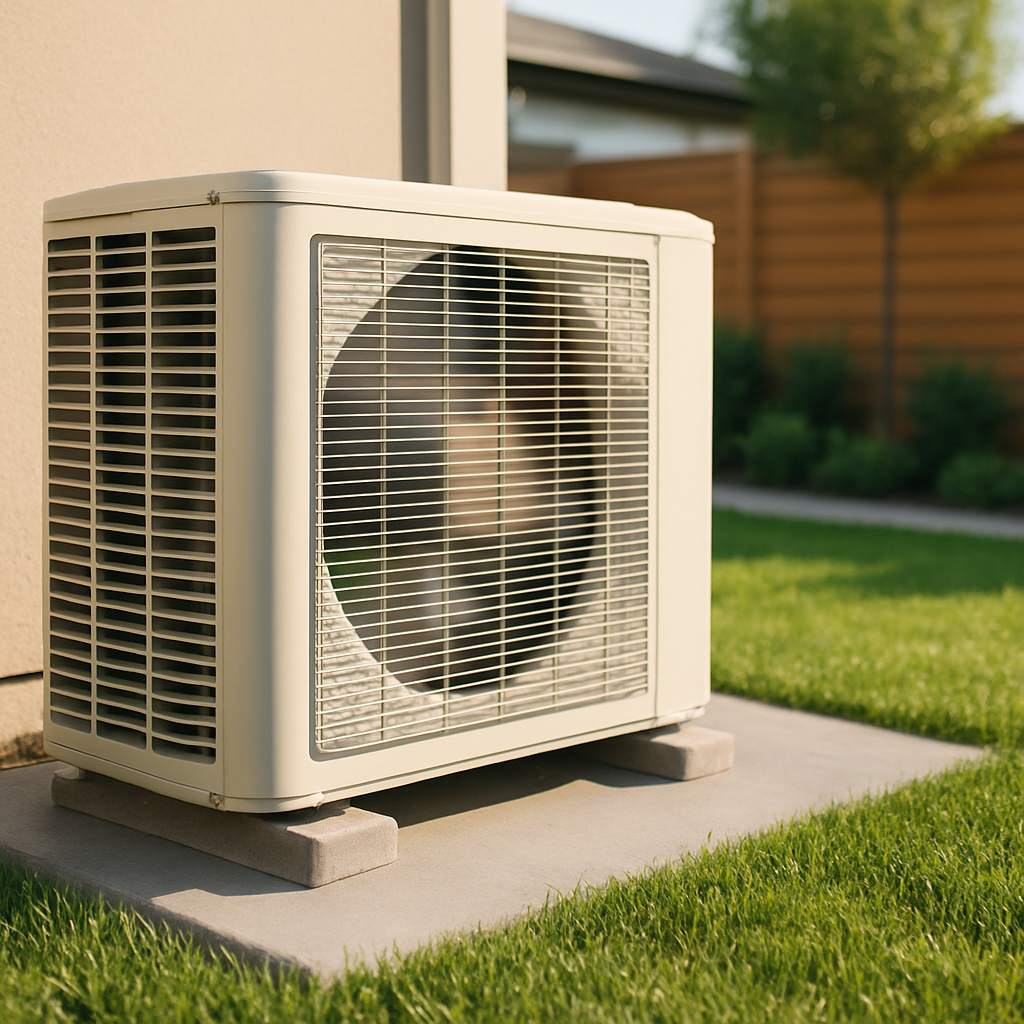
Most AC vibration noises come from the outdoor unit shaking against a loose mounting pad, slightly uneven base, or a cabinet panel that is resonating. Start by confirming the noise is outdoors, then check that the unit sits solidly on the pad and that all exterior panels and screws are snug. If the vibration is accompanied by grinding, metal-on-metal squeal, breaker trips, or hard starting, shut it off and call a technician.
Identify the Noise First
If the noise happens only during compressor start and the unit gives a brief shake, suspect the cabinet or pad amplifying normal start torque. If it grows louder while running, look for resonance from a loose panel, pad contact points, or refrigerant line contact transmitting vibration into the house.
If the noise is louder at night, the sound is often the same vibration but more noticeable due to lower background noise; resonance is also more obvious in cooler, denser air. If it occurs on shutdown as a brief rattle, suspect a loose panel edge, grille, or line set tapping the cabinet as vibration decays.
To isolate outdoor vs indoor: stand near the outdoor condenser when the noise occurs. If the vibration is strongest at the outdoor cabinet or pad, this article applies. If you mainly hear it at an indoor supply register or air handler closet with little outdoor noise, it is likely vibration being transmitted through refrigerant lines or the structure, still tied to outdoor mounting and contact points.
What This Noise Usually Means
This problem is usually not the compressor making a new sound. It is normal vibration from the compressor and fan being mechanically coupled into something that can resonate: the condenser cabinet panels, the mounting feet, the concrete/plastic pad, or the line set where it touches the cabinet or siding.
When the unit is slightly out of level, a pad corner is unsupported, or rubber isolators are missing/hardened, vibration concentrates at a few contact points. That turns small, normal vibrations into loud buzzing, humming, drumming, or rattling as metal panels flex and the pad or nearby structure acts like a speaker.
Most Common Causes
Loose condenser cabinet panels or corner screws: rattle or buzzing that changes when you press lightly on a panel while it is running.
Unit not sitting flat on the pad: rocking feel when you gently push a cabinet corner (power off), vibration louder on one side of the unit.
Settled, tilted, or cracked mounting pad: noise increased after heavy rain, freeze-thaw, landscaping work, or a new install; unit looks slightly off level.
Missing, compressed, or hardened rubber isolation feet: low-frequency hum or drumming that seems to travel into the wall; worse as the unit ages.
Refrigerant line set touching the cabinet or siding: rhythmic tapping or buzzing that is loud indoors near the line path; you may see copper lines contacting metal or wood.
Electrical disconnect whip or conduit vibrating against the cabinet: buzzing that stops if the cable is gently moved away from the cabinet (do not open electrical covers).
Fan grille or top cover resonance: vibration strongest at the top; noise character changes with wind or when the fan speed changes slightly.
Debris caught between the cabinet and base pan: intermittent rattle, often after mowing or storms; sound may change as the unit vibrates.
Pad-to-house contact or tight clearance: pad or unit too close to the wall, fence, or slab edge; vibration transfers into framing and becomes a loud indoor hum.
How to Check Safely
Confirm the source: run cooling and listen at the outdoor unit, then inside near the line set entry. Note where it is loudest.
Do a timing test: does it happen at start, steady run, shutdown, or only in wind. Resonance issues often peak at a specific moment or speed.
Thermostat repeatability: turn the thermostat off for 2 minutes, then back on. If the same brief shake/rattle repeats at each start, suspect mounting or panel resonance.
Visual panel check: with the unit running, look for a panel edge visibly vibrating. Do not remove panels.
Gentle press test: press lightly on an exterior panel or corner (hands clear of the fan grille). If the noise changes or stops, a panel or screw is likely loose.
Clearance check: confirm the cabinet, pad, and refrigerant lines are not touching siding, trim, downspouts, or fence panels.
Line contact check: follow the insulated suction line where you can see it. If it rests against metal, wood, or the cabinet, that contact can transmit vibration indoors.
Pad support check: with the system off, gently push on the cabinet near each corner. Any rocking suggests uneven pad support or a shifted foot.
Debris check: look around the base for sticks, stones, or mulch touching the cabinet or wedged under edges.
Stop and call a technician: if vibration is paired with hard starting, repeated clicking, burning smell, breaker trips, or a grinding/screeching noise. Those are not pad resonance checks.
Normal vs A Problem
Normal: a mild, steady hum outdoors with no cabinet rattling, and no vibration felt in nearby walls; a brief, soft thump at startup can be normal if it is not getting worse.
Problem: buzzing or rattling that you can feel in the cabinet, pad, or nearby wall; vibration that has gotten louder over weeks; a new vibration after a storm, landscaping, or installation; indoor rooms “humming” when the outdoor unit runs; any vibration that coincides with reduced cooling, short cycling, or the unit walking or shifting on the pad.
Not a resonance issue: grinding, metal scraping, or squealing. Those suggest mechanical wear and should be checked by a technician without repeated run cycles.
When to Call a Technician
The unit rocks on the pad, the pad is visibly cracked/sunken, or the cabinet is noticeably out of level.
Noise persists after snugging accessible exterior screws and clearing debris, or it returns quickly.
Vibration is being transmitted into the home through the line set and you cannot create safe clearance.
The cabinet appears to be contacting conduit, disconnect whip, or the wall and you cannot reposition it safely.
You notice performance issues along with the vibration: weak cooling, frequent starts/stops, or unusually long run times.
Any signs outside the vibration theme: hard-start symptoms, electrical burning odor, breaker trips, or grinding noises.
How to Prevent This Problem
Keep a clear perimeter around the condenser so mulch, stones, and branches cannot wedge against the base.
Maintain proper clearance to walls and fences to reduce vibration transfer and cabinet resonance.
After storms or yard work, do a quick visual check that the unit is still level and sitting flat.
Make sure the line set is supported and not touching siding, the cabinet, or sharp edges along its route.
Periodically snug accessible exterior panel screws if they loosen from normal vibration.
If you replace the pad, use a correctly sized, stable pad and ensure full-foot support at all mounting points.
Related HVAC Noise Problems
Buzzing that stops when you press on the electrical disconnect box or conduit
Indoor humming at one wall where the refrigerant lines run
Rattle only on startup, then quiet for the rest of the cycle
Outdoor unit louder after rain or freeze-thaw weather
Metallic buzzing that changes with wind direction around the condenser
Vibration that appears after a new pad installation or equipment replacement
Condenser sounds normal outside but floors or windows vibrate inside
Intermittent tapping traced to the line set touching the cabinet
Top grille buzzing that changes when the fan ramps up
Low-frequency drumming that disappears when the unit is slightly lifted or re-seated
Conclusion
Most AC vibration noises are resonance problems: the cabinet, pad, or nearby contact points are amplifying normal operating vibration. Start by verifying the noise is from the outdoor unit, then check for loose panels, rocking on the pad, and line set or conduit contact. If the vibration is escalating or paired with hard starting, tripping, or grinding, shut the system off and schedule service.
Frequently Asked Questions
Can a slightly unlevel condenser really make that much noise?
Yes. If one foot is carrying most of the load, vibration concentrates at that point and can turn the cabinet or pad into a resonator. Even small tilt can create rocking and panel buzz, especially at startup and shutdown.
Why do I hear the vibration inside more than outside?
Structure-borne vibration travels well. If the line set, pad, or cabinet is touching the house, vibration can transmit into framing and drywall and sound louder indoors than at the condenser itself.
Is a loud hum always an electrical problem?
No. Many loud hum complaints are normal motor/compressor hum being amplified by a loose panel, cabinet resonance, or conduit/line contact. True electrical issues usually add symptoms like rapid clicking, arcing sounds, hard starting, or breaker trips.
Do anti-vibration pads always fix it?
They help only if the cause is poor isolation at the mounting points. If the real issue is a loose panel, rocking base, or a line set touching the cabinet or wall, pads alone may not change the noise until the contact/resonance path is corrected.
Should I tighten every screw I can see on the outdoor unit?
You can snug accessible exterior panel screws, but do not remove panels or open any electrical compartments. If tightening changes nothing, the problem may be pad support, isolation feet, or vibration transfer through the line set, which is better handled during a service visit.
There’s a quiet relief in seeing it spelled out without the usual fog. The point lands cleanly, and the noise in your head gets to take a back seat.
After that, the rest feels less like a puzzle and more like background—still there, but no longer looming. You can get on with the day, unbothered in a way that almost feels unfair to how hard it used to be.