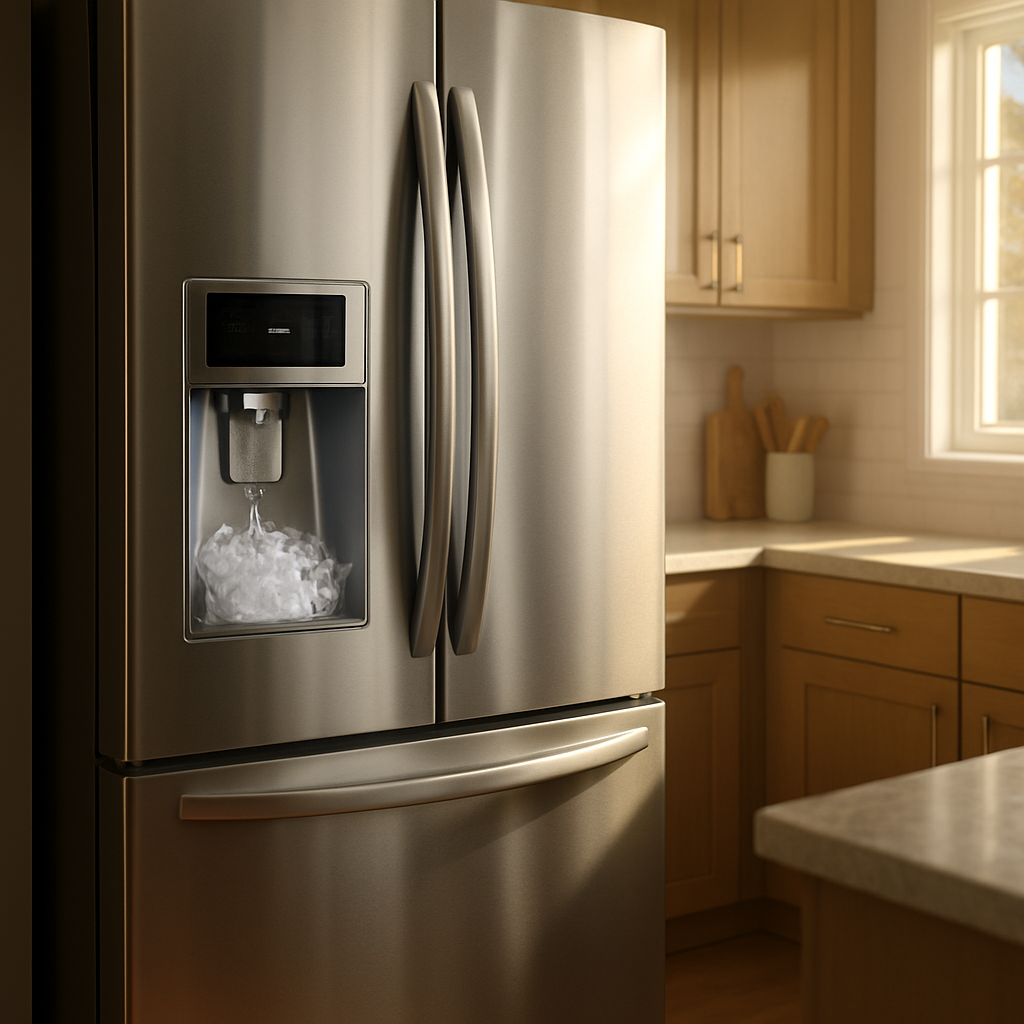
If the noise happens only when the ice maker is calling for water or dumping a batch, it’s usually normal fill and harvest cycle sound: a brief hum from the water inlet valve, water rushing into the mold, then a clunk as cubes release. First action: time the noise. If it lasts under 10 seconds during fill and under 5 seconds during dump with normal ice production, it’s typically fine.
Identify the Noise First
Use this quick timing guide to confirm the sound is tied to the ice maker fill and harvest cycle, not a fan or compressor issue.
If the noise starts exactly when the compressor starts: more likely compressor start relay or normal start-up hum, not the ice maker.
If the noise happens while the compressor is running: could still be the ice maker, but first check timing. Ice maker noises are short and “event-based,” not steady.
If the noise happens right after the compressor stops: often refrigerant equalization pops/ticks or cabinet movement, not ice maker.
If the noise happens during defrost or shortly after: hissing/sizzling or dripping is common defrost behavior, not ice maker.
If the noise happens when the ice maker runs or fills:
If you hear a low buzz/hum for 3–10 seconds and then water sound: that’s the water inlet valve opening for a fill.
If you hear a brief clunk/crack, rattle, or thunk once per batch: that’s the harvest cycle releasing cubes and sweeping them into the bin.
If you hear repeated buzzing for 10+ seconds with no water sound: likely a fill problem (restricted water supply, frozen fill tube, weak valve).
If the noise changes when you open the freezer door: ice maker noises usually continue; fan noises often change or stop when the door opens (model-dependent).
If the noise matches the evaporator fan running (freezer side): steady whir or scraping that lasts minutes points to fan/ice buildup, not a short ice maker event.
If the noise matches the condenser fan (rear/bottom): a steady blade noise that you can hear behind/below usually isn’t ice maker-related.
If it is constant: not an ice maker fill/harvest issue.
If it is intermittent: ice maker noises are typically intermittent and repeat on a schedule (often every 60–120 minutes depending on usage and temperature).
If it is louder at night: normal. The kitchen is quieter and the ice maker cycle stands out more, especially the dump clunk.
What This Noise Usually Means
The ice maker makes two main noises that people notice:
Fill cycle: The refrigerator energizes the water inlet valve for a few seconds. You may hear a short hum/buzz, then water rushing through the fill tube into the ice mold.
Harvest cycle: After the ice freezes, the ice maker warms the mold slightly and uses a small motor/module to eject cubes. That can create a brief click, clunk, or ratcheting sound as the ejector sweeps and cubes drop into the bin.
Because these sounds are brief and repeat periodically, they’re often mistaken for a failing fan or compressor. The key diagnostic logic is timing: fill and harvest are short, distinct events that happen even when the rest of the refrigerator sounds normal.
Most Common Causes
Normal water inlet valve hum during fill: short buzz/hum for a few seconds followed by water flow noise.
Normal cube dump clunk into the bin: one-time clunk/crack during harvest, louder when the bin is emptier or cubes are larger.
Ice cubes bridging or sticking, then breaking free at harvest: sharper crack/pop during dump; ice may look clumped or wet.
Frozen or partially frozen fill tube: loud buzz longer than normal, little or no water sound, small cubes or no ice production.
Restricted water supply (saddle valve, kinked line, clogged filter): extended buzzing and weak fill; hollow or small cubes; slower ice production.
Worn or noisy inlet valve: louder-than-usual buzzing during fills; may chatter instead of a smooth hum.
Ice maker module/gears getting loud: grinding/ratcheting during harvest that’s new or progressively louder, sometimes paired with irregular harvest timing.
Ice bin or auger components amplifying the sound: dump sounds unusually loud because the bin is mis-seated, empty, or the ice is stacked against the chute.
How to Check Safely
Time the noise: Use your phone timer. Water valve fill is usually 3–10 seconds. Harvest/dump is usually under 5 seconds. Anything much longer is a clue.
Listen for the sequence: During a fill you should hear buzz/hum then water. During harvest you usually hear a click/whir then a clunk into the bin.
Confirm it only happens with ice making enabled: Turn the ice maker off for 6–12 hours (switch/arm/button depending on model). If the noise disappears completely, you’ve isolated it to the ice maker cycle.
Check ice quality: Look for small, hollow, or fused cubes. That points to a fill restriction or a fill tube problem that can cause buzzing without proper water flow.
Inspect the fill tube area (no tools, no heat): With the freezer door open, look where water enters the ice maker (fill tube at the back/top). If you see frosting or an obvious ice plug, that supports a frozen fill tube diagnosis. Do not use a heat gun or sharp tools.
Verify the bin is seated: Make sure the ice bin is fully pushed in and level. A mis-seated bin can make dumping cubes sound like a hard slam.
Reduce sound transmission: Confirm the refrigerator is level and not touching a wall or cabinet. Ice maker clunks can resonate through an unlevel cabinet or a unit pressed against wood.
Check for water leaks: Look under the ice maker area and under the fridge for signs of dripping. A slow leak can lead to ice buildup that changes harvest sounds.
If you smell burning, hear repeated rapid clicking, or the unit trips the breaker: stop and call a technician. That is not a normal ice maker cycle issue.
When This Is Normal vs A Problem
Usually normal:
Brief hum/buzz for a few seconds, then you hear water.
One clunk/crack as cubes drop into the bin.
Noise repeats a few times per day depending on use.
Ice cubes are normal size and not hollow, and the freezer temperature is stable.
Usually a problem:
Buzzing lasts longer than about 10 seconds or repeats several times in a row with little/no water sound.
Grinding or harsh ratcheting during harvest that’s new and getting louder.
Ice production drops, cubes are small/hollow, or the ice maker stops making ice.
Water leaks, heavy frost around the fill tube, or ice clumps that keep returning.
Noise is no longer limited to brief events and becomes frequent or erratic.
When to Call a Technician
Repeated buzzing with no fill and you’ve confirmed the water supply is on and the filter is not overdue. This often involves a frozen fill tube, failing inlet valve, or water pressure issue that needs proper diagnosis.
Grinding/ratcheting during harvest that persists and is increasing. Ice maker modules and gear trains are typically replaced, not rebuilt.
Any water leak originating from the ice maker fill area, rear water line connection, or under the unit.
Noise plus warming temperatures or ice melting. That points away from a simple normal harvest sound and may indicate broader cooling or airflow issues.
Electrical symptoms: burning smell, breaker trips, repeated clicking, or a loud buzz that coincides with lights dimming.
How to Prevent This Problem
Keep the refrigerator level: A slight forward tilt (per manufacturer guidance) helps doors seal and keeps harvest and bin seating consistent.
Maintain airflow and clearance: Don’t press the cabinet tight to the wall; resonance makes normal ice dumps sound much louder.
Replace the water filter on schedule: A restricted filter can cause slow fills and valve buzzing without proper water flow.
Avoid overpacking freezer vents: Poor airflow can contribute to inconsistent freezing and sticky harvests.
Empty and re-seat the ice bin occasionally: Prevents ice bridges that snap loudly during harvest.
Keep door gaskets clean: Moist air leaks can cause frost near the fill area and increase the chance of a frozen fill tube.
If leaving home: Consider turning the ice maker off to prevent unnecessary cycles and reduce the chance of fill-related noise complaints or leaks going unnoticed.
Related Refrigerator Noise Problems
Buzzing from the back of the fridge for 5–10 seconds with no ice made
Loud clunk in the freezer every 1–2 hours
Ice maker keeps clicking but the ice tray stays dry
Rattling in the freezer only when ice drops into the bin
Water hammer bang in house pipes when the ice maker fills
Ice cubes are hollow and the valve buzzes longer than normal
Freezer making a scraping noise that changes when the door opens
Gurgling sound right after the ice maker fills
Ice bucket auger grinding noise when dispensing ice, not when making ice
Frost buildup at the fill tube with intermittent no-ice periods
Conclusion
Noise that happens only when the ice maker fills or dumps is usually normal: a short inlet valve hum and a quick harvest clunk. Identify it by timing and sequence, then verify ice quality and whether the sound stops when you turn the ice maker off. If buzzing is extended, repeats without water, or ice production changes, plan on diagnosing the water supply, fill tube freezing, or a failing valve/module.
Frequently Asked Questions
Why does my fridge buzz for a few seconds and then stop when the ice maker runs?
That’s typically the water inlet valve being energized for the fill cycle. A smooth hum for a few seconds followed by water flow noise is normal. If it buzzes longer than about 10 seconds or you never hear water, suspect a restricted water supply, a frozen fill tube, or a weak inlet valve.
Is a loud clunk when ice drops into the bin normal?
A single clunk during harvest is normal, especially if the bin is empty or the cubes are large. It’s more concerning if it turns into repeated banging, grinding, or if cubes are clumped and snapping free every cycle, which can indicate sticking cubes or a harvest mechanism getting noisy.
Why is the noise louder at night?
The ice maker cycle is intermittent and brief, so it stands out when the room is quiet. Also, hard surfaces and cabinets can amplify the harvest clunk if the refrigerator is touching a wall or not level.
My ice maker buzzes but barely makes any ice. What should I check first?
Check ice cube size and the water filter age. Small or hollow cubes point to low fill volume. If the filter is overdue, replace it. If the filter is fine, look for frost/ice at the fill tube area, which suggests a frozen or restricted fill path. Persistent buzzing with poor ice production often ends up as a water supply issue or a failing inlet valve.
Does turning off the ice maker help diagnose the noise?
Yes. If the noise stops completely when the ice maker is off, you’ve isolated it to the fill/harvest cycle rather than fans or the compressor. That makes the next checks straightforward: fill timing, water flow sound, cube quality, and signs of a frozen fill tube or a noisy inlet valve.
For a moment, the noise stops and you can feel your attention come back. Not grand, not cinematic—just the kind of quiet shift that lets the day keep moving.
It’s also oddly satisfying how ordinary this feels once it’s handled. The rest is just living, without the extra weight in the background.