Fridge Noise From Inside? Common Reasons Explained
Quick Answer
Most inside-fridge noises that sound like whooshing, rushing air, light popping, or crackling are caused by internal airflow changes and normal expansion and contraction of plastic liners and ducts as temperatures shift. First, identify exactly when it happens: during fan operation, right after the compressor stops, or around defrost. Then do a quick door-open test and check for blocked vents or overpacked shelves.
Identify the Noise First
Use these if/then checks to pinpoint the situation before you assume something is failing.
- If the sound happens when the compressor starts: a brief whoosh or rush from inside often lines up with airflow ramping up and pressure equalizing in air ducts. If it turns into a long, loud roar, suspect restricted vents or an overworking fan.
- If the sound happens while the compressor is running: steady airflow noise from the freezer side usually points to the evaporator fan moving air through the ducts. If opening the refrigerator door changes the sound immediately, it is almost always airflow-related.
- If the sound happens right after the compressor stops: ticking, light popping, or crackling from inside panels is typically expansion/contraction as temperatures swing and airflow slows.
- If the sound happens during defrost or shortly after: sizzling, hissing, and occasional pops can be normal as frost melts and internal surfaces warm briefly, then cool back down when the fan restarts.
- If the sound happens when the ice maker runs or fills (if applicable): a short rushing-water sound is separate from airflow. If the noise you hear is more like a whoosh from vents, it is likely the fan moving air, not the fill valve.
- If the sound happens when the evaporator fan is running (freezer side): expect a smooth, consistent fan noise. If it surges, whistles, or gets louder with a packed freezer, you are likely hearing airflow restriction and turbulence at vents.
- If the sound happens when the condenser fan is running (rear/bottom, if equipped): that noise is usually outside the cabinet. If you only hear it inside, you may be hearing the airflow path resonating through internal ducts rather than a failing part.
- If the noise is constant: constant whooshing is often a vent partially blocked by food items or packaging. Constant popping is less typical and should be watched for changes in cooling or panel bulging.
- If the noise is intermittent: intermittent whooshes and pops commonly match fan cycling, damper changes, or temperature transitions after door openings.
- If it is louder at night and quieter during the day: at night the room is quieter and the fridge runs longer with fewer door openings, so airflow and expansion sounds are more noticeable. If it has suddenly become much louder than before, treat it as a change worth checking.
What This Noise Usually Means
Inside-the-cabinet noises that resemble air rushing, soft thumping, or popping are usually the sound of air being pushed through narrow ducts and vents, combined with plastic and thin metal parts flexing as temperatures change. Refrigerator airflow is not constant: fans cycle, dampers open and close, and defrost temporarily changes temperatures around the evaporator. Those shifts create pressure changes in the air channels and cause liners, vent towers, and covers to expand or contract, producing brief crackles or pops.
Most Common Causes
- Air vent restriction from food packaging or overpacking: louder whooshing, wind noise, or a pulsing roar; often worsens when the freezer is stuffed or items are pushed against the rear wall.
- Normal cabinet liner and duct expansion/contraction: single pops, ticking, or crackling that happens after a run cycle stops, after defrost, or after large temperature changes from frequent door openings.
- Damper (air diffuser) changing position between freezer and fresh food section: a brief flutter, soft thump, or momentary rushing sound, usually in the upper refrigerator area; may be more noticeable when switching from heavy use to long closed-door periods.
- Evaporator airflow turbulence from frost buildup at vents: whooshing that gradually gets louder over days, sometimes with uneven temperatures; commonly tied to blocked return vents or a door not sealing well.
- Cabinet resonance from contact points: airflow and fan sound seems amplified inside when the fridge cabinet is touching a wall or adjacent cabinet, turning normal airflow into a louder humming/whooshing presence.
- Loose internal components in the vent tower or air duct cover: a rattle or buzz that coincides with the fan running, often changes when you press lightly on the vent cover area.
How to Check Safely
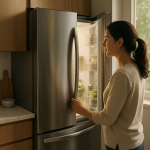
- Do the door-change test: with the unit running, open the refrigerator door and listen. If the noise changes immediately, it is almost always airflow or the damper path, not the compressor.
- Locate the loudest zone: listen near the upper refrigerator vent area, the rear freezer panel, and the center divider between sections. Airflow noises are strongest near vents and return paths.
- Check for blocked supply vents: move containers, bags, and boxes away from vent openings. Leave a few inches of space around vents and do not press items against the rear wall where air returns often are.
- Check for blocked return airflow: confirm that lower returns (often lower back of the fresh-food section or near crisper areas) are not blocked by drawers, bags, or fallen packaging.
- Inspect door gaskets quickly: look for gaps, torn sections, or areas not contacting the cabinet. A poor seal increases frost and makes airflow noisier over time.
- Confirm the unit is level and stable: if the cabinet rocks, internal ducting and liners can pop more, and airflow noise can resonate. Adjust front feet so doors self-close gently and the fridge does not wobble.
- Check clearance and contact points: pull the fridge slightly away from walls or cabinets. If the inside noise seems reduced after you create clearance, you were hearing resonance rather than a failing part.
- Listen through a full cycle: note if popping happens mainly after the compressor stops or after defrost. That timing strongly supports normal expansion/contraction.
- If you suspect frost-related airflow restriction: look for heavy frost on visible freezer surfaces or vents. Do not chip ice or remove internal panels. If airflow is weak and noise is getting louder, stop and schedule service.
When This Is Normal vs A Problem
- Usually normal: brief whoosh when the fan starts, light crackling/popping for a few minutes after the compressor stops, occasional sounds after defrost, and mild airflow noise that does not change week to week.
- More likely a problem: airflow noise that has become noticeably louder recently, a persistent whistle or roaring that does not settle, or any change paired with warmer temperatures, soft ice cream, or spoiling food.
- Watch closely: repeated loud pops that coincide with visible panel distortion, frequent heavy frost returning quickly, or airflow that seems weak at vents.
- Not typical for this category: grinding, metal-on-metal scraping, repeated clicking with no cooling, buzzing that lasts without the unit starting, water leaking, burning smell, or breaker trips. Those point away from simple airflow/expansion sounds.
When to Call a Technician
- Airflow noise continues after vents are cleared and the sound is loud enough to hear across rooms.
- Noise is paired with poor cooling in either section, or temperatures swing widely.
- Suspected frost buildup behind panels causing turbulent airflow or a strained fan sound; internal access usually requires safe disassembly and diagnosis of defrost/airflow causes.
- Fan-related scraping persists (especially from the freezer rear area) even after you confirm nothing is touching vents; this can indicate ice interference or a fan issue that should not be ignored.
- Any electrical or system red flags: burning smell, repeated start attempts, buzzing with no start, or breaker trips. Stop using the unit and schedule service.
How to Prevent This Problem
- Keep vents clear: do not pack items tightly against vent openings or rear walls; maintain clear airflow paths in both sections.
- Do not overload the freezer with flat-packed items against the back panel: that area is part of the airflow route and can amplify whooshing and turbulence.
- Maintain door seals: clean gaskets and the sealing surface; replace damaged gaskets to reduce frost-driven airflow noise.
- Set stable temperatures: avoid frequent extreme adjustments; stable settings reduce rapid temperature swings that cause more expansion sounds.
- Level the refrigerator: reduce cabinet flex and resonance so normal airflow does not sound amplified.
- Allow cabinet clearance: prevent the fridge from touching walls or cabinetry, which can transmit and magnify internal airflow noise.
- Clean accessible condenser areas: improved overall efficiency reduces long run times that make airflow noise more noticeable (follow the manufacturer guidance and keep it gentle).
Related Refrigerator Noise Problems
- Rattling inside the fridge that stops when the door is opened
- Whistling from the refrigerator vent area when the freezer is full
- Popping or cracking sounds after the fridge shuts off
- Hissing or sizzling sounds during defrost
- Gurgling or bubbling sounds from inside walls after a cycle
- Buzzing that only happens when the evaporator fan runs
- Clicking followed by airflow stopping and temperatures rising
- Thumping sound near the damper when airflow changes to the fridge section
- Louder airflow noise after moving the refrigerator or pushing it back into place
- Intermittent whooshing after frequent door openings or loading groceries
Conclusion
If the noise is coming from inside and matches whooshing, rushing air, or brief popping, the most likely explanation is normal airflow changes and expansion sounds. Use timing and the door-open test to confirm it is tied to vent airflow, then clear vents and check sealing and clearance. If the sound is getting louder over time or cooling performance changes, schedule a technician to check for airflow restriction or frost-related issues.
Frequently Asked Questions
Why does my fridge make popping noises from inside at night?
At night you hear it more because the room is quieter and the refrigerator often runs longer without door openings. Popping typically comes from internal liners and air ducts expanding and contracting as temperatures change after a cooling cycle or after defrost. If it is brief and not getting louder over time, it is usually normal.
My fridge makes a loud whooshing sound when the fan runs. What should I check first?
Check for blocked vents and returns. Pull food packages away from vent openings and the rear walls, especially in the freezer. Then open the refrigerator door while it is making the noise. If the sound changes immediately, that confirms it is airflow-related and not a compressor problem.
Can a bad door seal cause inside airflow noise?
Yes. A leaking gasket lets humid air in, which can lead to frost where air moves through vents. That restriction creates louder airflow turbulence and sometimes a pulsing whoosh. If you also see recurring frost or notice temperature inconsistency, address the seal and have the airflow/defrost condition checked.
Is hissing inside the fridge during defrost normal?
A mild hissing or sizzling during defrost can be normal as frost melts and water hits warm surfaces. If the sound is extremely loud, lasts a long time, or is followed by weak airflow and warming temperatures, have it inspected for abnormal frost buildup or airflow restriction.
Opening the fridge door makes the noise stop. What does that mean?
That pattern strongly points to internal airflow and pressure changes through vents and ducting, not a sealed-system issue. Door opening changes the air path and often pauses or alters fan/damper behavior, which changes the sound. Focus on vent blockage, damper area noise, and cabinet resonance before assuming a major failure.
That’s the strange part: the hardest work happened before anyone needed a big speech. It just sits there, obvious in the background, like a locked door you finally stop trying to force with your shoulder.
Now the page feels cleaner, the air a little lighter. Not because everything’s magically solved, but because the next step doesn’t have to be guessed anymore.