Fridge Making Ticking Noise? Causes And Fixes
Quick Answer
A ticking fridge is most often electrical switching (thermostat/control board relays, compressor start components) or normal expansion ticking as plastic liners and refrigerant tubing warm and cool. First action: time the tick to a specific event like compressor start/stop or defrost. If the tick repeats every few seconds with buzzing and the fridge is warming, stop and schedule service for a likely start device or compressor issue.
Identify the Noise First
Use this quick sorting guide. Your goal is to match the tick to a specific operating change.
- If it ticks exactly when the compressor starts: likely a relay or thermostat click, or a start attempt that may turn into repeated clicking.
- If it ticks while the compressor is running: more often expansion ticking (tubing shifting as pressures/temperatures change) or a control relay cycling a load.
- If it ticks right after the compressor stops: very commonly expansion ticking as the sealed-system tubing and cabinet relax and cool down.
- If it ticks during defrost or shortly after: common expansion ticking from rapid temperature change at the evaporator area; may be paired with dripping/sizzling water on the defrost heater.
- If it ticks when the ice maker runs or fills: could be the ice maker module cycling, the water inlet valve energizing, or ice dropping into the bin (often more of a clack).
- If ticking changes when the freezer door opens: not typical of electrical switching; that points more toward fans, but do note whether the tick is still present with the door switch held in.
- If it ticks near the rear/bottom and the sound is a clean single click: often a relay switching (condenser fan, compressor, defrost circuit) or the compressor start device.
- If it is constant and evenly paced (every 1–5 seconds): treat it as an abnormal switching or start-attempt pattern, especially if cooling is weak.
- If it is intermittent (a few ticks, then quiet for minutes/hours): more consistent with normal expansion or normal relay actions.
- If it seems louder at night: often normal. With less background noise, expansion ticks and normal relay clicks become noticeable.
What This Noise Usually Means
Ticking in refrigerators commonly comes from one of two places:
- Electrical switching: A thermostat, relay on the control board, defrost timer, compressor start relay, or water inlet valve energizes or de-energizes. These make a distinct, sharp click or tick at the moment they switch.
- Expansion ticking: As the compressor runs and then stops, refrigerant tubing and cabinet liners rapidly change temperature. Materials expand and contract, causing a series of light ticks or pops, often after a cycle change or during/after defrost.
The diagnostic difference is timing. Electrical switching is usually one clean tick right when something turns on/off. Expansion ticking is often a cluster of ticks that follows temperature change, especially after shutoff or after defrost.
Most Common Causes
- Normal thermal expansion of evaporator area and refrigerant tubing: Light ticking or popping for a few minutes after the compressor stops or after defrost; cooling remains normal.
- Control board relay or thermostat switching: A single click/tick when the compressor or fan starts or stops; happens a few times per hour depending on load and settings.
- Defrost timer/defrost relay switching: A click at the beginning or end of defrost; often followed by expansion ticking and occasional water sizzling/dripping sounds in the freezer.
- Compressor start relay/overload cycling (start attempts): Repeated clicking every 30–180 seconds, often paired with buzzing/humming and little or no compressor run time; temperatures may rise.
- Ice maker module or water inlet valve energizing: Ticking at the same point in each ice cycle or a click right when the mold fills; may occur even when you are not actively using ice.
- Loose rear access cover, drain pan, or tubing touching the cabinet: Switching or expansion vibrations are amplified into a sharper tick; often changes if you gently press on the panel (do not place hands near a running fan).
How to Check Safely
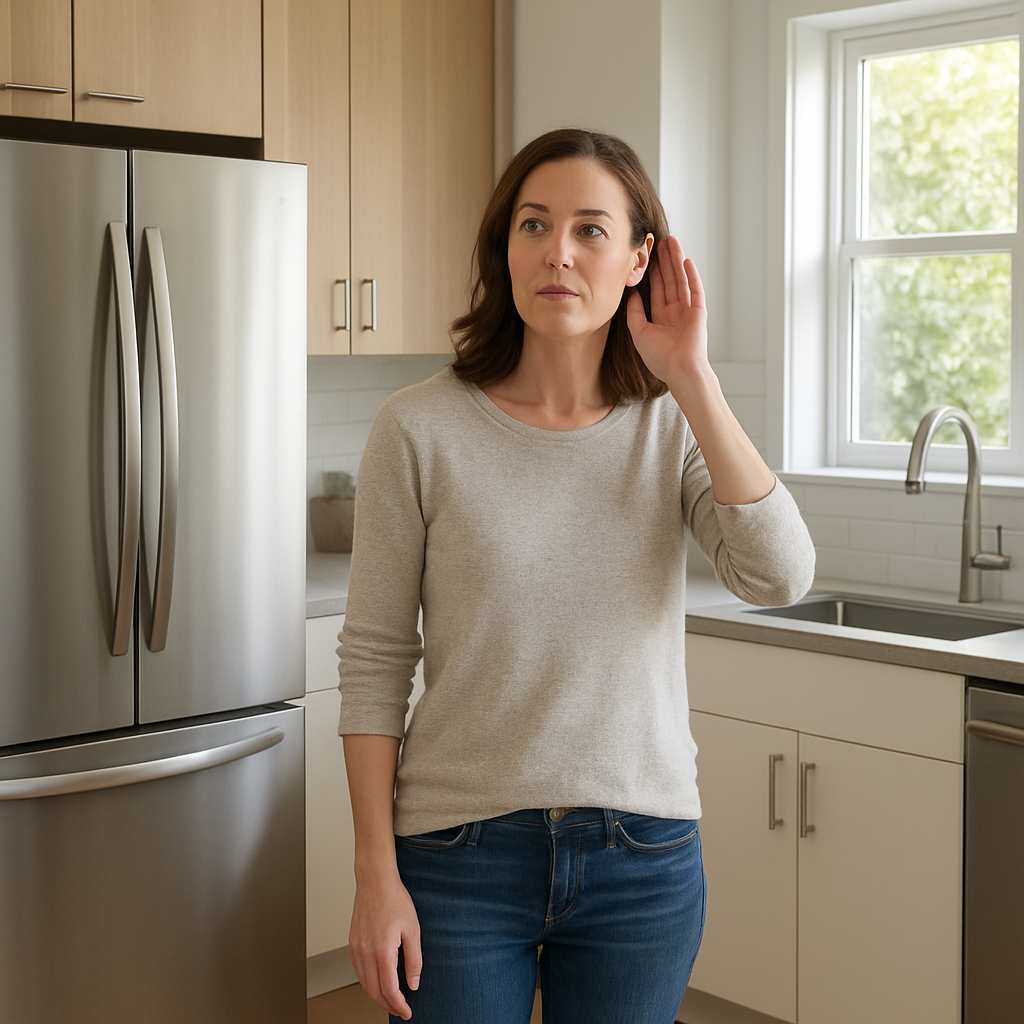
- Do a timing test (most important): Stand near the fridge for 10 minutes. Note whether the tick happens at compressor start, during steady running, or right after shutdown. Repeat once later in the day.
- Check cooling performance: If food is staying cold and the compressor runs normally (not constantly stopping/starting), expansion ticking or normal relay clicks are more likely.
- Listen from specific locations: Front center (control area), freezer interior rear wall (defrost/evaporator area), and rear/bottom (compressor compartment). Switching ticks are usually pinpointable.
- Confirm the unit is not touching anything: Ensure the cabinet is not contacting the wall, cabinets, or a water line. A small contact point can turn normal expansion into loud ticking.
- Level the refrigerator: Slightly tilt back so doors self-close. Poor leveling can increase cabinet flexing and make expansion ticks louder.
- Check for loose items and liners: Inside, make sure shelves, bins, and the ice bin are fully seated. A loose bin can tick when the cabinet flexes during on/off cycles.
- Inspect the rear lower area (power off first if you need to move it): Unplug the fridge, pull it out carefully, and look for a loose access panel or drain pan. Re-seat screws if obviously loose. Plug back in and recheck.
- Condenser cleaning for relay cycling issues: If the condenser is dusty and the fridge seems to cycle abnormally, clean accessible coils/vents with a brush/vacuum. Restricted airflow can cause more frequent starts/stops and more noticeable switching ticks.
- Ice maker isolation test: If the tick lines up with ice production, turn the ice maker off for 12–24 hours. If ticking stops, the sound is likely from the ice maker module or water valve switching.
- Stop if you hear repeated clicking with buzzing and no stable run: That points to a start-component/compressor issue. Continued attempts can overheat components. Schedule service.
When This Is Normal vs A Problem
- Usually normal:
- Single click when the compressor or defrost cycle starts or stops.
- Light ticking/popping for a few minutes after shutdown or after defrost.
- Intermittent ticks with normal temperatures and no change in cooling performance.
- Usually a problem:
- Repeated clicking every 30–180 seconds with a buzz/hum and the compressor does not stay running.
- Ticking that is new and rapidly getting louder or more frequent, especially paired with warming temps.
- Ticking plus electrical odor, scorch marks near the rear/bottom, or the breaker tripping.
- Clicking that coincides with lights dimming in the room or the fridge making multiple start attempts per hour.
- Ticking plus water leaking at the bottom (can indicate defrost drain issues, which can change defrost behavior and increase expansion noises).
When to Call a Technician
- Repeated start attempts: click-buzz-click patterns, especially if the compressor is hot and the fridge/freezer is warming.
- Electrical symptoms: burning smell, melted plastic odor, visible discoloration at the outlet/cord, or breaker trips.
- Cooling problems alongside ticking: rising temperatures, thawing food, or the unit runs briefly then shuts off repeatedly.
- Ticking tied to a control failure: rapid relay chatter from the control area (multiple clicks in quick succession) that does not match normal cycle timing.
- You cannot access the source without removing covers near wiring: internal electrical diagnosis and compressor start components should be handled by a qualified tech.
How to Prevent This Problem
- Maintain clearance: Keep space behind and above the unit so heat can leave consistently; stable cycling reduces repetitive switching.
- Clean condenser coils/air paths: Dust buildup can increase run heat and change cycle behavior, making relay switching and expansion ticks more noticeable.
- Keep temperature settings reasonable: Extremely cold settings can increase run time and defrost-to-run temperature swings, which increases expansion ticking.
- Don’t block vents inside: Overpacked freezers can cause longer runs and sharper temperature transitions after cycles.
- Keep the cabinet stable: Level the refrigerator and prevent contact with walls, trim, or water lines that can amplify normal ticks.
- Ice maker upkeep: Replace a chattering water inlet valve if it becomes noisy and confirm the fill tube is not causing splash-freeze issues that alter the ice cycle timing.
Related Refrigerator Noise Problems
- Fridge clicking every few minutes and not cooling
- Buzzing then clicking from the back of the refrigerator
- Popping sounds after the compressor shuts off
- Cracking noises during or after defrost
- Ice maker clicking but not making ice
- Water inlet valve humming or chattering during ice fill
- Relay chatter from the temperature control area
- Single loud click followed by silence and warming temperatures
- Refrigerator makes noise only at night
- Noises after moving a refrigerator back into place (cabinet contact ticking)
Conclusion
Most ticking is either normal expansion during temperature changes or a normal electrical switch click when loads turn on and off. Match the tick to compressor start/stop or defrost first. If you hear repeated click-buzz patterns or cooling is affected, treat it as a likely start-component or control issue and schedule service.
Frequently Asked Questions
Why does my fridge tick right after it shuts off?
That timing strongly points to expansion ticking. Tubing and liners cool and relax after the compressor stops, creating a brief series of ticks or pops. If it stays under a few minutes and cooling is normal, it is typically not a fault.
My fridge clicks every minute. Is that normal?
Occasional clicks are normal, but clicking every minute is not typical. If it is a single click with normal cooling, it may be frequent cycling from restricted airflow (dirty condenser, poor clearance) or an incorrect temperature setting. If it is click-buzz-click and temperatures are rising, suspect a start relay/overload or compressor problem and call a technician.
Can a dirty condenser cause ticking?
Yes, indirectly. A dirty condenser can change how often the compressor cycles and how hot components get, which increases relay switching frequency and makes expansion noises more noticeable. Cleaning accessible coils/vents is a low-risk first step.
Is a ticking sound during defrost normal?
Often, yes. Defrost creates fast temperature change at the evaporator area, which commonly produces expansion ticking. A single click at the start/end of defrost can also be normal switching. Investigate further if defrost ticks become very loud, are accompanied by repeated relay chatter, or you notice warming and heavy frost buildup.
How do I tell a normal click from a failing start relay?
A normal click is usually one clean tick when the compressor starts or stops, followed by steady running. A failing start relay pattern is repeated clicking with a short buzz/hum, and the compressor does not stay running. Cooling performance usually declines with the start-attempt pattern.
With the groundwork laid, the noise feels easier to ignore, like you’ve finally found where the sound leaks in. The answer isn’t hiding behind jargon or drama anymore—it just sits there, quietly doing its job.
Now the only real question is whether the next step will be handled with the same casual momentum as everything else. Oddly enough, that’s where the satisfaction lands.