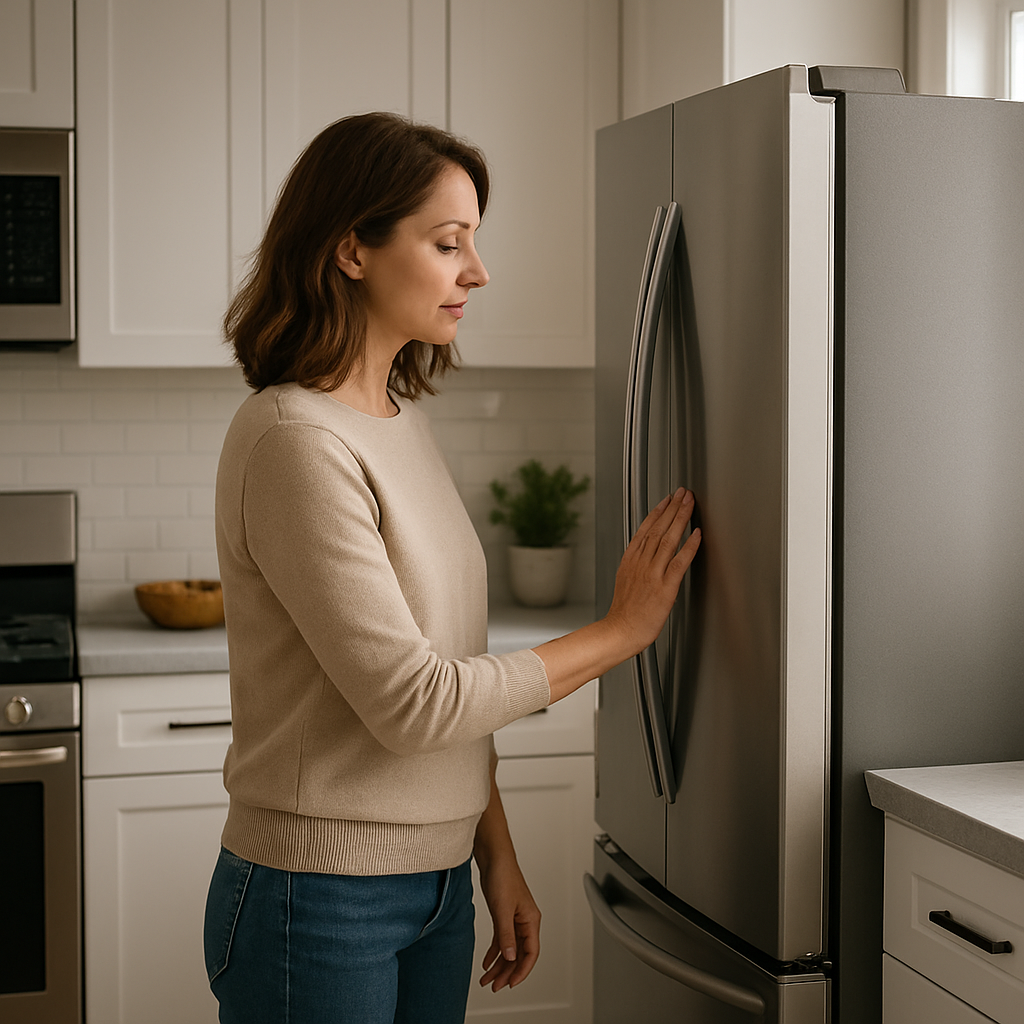
Fridge Noise When Door Closes? What’s Causing It
Quick Answer
If your fridge makes a whoosh, pop, or brief thump right when the door closes, the most common cause is door seal pressure and air shifting between the fresh food and freezer compartments. The first step is to check the door gasket seal and door alignment: close the door on a thin paper strip in several spots and confirm it grips evenly, and make sure the fridge is level so the door closes smoothly without slamming.
Identify the Noise First
Use this quick guide to match your exact situation. This article is for noises that happen because the door closes, not random running noises.
- If the noise happens exactly as the door shuts (even when the fridge is otherwise quiet): most likely airflow/pressure shifting at the door seal.
- If the noise happens 1–10 seconds after the door shuts: pressure is equalizing through internal air passages; still usually seal/air shift related.
- If the noise only happens when the compressor starts (and not every door close): not a door pressure issue; it’s start-up vibration coincidentally timed.
- If the noise happens while the compressor is running and gets louder when the door closes: the door close is changing airflow, making a fan or vent resonate.
- If the noise happens right after the compressor stops regardless of the door: that’s typically refrigerant pressure equalization, not the seal.
- If the noise happens during defrost or shortly after (often a sizzle, drip, or crack): not door-pressure related unless it only occurs with door closing.
- If it happens when the ice maker runs or fills (water fill buzz, ice dump clack): not the door seal; verify by turning ice maker off temporarily.
- If it happens when the evaporator fan is running (freezer side): door closing can momentarily change air pressure and make the fan/duct “flutter” if a cover is loose.
- If it happens when the condenser fan is running (rear/bottom): door closing should not affect it; look for cabinet vibration instead.
- If it’s constant: not door seal pressure. Constant hum, buzz, or rattle points to fans, compressor, or cabinet contact.
- If it’s intermittent but always tied to door movement: likely gasket sticking/releasing or pressure equalization.
- If it’s louder at night: normal perception increase in a quiet house; door pressure noises often seem louder then. If it also becomes sharper or more frequent, check for gasket deformation.
Key confirmation test: Close the door gently versus firmly. If the noise is dramatically different, this strongly supports a seal/pressure air shift cause.
What This Noise Usually Means
When you close a refrigerator door, you compress air inside the cabinet slightly. A good gasket seals that air in, so the pressure has to equalize through designed internal air pathways between compartments and around the damper areas. That equalization can sound like a quick whoosh, soft pop, or brief thump.
If the gasket is slightly sticky, dry, misaligned, or deformed, it can grab and release as the door seats, making a sharper pop or chirp. If the fridge isn’t level or the door is loaded heavy, the door can “snap” shut and the cabinet flex can amplify the air shift sound.
Most Common Causes
- Normal pressure equalization through the cabinet: A short whoosh/pop right at close, more noticeable after the door was open longer.
- Gasket sticking then releasing: A tacky pop or chirp; more common with a dry/dirty gasket, or after cleaning with the wrong product.
- Door not aligned or fridge not level: A thump as the door cams shut harder than it should; noise changes with gentle closing.
- Overpacked door bins or a shifted shelf interfering: Door rebounds slightly, then reseats with a second pop; look for rub marks.
- Blocked or restricted internal airflow path (vents packed with food): Pressure equalization becomes more abrupt; can sound like a stronger whoosh and may be worse on top-freezer models with shared airflow.
- Gasket not sealing evenly (gap at a corner): A hiss or flutter as air leaks during/after closing; may leave moisture or frost near the leak area.
- Cabinet touching a wall or cabinet panel: Door closure transfers vibration to something behind/next to the unit, exaggerating a normal pressure sound into a louder thud.
How to Check Safely
- Confirm it’s truly door-triggered: Stand quietly with the fridge running and not running (if possible). Close the door gently. Repeat with a firmer close. Note whether the noise occurs only with the door action.
- Do the paper-strip gasket test: Close the door on a thin strip of paper (or a dollar bill) at multiple points around the gasket. It should drag with similar resistance everywhere. Easy pull-out areas suggest a weak seal that can change pressure behavior and create noise.
- Inspect the gasket for stickiness, tears, and folds: Look for shiny rubbed spots, hardened sections, or corners that don’t sit flat against the frame.
- Clean the gasket correctly: Wipe with warm water and mild dish soap, then dry. Avoid oily products that can worsen sticking or swelling. If it’s sticking after cleaning, a very light wipe with plain water and thorough drying often helps more than adding any coating.
- Check door alignment and leveling: The fridge should be slightly tilted back so the doors self-close without slamming. If the door drops or you feel a “snap” in the last inch, leveling/hinge alignment is often the fix.
- Check for obstruction and overloading: Make sure bins, shelves, and tall containers aren’t contacting the door liner. Remove a few heavy items from the door and retest.
- Verify clearance: Ensure the fridge isn’t touching the wall, side cabinet, or a water line. Close the door and see if anything behind the unit taps or rattles.
- Check vent areas for overpacking: Without dismantling panels, look for food blocking visible vents in the fresh food section and freezer. Restore airflow and retest the door-close noise.
- Ice maker quick isolation (if applicable): If your noise description is mixed (pop plus a buzz), turn the ice maker off for a day. Door-pressure noises will remain; fill-valve/ice maker noises will not.
If you find a torn gasket, hinge damage, or the door is visibly sagging, stop forcing the door shut. Continued slamming can worsen alignment and sealing.
When This Is Normal vs A Problem
Usually normal:
- A brief whoosh, soft pop, or mild thump only when the door closes.
- Noise is consistent for years and cooling performance is normal.
- More noticeable after the door was open a while, or when closing the freezer right after the fridge door (pressure changes stack up).
Likely a problem:
- The sound is getting sharper, louder, or more frequent over days/weeks.
- You hear a hiss that continues after closing, suggesting a seal leak rather than normal equalization.
- The door bounces back open or feels like it’s being pushed open by pressure.
- You see condensation, frost, or ice buildup near the door edges, especially at one corner.
- Cooling complaints start at the same time: warmer temps, longer run times, or food softening in the freezer.
When to Call a Technician
- Gasket won’t seal evenly after cleaning and basic alignment checks, or it’s torn, shrunken, or deformed.
- Door sag or hinge issues: the door drops, rubs, or needs lifting to close properly.
- Persistent hissing after close plus moisture/frost around the frame (seal leak needs correction to prevent icing and high run time).
- Noise is not just pressure: grinding, fan scraping that persists with the door closed, repeated clicking, buzzing with no start, or any burning/electrical smell.
- Cooling performance changes occur alongside the new door-close noise; a poor seal can cause long run times and secondary noise complaints.
How to Prevent This Problem
- Keep the door seals clean and dry: periodic mild soap and water wipe-down prevents sticking and uneven seating.
- Maintain proper leveling: a slight backward tilt helps the door close smoothly without a slam that amplifies pressure noises.
- Don’t overload door bins: heavy loading increases hinge sag and makes the seal seat abruptly.
- Keep vents clear: avoid packing items tight against visible vents; smoother airflow helps pressure equalize more gently.
- Maintain cabinet clearance: keep the fridge from touching walls or trim so normal door-close pressure sounds don’t turn into loud thuds.
- Use stable temperature settings: extreme settings can increase frost/condensation that degrades gasket performance over time.
- If you have an ice maker: keep cubes from overfilling and pushing on the door or bins, which can affect how the door seats.
Related Refrigerator Noise Problems
- Whooshing sound when opening the refrigerator door
- Popping or cracking noises after closing the freezer door
- Door won’t open easily right after closing, vacuum effect
- Hissing sound at the door edge after closing
- Rattle only when the door closes and the fridge touches the wall
- Chirp/squeak as the gasket slides on the cabinet frame
- Second pop a few seconds after closing, pressure equalization delayed
- Freezer fan noise changes when the refrigerator door closes
- Condensation around the door gasket with mild whistling
- Door bounces open and then re-seals with a thump
Conclusion
A noise right when the fridge door closes is most often seal pressure and air shifting as the cabinet equalizes. Start by checking gasket grip with the paper test, cleaning the seal, and confirming the fridge is level and not slamming shut. If you find an uneven seal, persistent hissing, or new moisture/frost around the door, plan on gasket or hinge correction.
Frequently Asked Questions
Why does my fridge make a whoosh sound when I close the door?
A quick whoosh is typically air pressure shifting as the door gasket seals and the refrigerator equalizes pressure through internal air channels. It’s common and usually harmless if it’s brief and cooling is normal.
My door pops loudly when it closes. Is the gasket bad?
A loud pop often points to the gasket sticking and releasing or the door snapping shut from alignment/leveling issues. Check for tacky spots, folds, or weak areas using the paper-strip test. If one corner fails the test or you see moisture/frost there, the gasket likely needs attention.
Why is it harder to open the fridge right after I close it?
That’s a normal short-term pressure imbalance. A good seal can create a temporary vacuum effect until air slowly equalizes. If it lasts a long time or the door feels excessively stuck, check for blocked airflow paths and confirm the gasket isn’t sealing too aggressively due to misalignment.
Can overpacking cause a door-close noise?
Yes. Overpacked shelves or door bins can prevent a smooth close, causing the door to rebound and reseat with a pop. Overpacking vents can also make pressure equalization more abrupt, increasing a whoosh or thump.
When is a door-close noise a sign of a cooling problem?
If the noise is new and you also notice warming temperatures, longer run times, condensation, or frost near the door edges, treat it as a sealing issue. A leaking gasket can force the fridge to run longer and create secondary noises from airflow and temperature swings.
There’s no big reveal left to chase—just the comfort of seeing everything fall into place. It reads cleaner when the answer is already on the table, even if it took a while to get there.
The real payoff is how ordinary the next moments feel. No drama, no extra weight, just a slightly lighter mind moving on with its day.