Dishwasher Noise From Back: Causes & Fixes
Quick Answer
A noise coming from the back of the dishwasher is most often vibration from the motor/pump mount or rear panel contacting the cabinet/floor. It happens when the wash motor torque or pump pulses transfer into a loose bracket, shifted unit, or hardened isolator. First action: run a short cycle and confirm the noise starts during spray/circulation, then press lightly on the rear corners of the tub or cabinet to see if the sound changes.
Identify the Noise First
- During water fill: If the noise is only while water is entering, it’s less likely a rear motor mount issue. Rear vibration problems usually don’t start and stop with fill.
- During spray / circulation: Most rear motor mount and rear panel vibration noises start 10–60 seconds after filling, when the wash motor ramps up. The sound often changes with spray load and motor speed.
- During draining: A vibration issue can show up here if the drain pump is mounted at the rear on your model, but most “from the back” vibration complaints are tied to the main wash motor during circulation, not the drain phase.
- During heating: Heating alone is usually silent. If the noise appears “during heating,” verify it’s actually while the circulation motor is running at the same time.
- At start of cycle: If the noise begins right as the motor starts and never happens during fill, focus on mounts and rear contact points.
- At end of cycle: If it appears only at the end, verify whether it coincides with the final circulation segment or a short pump run-down where vibration is most noticeable.
- Constant: Constant noise through multiple phases is rarely a mount-only issue unless the unit is physically touching the cabinet and transmitting vibration continuously whenever any motor runs.
- Intermittent: Intermittent rattling or buzzing that comes and goes with spray pulses strongly suggests a loose rear panel, bracket, or harness tapping from vibration.
To isolate the stage: start the dishwasher and listen for the moment it transitions from fill to motor operation. If the noise “switches on” with the wash motor and “switches off” when the motor stops, you’re in the right diagnostic lane for rear mount vibration.
What This Noise Usually Means
When the wash motor starts, it creates torsional torque and a steady vibration. The motor/pump assembly is held by mounts and brackets designed to isolate that vibration from the tub and cabinet. If a mount loosens, shifts, hardens, or tears, the vibration transfers into the rear panel or frame. The panel then acts like a sounding board, turning normal motor vibration into a loud buzz, hum, rattle, or knock that seems to come from the back wall area.
A second mechanism is contact: a slightly shifted dishwasher can let the rear cabinet panel, drain hose loop, wiring harness, or insulation touch the motor or frame. The motor vibration then makes those parts tap or resonate against the rear panel.
Most Common Causes
- Loose motor/pump mounting bolts or bracket: The assembly moves more than it should under load, making a low-frequency rumble or a metallic buzz from the rear.
- Worn or hardened motor isolators (rubber mounts): Aged isolators transmit vibration instead of damping it, producing a louder hum and cabinet resonance during circulation.
- Rear panel or rear frame contact with cabinet wall: If the unit is pushed back tight or skewed, normal motor vibration turns into a buzzing panel vibration that changes when you press on the cabinet.
- Harness, hose, or insulation tapping the rear panel: Vibration causes a repeating tick/rattle as the motor runs, often intermittent and sensitive to cabinet pressure.
- Motor/pump assembly slightly twisted after installation or service: Misalignment preloads the mounts and increases vibration, especially at motor start/stop.
How to Check Safely
1) Confirm cycle stage
- Run a rinse cycle with the dishwasher empty.
- Listen for the noise to begin exactly when the wash motor starts (after fill). If it does, proceed with rear vibration checks.
2) Isolate load factor
- Keep the dishwasher empty for testing. Loose dishes can mimic rattles and hide the real source.
- If the noise only happens when loaded, re-check by loading the racks but leaving items clear of the tub sides; rear mount vibration typically does not depend on dish contact.
3) Inspect relevant components
- Turn power off at the breaker before any physical inspection.
- Pull the dishwasher out only if you can do it without stressing wiring or hoses. Do not kink the water line or drain hose.
- Inspect the rear area for any parts touching the motor/pump housing or rear panel: wiring bundles, clamps, hose loops, insulation, or sound blankets.
4) Confirm or rule out obstruction
- Look for shiny rub marks on the rear panel/frame that indicate vibration contact.
- Check for missing clips or loose clamps that allow a harness or hose to slap the rear panel when the motor runs.
5) Perform a controlled test
- Restore power and run a short cycle.
- With the unit in place, apply light hand pressure to the dishwasher’s side frames near the rear (not underneath, not near moving parts). If the noise changes or stops, that strongly confirms a vibration/contact issue rather than an internal hydraulic problem.
- If safely accessible with the kick plate removed, listen for vibration transmission through the frame: mount issues tend to be loudest at motor start and during steady spray.
When This Is Normal vs A Problem
Normal: A smooth, steady motor hum during circulation that does not buzz the cabinet, does not rattle the rear panel, and does not change when you lightly steady the dishwasher body.
Problem: A buzzing or drumming from the back that gets louder as the motor runs, changes when you push on the cabinet or rear corners, or appears after moving/installation. Metallic rattling, tapping, or a knock at motor start/stop typically indicates a loose mount, bracket, or rear contact point.
When to Call a Technician
- You confirmed the noise is tied to the wash motor and you cannot access or secure the mounting points without pulling the machine.
- The motor/pump assembly shows visible movement, sagging, or mount damage.
- The noise is accompanied by leaking, burning smell, repeated shutdowns, or the unit walks/vibrates noticeably in the cabinet.
- You corrected rear contact points but the vibration remains strong, suggesting mount failure or bracket deformation that requires parts replacement.
How to Prevent This Problem
- Keep the dishwasher level and firmly secured to the cabinet so it can’t shift backward and contact the wall.
- After any service or move, verify hoses and wiring are clipped up and not touching the motor/pump or rear panel.
- Do not shove the unit back by the door; push from the sides to avoid twisting the frame and preloading mounts.
- If you notice new vibration after installation, correct it early; continued resonance can loosen fasteners and worsen mount wear.
Related Dishwasher Noise Problems
- Buzzing noise only when the dishwasher is pushed fully back into the cabinet (rear panel contact)
- Rattle from the back that stops when you hold the side of the tub/frame (loose panel or bracket resonance)
- Knock at wash motor start and stop but quiet during steady running (mount play or bracket shift)
- Intermittent ticking from the rear during spray bursts (harness or hose tapping)
- Low-frequency drumming that increases on certain cycles (mount isolation hardened, cabinet resonance)
Conclusion
A dishwasher noise from the back is most commonly rear panel vibration caused by a loose or worn motor/pump mount, or by the cabinet touching the rear panel. Confirm the noise starts with circulation, then check for rear contact points and mounting looseness. If the sound changes when you steady the cabinet or you see mount damage, plan on securing the bracket or replacing the isolators.
Frequently Asked Questions
Why does the noise change when I press on the dishwasher cabinet?
That’s a classic sign of resonance or contact. Your hand is damping the rear panel/frame vibration or slightly shifting a touch point. Mount and rear panel issues respond to pressure; internal hydraulic noises usually don’t.
Can a dishwasher be “too tight” in the opening and cause a back-wall noise?
Yes. If the unit is forced back or wedged sideways, the rear panel or frame can touch the cabinet wall. Normal motor vibration then becomes a loud buzz or drum. The fix is clearance and proper leveling/securing, not a pump replacement.
What does a worn motor isolator sound like compared to a loose bracket?
Worn isolators usually create a deeper, steady hum and cabinet drumming throughout circulation. A loose bracket more often creates a sharper metallic buzz or rattle, especially at motor start/stop or when spray load changes.
Do I need to remove the dishwasher to confirm a rear motor mount problem?
Not always. You can often confirm it by timing (starts with circulation) and by damping tests (light pressure changing the noise). Full confirmation and repair commonly require pulling the unit to inspect mounts, brackets, and rear contact points safely.
Will this vibration damage the dishwasher if I keep using it?
It can. Continuous vibration can loosen fasteners, wear through insulation, or chafe a harness or hose against the rear panel. If the noise is new and clearly vibration-related, fix the mounting or contact point before it worsens.
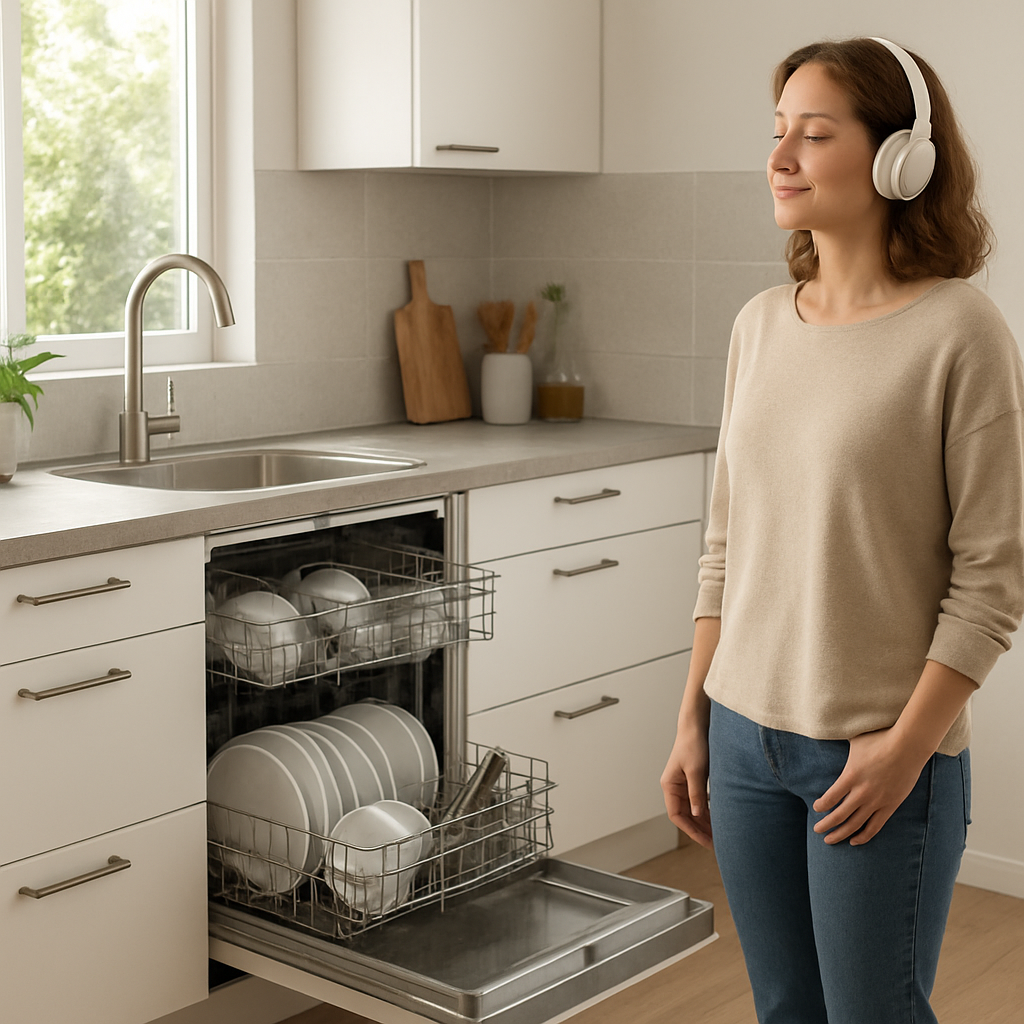
There’s a strange comfort in seeing the pieces fall into place without fanfare. The noise fades, the clutter loosens, and the whole thing stops feeling personal.
Nothing magical happened—just the right shift at the right moment. The next time it shows up, it won’t feel like a mystery that needs dramatic attention.