Washing Machine Noise From the Front? What to Check
Quick Answer
If the noise is clearly coming from the front of the washer, the most common causes are a problem in the front tub support area: a loose or rubbing door boot, worn front shock/strut mounts, or a failing main bearing that telegraphs noise through the front panel. First action: run a short spin with the drum empty and listen at the lower front corners, then inspect the door boot and front lower access area for rubbing, loose parts, or debris.
Identify the Noise First
Pin down the moment the noise starts. Front-assembly issues change sound depending on what the front of the tub is doing.
- During spin: rumble, roaring, scraping, banging, or a clicking that speeds up with RPM usually points to tub support, front counterweight area, or bearing-related noise transmitted to the front.
- During drain: rattling, buzzing, or a harsh grinding from the lower front often points to the drain pump, coin trap/filter housing, or debris in the front pump area.
- During fill: a brief water-hammer bang or a chattering sound near the front top can be inlet/hoses, but if you only hear it at the front door area, check for a loose front panel or door boot vibrating with water flow.
- Constant (even when tumbling slowly): steady rubbing or squeak from the door opening area usually means the door boot is contacting the drum, a clamp has shifted, or the inner lip is torn and catching.
- Intermittent: a clunk once per drum revolution suggests something contacting the front of the drum or tub opening area, like a bra wire, coin, or a shifted boot lip.
What This Noise Usually Means
When a washer sounds like it is coming from the front, it is often because the front panel acts like a speaker. Noises from the tub support system (shocks/struts, springs, counterweights, bearings) travel forward through the tub and cabinet and are most noticeable at the door opening and lower front corners. Front-lower noises are frequently from the drain pump/filter cavity because it is mounted behind the front access panel on many machines.
The key diagnostic idea is location: if the noise is loudest at the door rim or lower front access area, start with front assembly checks before chasing rear components.
Most Common Causes
- Debris in the front drain pump or filter cavity: coins, hairpins, bra wires, small socks, or broken plastic pieces can grind or rattle, especially during drain and spin transitions.
- Door boot (bellows) rubbing or torn: a displaced boot lip, torn inner fold, or loose boot clamp can scrape the drum or slap during spin.
- Loose front counterweight or mounting bolts: a dull knock or thud at higher spin, often worse with heavier loads, can come from a weight that has shifted slightly.
- Worn or broken shock/strut mount at the front: banging at spin ramp-up, tub striking the front panel, or a repetitive clunk when the tub shifts forward.
- Foreign object between inner drum and outer tub near the front: scraping or ticking that repeats with rotation; commonly a bra underwire or small metal item.
- Main bearing beginning to fail: low growl/roar that rises with spin speed; commonly heard at the front even though the bearing is centered at the tub shaft.
- Loose front panel, door hinge, or latch area: metallic tapping or vibration that changes when you press on the door or front panel.
How to Check Safely
These checks focus on the front assembly and can be done without special tools beyond a flashlight and basic hand tools. Stop if you smell burning, see water leaking, or the drum feels unstable.
- 1) Verify the noise location
- Run a short rinse and spin with the drum empty.
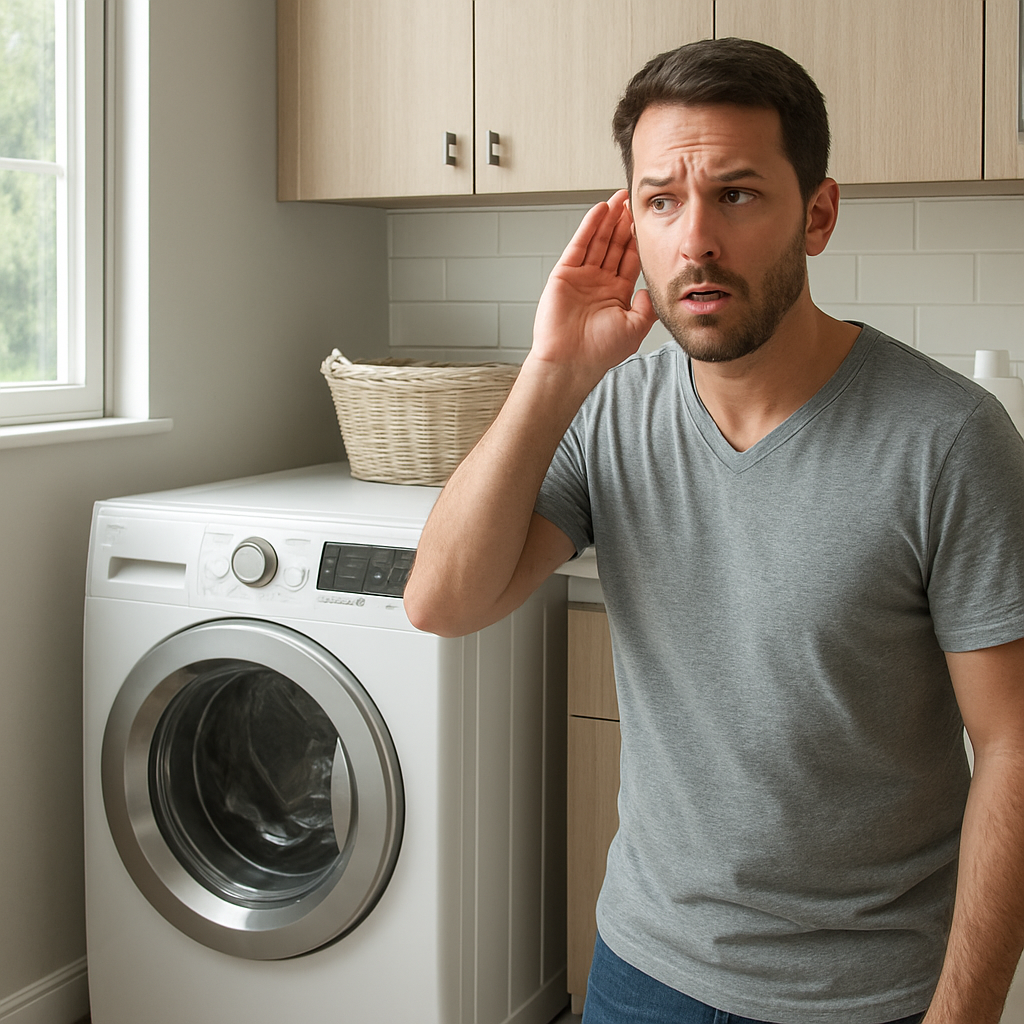
- Listen with your ear near the lower front access panel and around the door rim.
- Lightly press the front panel with your hand (away from moving parts). If the tone changes, vibration is being amplified at the front.
- 2) Check the door boot for rubbing and tears
- Unplug the washer.
- Open the door and inspect the boot all the way around, especially the bottom and at the 4 and 8 oclock positions.
- Look for shiny rub marks, a folded lip, or a split inner fold that could catch the drum.
- Gently pull the boot lip back and feel for trapped items at the front edge of the tub.
- 3) Inspect the front-lower pump/filter area
- Place towels and a shallow pan under the front access door.
- Open the access panel and slowly loosen the filter (if your model has one) to drain water.
- Remove debris from the filter and check the cavity with a flashlight.
- Reach in carefully and spin the pump impeller with a finger. It should turn with slight magnetic resistance but not scrape or bind.
- 4) Quick drum stability check at the front
- With the door open and power unplugged, grab the stainless drum at the top and pull forward, then push back.
- Some movement is normal, but a heavy clunk forward, the tub contacting the front, or excessive play suggests shock/strut or mount issues.
- Spin the drum by hand. Listen for scraping at the front rim area or a repeating tick once per revolution.
- 5) Check for a foreign object near the front of the tub
- If you hear a repeating scrape/tick, use a flashlight through the drum holes and around the front gap to look for a wire or small item.
- Gently flex the boot back and inspect the lower front where items often lodge.
- If your machine has a removable lifter/paddle, check behind it for trapped objects that can migrate forward.
- 6) Rule out loose front hardware
- Check the door hinge screws and latch screws for looseness.
- If safe on your model, remove the lower front kick panel to inspect for loose screws, wire looms tapping, or a hose vibrating against the panel.
When This Is Normal vs A Problem
Usually normal:
- A brief pump hum during drain and a soft rushing water sound at the front.
- Light cabinet vibration at high spin that does not include banging, scraping, or metal-on-metal sounds.
- A mild change in sound when the washer ramps up and down in spin speed.
A problem that needs attention:
- Scraping that continues even with an empty drum, especially if you see rub marks on the door boot.
- Banging or thumping that makes the door or front panel visibly shake during spin.
- Grinding or rattling from the front drain area that persists after cleaning the filter.
- A roar or rumble that gets noticeably louder over weeks and is strongest at high spin.
- Water leaks from the door area or detergent odor/mildew worsening suddenly, which can happen with a torn boot.
When to Call a Technician
- The drum feels loose or drops forward: likely shock/strut mount, spring, or tub support issues that require disassembly and correct torqueing.
- Suspected bearing failure: loud roar in spin plus play at the drum or rusty streaks around the shaft area can mean a bearing and seal job, which is labor-heavy and model-dependent.
- Counterweight or tub mounts appear loose: weights are heavy and can crack tubs or panels if not secured correctly.
- Repeated scraping you cannot locate: a trapped object between tubs often needs heater removal, sump access, or partial tub separation depending on design.
- Electrical burning smell or the pump impeller is jammed and hot: stop using the machine to avoid motor or control damage.
How to Prevent This Problem
- Empty pockets every load: coins and screws are the top cause of front pump and tub-gap noises.
- Use a mesh bag for small items: prevents baby socks and underwires from migrating into the front boot gap or pump.
- Clean the pump filter regularly: if your model has one, check monthly if you wash pet bedding or heavily soiled items.
- Do not overload: overload increases forward tub movement, which accelerates shock wear and can make the tub kiss the front boot.
- Wipe the door boot folds: reduces grit buildup that can create rubbing noise and premature boot wear.
Related Washing Machine Noise Problems
- Grinding noise only when draining: usually pump impeller debris or a failing pump motor.
- Banging during spin but quiet when empty: often load balance or worn shocks allowing the tub to hit the front.
- Scraping sound once per drum revolution: commonly a foreign object between drums or a boot lip catching.
- Rumbling roar at high spin that steadily worsens: typical bearing wear transmitted through the front panel.
- Door area squeak or chirp during tumble: boot friction or door hinge/latch movement.
Conclusion
Front-of-machine noises are most efficiently diagnosed by focusing on the front assembly: the door boot, the front-lower pump/filter area, and how the tub moves toward the front during spin. Start with an empty spin test, inspect the boot for rub or tears, and clean and check the pump filter and impeller. If the drum feels unstable, the machine bangs in spin, or the sound matches a bearing roar, schedule service before continuing regular use.
Frequently Asked Questions
Why is my washer making a scraping noise at the front only during spin?
Front scraping during spin is commonly the door boot contacting the drum or a foreign object riding near the front tub opening. Unplug the washer and check the boot for a folded lip, loose clamp, or shiny rub marks. Then spin the drum by hand and listen for a repeating scrape that suggests something trapped between the inner drum and outer tub.
What does a rattling noise behind the lower front panel usually mean?
That location strongly points to the drain pump/filter cavity. Coins and small items can rattle or grind when the pump runs, and they can also rattle during spin as they bounce in the trap area. Drain the filter slowly, remove debris, and confirm the pump impeller turns without scraping.
My washer is quiet when tumbling but roars during high spin. Can it still sound like it comes from the front?
Yes. A developing main bearing roar often transmits through the tub and gets amplified by the front panel and door opening. If the roar rises smoothly with spin speed and is loudest at maximum RPM, and especially if you feel roughness when spinning the drum by hand, a bearing/seal issue is likely and typically requires professional repair.
How can I tell if the noise is just the front panel vibrating?
During a controlled test (empty spin), lightly press on the front panel or the door frame area. If the sound changes significantly or stops, the panel is acting as a resonator. Then check for loose screws at the door hinge and latch, a loose kick panel, or hoses/wire looms tapping the panel behind the lower front access area.
Is it safe to keep using the washer if the noise is coming from the front?
If it is a brief pump hum or mild vibration with no scraping, leaking, or banging, it is usually safe. Do not continue using it if you hear metal scraping, repeating loud bangs, or a grinding pump noise, or if the drum feels loose at the front. Those conditions can quickly turn a small front-assembly issue into tub, boot, or pump damage.
It feels almost unfair how quickly the clutter clears once everything has its place. The point isn’t that the problem was mysterious—it’s that it was easier than we made it in our heads.
Now the conversation can go back to the real stuff: how things actually feel, how they move, and what we do next without squinting at the wrong details. Quiet progress has a way of looking like the simplest version of relief.