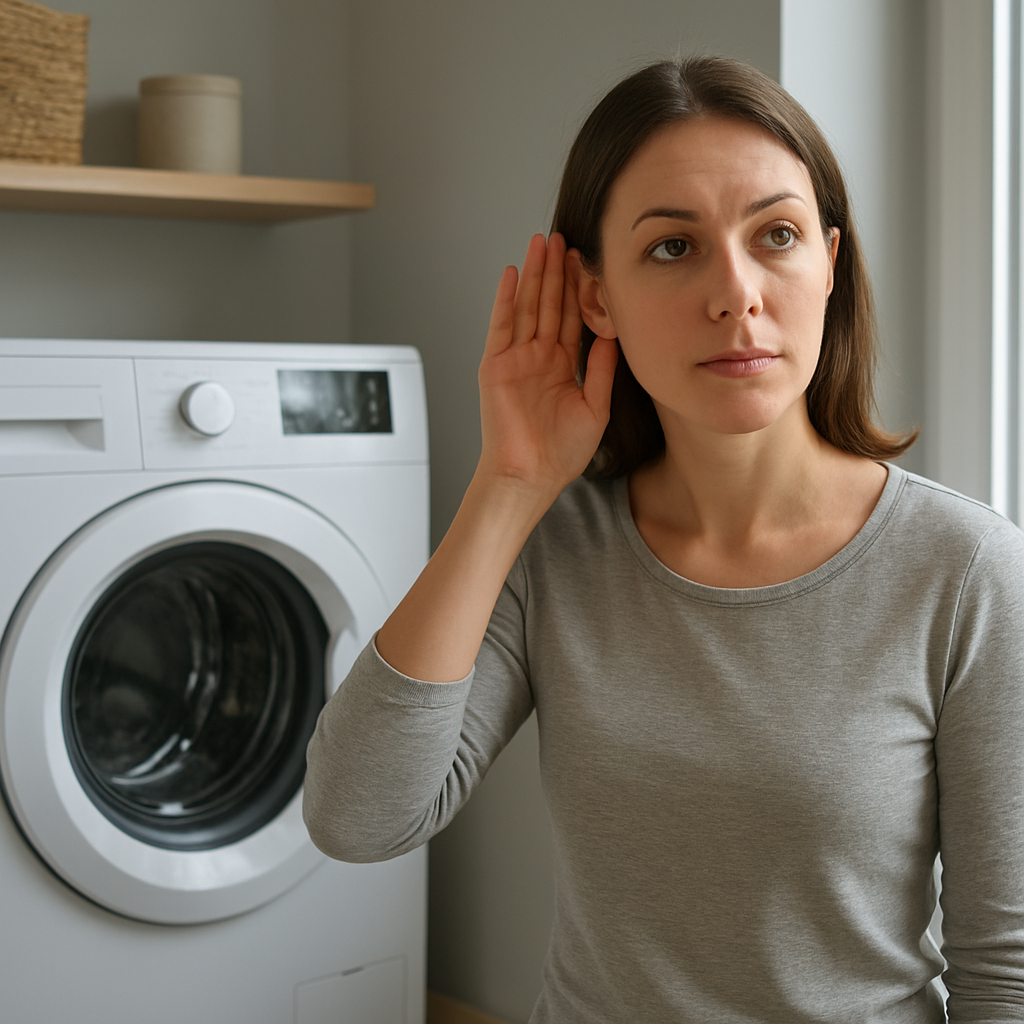
A high-pitched whining noise usually points to the drive motor working harder than it should. The most common reasons are an overloaded drum, a slipping belt, or a drag in the drive system that makes the motor strain during agitation or spin. First action: stop the cycle, redistribute or reduce the load, then re-test on a short spin with the drum empty. If the whine remains, do not keep running it.
Identify the Noise First
High-frequency motor strain has a recognizable pattern. Use the guide below to match what you hear to when it happens.
During spin: Whine rises in pitch as the drum speeds up, often worst at high RPM. May start quiet and grow louder as the machine accelerates.
During drain: If the noise is a smooth high pitch only while draining, that is more typical of the drain pump, not motor strain. Motor-strain whine usually continues after draining when the machine begins to spin.
During fill: A whine during fill is rarely motor-related. Motor strain requires the motor to be running; fill noises are usually water valve or plumbing related.
Constant: A steady whine any time the tub moves (agitate and spin) points toward the motor or the drive system loading the motor. A constant whine even with no tub movement is not typical of motor strain and suggests an electrical or control issue.
Intermittent: Whine that comes and goes with heavy items shifting, or only with certain load sizes, commonly indicates variable load on the motor from balance issues, overloading, or friction that worsens when the tub is forced off-center.
If the sound is more of a squeal, grinding, or rumble, you are likely dealing with a different failure mode than motor strain.
What This Noise Usually Means
The drive motor is being forced to produce more torque than normal. When a motor is loaded heavily, the sound profile often shifts to a higher-frequency whine because the motor is drawing more current and working harder to maintain speed. In practical terms, something is resisting motion or the motor’s power is not transferring efficiently to the drum.
This is why the noise often gets worse at the exact moments torque demand is highest: starting a spin, ramping up to high speed, or tumbling a heavy or uneven load.
Most Common Causes
Overloaded drum or heavy absorbent items: Too much mass, or items like towels/blankets that hold water, can push the motor into strain during acceleration.
Load out of balance increasing drag: A lopsided load forces the suspension to fight the motion and can make the motor work harder, especially in spin.
Slipping or glazed drive belt (belt-driven models): A belt that slips can make a sharp whine as the motor spins faster than the drum, especially during spin ramp-up.
Mechanical drag in the drive system: Stiff tub movement from a worn bearing, tight pulley, or seized component can load the motor and create a persistent whine.
Rotor stator or motor issues (direct-drive models): A failing motor winding, damaged rotor, or related sensor problems can cause a strained whine, often paired with weak spinning or error codes.
Power or control problems that reduce motor torque: If the motor is commanded to run but cannot develop normal torque, it may whine while struggling to accelerate (less common, but possible).
How to Check Safely
These checks are aimed at confirming motor strain versus other noises without disassembling anything beyond what a homeowner can handle.
1) Re-test with the drum empty: Run a spin-only cycle with no laundry. If the whine largely disappears, the motor is reacting to load size, water retention, or imbalance rather than a constant mechanical fault.
2) Try a small, evenly distributed load: Use a few similar items. If the whine returns only on larger loads, you are seeing load-induced motor strain or a borderline drive issue.
3) Watch the spin ramp-up: If the motor audibly whines but the drum is slow to reach speed, or surges up and down, suspect belt slip on belt-driven units or a torque/drag issue on direct-drive models.
4) Check for obvious drag by hand (power off): With the machine unplugged, rotate the drum by hand. It should turn smoothly. A stiff, notchy feel, or resistance that varies through rotation suggests mechanical drag that will strain the motor.
5) Smell check near the lower rear or underside: A hot, rubbery odor after a noisy spin points toward belt slip. Electrical burning smells are not typical and should be treated as a stop-use condition.
6) Look for simple external causes: Confirm the machine is level and not pinched against a wall. Severe rocking can increase load and trigger motor strain during spin acceleration.
7) If you can safely access the belt area (only if your model allows simple access): Unplug the unit first. Inspect for a shiny/glazed belt, rubber dust, or a belt riding incorrectly. Do not run the machine with guards removed.
When This Is Normal vs A Problem
Usually normal:
Brief, faint whine only as the motor starts or changes speed, then it settles quickly.
A mild high-frequency sound during high-speed spin that does not change over time and is not accompanied by poor performance.
Usually a problem:
Whine is getting louder week to week or appears on more cycles than before.
Whine is paired with slow spin-up, repeated attempts to accelerate, or a cycle that takes longer than normal.
Whine occurs even with an empty drum, indicating load is not the main driver.
Any hot rubber smell (belt slip) or the machine stops mid-cycle due to motor protection or errors.
Whine is accompanied by new vibration or the washer struggles to reach full spin speed.
When to Call a Technician
The noise persists with the drum empty: This points away from simple overloading and toward drag, belt, motor, or control issues.
The drum is hard to turn by hand or feels rough: Mechanical drag problems can escalate and may require bearing, pulley, or drive component work.
You smell burning rubber or electrical odor: Belt slip can damage pulleys and the belt; electrical smells require immediate stop and professional diagnosis.
The washer cannot reach full spin or throws motor-related errors: Direct-drive motor, sensor, inverter/control, or wiring diagnostics are not guesswork work.
You see rubber dust or belt debris: Belt replacement is straightforward for some models but still requires correct tensioning and inspection of the reason it slipped.
How to Prevent This Problem
Load by volume and fabric type, not by weight: Dense loads and water-heavy items push motor torque demand up fast.
Don’t wash one huge item alone: Balance it with a few similar items so the washer doesn’t fight an off-center load during spin.
Use the right cycle and spin setting: High spin on heavy loads increases peak motor strain. Lower spin can reduce stress.
Keep the washer level: A rocking cabinet increases resistance and can cause repeated acceleration attempts that strain the motor.
Address belt dust or occasional slip early: A belt that slips intermittently tends to get worse and can mimic motor problems.
Related Washing Machine Noise Problems
High-pitched squeal during spin: Often belt slip or a failing idler/tensioner, which can be confused with motor whine.
Grinding or rumbling that worsens with speed: More typical of tub bearing wear than motor strain, though it can cause motor strain as a secondary effect.
Buzzing with no drum movement: Can indicate a motor start/drive issue or control problem rather than a loaded motor.
Whine only during draining: Commonly a drain pump noise, not the main drive motor.
Clicking followed by repeated attempts to spin: Often a control reacting to inability to accelerate due to drag or a failing drive component.
Conclusion
A whining washer most often means the motor is under high load or losing efficient drive to the drum. Start by testing with an empty drum and then a small balanced load to see if the sound is load-dependent. If the whine continues empty, the drum feels rough to turn, or there is any burning smell, stop using the washer and schedule service to prevent further drive-system damage.
Frequently Asked Questions
Why does my washing machine whine only on heavy loads?
Heavy or water-logged loads increase torque demand during agitation and spin acceleration. If the whine disappears on an empty drum or a small balanced load, the motor is reacting to load strain. Reduce load size, balance items, and avoid high spin on very heavy loads. If it is getting worse over time, check for belt slip or developing mechanical drag.
My washer whines and takes longer to start spinning. What does that indicate?
That combination usually means the motor is struggling to accelerate the drum. On belt-driven machines, a slipping belt is common. On direct-drive machines, it can be motor/rotor issues or mechanical drag. If the behavior happens with an empty drum, it is less likely to be simple load imbalance and more likely a drive or motor problem.
Can a worn tub bearing cause a high-pitched whine?
A worn bearing more often produces a rumble or growl, but it can still lead to motor whine because it adds drag. If the drum feels rough or resists turning by hand (with power unplugged), or the noise rises with speed and is present on empty spins, bearing or drive drag should be considered.
Is a brief whine when the washer changes speeds normal?
A short, mild whine during speed transitions can be normal motor sound, especially on variable-speed machines. It becomes a concern when it grows louder, lasts through the whole spin, or comes with poor performance such as repeated spin attempts, slow ramp-up, or cycle interruptions.
What’s the difference between motor whine and drain pump noise?
Drain pump noise is typically heard only while draining and often sounds like a steady high-pitch hum or buzz that stops when draining ends. Motor strain whine is tied to drum movement and usually intensifies during acceleration into spin or when tumbling a heavy load.
It’s the kind of shift that feels almost boring when it finally lands—like the paperwork moved, the air cleared, and you can stop thinking about it for a second. The big noise fades, not with drama, but with something steadier.
For once, the conversation doesn’t have to circle the same drain. The relief is quiet, yet it sticks around longer than expected.