
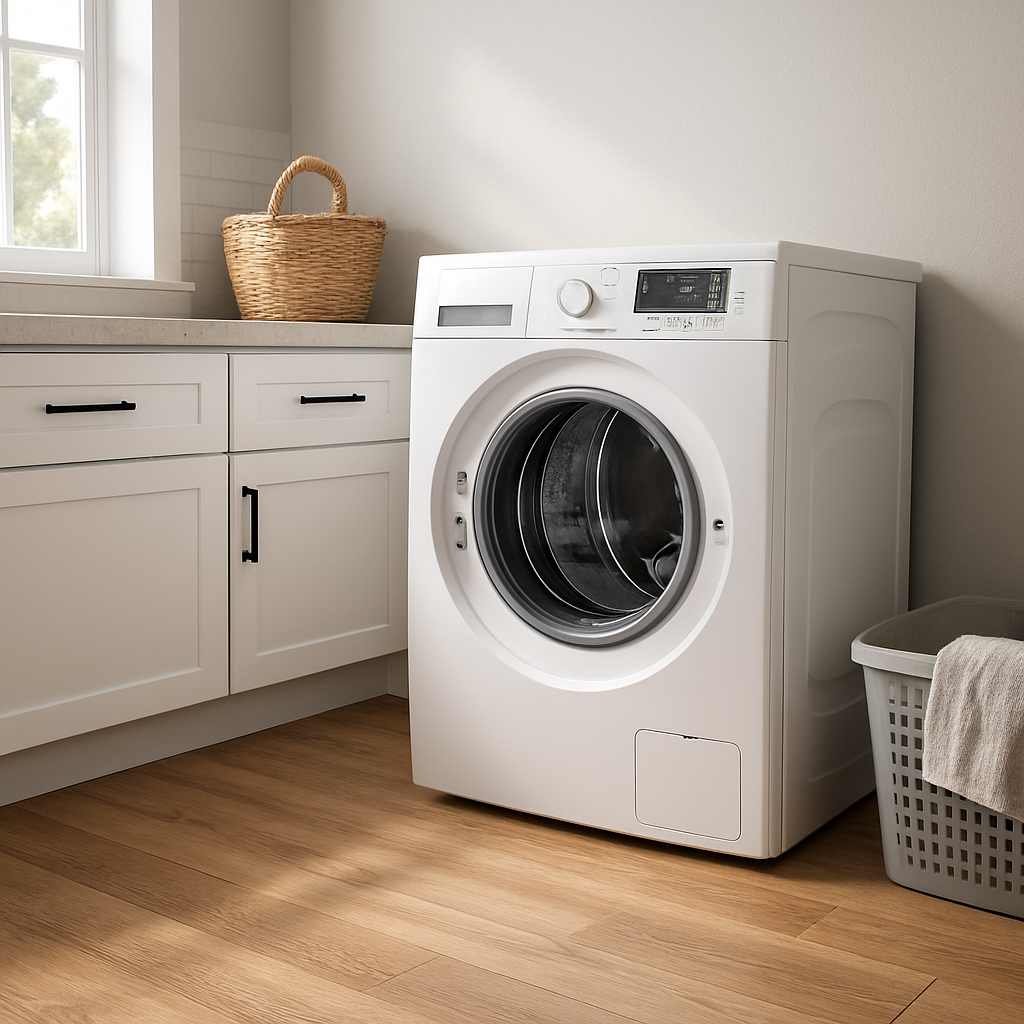
Dryer Vibration Noise: Causes & Easy Fixes
Quick Answer
Most dryer vibration noise comes from an unlevel dryer or an unstable floor letting the cabinet rock as the drum spins. First action: push on the top front corners of the dryer. If it rocks, level it by adjusting the leveling legs and locking the leg nuts. If it is already level, the floor may be flexing and needs stabilization or a vibration pad.
Identify the Noise First
Use when the noise happens and what it feels like to pinpoint a leveling or structural vibration issue.
- During drum rotation: Thumping that gets worse as the load tumbles usually points to cabinet rocking on uneven legs or an out-of-level installation.
- At startup: A quick bang or hop as the drum begins turning often means the dryer shifts because one foot is barely touching or the floor is slick/uneven.
- During heating: Vibration that changes after 5–10 minutes can be cabinet expansion plus a marginally stable stance; the feet were close, but not firmly planted.
- During cooling cycle: If vibration is worst near the end with lighter loads, it often indicates the dryer is balanced on uneven contact points (front-to-back or side-to-side) and the small load isn’t damping movement.
- Constant: A steady buzzing or droning you feel in the floor or walls (not just the dryer) usually indicates floor/joist transmission, especially on upper floors or in older homes.
- Intermittent: Vibration that comes and goes as the drum turns can still be leveling-related if the cabinet rocks and the feet alternately unload/reload on a flexing floor.
What This Noise Usually Means
A dryer is designed to sit solidly on four points. When one leveling leg is high or low, the cabinet cannot resist the normal movement of a turning drum and shifting laundry. That small movement becomes a larger vibration, which transfers into the floor. On flexible floors (wood joists, raised platforms, stacked laundry centers, thin utility room subfloors), the floor acts like a sounding board and turns mild vibration into loud droning or rattling.
Most Common Causes
- Dryer not level (side-to-side or front-to-back): One or more feet not firmly loaded.
- Leveling leg locknuts not tightened: Legs drift over time, especially after moving the dryer for cleaning.
- Dryer sitting partly on debris: Coins, lint clumps, detergent caps, or a lip in the flooring under a foot.
- Flexing floor or weak platform: Upper-floor laundry rooms, older joists, or hollow risers amplify vibration.
- Slick floor surface: Smooth tile or sealed concrete lets the dryer creep and start rattling against a wall or vent.
- Dryer touching surrounding surfaces: Cabinet contacting the wall, baseboard, washer, shelf, or gas/vent line so vibration becomes noise.
- Load-related imbalance made worse by installation: A single heavy item in a small load can be normal, but an unsteady stance makes it loud.
How to Check Safely
These checks focus on leveling and vibration transfer. Use caution around gas lines and venting when moving the dryer.
- 1) Confirm the noise is vibration, not scraping: With the dryer running, lightly place a hand on the top panel. If you feel strong shaking and the sound is a buzz/thump through the cabinet or floor, proceed. If you hear metal scraping, stop and investigate a different noise type.
- 2) Rock test: With the dryer off, push the top front-left corner, then front-right. Repeat at the rear corners if accessible. Any rocking indicates at least one leveling leg is not planted.
- 3) Check for contact points: Look behind and at the sides. Ensure the dryer is not touching the wall, baseboard, washer, shelving, or a loose vent pipe. Leave a small gap so vibration cannot rattle another surface.
- 4) Inspect under the feet: Carefully pull the dryer out a few inches. Check each foot location for coins, lint, or a raised edge in the floor. Clean the area.
- 5) Level the dryer: Place a level across the top side-to-side, then front-to-back. Adjust the leveling legs until the bubble is centered both ways. Then tighten the locknuts against the cabinet so the setting cannot change.
- 6) Re-test with a small load: Run 5–10 minutes with a few towels. If vibration is much improved, the issue was stance/contact. If the floor still drones, it is likely structural transmission.
- 7) Reduce floor transmission: If the dryer is level but the room still resonates, install a proper anti-vibration mat or pads rated for the dryer’s weight. Re-check level afterward because pads can compress.
- 8) Check for walking: Mark the front legs’ position with painter’s tape on the floor. After a cycle, see if it shifted. If it walks, increase traction (pads/mat) and verify the legs are locked.
When This Is Normal vs A Problem
- Usually normal: Mild thump with bulky items or a single heavy item (bath mat, sneaker, blanket) that comes and goes; light vibration you feel only on the dryer, not across the floor.
- Needs attention: The dryer rocks when you push on it, vibrates hard enough to rattle nearby doors/shelves, or creeps forward during operation. These are classic signs of an unsteady stance or floor transmission.
- Stop and reassess: Repeated banging that slams the cabinet, or vibration that makes the dryer contact the wall/vent/gas line. The priority is preventing movement and contact, not continuing to run cycles.
When to Call a Technician
- You cannot level it: The legs are corroded, stripped, missing, or the cabinet cannot sit stable even after adjustments.
- The floor or platform is the issue: If the dryer is level and stable but the room still booms or shakes, a technician or contractor may be needed to reinforce the platform, address joist flex, or correct installation on a raised base.
- Movement risks damaging connections: Any situation where vibration stresses a gas connector, rigid venting, or the dryer is installed in a tight closet where contact is unavoidable.
- The sound is not actually vibration: If leveling changes nothing and you hear squealing, scraping, or grinding, the noise source is likely internal and requires a different diagnostic path.
How to Prevent This Problem
- Re-check level after any move: Cleaning the vent or floor often shifts leg settings.
- Tighten locknuts: After leveling, lock the legs so they do not back out during vibration.
- Keep the floor clean under the feet: Small debris can turn a stable dryer into a rocking one.
- Maintain clearance: Leave space around the cabinet so normal vibration cannot rattle walls, shelves, or venting.
- Use vibration control on flexible floors: A quality mat/pads can reduce transmission, but always level after installation and after a week of compression.
- Load smarter: Avoid running one heavy item alone. Add a few towels to distribute weight and reduce peak vibration.
Related Dryer Noise Problems
- Dryer walks forward and bumps the wall: Often traction and leveling combined with a slick floor.
- Rattle from the back of the dryer during tumbling: Frequently the vent or wall contact, not an internal failure.
- Thumping only with small loads: Can be normal load imbalance, but becomes loud if the cabinet rocks.
- Banging when the cycle starts: Cabinet shift from a high foot or loose locknut.
- Droning hum felt in adjacent rooms: Floor/joist vibration transmission even when the dryer itself seems fine.
Conclusion
If your dryer noise feels like shaking through the cabinet or floor, treat it as a stability problem first: confirm it does not rock, level it in both directions, tighten the leg locknuts, and eliminate wall/vent contact. If it is stable but the room still resonates, focus on floor transmission with a vibration mat or platform reinforcement.
Frequently Asked Questions
How do I know if the dryer is actually unlevel?
Do the rock test first. If you can make the dryer click or shift by pushing the top corners, it is not sitting solidly. Then verify with a level on the top panel side-to-side and front-to-back. A dryer can look straight but still have one foot unloaded.
My dryer is level, but the floor still shakes. What now?
That points to structural transmission. Confirm the dryer is not touching any walls or the washer, then add an anti-vibration mat or pads and re-check level after they compress. If the room still booms, the floor or platform likely needs reinforcement.
Should all four dryer feet touch the floor firmly?
Yes. All four must be firmly planted and locked. If one foot is light, the cabinet rocks and the vibration spike becomes a loud thump, especially as the load shifts during tumbling.
Why does the vibration get worse with certain loads?
Some loads create uneven weight distribution as they tumble. A stable, level dryer can handle that with mild, temporary thumping. If the dryer is even slightly unstable, those same loads trigger cabinet rocking and much louder vibration.
Can a vibration pad make the dryer worse?
It can if the dryer is not leveled after installing it or if the pad compresses unevenly. Pads change the height and can reintroduce rocking. Install the pad, run a few loads, then re-check level and lock the legs.
At some point the argument stops feeling abstract and starts landing in the everyday. Not dramatic, not cinematic—just the kind of shift that makes the room feel calmer.
There’s no need to keep circling the same thought. The page can end now, with things finally settling where they belong.