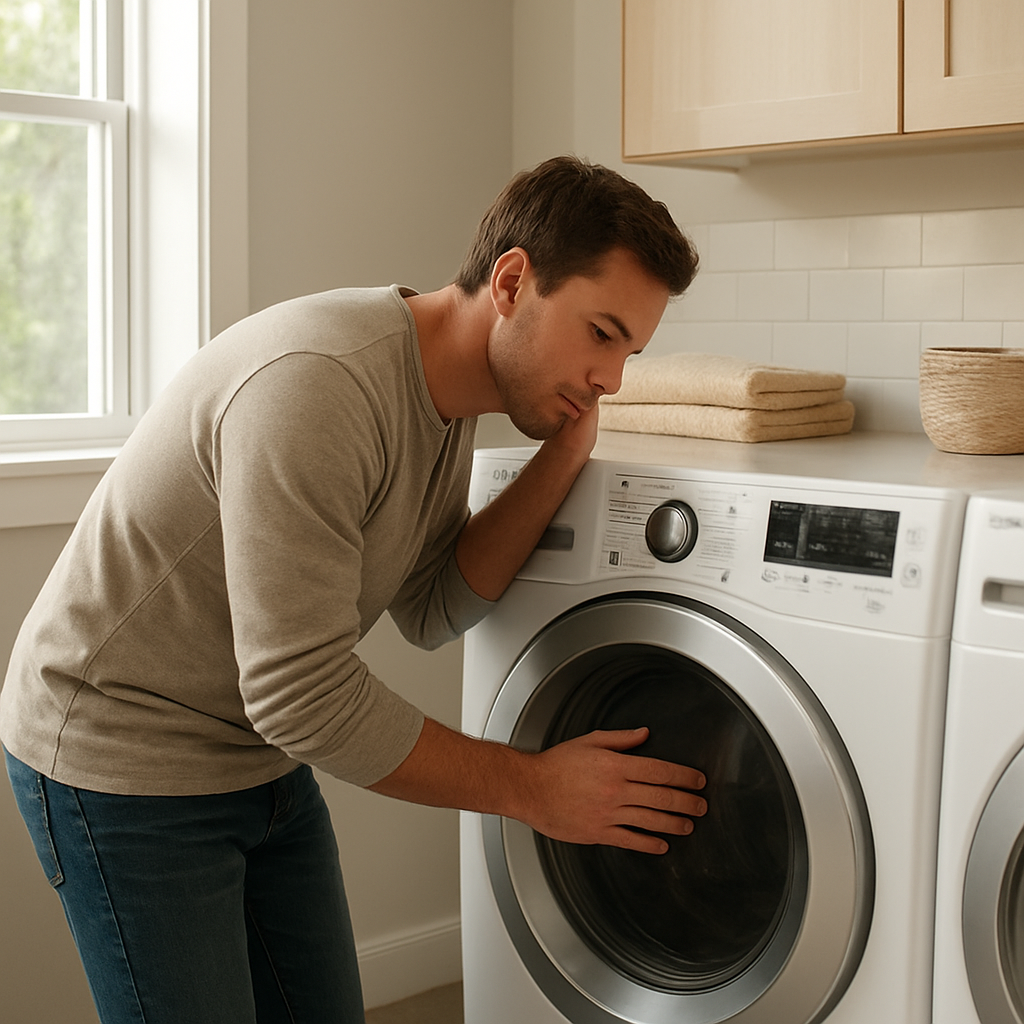
A noise coming from the bottom of the dryer is most often caused by a worn lower drum support roller or a failing motor mount letting the motor shift under load. First action: stop the dryer, rotate the drum by hand, and listen at the lower front panel. If the sound is a thump, rumble, or squeal that follows drum rotation, plan to inspect the lower roller(s) and motor mounting hardware.
Identify the Noise First
Bottom noises are easiest to diagnose by matching the sound to when it happens. Use this quick guide to pinpoint whether you are dealing with a lower roller issue or a motor mount issue.
During drum rotation (noise rises and falls with drum speed): most commonly a flat-spotted or dry lower roller. If it is a heavy thump every few seconds, think roller flat spot. If it is a rhythmic rumble, think roller bearing wear.
At startup (first 1–5 seconds, then improves): a roller with a flat spot that bangs until the rubber warms up, or a motor mount that shifts when torque hits. If you hear a sharp clunk right as the motor starts, suspect the motor mount.
During heating (noise appears after 5–15 minutes): roller bearings can get louder as they warm. A motor mount can also reveal itself once vibration increases, but heat-timed rumble is more roller-like.
During cooling cycle (noise stays even though heat is off): points away from heating components and back toward rollers/mounts. If the noise continues the same, stay focused on lower roller or motor mount.
Constant (no change with load, heat, or time): more likely a motor mount or motor shifting and vibrating at one spot, especially if the sound is a buzz/harsh vibration at the base.
Intermittent (comes and goes, sometimes only with heavy loads): a motor mount that shifts only under higher belt tension, or a roller that only complains when the drum is loaded to one side.
What This Noise Usually Means
The bottom of most dryers houses the drive motor, belt path, and at least one set of drum support rollers. When a lower roller wears, its bearing drags or develops a flat spot. The drum then rolls unevenly, creating a thump, rumble, or squeal that tracks drum rotation.
When a motor mount loosens or cracks, the motor can twist or drop slightly when the belt loads it. That changes belt alignment and lets the motor vibrate against the base. The sound is usually a clunk at start, a harsh vibration, or a scraping/rubbing tone that can change with load size.
Most Common Causes
Worn lower drum support roller bearing (dry, gritty, seized, or loose): creates rumble, squeal, or cyclical growl near the base.
Flat-spotted lower roller (dryer sat unused, roller overheated, or worn rubber): causes a repeating thump that may lessen after a few minutes.
Loose or damaged motor mount (broken bracket, loose bolts, cracked rubber isolator): causes clunk at startup, vibration, and belt/motor noise concentrated at the bottom.
Motor shifting due to stripped mounting threads or bent base: motor sits slightly off, creating vibration and bottom rubbing noises.
Secondary effect: belt tracking misalignment due to motor movement: often accompanies motor mount problems and makes a chirp or rub that seems to originate low in the cabinet.
How to Check Safely
These checks help confirm a lower roller or motor mount issue before you commit to a repair. If you smell burning rubber or the drum stops turning, stop and skip to calling a technician.
Unplug the dryer (and shut off gas if applicable). Let it cool.
Do a hand-rotate test: open the door and rotate the drum by hand several turns. A roller issue often feels like a repeating resistance point and you may hear a low thump/rumble even without power.
Listen low: with the drum turning by hand, put your ear near the lower front panel area (not inside the drum). Roller noises project through the lower cabinet.
Check for drum sag/bounce: gently lift the drum from inside the door opening. Excessive up-down movement can indicate roller wear that lets the drum ride lower.
Run a short test with the panel on (only if you are comfortable): plug in, run 30–60 seconds on air fluff. Note whether the noise is worst at startup (motor mount clue) or matches a repeating drum rhythm (roller clue). Unplug again.
If you can access the lower area safely: remove the lower access panel or front panel as your model allows (unplugged). Inspect for:
Roller wobble: a roller that rocks side-to-side or looks out of round is suspect.
Roller spin: roller should spin freely and quietly. A rough, gritty, or tight roller bearing will telegraph noise through the base.
Motor mount movement: try to move the motor by hand. It should be solid. Any noticeable shift, clunk, or contact marks on the base points to a mount problem.
Shiny rub marks on the base, bracket, or near the belt line: often indicates motor shifting or vibration.
When This Is Normal vs A Problem
Normal bottom sounds are a steady, soft whir and airflow noise. A faint, consistent motor hum with smooth drum rotation is typical.
A problem is likely when you notice any of the following:
Repeating thump that matches drum rotation, especially with light loads.
Squeal or rumble that gets louder over days or weeks.
Clunk at startup followed by vibration you can feel in the cabinet (motor mount movement).
Noise changes with load size (heavier load increases vibration or scraping).
New vibration plus slower start or occasional belt slip smell (motor shifting can change belt tension and alignment).
When to Call a Technician
You cannot access the rollers or motor mount without significant disassembly on your model, or you are unsure how to re-tension the belt correctly.
The motor mount is cracked, the base is bent, or bolts are stripped. Securing the motor correctly matters for safe operation and belt tracking.
Noise is accompanied by burning smell, visible smoke, or repeated breaker trips. Do not keep testing.
The drum is not turning reliably or you hear metal-on-metal scraping from the bottom. Continued operation can damage the belt and drum support system.
How to Prevent This Problem
Avoid chronic overloading. Excess load accelerates lower roller bearing wear and increases torque on motor mounts.
Run the dryer regularly if it sits for long periods. Rollers can develop flat spots when parked under load.
Keep the dryer level. A tilted cabinet shifts drum weight to one roller and shortens its life.
Do not ignore early symptoms like brief startup thumps or light rumble. Rollers are cheaper to address before they seize and shred the roller shaft.
Clean lint as recommended. While lint is not the main cause of roller/mount failure, restricted airflow raises internal temps and can speed up rubber and bearing degradation.
Related Dryer Noise Problems
Squealing from the front of the dryer caused by a worn drum glide or front bearing rather than lower rollers.
High-pitched chirp that changes with load from belt misalignment commonly triggered by a shifting motor mount.
Grinding noise with drum not turning from a seized roller or pulley creating belt slip and motor strain.
Thumping that only happens with one heavy item from load imbalance that can mimic a flat-spotted lower roller.
Scraping from the base where the motor or pulley contacts the cabinet due to a broken mount or shifted motor bracket.
Conclusion
Most bottom-of-dryer noises trace back to the lower drum support rollers or a motor mount that is letting the drive assembly move. Identify whether the sound follows drum rotation (roller) or hits hardest at startup and under load (motor mount). Next step: unplug the dryer, hand-rotate the drum to confirm the pattern, then inspect the lower roller(s) and motor mounting for wobble, roughness, or movement.
Frequently Asked Questions
Why does my dryer thump from the bottom for the first few minutes?
That pattern strongly points to a flat-spotted lower roller. The roller develops a flattened section and thumps once per revolution until the rubber warms slightly. If it is getting worse, plan to replace the roller(s) rather than waiting for the bearing to fail.
My dryer makes a clunk right when it starts. Is that a roller?
A single clunk at startup is more typical of a motor mount shifting when the motor torque loads the belt. A roller issue is more likely to produce a repeating thump or rumble that continues through the cycle and matches drum rotation.
Can I keep using the dryer if the noise is only occasional?
If the noise is a light, occasional thump and the drum turns normally, you may be able to use it briefly while planning a repair. Stop using it if the noise becomes constant, turns into a squeal/grind, the drum hesitates, or you notice belt odor. A roller that seizes can quickly damage the belt and roller shaft.
Do I need to replace all the lower rollers or just the noisy one?
If your dryer uses multiple drum support rollers, replacing them as a set is usually the most reliable approach because they wear at a similar rate. A single new roller next to an older worn roller can leave you with continued rumble and uneven support.
What does a bad motor mount sound like compared to a bad roller?
A bad motor mount is typically a clunk at start, a harsh vibration felt through the cabinet, or a rubbing/scraping tone that changes with load size. A bad lower roller is usually a rhythmic thump, rumble, or squeal that tracks drum rotation and is often audible even when turning the drum by hand.
What’s left now feels less like a battle and more like a breath. The noise fades, the choices stop feeling endless, and everything sits back in its right place.
It’s almost funny how quickly things get lighter when the picture is finally clear. Not perfect, not flashy—just workable, and that’s enough for the day.